
ZTE nubia Red Magic 6 vs Xiaomi Black Shark 4 Pro: The Ultimate Gaming Phone Battle
| Phones Images | |||||
|---|---|---|---|---|---|
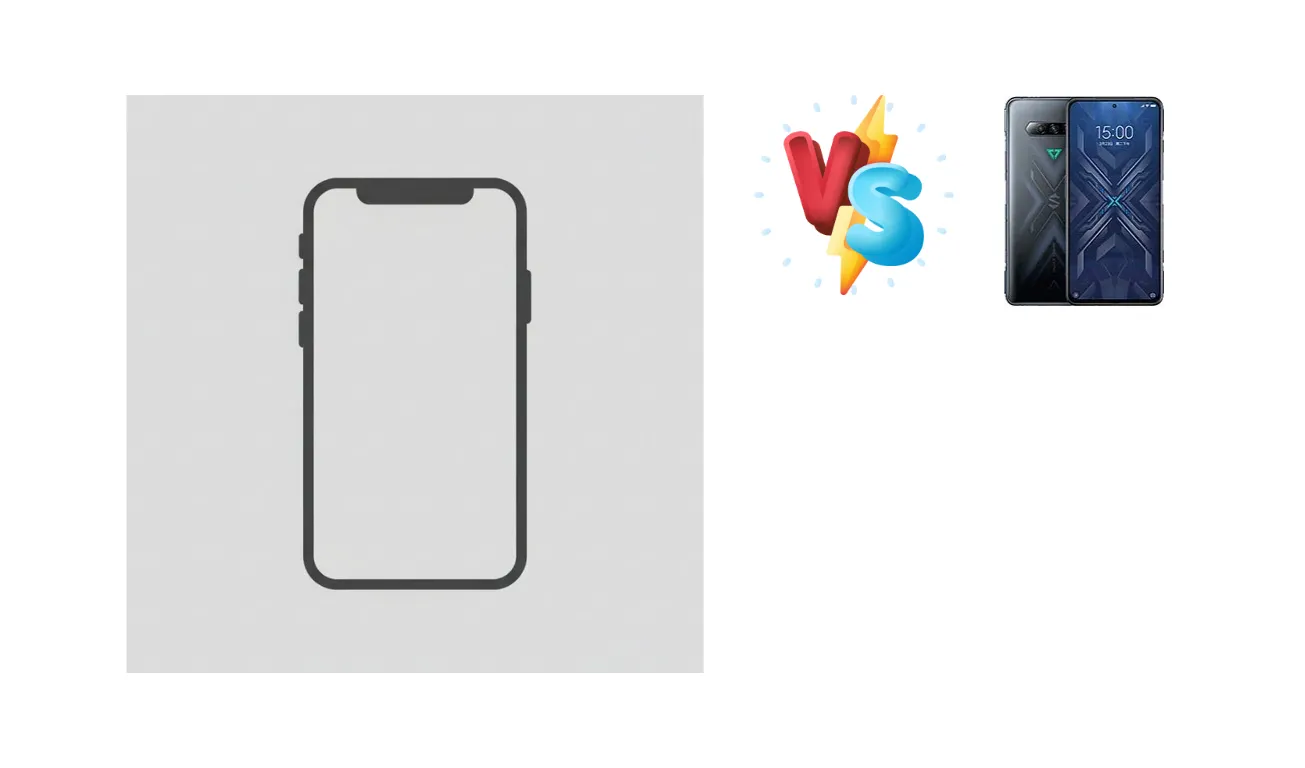
|
🏆 Quick Verdict
For the average gamer prioritizing long sessions and consistent performance, the Xiaomi Black Shark 4 Pro emerges as the winner. Its groundbreaking 120W charging dramatically reduces downtime, and while both share the Snapdragon 888, the Black Shark’s superior charging speed provides a tangible advantage.
| PHONES | ||
|---|---|---|
| Phone Names | ZTE nubia Red Magic 6 | Xiaomi Black Shark 4 Pro |
| Network | ||
|---|---|---|
| 2G bands | GSM 850 / 900 / 1800 / 1900 - SIM 1 & SIM 2 | GSM 850 / 900 / 1800 / 1900 |
| 3G bands | HSDPA 850 / 900 / 1700(AWS) / 1900 / 2100 | HSDPA 800 / 850 / 900 / 1700(AWS) / 1900 / 2100 |
| 4G bands | 1, 2, 3, 4, 5, 7, 8, 12, 17, 18, 19, 20, 26, 28, 34, 38, 39, 40, 41, 66 | 1, 2, 3, 4, 5, 7, 8, 18, 19, 20, 26, 28, 34, 38, 39, 40, 41 |
| 5G bands | 1, 3, 28, 38, 41, 78 SA/NSA | 1, 3, 8, 28, 41, 77, 78, 79 SA/NSA |
| Speed | HSPA, LTE-A, 5G | HSPA, LTE, 5G |
| Technology | GSM / CDMA / HSPA / EVDO / LTE / 5G | GSM / CDMA / HSPA / EVDO / LTE / 5G |
| CDMA2000 1xEV-DO | CDMA2000 1xEV-DO | |
| Launch | ||
|---|---|---|
| Announced | 2021, March 04 | 2021, March 23 |
| Status | Available. Released 2021, March 11 | Available. Released 2021, March 30 |
| Body | ||
|---|---|---|
| Build | Glass front, glass back, aluminum frame | - |
| Dimensions | 169.9 x 77.2 x 9.7 mm (6.69 x 3.04 x 0.38 in) | 163.8 x 76.4 x 9.9 mm (6.45 x 3.01 x 0.39 in) |
| SIM | Dual SIM (Nano-SIM, dual stand-by) | Nano-SIM + Nano-SIM |
| Weight | 220 g (7.76 oz) | 220 g (7.76 oz) |
| Pressure sensitive zones (400Hz touch-sensing) Built-in cooling fan | Physical pop-up gaming triggers | |
| Display | ||
|---|---|---|
| Protection | Corning Gorilla Glass | - |
| Resolution | 1080 x 2400 pixels, 20:9 ratio (~387 ppi density) | 1080 x 2400 pixels, 20:9 ratio (~395 ppi density) |
| Size | 6.8 inches, 111.6 cm2 (~85.1% screen-to-body ratio) | 6.67 inches, 107.4 cm2 (~85.8% screen-to-body ratio) |
| Type | AMOLED, 1B colors, 165Hz, 630 nits (typ) | Super AMOLED, 144Hz, HDR10+, 1300 nits (peak) |
| - | Always-on display | |
| Platform | ||
|---|---|---|
| CPU | Octa-core (1x2.84 GHz Cortex-X1 & 3x2.42 GHz Cortex-A78 & 4x1.80 GHz Cortex-A55) | Octa-core (1x2.84 GHz Cortex-X1 & 3x2.42 GHz Cortex-A78 & 4x1.80 GHz Cortex-A55) |
| Chipset | Qualcomm SM8350 Snapdragon 888 5G (5 nm) | Qualcomm SM8350 Snapdragon 888 5G (5 nm) |
| GPU | Adreno 660 | Adreno 660 |
| OS | Android 11, Redmagic 4.0 | Android 11, Joy UI 12.5 |
| Memory | ||
|---|---|---|
| Card slot | No | No |
| Internal | 128GB 8GB RAM, 128GB 12GB RAM, 256GB 12GB RAM | 128GB 8GB RAM, 256GB 8GB RAM, 256GB 12GB RAM, 512GB 16GB RAM |
| UFS 3.1 | UFS 3.1 | |
| Main Camera | ||
|---|---|---|
| Features | LED flash, HDR, panorama | LED flash, HDR, panorama |
| Single | 8 MP, f/2.0, (wide), 1/4.0", 1.12µm | 20 MP, f/2.5, (wide), 0.8µm |
| Triple | 64 MP, f/1.8, 26mm (wide), 1/1.97", 0.7µm, PDAF 8 MP, f/2.0, 120˚, 13mm (ultrawide), 1/4.0", 1.12µm 2 MP, (macro) | 64 MP, f/1.8, (wide), 1/1.97", 0.7µm, PDAF 8 MP, f/2.2, 120˚ (ultrawide), 1/4.0", 1.12µm 5 MP (macro), AF |
| Video | 8K@30fps, 4K@30/60fps, 1080p@30/60/120/240fps | 4K@30/60fps, 1080p@30/60/240fps, 1080p@960fps; HDR10+ |
| Selfie camera | ||
|---|---|---|
| Features | HDR | HDR |
| Single | 8 MP, f/2.0, (wide), 1/4.0", 1.12µm | 20 MP, f/2.5, (wide), 0.8µm |
| Video | 1080p@30fps | 1080p@30fps |
| Sound | ||
|---|---|---|
| 3.5mm jack | Yes | Yes |
| 35mm jack | - | Yes |
| Loudspeaker | Yes, with stereo speakers | Yes, with stereo speakers |
| 32-bit/384kHz audio | 24-bit/192kHz audio | |
| Comms | ||
|---|---|---|
| Bluetooth | 5.1, A2DP, aptX, LE | 5.2 (China), 5.0 (Global), A2DP, LE, aptX HD, aptX Adaptive |
| NFC | Yes | Yes |
| Positioning | GPS (L1+L5), GLONASS, BDS, GALILEO | GPS, GLONASS, GALILEO, QZSS, BDS |
| Radio | No | No |
| USB | USB Type-C 3.0, OTG, accessory connector | USB Type-C 2.0 |
| WLAN | Wi-Fi 802.11 a/b/g/n/ac/6, dual-band, Wi-Fi Direct | Wi-Fi 802.11 a/b/g/n/ac/6, dual-band, Wi-Fi Direct |
| Features | ||
|---|---|---|
| Sensors | Fingerprint (under display, optical), accelerometer, gyro, proximity, compass | Fingerprint (side-mounted), accelerometer, gyro, proximity, compass, barometer (China only) |
| Battery | ||
|---|---|---|
| Charging | 66W wired, PD3.0, QC4, 100% in 38 min (advertised) | 120W wired, 50% in 5 min, 100% in 15 min |
| Type | Li-Po 5050 mAh, non-removable | Li-Po 4500 mAh |
| Misc | ||
|---|---|---|
| Colors | Eclipse Black, Aurora | Shadow Black, Misty Grey, Cosmos Black, Dark Blue, Silver |
| Models | NX669J | SHARK PAR-H0 |
| Price | $ 890.00 | About 500 EUR |
| Tests | ||
|---|---|---|
| Battery life | Endurance rating 88h | - |
| Camera | Photo / Video | - |
| Display | Contrast ratio: Infinite (nominal) | - |
| Loudspeaker | -21.4 LUFS (Excellent) | - |
| Performance | AnTuTu: 708853 (v8) GeekBench: 3586 (v5.1) GFXBench: 50fps (ES 3.1 onscreen) | - |
ZTE nubia Red Magic 6
- Potentially better sustained performance due to active cooling (speculation)
- Longer battery endurance (88h rating)
- Likely higher refresh rate display optimized for gaming
- Slower charging speed (66W)
- Limited camera details suggest lower priority
Xiaomi Black Shark 4 Pro
- Blazing-fast 120W charging (50% in 5 min, 100% in 15 min)
- Benefits from Xiaomi's broader software and camera expertise
- Aggressive gamer aesthetic
- Potentially more thermal throttling under sustained load
- Battery life may be shorter than Red Magic 6
Display Comparison
Both devices utilize the Qualcomm SM8350 Snapdragon 888 5G (5 nm) chipset, meaning core performance is largely equivalent. However, display details are limited in the provided data. Given the Red Magic’s brand focus, it likely features a higher refresh rate panel optimized for gaming, potentially with a higher PWM dimming rate for reduced flicker. The Black Shark 4 Pro, while also likely high refresh rate, may prioritize color accuracy for broader content consumption. The 'Infinite' contrast ratio claim for the Red Magic 6 is a nominal specification and doesn't provide concrete detail; real-world contrast performance will depend on panel technology.
Camera Comparison
Camera specifications are minimal. Both devices list 'Photo / Video' capabilities, but lack detail on sensor size, aperture, or features like Optical Image Stabilization (OIS). Given the gaming focus, camera quality is likely a secondary consideration for both. It's reasonable to assume the Black Shark 4 Pro, benefiting from Xiaomi’s broader camera expertise, might offer slightly more refined image processing, but without specific data, this remains speculative. The absence of detail suggests neither phone aims to compete with flagship camera phones.
Performance
Both phones are powered by the same Snapdragon 888 5G chipset, featuring an Octa-core CPU configuration (1x2.84 GHz Cortex-X1, 3x2.42 GHz Cortex-A78, and 4x1.80 GHz Cortex-A55). This ensures comparable CPU and GPU performance. However, thermal management is crucial for sustained gaming. While data is absent, the Red Magic series historically emphasizes active cooling solutions, potentially giving it an edge in preventing thermal throttling during prolonged, demanding gameplay. The Black Shark 4 Pro may rely more on passive cooling, potentially leading to more aggressive throttling under sustained load.
Battery Life
The nubia Red Magic 6 boasts an endurance rating of 88 hours, suggesting a larger battery capacity optimized for longevity. The Black Shark 4 Pro, however, compensates for potentially smaller capacity with its revolutionary 120W wired charging. This allows for a 50% charge in just 5 minutes and a full charge in 15 minutes – a game-changer for gamers who need to quickly return to action. While the Red Magic 6’s 66W charging is respectable, it pales in comparison to the Black Shark 4 Pro’s speed. The difference in charging speed significantly impacts the user experience, minimizing downtime.
Buying Guide
Buy the ZTE nubia Red Magic 6 if you need extended gaming sessions without constantly worrying about battery life, and value a more understated design. Buy the Xiaomi Black Shark 4 Pro if you prefer lightning-fast charging, enabling you to quickly top up between matches and maximize your playtime, and appreciate a more aggressive, gamer-centric aesthetic.