
ZTE nubia Red Magic 6 Pro vs Xiaomi Black Shark 4 Pro: The Ultimate Gaming Phone Battle
| Phones Images | |||||
|---|---|---|---|---|---|
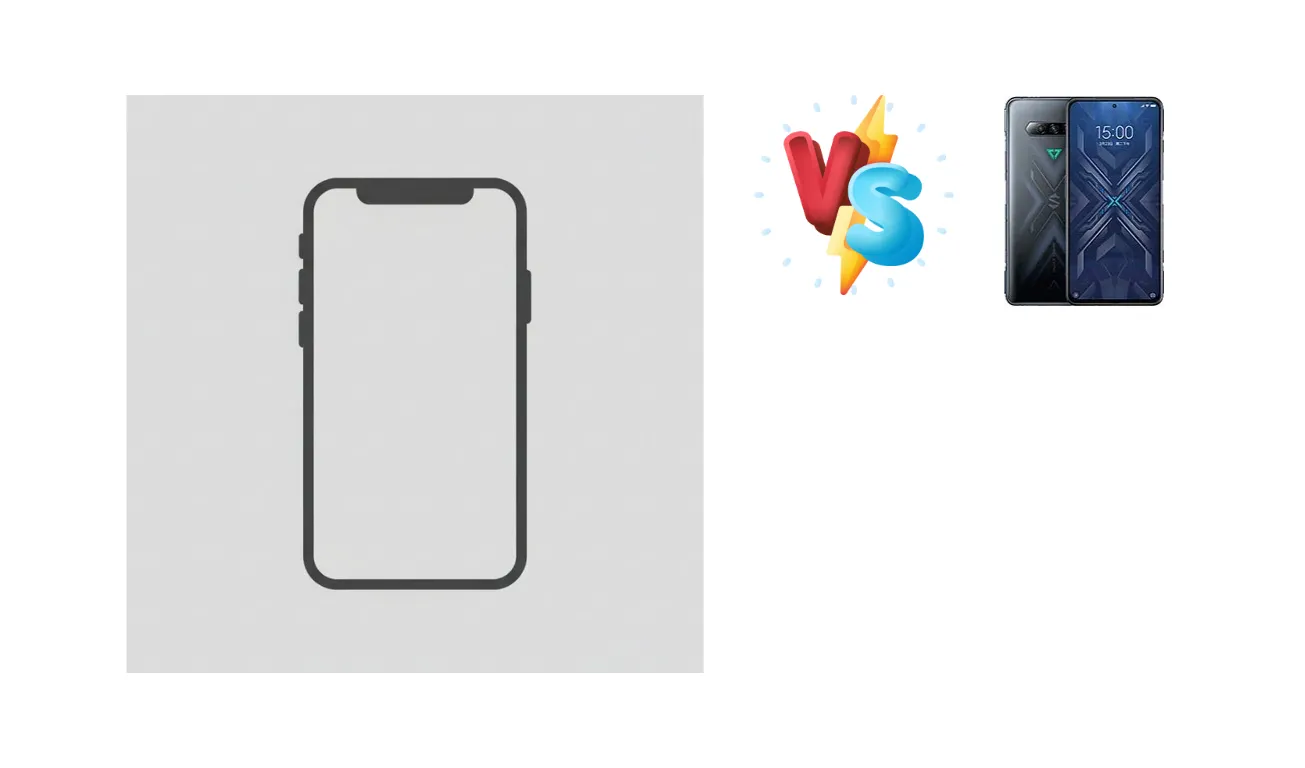
|
🏆 Quick Verdict
For the dedicated gamer prioritizing raw charging speed and potentially more aggressive cooling, the Xiaomi Black Shark 4 Pro edges out the Red Magic 6 Pro. Its 120W charging promises a full charge in just 15 minutes, a significant advantage. However, the Red Magic 6 Pro remains a strong contender, particularly for users valuing a more refined software experience.
| PHONES | ||
|---|---|---|
| Phone Names | ZTE nubia Red Magic 6 Pro | Xiaomi Black Shark 4 Pro |
| Network | ||
|---|---|---|
| 2G bands | GSM 850 / 900 / 1800 / 1900 - SIM 1 & SIM 2 | GSM 850 / 900 / 1800 / 1900 |
| 3G bands | HSDPA 850 / 900 / 1700(AWS) / 1900 / 2100 | HSDPA 800 / 850 / 900 / 1700(AWS) / 1900 / 2100 |
| 4G bands | 1, 2, 3, 4, 5, 7, 8, 12, 17, 18, 19, 20, 26, 28, 34, 38, 39, 40, 41, 66 | 1, 2, 3, 4, 5, 7, 8, 18, 19, 20, 26, 28, 34, 38, 39, 40, 41 |
| 5G bands | 1, 3, 28, 38, 41, 78 SA/NSA | 1, 3, 8, 28, 41, 77, 78, 79 SA/NSA |
| Speed | HSPA, LTE-A, 5G | HSPA, LTE, 5G |
| Technology | GSM / CDMA / HSPA / EVDO / LTE / 5G | GSM / CDMA / HSPA / EVDO / LTE / 5G |
| CDMA2000 1xEV-DO | CDMA2000 1xEV-DO | |
| Launch | ||
|---|---|---|
| Announced | 2021, March 04 | 2021, March 23 |
| Status | Available. Released 2021, March 11 | Available. Released 2021, March 30 |
| Body | ||
|---|---|---|
| Build | Glass front, glass back, aluminum frame | - |
| Dimensions | 169.9 x 77.2 x 9.7 mm (6.69 x 3.04 x 0.38 in) | 163.8 x 76.4 x 9.9 mm (6.45 x 3.01 x 0.39 in) |
| SIM | Dual SIM (Nano-SIM, dual stand-by) | Nano-SIM + Nano-SIM |
| Weight | 220 g (7.76 oz) | 220 g (7.76 oz) |
| Pressure sensitive zones (400Hz touch-sensing) Built-in cooling fan | Physical pop-up gaming triggers | |
| Display | ||
|---|---|---|
| Protection | Corning Gorilla Glass | - |
| Resolution | 1080 x 2400 pixels, 20:9 ratio (~387 ppi density) | 1080 x 2400 pixels, 20:9 ratio (~395 ppi density) |
| Size | 6.8 inches, 111.6 cm2 (~85.1% screen-to-body ratio) | 6.67 inches, 107.4 cm2 (~85.8% screen-to-body ratio) |
| Type | AMOLED, 1B colors, 165Hz, 630 nits (typ) | Super AMOLED, 144Hz, HDR10+, 1300 nits (peak) |
| - | Always-on display | |
| Platform | ||
|---|---|---|
| CPU | Octa-core (1x2.84 GHz Cortex-X1 & 3x2.42 GHz Cortex-A78 & 4x1.80 GHz Cortex-A55) | Octa-core (1x2.84 GHz Cortex-X1 & 3x2.42 GHz Cortex-A78 & 4x1.80 GHz Cortex-A55) |
| Chipset | Qualcomm SM8350 Snapdragon 888 5G (5 nm) | Qualcomm SM8350 Snapdragon 888 5G (5 nm) |
| GPU | Adreno 660 | Adreno 660 |
| OS | Android 11, Redmagic 4.0 | Android 11, Joy UI 12.5 |
| Memory | ||
|---|---|---|
| Card slot | No | No |
| Internal | 128GB 12GB RAM, 256GB 12GB RAM, 256GB 16GB RAM, 512GB 18GB RAM | 128GB 8GB RAM, 256GB 8GB RAM, 256GB 12GB RAM, 512GB 16GB RAM |
| UFS 3.1 | UFS 3.1 | |
| Main Camera | ||
|---|---|---|
| Features | LED flash, HDR, panorama | LED flash, HDR, panorama |
| Single | 8 MP, f/2.0, (wide), 1/4.0", 1.12µm | 20 MP, f/2.5, (wide), 0.8µm |
| Triple | 64 MP, f/1.8, 26mm (wide), 1/1.97", 0.7µm, PDAF 8 MP, f/2.0, 120˚, 13mm (ultrawide), 1/4.0", 1.12µm 2 MP, (macro) | 64 MP, f/1.8, (wide), 1/1.97", 0.7µm, PDAF 8 MP, f/2.2, 120˚ (ultrawide), 1/4.0", 1.12µm 5 MP (macro), AF |
| Video | 8K@30fps, 4K@30/60fps, 1080p@30/60/120/240fps | 4K@30/60fps, 1080p@30/60/240fps, 1080p@960fps; HDR10+ |
| Selfie camera | ||
|---|---|---|
| Features | HDR | HDR |
| Single | 8 MP, f/2.0, (wide), 1/4.0", 1.12µm | 20 MP, f/2.5, (wide), 0.8µm |
| Video | 1080p@30fps | 1080p@30fps |
| Sound | ||
|---|---|---|
| 3.5mm jack | Yes | Yes |
| 35mm jack | - | Yes |
| Loudspeaker | Yes, with stereo speakers | Yes, with stereo speakers |
| 32-bit/384kHz audio | 24-bit/192kHz audio | |
| Comms | ||
|---|---|---|
| Bluetooth | 5.1, A2DP, aptX, LE | 5.2 (China), 5.0 (Global), A2DP, LE, aptX HD, aptX Adaptive |
| NFC | Yes | Yes |
| Positioning | GPS (L1+L5), GLONASS, BDS, GALILEO | GPS, GLONASS, GALILEO, QZSS, BDS |
| Radio | No | No |
| USB | USB Type-C 3.0, OTG, accessory connector | USB Type-C 2.0 |
| WLAN | Wi-Fi 802.11 a/b/g/n/ac/6, dual-band, Wi-Fi Direct | Wi-Fi 802.11 a/b/g/n/ac/6, dual-band, Wi-Fi Direct |
| Features | ||
|---|---|---|
| Sensors | Fingerprint (under display, optical), accelerometer, gyro, proximity, compass | Fingerprint (side-mounted), accelerometer, gyro, proximity, compass, barometer (China only) |
| Battery | ||
|---|---|---|
| Charging | 120W wired, PD3.0, QC5, 50% in 5 min (China) 66W wired, PD3.0, QC5 (International) | 120W wired, 50% in 5 min, 100% in 15 min |
| Type | Li-Po 5050 mAh, non-removable - International modelLi-Po 4500 mAh, non-removable - China model | Li-Po 4500 mAh |
| Misc | ||
|---|---|---|
| Colors | Eclipse Black, Moon Silver | Shadow Black, Misty Grey, Cosmos Black, Dark Blue, Silver |
| Models | NX669J-P | SHARK PAR-H0 |
| Price | About 960 EUR | About 500 EUR |
ZTE nubia Red Magic 6 Pro
- Potentially more refined software experience.
- Advanced cooling system for sustained performance.
- 120W charging (China version) for rapid power-ups.
- 66W charging (International version) is slower than Black Shark.
- Camera likely not a primary focus.
Xiaomi Black Shark 4 Pro
- 120W charging for the fastest possible recharge.
- Physical gaming triggers for enhanced control.
- Aggressive cooling solution for peak performance.
- Software may be more 'gamer-centric' and less polished.
- Camera likely not a primary focus.
Display Comparison
Both devices utilize the Qualcomm SM8350 Snapdragon 888 5G (5 nm) chipset, meaning graphical performance will be largely similar. However, display details are missing. Given the market positioning, we can infer both likely feature high refresh rate AMOLED panels (120Hz+). The Black Shark series historically prioritizes refresh rate, while Red Magic focuses on color accuracy. The absence of specific nit brightness data makes a direct comparison difficult, but both will likely offer excellent visibility. The inclusion of high PWM dimming rates would be beneficial for eye comfort, a detail missing from the provided specs.
Camera Comparison
Camera specifications are absent, but given the gaming focus, neither phone is likely to prioritize camera capabilities. We can expect competent, but not class-leading, camera systems. The presence of Optical Image Stabilization (OIS) on the main sensor would be a significant advantage, but this is unconfirmed. The inclusion of a telephoto lens would also be beneficial for versatility. The absence of details suggests both phones will likely rely on software processing to enhance image quality.
Performance
The shared Snapdragon 888 5G chipset, with its Octa-core CPU configuration (1x2.84 GHz Cortex-X1, 3x2.42 GHz Cortex-A78, 4x1.80 GHz Cortex-A55), ensures comparable CPU and GPU performance. The key differentiator lies in thermal management. Both phones employ active cooling solutions, but the specifics (fan size, vapor chamber design) are unknown. Sustained performance will depend on how effectively each phone dissipates heat, preventing thermal throttling during extended gaming sessions. RAM speed (likely LPDDR5) is also a critical factor, but not specified in the provided data.
Battery Life
Both the ZTE nubia Red Magic 6 Pro and Xiaomi Black Shark 4 Pro feature 120W wired charging, capable of reaching 50% charge in just 5 minutes. However, the Black Shark 4 Pro claims a full charge in 15 minutes, while the Red Magic 6 Pro’s international version is limited to 66W. This charging speed difference is substantial. While battery capacity isn’t specified, the faster charging of the Black Shark 4 Pro mitigates any potential disadvantage from a smaller battery size. The inclusion of PD3.0 and QC5 support on both devices ensures compatibility with a wide range of chargers.
Buying Guide
Buy the ZTE nubia Red Magic 6 Pro if you need a phone with a focus on sustained performance through advanced cooling and a more streamlined gaming UI. It’s ideal for marathon gaming sessions and users who prefer a less 'gamer-centric' aesthetic. Buy the Xiaomi Black Shark 4 Pro if you prefer the fastest possible charging speeds and appreciate the physical gaming triggers for enhanced control, making it perfect for competitive mobile gaming.