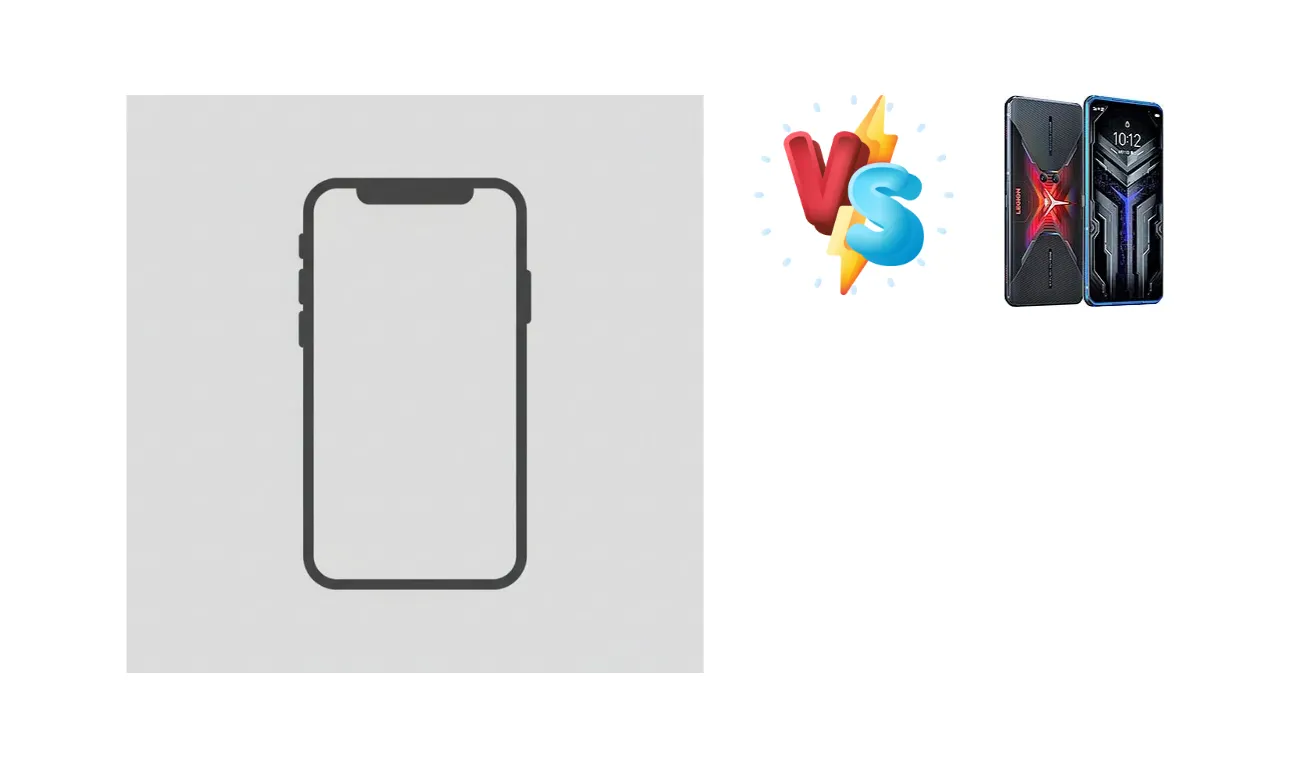
Both the ZTE nubia Red Magic 5S and the Lenovo Legion Pro represent a focused push into the dedicated gaming smartphone market. While both leverage the Qualcomm Snapdragon 865 platform, they diverge significantly in charging technology, RAM configurations, and overall design philosophy, catering to slightly different gaming priorities.
🏆 Quick Verdict
For the average gamer prioritizing sustained performance and rapid refueling, the Lenovo Legion Pro emerges as the stronger choice. Its Snapdragon 865+ chipset and variable charging speeds (up to 90W) provide a noticeable edge, especially for demanding titles. However, the Red Magic 5S remains a compelling option for those seeking a more affordable entry point.
| Network |
|---|
| 2G bands | GSM 850 / 900 / 1800 / 1900 - SIM 1 & SIM 2 | GSM 850 / 900 / 1800 / 1900 |
| 3G bands | HSDPA 850 / 900 / 1700(AWS) / 1900 / 2100 | HSDPA 850 / 900 / 1900 / 2100 |
| 4G bands | 1, 2, 3, 4, 5, 7, 8, 12, 17, 18, 19, 20, 26, 34, 38, 39, 40, 41 | LTE |
| 5G bands | 41, 78, 79 SA/NSA | SA/NSA |
| Speed | HSPA, LTE-A, 5G 7.5 Gbps DL | HSPA 42.2/5.76 Mbps, LTE (4CA) Cat15 800/210 Mbps, 5G 2.5 Gbps DL |
| Technology | GSM / CDMA / HSPA / EVDO / LTE / 5G | GSM / CDMA / HSPA / LTE / 5G |
| | CDMA2000 1xEV-DO | CDMA 800 & TD-SCDMA |
| Launch |
|---|
| Announced | 2020, July 28 | 2020, July 22. Released 2020, July 30 |
| Status | Available. Released 2020, August 01 | Discontinued |
| Body |
|---|
| Build | Glass front (Gorilla Glass), glass back (Gorilla Glass), aluminum frame | Glass front, glass back, aluminum frame |
| Dimensions | 168.6 x 78 x 9.8 mm (6.64 x 3.07 x 0.39 in) | 169.2 x 78.5 x 9.9 mm (6.66 x 3.09 x 0.39 in) |
| SIM | Dual SIM (Nano-SIM, dual stand-by) | Nano-SIM + Nano-SIM |
| Weight | 220 g (7.76 oz) | 239 g (8.43 oz) |
| | Pressure sensitive zones (300Hz touch-sensing)
Built-in cooling fan | Water-repellent coating |
| Display |
|---|
| Protection | Corning Gorilla Glass | - |
| Resolution | 1080 x 2340 pixels, 19.5:9 ratio (~388 ppi density) | 1080 x 2340 pixels, 19.5:9 ratio (~388 ppi density) |
| Size | 6.65 inches, 108.6 cm2 (~82.5% screen-to-body ratio) | 6.65 inches, 108.6 cm2 (~81.7% screen-to-body ratio) |
| Type | AMOLED, 144Hz | AMOLED, 144Hz, HDR10+ |
| Platform |
|---|
| CPU | Octa-core (1x2.84 GHz Cortex-A77 & 3x2.42 GHz Cortex-A77 & 4x1.80 GHz Cortex-A55) | Octa-core (1x3.09 GHz Cortex-A77 & 3x2.42 GHz Cortex-A77 & 4x1.80 GHz Cortex-A55) |
| Chipset | Qualcomm SM8250 Snapdragon 865 5G (7 nm+) | Qualcomm SM8250 Snapdragon 865 5G+ (7 nm+) |
| GPU | Adreno 650 | Adreno 650 |
| OS | Android 10, Redmagic 3.0 | Android 10, Legion OS/ ZUI12 |
| Memory |
|---|
| Card slot | No | No |
| Internal | 128GB 8GB RAM, 256GB 12GB RAM, 256GB 16GB RAM | 128GB 8GB RAM, 128GB 12GB RAM, 256GB 12GB RAM, 512GB 16GB RAM |
| | UFS 3.1 | UFS 3.1 |
| Main Camera |
|---|
| Dual | - | 64 MP, f/1.9, 25mm (wide), 1/1.72", 0.8µm, PDAF
16 MP, f/2.2, 120˚, 16mm (ultrawide) |
| Features | LED flash, HDR, panorama | Dual-LED flash, panorama, HDR |
| Triple | 64 MP, f/1.8, 26mm (wide), 1/1.72", 0.8µm, PDAF
8 MP, f/2.0, 120˚, 13mm (ultrawide), 1.12µm
2 MP, (macro) | - |
| Video | 8K@30fps, 4K@30/60fps, 1080p@30/60/120/240fps | 4K@30fps gyro-EIS |
| Selfie camera |
|---|
| Features | HDR | LED flash, HDR |
| Single | 8 MP, f/2.0, (wide), 1.12µm | Motorized pop-up 20 MP, f/2.2, 25mm (wide), 1/3.1", 0.9µm |
| Video | 1080p@30fps | 4K@30fps |
| Sound |
|---|
| 3.5mm jack | Yes | No |
| 35mm jack | - | No |
| Loudspeaker | Yes, with stereo speakers | Yes, with stereo speakers |
| | 32-bit/384kHz audio | - |
| Comms |
|---|
| Bluetooth | 5.1, A2DP, aptX, LE | 5.0, A2DP, LE, aptX HD, aptX Adaptive |
| NFC | Yes | Yes |
| Positioning | GPS (L1+L5), GLONASS, BDS, GALILEO | GPS (L1+L5), GLONASS, GALILEO, BDS, QZSS |
| Radio | No | No |
| USB | USB Type-C 3.0, OTG, accessory connector | Two USB Type-C, OTG |
| WLAN | Wi-Fi 802.11 a/b/g/n/ac/6, dual-band, Wi-Fi Direct | Wi-Fi 802.11 a/b/g/n/ac/6, dual-band, Wi-Fi Direct |
| Features |
|---|
| Sensors | Fingerprint (under display, optical), accelerometer, gyro, proximity, compass | Fingerprint (under display, optical), accelerometer, gyro, proximity, compass |
| Battery |
|---|
| Charging | 55W wired, 56% in 15 min, 100% in 40 min (advertised) | 45W wired, (128GB 8GB RAM model)
65W wired, (128GB 12GB RAM, 256GB 12GB RAM models)
90W wired, 50% in 10 min, 100% in 30 min (512GB 16GB RAM model) |
| Type | Li-Po 4500 mAh, non-removable | Li-Po 5000 mAh |
| Misc |
|---|
| Colors | Silver, Pulse | Vengeance Red, Blazing Blue, White |
| Models | - | L79031 |
| Price | About 540 EUR | - |
| Tests |
|---|
| Battery life |
Endurance rating 83h
| - |
| Camera |
Photo / Video | - |
| Display |
Contrast ratio: Infinite (nominal) | - |
| Loudspeaker |
-22.6 LUFS (Excellent)
| - |
| Performance |
AnTuTu: 557056 (v8)
GeekBench: 13400 (v4.4), 3386 (v5.1)
GFXBench: 46fps (ES 3.1 onscreen) | - |
ZTE nubia Red Magic 5S
- Strong battery endurance (83h rating)
- More affordable price point (likely)
- Dedicated gaming features (implied, based on brand)
- Slightly older Snapdragon 865 chipset
- Slower charging speeds (55W)
- Potentially lower maximum RAM configuration
Lenovo Legion Pro
- Snapdragon 865+ for improved performance
- Variable charging speeds up to 90W
- Higher RAM options (up to 16GB)
- Potentially lower battery endurance (due to higher power draw)
- Higher price point
- Thermal management is critical to avoid throttling
Display Comparison
Both devices utilize displays with an infinite (nominal) contrast ratio, typical of AMOLED panels. However, detailed display specs like refresh rate, peak brightness, and color gamut coverage are missing from the provided data. Given the gaming focus, both likely feature high refresh rates (120Hz or higher). The Legion Pro’s potential for LTPO technology, common in higher-end devices, would offer variable refresh rate capabilities for improved power efficiency, a feature not confirmed for the Red Magic 5S. Bezels are likely minimized on both, but without specific measurements, a direct comparison is impossible.
Camera Comparison
The provided data offers minimal insight into camera capabilities beyond 'Photo / Video' functionality. Given the gaming focus, camera quality is likely secondary. However, the absence of sensor size or aperture information makes a meaningful comparison impossible. It’s reasonable to assume both devices feature multi-camera setups, but the quality will likely be adequate rather than class-leading. The inclusion of a dedicated image signal processor (ISP) within the Snapdragon 865 series will provide decent image processing capabilities.
Performance
The Lenovo Legion Pro’s Snapdragon 865 5G+ chipset represents a slight architectural refinement over the Red Magic 5S’s Snapdragon 865. The ‘+’ variant boosts the CPU clock speed to 3.09 GHz versus 2.84 GHz on the 865, offering a marginal performance increase in CPU-bound tasks. Both utilize the same CPU core configuration (1x Cortex-A77 at higher clock, 3x Cortex-A77, 4x Cortex-A55). The Legion Pro’s potential for higher RAM configurations (up to 16GB) compared to the Red Magic 5S (implied lower maximum) will benefit multitasking and handling large game assets. Thermal management is crucial; while neither spec sheet details cooling solutions, the Legion Pro’s higher performance ceiling necessitates a more robust system to prevent throttling.
Battery Life
The Red Magic 5S boasts an endurance rating of 83 hours, suggesting strong battery life. However, the Legion Pro’s charging capabilities are significantly more versatile. While the base 128GB/8GB model charges at 45W, the 128GB/12GB and 256GB/12GB models step up to 65W, and the 512GB/16GB model reaches a blistering 90W. The 90W charging can deliver a 50% charge in just 10 minutes and a full charge in 30 minutes, a substantial advantage over the Red Magic 5S’s advertised 40-minute full charge time with 55W. This faster charging is critical for gamers who need to quickly return to play.
Buying Guide
Buy the ZTE nubia Red Magic 5S if you need a capable gaming phone at a more accessible price point and value endurance over absolute peak performance. It’s ideal for gamers who enjoy longer sessions without needing the fastest possible recharge. Buy the Lenovo Legion Pro if you prioritize maximum performance, the quickest charging speeds available, and are willing to invest in a device designed for competitive gaming with higher RAM options.
Frequently Asked Questions
❓ Does the Lenovo Legion Pro's 90W charging generate excessive heat during charging?
While 90W charging is incredibly fast, Lenovo likely incorporates thermal management technologies within the charging circuitry and battery to mitigate heat generation. The device's overall cooling system also plays a role in dissipating heat during charging, preventing damage to the battery and ensuring safe operation.
❓ How does the Snapdragon 865+ in the Legion Pro handle sustained gaming performance compared to the standard 865 in the Red Magic 5S?
The Snapdragon 865+ offers a slight clock speed advantage and improved thermal design, allowing it to maintain peak performance for longer durations during demanding gaming sessions. While both chips are capable, the Legion Pro is less likely to experience significant throttling under sustained load, resulting in more consistent frame rates.
❓ Is the difference between 8GB and 16GB of RAM on the Legion Pro noticeable for gaming?
For most mobile games, 8GB of RAM is sufficient. However, 16GB of RAM on the Legion Pro provides a noticeable benefit when multitasking, running background apps, or playing graphically intensive games with large textures and assets. It also future-proofs the device for upcoming games that may require more memory.
❓ What type of cooling system does the Red Magic 5S employ to manage heat during gaming?
While the provided data doesn't specify, nubia Red Magic phones are known for their active cooling solutions, often including internal fans. This helps to dissipate heat away from the Snapdragon 865, preventing thermal throttling and maintaining performance during extended gaming sessions.