
ZTE nubia Red Magic 5S vs Asus Zenfone 9: A Clash of Titans
| Phones Images | |||||
|---|---|---|---|---|---|
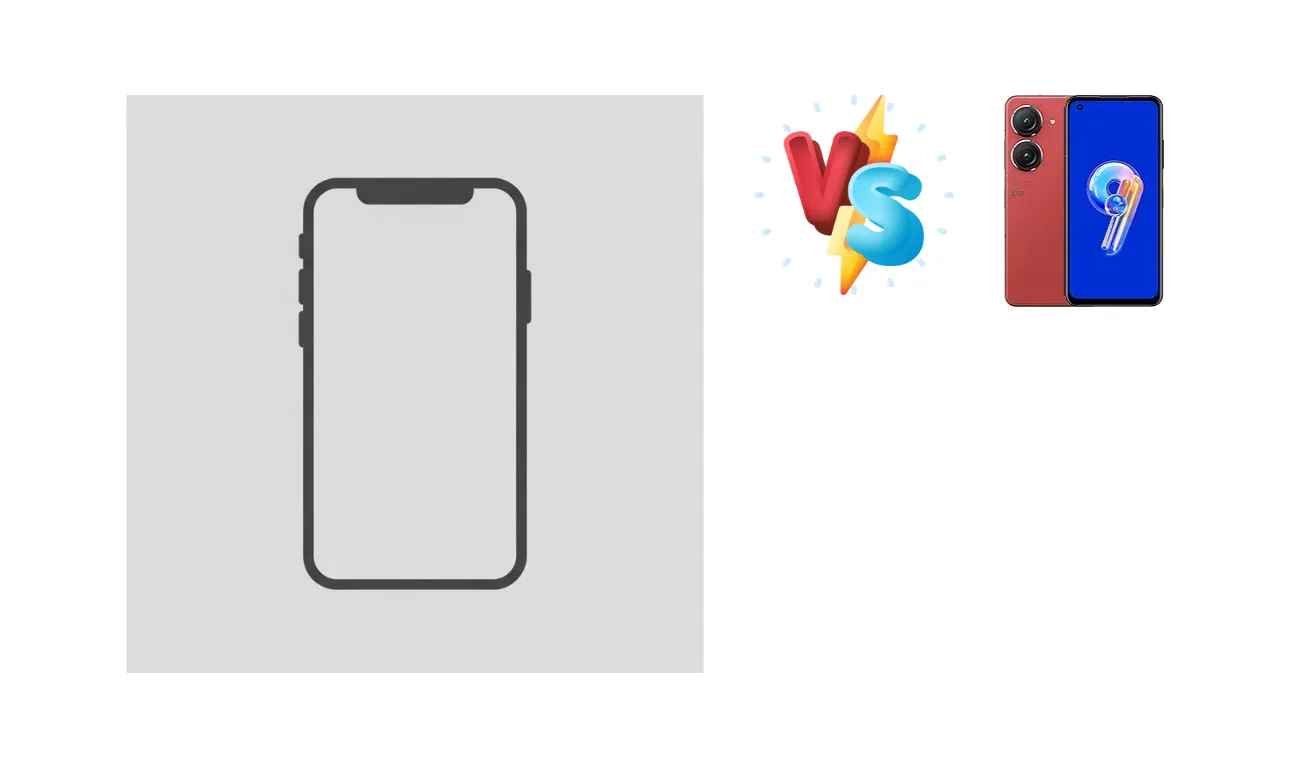
|
🏆 Quick Verdict
The Zenfone 9 takes the crown for overall usability and a more refined experience. While the Red Magic 5S boasts raw gaming power and faster charging, the Zenfone 9’s superior chipset, brighter display, and compact design make it the more versatile choice for most users.
| PHONES | ||
|---|---|---|
| Phone Names | ZTE nubia Red Magic 5S | Asus Zenfone 9 |
| Network | ||
|---|---|---|
| 2G bands | GSM 850 / 900 / 1800 / 1900 - SIM 1 & SIM 2 | GSM 850 / 900 / 1800 / 1900 |
| 3G bands | HSDPA 850 / 900 / 1700(AWS) / 1900 / 2100 | HSDPA 800 / 850 / 900 / 1700(AWS) / 1900 / 2100 |
| 4G bands | 1, 2, 3, 4, 5, 7, 8, 12, 17, 18, 19, 20, 26, 34, 38, 39, 40, 41 | 1, 2, 3, 4, 5, 7, 8, 12, 17, 18, 19, 20, 26, 28, 34, 38, 39, 40, 41, 42 - A version |
| 5G bands | 41, 78, 79 SA/NSA | 1, 2, 3, 5, 7, 8, 12, 20, 28, 38, 77, 78 - A version |
| Speed | HSPA, LTE-A, 5G 7.5 Gbps DL | HSPA 42.2/5.76 Mbps, LTE (5CA) Cat20 2000/211 Mbps, 5G 4.5/0.9 Gbps |
| Technology | GSM / CDMA / HSPA / EVDO / LTE / 5G | GSM / HSPA / LTE / 5G |
| CDMA2000 1xEV-DO | 1, 2, 3, 5, 7, 8, 12, 20, 25, 28, 38, 40, 41, 66, 71, 77, 78 - C version | |
| Launch | ||
|---|---|---|
| Announced | 2020, July 28 | 2022, July 28 |
| Status | Available. Released 2020, August 01 | Available. Released 2022, September 15 |
| Body | ||
|---|---|---|
| Build | Glass front (Gorilla Glass), glass back (Gorilla Glass), aluminum frame | Glass front (Gorilla Glass Victus), plastic back, aluminum frame |
| Dimensions | 168.6 x 78 x 9.8 mm (6.64 x 3.07 x 0.39 in) | 146.5 x 68.1 x 9.1 mm (5.77 x 2.68 x 0.36 in) |
| SIM | Dual SIM (Nano-SIM, dual stand-by) | Nano-SIM + Nano-SIM |
| Weight | 220 g (7.76 oz) | 169 g (5.96 oz) |
| Pressure sensitive zones (300Hz touch-sensing) Built-in cooling fan | IP68 dust/water resistant (up to 1.5m for 30 min) | |
| Display | ||
|---|---|---|
| Protection | Corning Gorilla Glass | Corning Gorilla Glass Victus |
| Resolution | 1080 x 2340 pixels, 19.5:9 ratio (~388 ppi density) | 1080 x 2400 pixels, 20:9 ratio (~445 ppi density) |
| Size | 6.65 inches, 108.6 cm2 (~82.5% screen-to-body ratio) | 5.9 inches, 84.4 cm2 (~84.6% screen-to-body ratio) |
| Type | AMOLED, 144Hz | Super AMOLED, 120Hz, HDR10+, 1100 nits (peak) |
| - | Always-on display | |
| Platform | ||
|---|---|---|
| CPU | Octa-core (1x2.84 GHz Cortex-A77 & 3x2.42 GHz Cortex-A77 & 4x1.80 GHz Cortex-A55) | Octa-core (1x3.19 GHz Cortex-X2 & 3x2.75 GHz Cortex-A710 & 4x1.80 GHz Cortex-A510) |
| Chipset | Qualcomm SM8250 Snapdragon 865 5G (7 nm+) | Qualcomm SM8475 Snapdragon 8+ Gen 1 (4 nm) |
| GPU | Adreno 650 | Adreno 730 |
| OS | Android 10, Redmagic 3.0 | Android 12, upgradable to Android 14 |
| Memory | ||
|---|---|---|
| Card slot | No | No |
| Internal | 128GB 8GB RAM, 256GB 12GB RAM, 256GB 16GB RAM | 128GB 6GB RAM, 128GB 8GB RAM, 256GB 8GB RAM, 256GB 16GB RAM |
| UFS 3.1 | UFS 3.1 | |
| Main Camera | ||
|---|---|---|
| Dual | - | 50 MP, f/1.9, 24mm (wide), 1/1.56", 1.0µm, multi-directional PDAF, gimbal OIS 12 MP, f/2.2, 14mm, 113° (ultrawide), 1/2.55", 1.4µm, dual pixel PDAF |
| Features | LED flash, HDR, panorama | LED flash, HDR, panorama |
| Triple | 64 MP, f/1.8, 26mm (wide), 1/1.72", 0.8µm, PDAF 8 MP, f/2.0, 120˚, 13mm (ultrawide), 1.12µm 2 MP, (macro) | - |
| Video | 8K@30fps, 4K@30/60fps, 1080p@30/60/120/240fps | 8K@24fps, 4K@30/60/120fps, 1080p@30/60/240fps; gyro-EIS, HDR |
| Selfie camera | ||
|---|---|---|
| Features | HDR | - |
| Single | 8 MP, f/2.0, (wide), 1.12µm | 12 MP, f/2.5, 28mm (standard), 1/2.93", 1.22µm, dual pixel PDAF |
| Video | 1080p@30fps | 4K@30fps, 1080p@30/60fps |
| Sound | ||
|---|---|---|
| 3.5mm jack | Yes | Yes |
| 35mm jack | - | Yes |
| Loudspeaker | Yes, with stereo speakers | Yes, with stereo speakers |
| 32-bit/384kHz audio | 24-bit/192kHz audio | |
| Comms | ||
|---|---|---|
| Bluetooth | 5.1, A2DP, aptX, LE | 5.2, A2DP, LE, aptX HD, aptX Adaptive, aptX Lossless |
| NFC | Yes | Yes |
| Positioning | GPS (L1+L5), GLONASS, BDS, GALILEO | GPS (L1+L5), GLONASS (L1), BDS (B1I+B1c+B2a), GALILEO (E1+E5a), QZSS (L1+L5), NavIC (L5) |
| Radio | No | No |
| USB | USB Type-C 3.0, OTG, accessory connector | USB Type-C, OTG |
| WLAN | Wi-Fi 802.11 a/b/g/n/ac/6, dual-band, Wi-Fi Direct | Wi-Fi 802.11 a/b/g/n/ac/6e, dual-band, Wi-Fi Direct |
| Features | ||
|---|---|---|
| Sensors | Fingerprint (under display, optical), accelerometer, gyro, proximity, compass | Fingerprint (side-mounted), accelerometer, gyro, proximity, compass |
| Battery | ||
|---|---|---|
| Charging | 55W wired, 56% in 15 min, 100% in 40 min (advertised) | 30W wired, PD3.0, PPS, QC4 5W reverse wired |
| Type | Li-Po 4500 mAh, non-removable | Li-Po 4300 mAh |
| Misc | ||
|---|---|---|
| Colors | Silver, Pulse | Starry Blue, Moonlight White, Sunset Red, Midnight Black |
| Models | - | AI2202-1A006EU, AI2202, AI2202_B |
| Price | About 540 EUR | £ 619.99 |
| Tests | ||
|---|---|---|
| Battery life | Endurance rating 83h | Endurance rating 108h |
| Camera | Photo / Video | Photo / Video |
| Display | Contrast ratio: Infinite (nominal) | Contrast ratio: Infinite (nominal) |
| Loudspeaker | -22.6 LUFS (Excellent) | -26.7 LUFS (Good) |
| Performance | AnTuTu: 557056 (v8) GeekBench: 13400 (v4.4), 3386 (v5.1) GFXBench: 46fps (ES 3.1 onscreen) | AnTuTu: 1083092 (v9) GeekBench: 4338 (v5.1) GFXBench: 89fps (ES 3.1 onscreen) |
ZTE nubia Red Magic 5S
- Excellent gaming performance
- Fast charging (55W)
- High refresh rate display
- Good battery life (83h endurance)
- Bulky design
- Less efficient chipset
- Camera not a standout
- Lower display brightness
Asus Zenfone 9
- Compact and pocketable design
- Powerful Snapdragon 8+ Gen 1 chipset
- Bright and vibrant display (831 nits)
- Excellent battery life (108h endurance)
- Reverse wireless charging
- Slower charging (30W)
- Camera details are limited
- Potentially less optimized for hardcore gaming
Display Comparison
The Zenfone 9’s display is the clear winner here. While both offer a nominal infinite contrast ratio, the Zenfone 9’s measured 831 nits peak brightness provides significantly better visibility in outdoor conditions. The Red Magic 5S’s display is good, but lacks the Zenfone 9’s punch and clarity. Both have high refresh rates for smooth visuals.
Camera Comparison
Camera performance is generally comparable, both offering Photo/Video capabilities. However, the Zenfone 9's newer image processing and potentially better sensor (details are missing in the provided specs) likely give it a slight advantage in image quality, especially in low-light conditions. The Red Magic 5S's camera is adequate, but not a standout feature.
Performance
The Zenfone 9’s Snapdragon 8+ Gen 1 is a significant upgrade over the Red Magic 5S’s Snapdragon 865. The newer chipset offers improved efficiency and raw processing power, resulting in smoother multitasking and better sustained performance, especially during demanding tasks like gaming. While the Red Magic 5S is still capable, the Zenfone 9 holds a noticeable edge.
Battery Life
Both phones boast impressive endurance ratings (83h and 108h respectively). However, the Zenfone 9's slightly longer endurance rating, combined with its smaller battery capacity, suggests better power efficiency. The Red Magic 5S's 55W charging is faster than the Zenfone 9's 30W, but the difference is less significant than the performance and display advantages of the Zenfone 9.
Buying Guide
The ZTE nubia Red Magic 5S is ideal for hardcore mobile gamers who prioritize performance above all else and don't mind a larger, more specialized device. The Asus Zenfone 9 is perfect for users who want a premium flagship experience in a pocket-friendly form factor, balancing power and portability.