
ZTE nubia Red Magic 5G vs. Samsung Galaxy S20 Ultra: A Deep Dive Comparison
| Phones Images | |||||
|---|---|---|---|---|---|
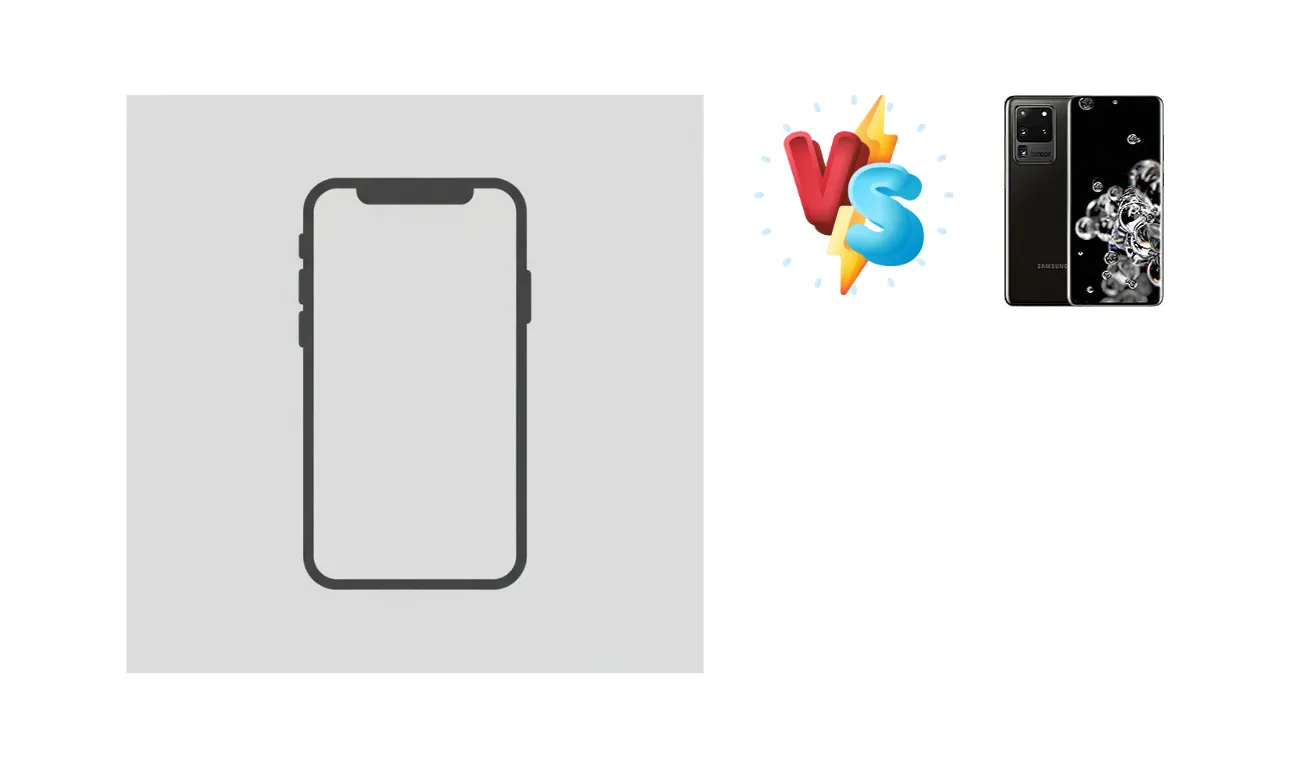
|
🏆 Quick Verdict
For dedicated mobile gamers, the ZTE nubia Red Magic 5G is the clear winner. Its Snapdragon 865, coupled with a superior cooling system and gaming-centric features, delivers sustained performance the S20 Ultra struggles to match. However, the Samsung Galaxy S20 Ultra remains a compelling choice for users prioritizing camera versatility and a more polished, all-around smartphone experience.
| PHONES | ||
|---|---|---|
| Phone Names | ZTE nubia Red Magic 5G | Samsung Galaxy S20 Ultra |
| Network | ||
|---|---|---|
| 2G bands | GSM 850 / 900 / 1800 / 1900 - SIM 1 & SIM 2 | GSM 850 / 900 / 1800 / 1900 |
| 3G bands | HSDPA 850 / 900 / 1700(AWS) / 1800 / 1900 / 2100 | HSDPA 850 / 900 / 1700(AWS) / 1900 / 2100 |
| 4G bands | 1, 2, 3, 4, 5, 7, 8, 20, 12, 17, 18, 19, 26, 34, 38, 39, 40, 41 | 1, 2, 3, 4, 5, 7, 8, 12, 13, 17, 18, 19, 20, 25, 26, 28, 32, 38, 39, 40, 41, 66 |
| 5G bands | 41, 78, 79 SA/NSA | - |
| Speed | HSPA, LTE-A, 5G 7.5 Gbps DL | HSPA 42.2/5.76 Mbps, LTE (7CA) Cat20 2000/200 Mbps |
| Technology | GSM / CDMA / HSPA / EVDO / LTE / 5G | GSM / CDMA / HSPA / EVDO / LTE |
| - | CDMA2000 1xEV-DO | |
| Launch | ||
|---|---|---|
| Announced | 2020, March 12 | 2020, February 11 |
| Status | Available. Released 2020, March 19 | Available. Released 2020, March 15 |
| Body | ||
|---|---|---|
| Build | Glass front (Gorilla Glass), glass back (Gorilla Glass), aluminum frame | Glass front (Gorilla Glass 6), glass back (Gorilla Glass 6), aluminum frame |
| Dimensions | 168.6 x 78 x 9.8 mm (6.64 x 3.07 x 0.39 in) | 166.9 x 76 x 8.8 mm (6.57 x 2.99 x 0.35 in) |
| SIM | Dual SIM (Nano-SIM, dual stand-by) | · Nano-SIM + eSIM· Nano-SIM + Nano-SIM |
| Weight | 218 g (7.69 oz) | 220 g (7.76 oz) |
| - | IP68 dust/water resistant (up to 1.5m for 30 min) | |
| Display | ||
|---|---|---|
| Protection | Corning Gorilla Glass | Corning Gorilla Glass 6 |
| Resolution | 1080 x 2340 pixels, 19.5:9 ratio (~388 ppi density) | 1440 x 3200 pixels, 20:9 ratio (~511 ppi density) |
| Size | 6.65 inches, 108.6 cm2 (~82.5% screen-to-body ratio) | 6.9 inches, 114.0 cm2 (~89.9% screen-to-body ratio) |
| Type | AMOLED, 144Hz | Dynamic AMOLED 2X, 120Hz, HDR10+, 1400 nits (peak) |
| - | Always-on display 120Hz@FHD/60Hz@QHD refresh rate | |
| Platform | ||
|---|---|---|
| CPU | Octa-core (1x2.84 GHz Cortex-A77 & 3x2.42 GHz Cortex-A77 & 4x1.80 GHz Cortex-A55) | Octa-core (2x2.73 GHz Mongoose M5 & 2x2.50 GHz Cortex-A76 & 4x2.0 GHz Cortex-A55)Octa-core (1x2.84 GHz Cortex-A77 & 3x2.42 GHz Cortex-A77 & 4x1.80 GHz Cortex-A55) |
| Chipset | Qualcomm SM8250 Snapdragon 865 5G (7 nm+) | Exynos 990 (7 nm+)Qualcomm SM8250 Snapdragon 865 5G (7 nm+) |
| GPU | Adreno 650 | Mali-G77 MP11Adreno 650 |
| OS | Android 10, Redmagic 3.0 | Android 10, upgradable to Android 13, One UI 5 |
| Memory | ||
|---|---|---|
| Card slot | No | microSDXC (uses shared SIM slot) |
| Internal | 128GB 8GB RAM, 128GB 12GB RAM, 256GB 12GB RAM, 256GB 16GB RAM | 128GB 12GB RAM, 512GB 16GB RAM |
| - | UFS 3.0 | |
| Main Camera | ||
|---|---|---|
| Features | LED flash, HDR, panorama | LED flash, auto-HDR, panorama |
| Triple | 64 MP, f/1.8, 26mm (wide), 1/1.72", 0.8µm, PDAF 8 MP, f/2.0, 13mm (ultrawide), 1.12µm 2 MP, (macro) | 108 MP, f/1.8, 26mm (wide), 1/1.33", 0.8µm, PDAF, OIS 48 MP, f/3.5, 103mm (periscope telephoto), 1/2.0", 0.8µm, PDAF, OIS, 4x optical zoom, 10x hybrid zoom 12 MP, f/2.2, 13mm, 120˚ (ultrawide), 1/2.55" 1.4µm, Super Steady video 0.3 MP, TOF 3D, f/1.0, (depth) |
| Video | 8K@15fps, 4K@30/60fps, 1080p@30/60/120/240fps | 8K@24fps, 4K@30/60fps, 1080p@30/60/240fps, 720p@960fps, HDR10+, stereo sound rec., gyro-EIS & OIS |
| Selfie camera | ||
|---|---|---|
| Features | HDR | HDR |
| Single | 8 MP, f/2.0, (wide), 1.12µm | 40 MP, f/2.2, 26mm (wide), 1/2.8", 0.7µm, PDAF |
| Video | 1080p@30fps | 4K@30/60fps, 1080p@30fps |
| Sound | ||
|---|---|---|
| 3.5mm jack | Yes | No |
| 35mm jack | - | No |
| Loudspeaker | Yes, with stereo speakers | Yes, with stereo speakers |
| - | 32-bit/384kHz audio Tuned by AKG | |
| Comms | ||
|---|---|---|
| Bluetooth | 5.1, A2DP, aptX, LE | 5.0, A2DP, LE |
| NFC | Yes | Yes |
| Positioning | GPS (L1+L5), GLONASS, BDS, GALILEO | GPS, GLONASS, BDS, GALILEO |
| Radio | No | FM radio (USA & Canada only) |
| USB | USB Type-C 3.0, OTG, accessory connector | USB Type-C 3.2, OTG |
| WLAN | Wi-Fi 802.11 a/b/g/n/ac/6, dual-band, Wi-Fi Direct | Wi-Fi 802.11 a/b/g/n/ac/6, dual-band, Wi-Fi Direct |
| Features | ||
|---|---|---|
| Sensors | Fingerprint (under display, optical), accelerometer, gyro, proximity, compass | Fingerprint (under display, ultrasonic), accelerometer, gyro, proximity, compass, barometer |
| - | Samsung DeX, Samsung Wireless DeX (desktop experience support) ANT+ Bixby natural language commands and dictation Samsung Pay (Visa, MasterCard certified) | |
| Battery | ||
|---|---|---|
| Charging | 55W wired, 56% in 15 min, 100% in 40 min (advertised) | 45W wired, PD3.0 15W wireless (Qi) 4.5W reverse wireless |
| Type | Li-Po 4500 mAh, non-removable | Li-Ion 5000 mAh |
| Misc | ||
|---|---|---|
| Colors | Eclipse Black, Hot Rod Red, Black, Mars Red, Cyber Neon, Transparent | Cosmic Grey, Cosmic Black, Cloud White |
| Models | NX659J | SM-G988B/DS |
| Price | $ 890.00 | About 690 EUR |
| SAR | - | 0.94 W/kg (head) 0.95 W/kg (body) |
| SAR EU | - | 0.32 W/kg (head) 1.56 W/kg (body) |
| Tests | ||
|---|---|---|
| Battery life | Endurance rating 83h | - |
| Camera | Photo / Video | - |
| Display | Contrast ratio: Infinite (nominal) | - |
| Loudspeaker | -22.6 LUFS (Excellent) | - |
| Performance | AnTuTu: 557056 (v8) GeekBench: 13370 (v4.4), 3387 (v5.1) GFXBench: 46fps (ES 3.1 onscreen) | - |
ZTE nubia Red Magic 5G
- Superior gaming performance due to active cooling.
- Extremely fast 55W wired charging.
- Long battery endurance (83h rating).
- Limited camera details and likely lower image quality.
- Lack of wireless charging and reverse wireless charging.
Samsung Galaxy S20 Ultra
- Versatile and high-quality camera system.
- Vibrant display with potentially superior color accuracy.
- Wireless charging and reverse wireless charging capabilities.
- Potential for thermal throttling with the Exynos variant.
- Slower wired charging compared to the Red Magic 5G.
Display Comparison
Both devices utilize 7nm+ fabrication, but diverge significantly in display priorities. While the S20 Ultra boasts a higher resolution and likely greater peak brightness (based on Samsung's display expertise), the Red Magic 5G prioritizes a high refresh rate for smoother gaming. The Red Magic 5G's 'Infinite' contrast ratio suggests a focus on deep blacks, potentially utilizing an AMOLED panel, but lacks specific details on peak brightness or color accuracy. The S20 Ultra's display is likely to offer superior color calibration and HDR support, catering to media consumption. The S20 Ultra also benefits from Samsung's display technology, potentially including LTPO for variable refresh rate and power efficiency.
Camera Comparison
The S20 Ultra's camera system is significantly more complex and versatile. While the Red Magic 5G offers photo/video capabilities, details are sparse. The S20 Ultra's strength lies in its large sensor, advanced image processing, and multiple lenses (including telephoto for significant zoom capabilities). The S20 Ultra's OIS is crucial for stable video recording and low-light photography. The Red Magic 5G likely focuses on adequate camera performance for casual use, while the S20 Ultra targets enthusiasts and professionals. The S20 Ultra's 108MP sensor dwarfs any expected sensor on the Red Magic 5G, offering superior detail and dynamic range.
Performance
Both phones can be configured with the Qualcomm Snapdragon 865 5G (7nm+), but the S20 Ultra also offered an Exynos 990 variant. The Red Magic 5G's consistent use of the Snapdragon 865 provides a performance baseline, while the S20 Ultra's Exynos version has historically faced thermal throttling concerns. The Red Magic 5G's active cooling system – a key differentiator – is designed to mitigate throttling, allowing for sustained peak performance during extended gaming sessions. The CPU configurations are similar, with the Red Magic 5G utilizing a Cortex-A77 prime core clocked at 2.84GHz, while the S20 Ultra's Snapdragon variant matches this. However, the Red Magic 5G's thermal design gives it an edge in maintaining those clock speeds.
Battery Life
The Red Magic 5G boasts a remarkable 55W wired charging capability, achieving 56% charge in 15 minutes and 100% in 40 minutes. The S20 Ultra offers 45W wired charging, slower than the Red Magic 5G. The S20 Ultra adds 15W wireless charging and 4.5W reverse wireless charging, features absent on the Red Magic 5G. The Red Magic 5G's endurance rating of 83 hours suggests excellent battery life, likely due to its focus on gaming optimization and potentially a larger battery capacity (though not specified). The S20 Ultra's battery life is good, but the Red Magic 5G's faster charging and potentially larger capacity give it an advantage for heavy users.
Buying Guide
Buy the ZTE nubia Red Magic 5G if you prioritize sustained gaming performance, require fast charging, and appreciate a design focused on minimizing heat. Buy the Samsung Galaxy S20 Ultra if you value a versatile camera system, a vibrant display with broader content support, and a more refined software experience with features like wireless charging and reverse wireless charging.