
ZTE nubia Red Magic 5G vs. Huawei P40 Pro+: A Deep Dive into Gaming and Photography
| Phones Images | |||||
|---|---|---|---|---|---|
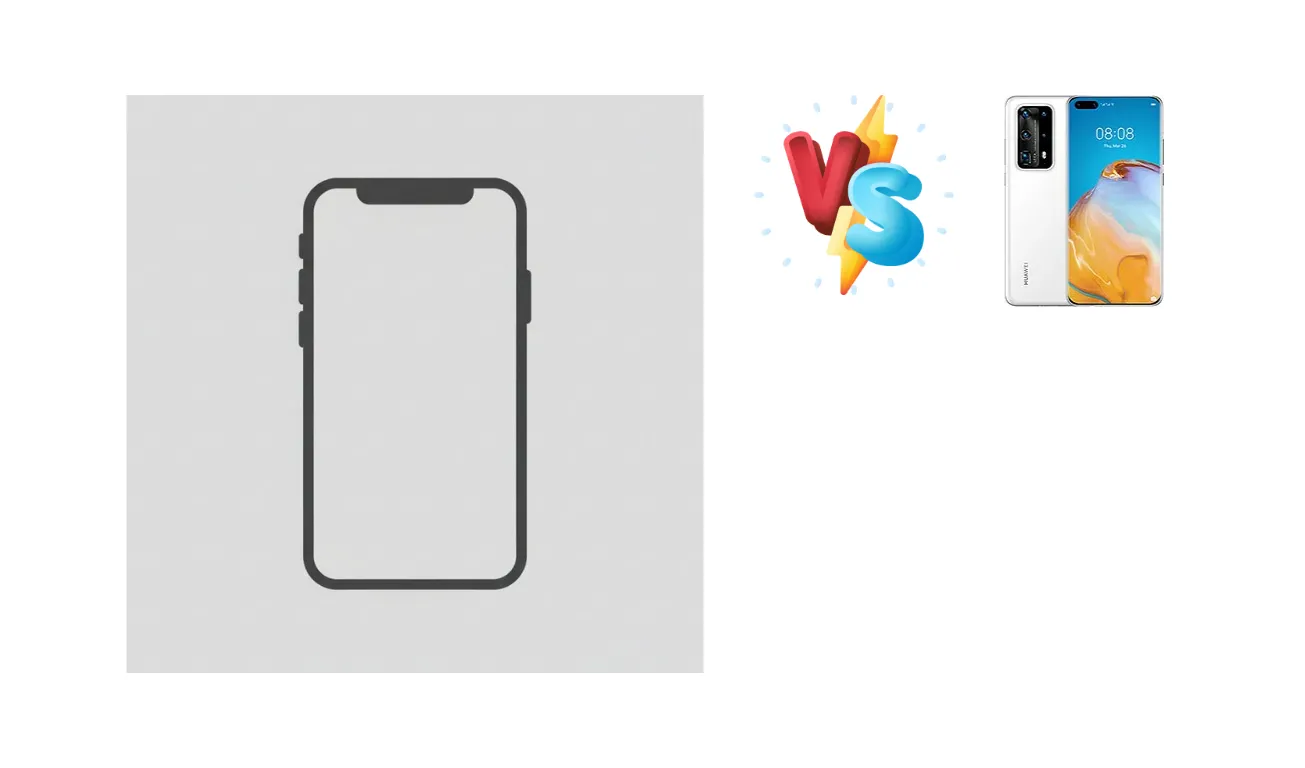
|
🏆 Quick Verdict
For the average user prioritizing a versatile camera and long battery life, the Huawei P40 Pro+ is the better choice. However, dedicated mobile gamers will find the Red Magic 5G’s superior cooling and raw performance, coupled with its faster charging, a more compelling package.
| PHONES | ||
|---|---|---|
| Phone Names | ZTE nubia Red Magic 5G | Huawei P40 Pro+ |
| Network | ||
|---|---|---|
| 2G bands | GSM 850 / 900 / 1800 / 1900 - SIM 1 & SIM 2 | GSM 850 / 900 / 1800 / 1900 |
| 3G bands | HSDPA 850 / 900 / 1700(AWS) / 1800 / 1900 / 2100 | HSDPA 800 / 850 / 900 / 1700(AWS) / 1900 / 2100 |
| 4G bands | 1, 2, 3, 4, 5, 7, 8, 20, 12, 17, 18, 19, 26, 34, 38, 39, 40, 41 | 1, 2, 3, 4, 5, 6, 7, 8, 9, 12, 17, 18, 19, 20, 26, 28, 34, 38, 39, 40, 41 |
| 5G bands | 41, 78, 79 SA/NSA | 1, 3, 28, 38, 41, 77, 78, 79 SA/NSA |
| Speed | HSPA, LTE-A, 5G 7.5 Gbps DL | HSPA, LTE, 5G |
| Technology | GSM / CDMA / HSPA / EVDO / LTE / 5G | GSM / HSPA / LTE / 5G |
| Launch | ||
|---|---|---|
| Announced | 2020, March 12 | 2020, March 26 |
| Status | Available. Released 2020, March 19 | Available. Released 2020, June 06 |
| Body | ||
|---|---|---|
| Build | Glass front (Gorilla Glass), glass back (Gorilla Glass), aluminum frame | Glass front, ceramic back, ceramic frame |
| Dimensions | 168.6 x 78 x 9.8 mm (6.64 x 3.07 x 0.39 in) | 158.2 x 72.6 x 9 mm (6.23 x 2.86 x 0.35 in) |
| SIM | Dual SIM (Nano-SIM, dual stand-by) | · Nano-SIM· Nano-SIM + Nano-SIM |
| Weight | 218 g (7.69 oz) | 226 g (7.97 oz) |
| - | IP68 dust/water resistant (up to 1.5m for 30 mins) | |
| Display | ||
|---|---|---|
| Protection | Corning Gorilla Glass | - |
| Resolution | 1080 x 2340 pixels, 19.5:9 ratio (~388 ppi density) | 1200 x 2640 pixels (~441 ppi density) |
| Size | 6.65 inches, 108.6 cm2 (~82.5% screen-to-body ratio) | 6.58 inches, 105.2 cm2 (~91.6% screen-to-body ratio) |
| Type | AMOLED, 144Hz | OLED, 90Hz, HDR10 |
| Platform | ||
|---|---|---|
| CPU | Octa-core (1x2.84 GHz Cortex-A77 & 3x2.42 GHz Cortex-A77 & 4x1.80 GHz Cortex-A55) | Octa-core (2x2.86 GHz Cortex-A76 & 2x2.36 GHz Cortex-A76 & 4x1.95 GHz Cortex-A55) |
| Chipset | Qualcomm SM8250 Snapdragon 865 5G (7 nm+) | Kirin 990 5G (7 nm+) |
| GPU | Adreno 650 | Mali-G76 MP16 |
| OS | Android 10, Redmagic 3.0 | Android 10, EMUI 10.1, no Google Play Services |
| Memory | ||
|---|---|---|
| Card slot | No | Nano Memory (uses shared SIM slot) |
| Internal | 128GB 8GB RAM, 128GB 12GB RAM, 256GB 12GB RAM, 256GB 16GB RAM | 256GB 8GB RAM, 512GB 8GB RAM |
| - | UFS 3.0 | |
| Main Camera | ||
|---|---|---|
| Features | LED flash, HDR, panorama | Leica optics, color spectrum sensor, LED flash, panorama, HDR |
| Quad | - | 50 MP, f/1.9, 23mm (wide), 1/1.28", 1.22µm, dual pixel PDAF, OIS 8 MP, f/4.4, 240mm (periscope telephoto), PDAF, OIS, 10x optical zoom 8 MP, f/2.4, 80mm (telephoto), PDAF, OIS, 3x optical zoom 40 MP, f/1.8, 18mm (ultrawide), 1/1.54", PDAF TOF 3D, (depth) |
| Triple | 64 MP, f/1.8, 26mm (wide), 1/1.72", 0.8µm, PDAF 8 MP, f/2.0, 13mm (ultrawide), 1.12µm 2 MP, (macro) | - |
| Video | 8K@15fps, 4K@30/60fps, 1080p@30/60/120/240fps | 4K@30/60fps, 1080p@30/60fps, 720@7680fps, 1080p@960fps, HDR; gyro-EIS |
| Selfie camera | ||
|---|---|---|
| Features | HDR | HDR |
| Single | 8 MP, f/2.0, (wide), 1.12µm | 32 MP, f/2.2, 26mm (wide), 1/2.8", 0.8µm, AF IR TOF 3D, (depth/biometrics sensor) |
| Video | 1080p@30fps | 4K@30/60fps, 1080p@30/60fps |
| Sound | ||
|---|---|---|
| 3.5mm jack | Yes | No |
| 35mm jack | - | No |
| Loudspeaker | Yes, with stereo speakers | Yes |
| - | 32-bit/384kHz audio | |
| Comms | ||
|---|---|---|
| Bluetooth | 5.1, A2DP, aptX, LE | 5.1, A2DP, LE |
| Infrared port | - | Yes |
| NFC | Yes | Yes |
| Positioning | GPS (L1+L5), GLONASS, BDS, GALILEO | GPS (L1+L5), GLONASS (L1), BDS (B1I+B1c+B2a), GALILEO (E1+E5a), QZSS (L1+L5), NavIC |
| Radio | No | No |
| USB | USB Type-C 3.0, OTG, accessory connector | USB Type-C 3.1, OTG |
| WLAN | Wi-Fi 802.11 a/b/g/n/ac/6, dual-band, Wi-Fi Direct | Wi-Fi 802.11 a/b/g/n/ac/6, dual-band, Wi-Fi Direct |
| Features | ||
|---|---|---|
| Sensors | Fingerprint (under display, optical), accelerometer, gyro, proximity, compass | Infrared Face ID, fingerprint (under display, optical), accelerometer, gyro, proximity, compass |
| Battery | ||
|---|---|---|
| Charging | 55W wired, 56% in 15 min, 100% in 40 min (advertised) | 40W wired 40W wireless 27W reverse wireless |
| Type | Li-Po 4500 mAh, non-removable | Li-Po 4200 mAh |
| Misc | ||
|---|---|---|
| Colors | Eclipse Black, Hot Rod Red, Black, Mars Red, Cyber Neon, Transparent | White Ceramic, Black Ceramic |
| Models | NX659J | ELS-N39, ELS-AN10 |
| Price | $ 890.00 | About 1000 EUR |
| Tests | ||
|---|---|---|
| Battery life | Endurance rating 83h | Endurance rating 95h |
| Camera | Photo / Video | Photo / Video |
| Display | Contrast ratio: Infinite (nominal) | Contrast ratio: Infinite (nominal) |
| Loudspeaker | -22.6 LUFS (Excellent) | -27.4 LUFS (Good) |
| Performance | AnTuTu: 557056 (v8) GeekBench: 13370 (v4.4), 3387 (v5.1) GFXBench: 46fps (ES 3.1 onscreen) | AnTuTu: 529687 (v8) GeekBench: 3203 (v5.1) GFXBench: 31fps (ES 3.1 onscreen) |
ZTE nubia Red Magic 5G
- Superior gaming performance due to Snapdragon 865 and cooling.
- Faster charging speeds (55W wired).
- Potentially higher refresh rate display for smoother gaming.
- Shorter battery life compared to the P40 Pro+.
- Less versatile camera system.
Huawei P40 Pro+
- Excellent camera system with advanced zoom capabilities.
- Longer battery life (95-hour endurance rating).
- Wireless and reverse wireless charging options.
- Kirin 990 may throttle under sustained gaming loads.
- Slower wired charging (40W).
Display Comparison
Both devices feature displays with an 'Infinite' contrast ratio, suggesting deep blacks. However, the Huawei P40 Pro+ boasts a measured peak brightness of 760 nits, a significant advantage for outdoor visibility. While the Red Magic 5G’s refresh rate isn’t specified, its gaming focus suggests a high refresh rate panel, potentially exceeding the P40 Pro+'s standard 60Hz. The P40 Pro+'s curved display offers a more immersive experience, but the Red Magic 5G’s flat panel may be preferred by gamers for reduced distortion.
Camera Comparison
Both phones offer photo and video capabilities, but their approaches differ significantly. The P40 Pro+ is renowned for its camera system, though specific sensor details are missing in the provided data. Its strength lies in its zoom capabilities and image processing. The Red Magic 5G, while capable, prioritizes gaming features over camera innovation. Without detailed sensor information, it’s safe to assume the P40 Pro+ offers a more versatile and higher-quality camera experience, particularly in challenging lighting conditions.
Performance
The ZTE nubia Red Magic 5G utilizes the Qualcomm Snapdragon 865 5G, built on a 7nm+ process, while the Huawei P40 Pro+ employs the Kirin 990 5G, also on a 7nm+ node. The Snapdragon 865’s CPU configuration (1x2.84 GHz Cortex-A77, 3x2.42 GHz Cortex-A77, 4x1.80 GHz Cortex-A55) is geared towards sustained performance, crucial for gaming. The Kirin 990’s (2x2.86 GHz Cortex-A76, 2x2.36 GHz Cortex-A76, 4x1.95 GHz Cortex-A55) architecture prioritizes a balance between performance and efficiency. The Red Magic 5G’s dedicated cooling system is a key differentiator, mitigating thermal throttling during extended gaming sessions, a potential weakness of the Kirin 990 under heavy load.
Battery Life
The Huawei P40 Pro+ claims an endurance rating of 95 hours, while the Red Magic 5G achieves 83 hours. This suggests the P40 Pro+ offers superior battery life for typical usage. However, the Red Magic 5G compensates with significantly faster charging – 55W wired, achieving 56% charge in 15 minutes and 100% in 40 minutes, compared to the P40 Pro+'s 40W wired, 40W wireless, and 27W reverse wireless. The Red Magic 5G’s faster charging is a boon for gamers who need to quickly top up their battery between sessions.
Buying Guide
Buy the ZTE nubia Red Magic 5G if you need uncompromising gaming performance, a high refresh rate display for competitive play, and prioritize sustained performance over camera versatility. Buy the Huawei P40 Pro+ if you prefer a top-tier camera system with excellent zoom capabilities, a more refined software experience (despite the Google limitations), and longer overall battery endurance for mixed usage.