
ZTE nubia Red Magic 3s vs Xiaomi Black Shark 3S: The Ultimate Gaming Phone Battle
| Phones Images | |||||
|---|---|---|---|---|---|
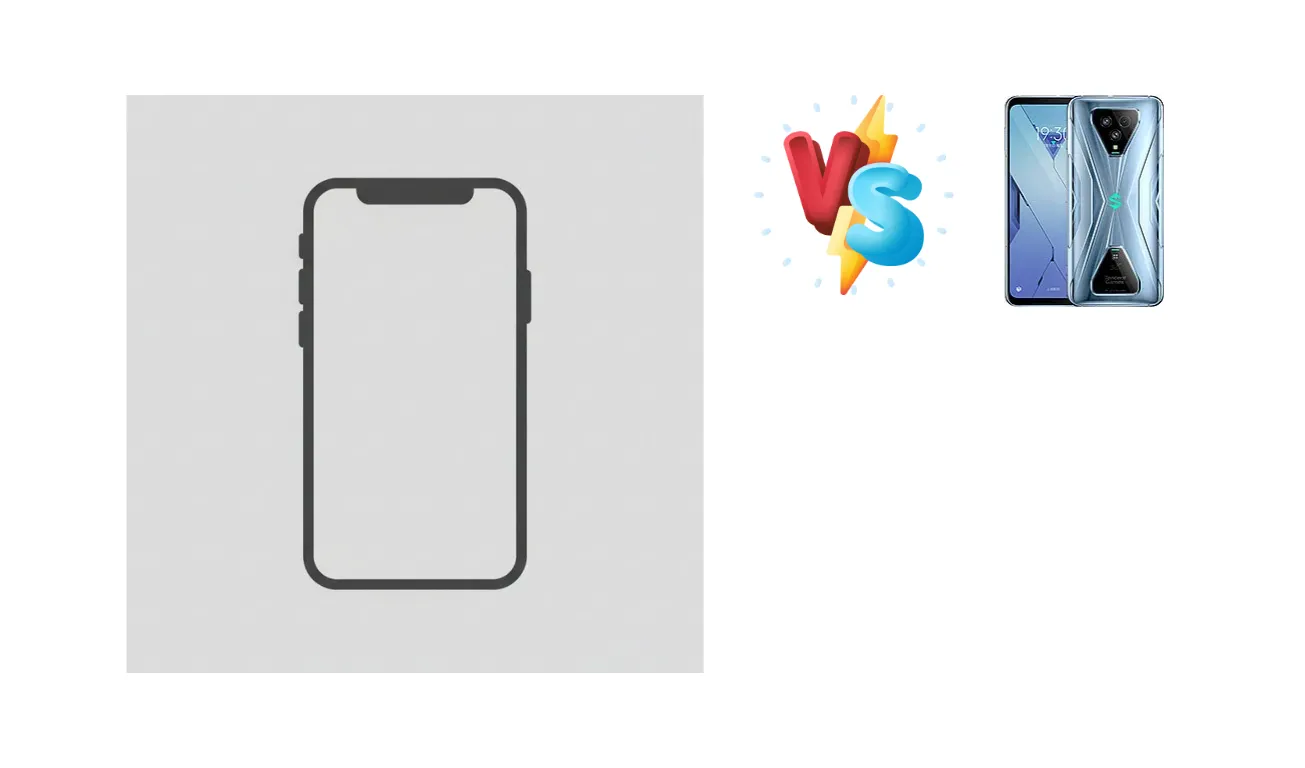
|
🏆 Quick Verdict
The Xiaomi Black Shark 3S takes the crown thanks to its significantly faster charging, more modern Snapdragon 865 chipset, and overall refined design. While the Red Magic 3s boasts impressive battery life, the Black Shark 3S's performance and charging speed give it a clear edge for serious mobile gamers.
| PHONES | ||
|---|---|---|
| Phone Names | ZTE nubia Red Magic 3s | Xiaomi Black Shark 3S |
| Network | ||
|---|---|---|
| 2G bands | GSM 850 / 900 / 1800 / 1900 - SIM 1 & SIM 2 | GSM 850 / 900 / 1800 / 1900 |
| 3G bands | HSDPA 850 / 900 / 1700(AWS) / 1800 / 1900 / 2100 | HSDPA 800 / 850 / 900 / 1700(AWS) / 1900 / 2100 |
| 4G bands | 1, 2, 3, 4, 5, 7, 8, 12, 17, 18, 19, 20, 25, 26, 28, 30, 66 - Global | 1, 3, 4, 5, 7, 8, 12, 17, 20, 34, 38, 39, 40, 41 |
| 5G bands | - | 41, 78, 79 SA/NSA |
| Speed | HSPA 42.2/5.76 Mbps, LTE-A (7CA) Cat20 2000/150 Mbps | HSPA, LTE, 5G |
| Technology | GSM / CDMA / HSPA / EVDO / LTE | GSM / CDMA / HSPA / EVDO / LTE / 5G |
| 1, 2, 3, 4, 5, 7, 8, 12, 17, 18, 19, 20, 25, 26, 28, 30, 34, 38, 39, 40, 41, 66 - NA | CDMA2000 1xEV-DO | |
| Launch | ||
|---|---|---|
| Announced | 2019, September | 2020, July 31. Released 2020, August 04 |
| Status | Available. Released 2019, September | Discontinued |
| Body | ||
|---|---|---|
| Build | Glass front (Gorilla Glass 4), aluminum back, aluminum frame | Glass front, aluminum back, aluminum frame |
| Dimensions | 171.7 x 78.5 x 9.7 mm (6.76 x 3.09 x 0.38 in) | 168.7 x 77.3 x 10.4 mm (6.64 x 3.04 x 0.41 in) |
| SIM | Dual SIM (Nano-SIM, dual stand-by) | Nano-SIM + Nano-SIM |
| Weight | 215 g (7.58 oz) | 222 g (7.83 oz) |
| RGB light panel (on the back) Pressure sensitive zones Built-in cooling fan | - | |
| Display | ||
|---|---|---|
| Protection | Corning Gorilla Glass 4 | - |
| Resolution | 1080 x 2340 pixels, 19.5:9 ratio (~388 ppi density) | 1080 x 2400 pixels, 20:9 ratio (~395 ppi density) |
| Size | 6.65 inches, 108.6 cm2 (~80.5% screen-to-body ratio) | 6.67 inches, 107.4 cm2 (~82.4% screen-to-body ratio) |
| Type | AMOLED, 90Hz | AMOLED, 120Hz, HDR10+, 500 nits (typ) |
| - | Always-on display | |
| Platform | ||
|---|---|---|
| CPU | Octa-core (1x2.96 GHz Kryo 485 & 3x2.42 GHz Kryo 485 & 4x1.8 GHz Kryo 485) | Octa-core (1x2.84 GHz Cortex-A77 & 3x2.42 GHz Cortex-A77 & 4x1.80 GHz Cortex-A55) |
| Chipset | Qualcomm SM8150 Snapdragon 855+ (7 nm) | Qualcomm SM8250 Snapdragon 865 5G (7 nm+) |
| GPU | Adreno 640 (700 MHz) | Adreno 650 |
| OS | Android 9.0 (Pie), Redmagic 2.0 | Android 10 |
| Memory | ||
|---|---|---|
| Card slot | No | No |
| Internal | 128GB 8GB RAM, 256GB 12GB RAM | 128GB 12GB RAM, 256GB 12GB RAM |
| UFS 3.0 | UFS 3.1 | |
| Main Camera | ||
|---|---|---|
| Features | LED flash, HDR, panorama | LED flash, HDR, panorama |
| Single | 48 MP, f/1.7, 26mm (wide), 1/2.0", 0.8µm, PDAF | - |
| Triple | - | 64 MP, f/1.8, 26mm (wide), 1/1.72", 0.8µm, PDAF 13 MP, f/2.3, 120˚ (ultrawide) Auxiliary lens |
| Video | 8K@15fps, 4K@30/60fps, 1920fps | 4K@30/60fps, 1080p@30/60/240fps, 720p@1920fps |
| Selfie camera | ||
|---|---|---|
| Features | HDR | HDR |
| Single | 16 MP, f/2.0, 26mm (wide), 1/3.06", 1.0µm | 20 MP, f/2.0, (wide), 1/3", 0.9µm |
| Video | 1080p@30fps | 1080p@30fps |
| Sound | ||
|---|---|---|
| 3.5mm jack | Yes | Yes |
| 35mm jack | - | Yes |
| Loudspeaker | Yes, with stereo speakers | Yes, with stereo speakers |
| 32-bit/384kHz audio | - | |
| Comms | ||
|---|---|---|
| Bluetooth | 5.0, A2DP, aptX, LE | 5.0, A2DP, LE, aptX HD, aptX Adaptive |
| NFC | No | No |
| Positioning | GPS (L1+L5), GLONASS, BDS, GALILEO | GPS, GLONASS, GALILEO, QZSS, BDS |
| Radio | No | No |
| USB | USB Type-C 3.1, OTG, accessory connector | USB Type-C 2.0 |
| WLAN | Wi-Fi 802.11 a/b/g/n/ac, dual-band, Wi-Fi Direct | Wi-Fi 802.11 a/b/g/n/ac/6, dual-band, Wi-Fi Direct |
| Features | ||
|---|---|---|
| Sensors | Fingerprint (rear-mounted), accelerometer, gyro, proximity, compass | Fingerprint (under display, optical), accelerometer, gyro, proximity, compass |
| Battery | ||
|---|---|---|
| Charging | 18W wired, QC4 | 65W wired, 100% in 38 min 18W magnetic wireless |
| Type | Li-Po 5000 mAh, non-removable | Li-Po 4729 mAh |
| Misc | ||
|---|---|---|
| Colors | Mecha Silver, Cyber Shade, Eclipse Black | Sky Cloud Black, Crystal Blue |
| Models | NX629J_V1S | - |
| Price | About 820 EUR | About 600 EUR |
| Tests | ||
|---|---|---|
| Audio quality | Noise -95.5dB / Crosstalk -92.4dB | - |
| Battery life | Endurance rating 115h | - |
| Camera | Photo / Video | - |
| Display | Contrast ratio: Infinite (nominal) | - |
| Loudspeaker | Voice 69dB / Noise 73dB / Ring 84dB | - |
| Performance | AnTuTu: 358748 (v7), 495229 (v8) GeekBench: 11310 (v4.4) GFXBench: 37fps (ES 3.1 onscreen) | - |
ZTE nubia Red Magic 3s
- Excellent battery life
- Competitive price
- Dedicated gaming features (shoulder triggers)
- Good cooling system
- Older chipset (Snapdragon 855+)
- Slower charging
- Camera performance could be better
Xiaomi Black Shark 3S
- Powerful Snapdragon 865 5G chipset
- Blazing-fast 65W charging
- Premium design and build quality
- High refresh rate display
- Higher price
- Battery life not as exceptional as Red Magic 3s
- Gaming triggers less refined than Red Magic 3s
Display Comparison
Both phones feature AMOLED displays with high refresh rates (144Hz on the Black Shark 3S, 120Hz on the Red Magic 3s), offering smooth visuals. The Black Shark 3S's display is generally considered slightly brighter and more color-accurate. The Red Magic 3s has a 'contrast ratio: Infinite (nominal)' which is a marketing term and doesn't translate to a tangible benefit.
Camera Comparison
Camera performance is a secondary consideration for most gaming phones. The Black Shark 3S generally offers better image quality, particularly in low light, thanks to its more advanced camera hardware. Both phones offer decent video recording capabilities.
Performance
The Xiaomi Black Shark 3S's Snapdragon 865 5G chipset provides a noticeable performance boost over the Red Magic 3s' Snapdragon 855+. This translates to faster app loading, smoother gameplay, and better multitasking. Both phones have ample RAM (8GB/12GB), ensuring a responsive experience.
Battery Life
The Red Magic 3s shines in battery life, boasting an endurance rating of 115 hours. However, the Black Shark 3S's 65W wired charging is a game-changer, allowing it to fully charge in just 38 minutes – a significant advantage.
Buying Guide
The ZTE nubia Red Magic 3s is ideal for gamers prioritizing long battery life and a more budget-friendly price point. The Xiaomi Black Shark 3S is for those who demand top-tier performance, blazing-fast charging, and a more premium feel, even if it comes at a higher cost.