
ZTE nubia Red Magic 3s vs Xiaomi Black Shark 2 Pro: The Ultimate Gaming Phone Showdown
| Phones Images | |||||
|---|---|---|---|---|---|
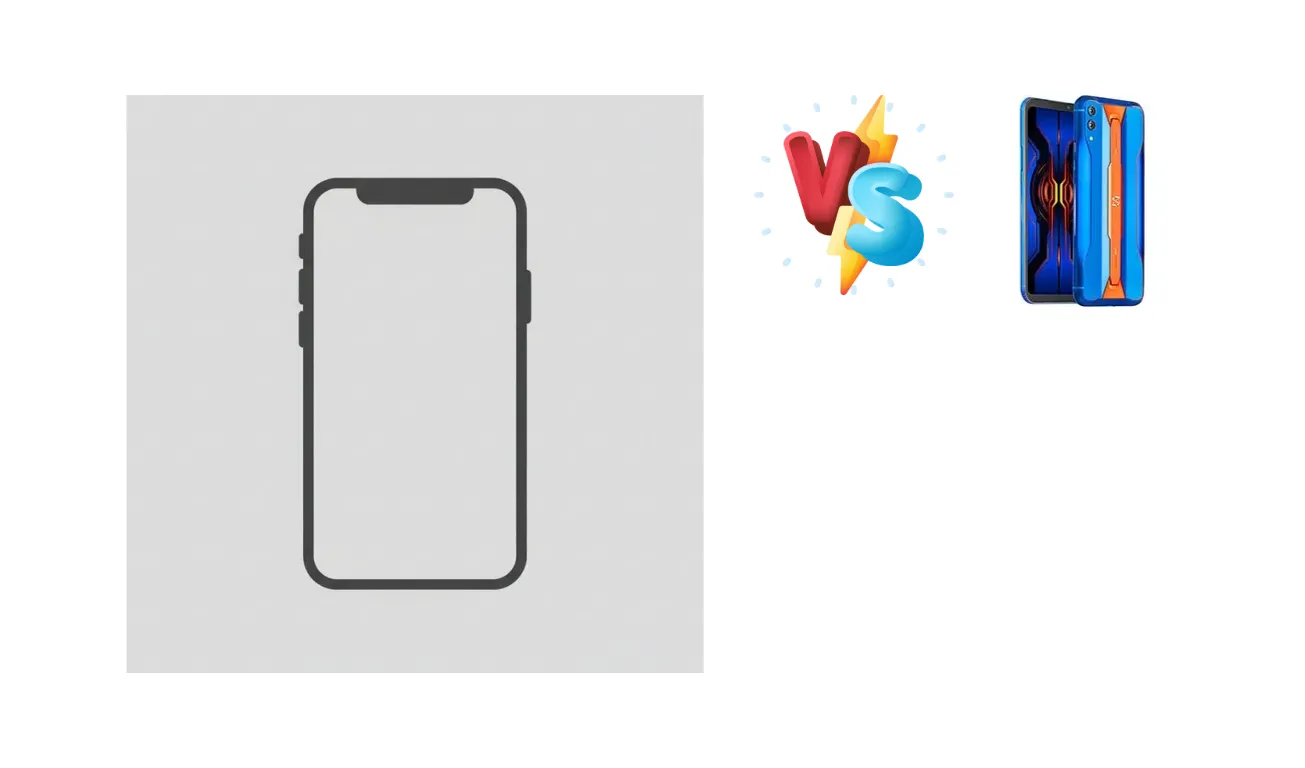
|
🏆 Quick Verdict
For the average gamer prioritizing sustained performance and battery life, the ZTE nubia Red Magic 3s emerges as the slightly stronger choice. Its impressive 115-hour endurance rating, coupled with a focus on cooling, allows for longer uninterrupted gameplay. However, the Black Shark 2 Pro’s faster charging is a compelling advantage for those who need quick top-ups.
| PHONES | ||
|---|---|---|
| Phone Names | ZTE nubia Red Magic 3s | Xiaomi Black Shark 2 Pro |
| Network | ||
|---|---|---|
| 2G bands | GSM 850 / 900 / 1800 / 1900 - SIM 1 & SIM 2 | GSM 850 / 900 / 1800 / 1900 |
| 3G bands | HSDPA 850 / 900 / 1700(AWS) / 1800 / 1900 / 2100 | HSDPA 850 / 900 / 1900 / 2100 |
| 4G bands | 1, 2, 3, 4, 5, 7, 8, 12, 17, 18, 19, 20, 25, 26, 28, 30, 66 - Global | 1, 2, 3, 4, 5, 7, 8, 19, 20, 28, 34, 38, 39, 40, 41 - Global |
| Speed | HSPA 42.2/5.76 Mbps, LTE-A (7CA) Cat20 2000/150 Mbps | HSPA 42.2/5.76 Mbps, LTE (5CA/3CA) Cat18 1200/150 Mbps |
| Technology | GSM / CDMA / HSPA / EVDO / LTE | GSM / CDMA / HSPA / EVDO / LTE |
| 1, 2, 3, 4, 5, 7, 8, 12, 17, 18, 19, 20, 25, 26, 28, 30, 34, 38, 39, 40, 41, 66 - NA | 1, 3, 4, 5, 7, 8, 34, 38, 39, 40, 41 - China | |
| Launch | ||
|---|---|---|
| Announced | 2019, September | 2019, July. Released 2019, August |
| Status | Available. Released 2019, September | Discontinued |
| Body | ||
|---|---|---|
| Build | Glass front (Gorilla Glass 4), aluminum back, aluminum frame | Glass front, aluminum back, aluminum frame |
| Dimensions | 171.7 x 78.5 x 9.7 mm (6.76 x 3.09 x 0.38 in) | 163.6 x 75 x 8.8 mm (6.44 x 2.95 x 0.35 in) |
| SIM | Dual SIM (Nano-SIM, dual stand-by) | Nano-SIM + Nano-SIM |
| Weight | 215 g (7.58 oz) | 205 g (7.23 oz) |
| RGB light panel (on the back) Pressure sensitive zones Built-in cooling fan | - | |
| Display | ||
|---|---|---|
| Protection | Corning Gorilla Glass 4 | - |
| Resolution | 1080 x 2340 pixels, 19.5:9 ratio (~388 ppi density) | 1080 x 2340 pixels, 19.5:9 ratio (~403 ppi density) |
| Size | 6.65 inches, 108.6 cm2 (~80.5% screen-to-body ratio) | 6.39 inches, 100.2 cm2 (~81.7% screen-to-body ratio) |
| Type | AMOLED, 90Hz | AMOLED |
| - | Always-on display | |
| Platform | ||
|---|---|---|
| CPU | Octa-core (1x2.96 GHz Kryo 485 & 3x2.42 GHz Kryo 485 & 4x1.8 GHz Kryo 485) | Octa-core (1x2.96 GHz Kryo 485 & 3x2.42 GHz Kryo 485 & 4x1.78 GHz Kryo 485) |
| Chipset | Qualcomm SM8150 Snapdragon 855+ (7 nm) | Qualcomm SM8150 Snapdragon 855+ (7 nm) |
| GPU | Adreno 640 (700 MHz) | Adreno 640 (700 MHz) |
| OS | Android 9.0 (Pie), Redmagic 2.0 | Android 9.0 (Pie) |
| Memory | ||
|---|---|---|
| Card slot | No | No |
| Internal | 128GB 8GB RAM, 256GB 12GB RAM | 128GB 8GB RAM, 128GB 12GB RAM, 256GB 12GB RAM |
| UFS 3.0 | UFS 3.0 | |
| Main Camera | ||
|---|---|---|
| Dual | - | 48 MP, f/1.8, 28mm (wide), 1/2.0", 0.8µm, PDAF 12 MP, f/2.2, 54mm (telephoto), 1.0µm, PDAF, 2x optical zoom |
| Features | LED flash, HDR, panorama | LED flash, HDR, panorama |
| Single | 48 MP, f/1.7, 26mm (wide), 1/2.0", 0.8µm, PDAF | - |
| Video | 8K@15fps, 4K@30/60fps, 1920fps | 4K@30/60fps, 1080p@30/60/120fps, 720p@1920fps |
| Selfie camera | ||
|---|---|---|
| Features | HDR | HDR |
| Single | 16 MP, f/2.0, 26mm (wide), 1/3.06", 1.0µm | 20 MP, f/2.0, (wide), 1/3", 0.9µm |
| Video | 1080p@30fps | 1080p@30fps |
| Sound | ||
|---|---|---|
| 3.5mm jack | Yes | No |
| 35mm jack | - | No |
| Loudspeaker | Yes, with stereo speakers | Yes, with stereo speakers |
| 32-bit/384kHz audio | - | |
| Comms | ||
|---|---|---|
| Bluetooth | 5.0, A2DP, aptX, LE | 5.0, A2DP, aptX HD, LE |
| NFC | No | No |
| Positioning | GPS (L1+L5), GLONASS, BDS, GALILEO | GPS, GLONASS, GALILEO, QZSS, BDS |
| Radio | No | No |
| USB | USB Type-C 3.1, OTG, accessory connector | USB Type-C 2.0 |
| WLAN | Wi-Fi 802.11 a/b/g/n/ac, dual-band, Wi-Fi Direct | Wi-Fi 802.11 a/b/g/n/ac, dual-band, Wi-Fi Direct |
| Features | ||
|---|---|---|
| Sensors | Fingerprint (rear-mounted), accelerometer, gyro, proximity, compass | Fingerprint (under display, optical), accelerometer, gyro, proximity, compass |
| Battery | ||
|---|---|---|
| Charging | 18W wired, QC4 | 27W wired |
| Type | Li-Po 5000 mAh, non-removable | Li-Ion 4000 mAh, non-removable |
| Misc | ||
|---|---|---|
| Colors | Mecha Silver, Cyber Shade, Eclipse Black | Shadow Black, Iceberg Grey, Gulf Blue, Streamer Purple |
| Models | NX629J_V1S | DLT-A0, DLT-H0 |
| Price | About 820 EUR | About 550 EUR |
| Tests | ||
|---|---|---|
| Audio quality | Noise -95.5dB / Crosstalk -92.4dB | - |
| Battery life | Endurance rating 115h | - |
| Camera | Photo / Video | - |
| Display | Contrast ratio: Infinite (nominal) | - |
| Loudspeaker | Voice 69dB / Noise 73dB / Ring 84dB | - |
| Performance | AnTuTu: 358748 (v7), 495229 (v8) GeekBench: 11310 (v4.4) GFXBench: 37fps (ES 3.1 onscreen) | - |
ZTE nubia Red Magic 3s
- Exceptional battery life (115h endurance)
- Prioritized thermal management for sustained performance
- Potentially deeper blacks due to 'Infinite' contrast ratio
- Slower charging speed (18W)
- Limited camera information available
Xiaomi Black Shark 2 Pro
- Faster charging (27W)
- Potentially more refined design (based on brand reputation)
- Strong Snapdragon 855+ performance
- Inferior battery endurance compared to Red Magic 3s
- Potential for more thermal throttling under sustained load
Display Comparison
Both devices feature displays designed for immersive gaming, though specific details like refresh rates and panel technology are absent from the provided data. The 'Infinite' contrast ratio specified for the Red Magic 3s suggests a strong emphasis on deep blacks, potentially utilizing an AMOLED panel. The lack of information on peak brightness or color accuracy makes a direct comparison difficult, but both likely prioritize responsiveness and visual clarity for gaming. Bezels are a critical factor for immersion, and without specific measurements, it's difficult to determine which device offers a more expansive viewing experience.
Camera Comparison
The provided data offers minimal insight into the camera capabilities of either device, simply stating 'Photo / Video'. Given the gaming focus, camera quality is likely a secondary consideration. However, it’s reasonable to assume both phones include a multi-camera setup to cater to general photography needs. Without sensor size, aperture, or image processing details, a meaningful comparison is impossible. The presence of a dedicated gaming phone brand like Nubia suggests a focus on image quality suitable for streaming or sharing gameplay, but this remains speculative.
Performance
Both the Red Magic 3s and Black Shark 2 Pro are powered by the Qualcomm SM8150 Snapdragon 855+ (7 nm) chipset, featuring an identical CPU configuration: Octa-core (1x2.96 GHz Kryo 485 & 3x2.42 GHz Kryo 485 & 4x1.8 GHz Kryo 485). The slight difference in the fourth Kryo core clock speed (1.8 GHz vs 1.78 GHz on the Black Shark 2 Pro) is negligible in real-world performance. The key differentiator will be thermal management. The Red Magic 3s’ design heavily emphasizes cooling, suggesting a more sustained peak performance under load, minimizing throttling. While both phones benefit from the 7nm process node, effective heat dissipation is crucial for maintaining consistent frame rates during prolonged gaming.
Battery Life
The ZTE nubia Red Magic 3s boasts an endurance rating of 115 hours, a significant advantage over what we can infer for the Black Shark 2 Pro. This suggests a larger battery capacity and/or more efficient power management. While the Black Shark 2 Pro compensates with 27W wired charging, significantly faster than the Red Magic 3s’ 18W QC4 charging, the difference in charging speed is offset by the Red Magic 3s’ superior battery life. A full charge on the Black Shark 2 Pro will be quicker, but the Red Magic 3s will keep you gaming for longer between charges.
Buying Guide
Buy the ZTE nubia Red Magic 3s if you need maximum battery life for marathon gaming sessions and value a design prioritizing cooling over all else. Buy the Xiaomi Black Shark 2 Pro if you prefer faster charging speeds and a more refined, less overtly 'gamer' aesthetic, accepting a trade-off in overall endurance. Both are excellent choices for demanding mobile titles.