
ZTE nubia Red Magic 3s vs. Google Pixel 4 XL: A Deep Dive into Gaming and Photography
| Phones Images | |||||
|---|---|---|---|---|---|
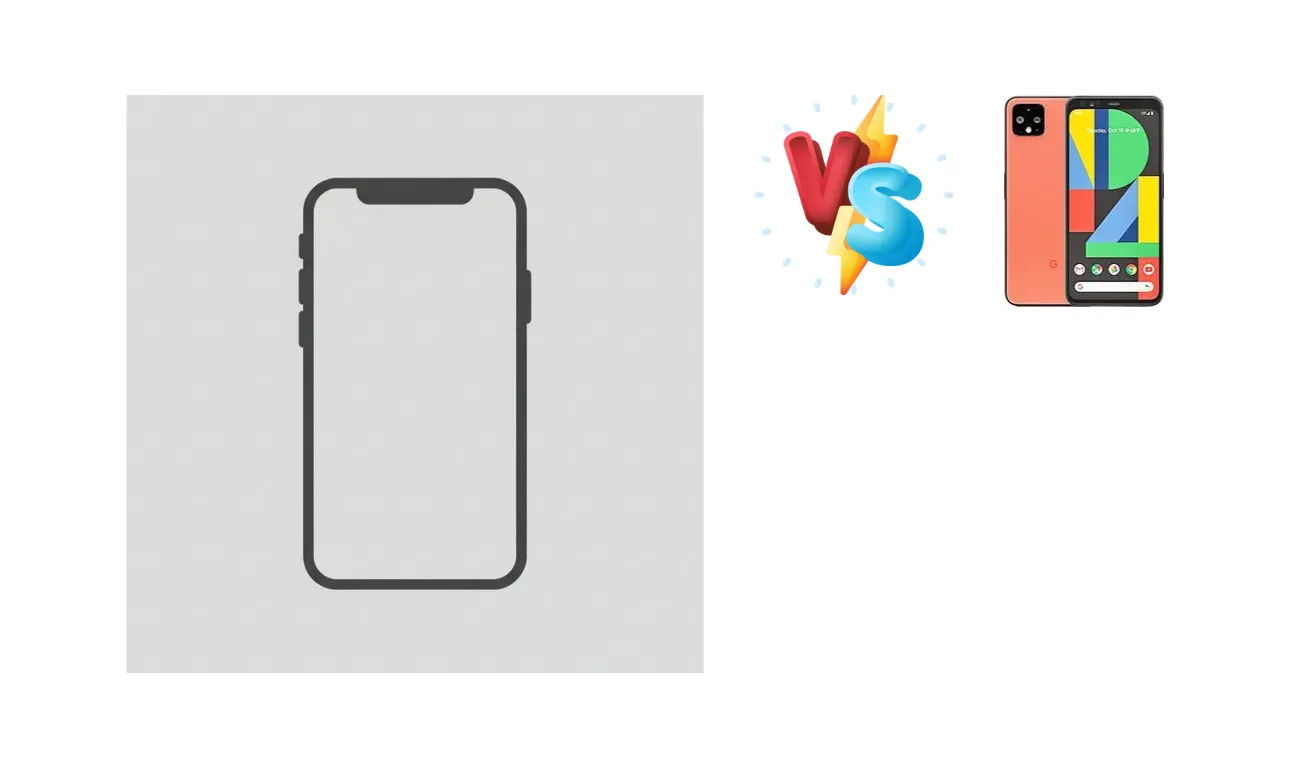
|
🏆 Quick Verdict
For the average user prioritizing camera quality and a clean software experience, the Google Pixel 4 XL remains a compelling choice, especially at its current price. However, the ZTE nubia Red Magic 3s decisively wins for gamers and power users who demand extended playtime and aren't willing to compromise on sustained performance.
| PHONES | ||
|---|---|---|
| Phone Names | ZTE nubia Red Magic 3s | Google Pixel 4 XL |
| Network | ||
|---|---|---|
| 2G bands | GSM 850 / 900 / 1800 / 1900 - SIM 1 & SIM 2 | GSM 850 / 900 / 1800 / 1900 |
| 3G bands | HSDPA 850 / 900 / 1700(AWS) / 1800 / 1900 / 2100 | HSDPA 850 / 900 / 1700(AWS) / 1900 / 2100 |
| 4G bands | 1, 2, 3, 4, 5, 7, 8, 12, 17, 18, 19, 20, 25, 26, 28, 30, 66 - Global | 1, 2, 3, 4, 5, 7, 8, 12, 13, 17, 20, 25, 26, 28, 32, 38, 39, 40, 41, 66, 71 - Global |
| Speed | HSPA 42.2/5.76 Mbps, LTE-A (7CA) Cat20 2000/150 Mbps | HSPA 42.2/5.76 Mbps, LTE (5CA) Cat18 1200/150 Mbps |
| Technology | GSM / CDMA / HSPA / EVDO / LTE | GSM / CDMA / HSPA / EVDO / LTE |
| 1, 2, 3, 4, 5, 7, 8, 12, 17, 18, 19, 20, 25, 26, 28, 30, 34, 38, 39, 40, 41, 66 - NA | 1, 2, 3, 4, 5, 7, 8, 12, 13, 14, 17, 18, 19, 20, 25, 26, 28, 29, 30, 38, 39, 40, 41, 46, 48, 66, 71 - USA | |
| Launch | ||
|---|---|---|
| Announced | 2019, September | 2019, October 15 |
| Status | Available. Released 2019, September | Available. Released 2019, October 22 |
| Body | ||
|---|---|---|
| Build | Glass front (Gorilla Glass 4), aluminum back, aluminum frame | Glass front (Gorilla Glass 5), glass back (Gorilla Glass 5), aluminum frame |
| Dimensions | 171.7 x 78.5 x 9.7 mm (6.76 x 3.09 x 0.38 in) | 160.4 x 75.1 x 8.2 mm (6.31 x 2.96 x 0.32 in) |
| SIM | Dual SIM (Nano-SIM, dual stand-by) | Nano-SIM + eSIM |
| Weight | 215 g (7.58 oz) | 193 g (6.81 oz) |
| RGB light panel (on the back) Pressure sensitive zones Built-in cooling fan | IP68 dust/water resistant (up to 1.5m for 30 min) | |
| Display | ||
|---|---|---|
| Protection | Corning Gorilla Glass 4 | Corning Gorilla Glass 5 |
| Resolution | 1080 x 2340 pixels, 19.5:9 ratio (~388 ppi density) | 1440 x 3040 pixels, 19:9 ratio (~537 ppi density) |
| Size | 6.65 inches, 108.6 cm2 (~80.5% screen-to-body ratio) | 6.3 inches, 98.0 cm2 (~81.3% screen-to-body ratio) |
| Type | AMOLED, 90Hz | P-OLED, 90Hz, HDR |
| - | Always-on display | |
| Platform | ||
|---|---|---|
| CPU | Octa-core (1x2.96 GHz Kryo 485 & 3x2.42 GHz Kryo 485 & 4x1.8 GHz Kryo 485) | Octa-core (1x2.84 GHz Kryo 485 & 3x2.42 GHz Kryo 485 & 4x1.78 GHz Kryo 485) |
| Chipset | Qualcomm SM8150 Snapdragon 855+ (7 nm) | Qualcomm SM8150 Snapdragon 855 (7 nm) |
| GPU | Adreno 640 (700 MHz) | Adreno 640 |
| OS | Android 9.0 (Pie), Redmagic 2.0 | Android 10, upgradable to Android 13 |
| Memory | ||
|---|---|---|
| Card slot | No | No |
| Internal | 128GB 8GB RAM, 256GB 12GB RAM | 64GB 6GB RAM, 128GB 6GB RAM |
| UFS 3.0 | UFS 2.1 | |
| Main Camera | ||
|---|---|---|
| Dual | - | 12.2 MP, f/1.7, 27mm (wide), 1/2.55", 1.4µm, dual pixel PDAF, OIS 16 MP, f/2.4, 50mm (telephoto), 1/3.6", 1.0µm, PDAF, OIS, 2x optical zoom |
| Features | LED flash, HDR, panorama | Dual-LED flash, Pixel Shift, Auto-HDR, panorama |
| Single | 48 MP, f/1.7, 26mm (wide), 1/2.0", 0.8µm, PDAF | - |
| Video | 8K@15fps, 4K@30/60fps, 1920fps | 4K@30fps, 1080p@30/60/120fps, 1080p@30fps (gyro-EIS) |
| Selfie camera | ||
|---|---|---|
| Features | HDR | HDR |
| Single | 16 MP, f/2.0, 26mm (wide), 1/3.06", 1.0µm | 8 MP, f/2.0, 22mm (wide), 1.22µm, no AF TOF 3D, (depth/biometrics sensor) |
| Video | 1080p@30fps | 1080p@30fps |
| Sound | ||
|---|---|---|
| 3.5mm jack | Yes | No |
| 35mm jack | - | No |
| Loudspeaker | Yes, with stereo speakers | Yes, with stereo speakers |
| 32-bit/384kHz audio | - | |
| Comms | ||
|---|---|---|
| Bluetooth | 5.0, A2DP, aptX, LE | 5.0, A2DP, LE, aptX HD |
| NFC | No | Yes |
| Positioning | GPS (L1+L5), GLONASS, BDS, GALILEO | GPS, GLONASS, BDS, GALILEO |
| Radio | No | No |
| USB | USB Type-C 3.1, OTG, accessory connector | USB Type-C 3.1 |
| WLAN | Wi-Fi 802.11 a/b/g/n/ac, dual-band, Wi-Fi Direct | Wi-Fi 802.11 a/b/g/n/ac, dual-band, Wi-Fi Direct, DLNA |
| Features | ||
|---|---|---|
| Sensors | Fingerprint (rear-mounted), accelerometer, gyro, proximity, compass | Face ID, accelerometer, gyro, proximity, compass, barometer |
| Battery | ||
|---|---|---|
| Charging | 18W wired, QC4 | 18W wired, PD2.0 Wireless |
| Type | Li-Po 5000 mAh, non-removable | Li-Po 3700 mAh, non-removable |
| Misc | ||
|---|---|---|
| Colors | Mecha Silver, Cyber Shade, Eclipse Black | Clearly White, Just Black, Oh So Orange |
| Models | NX629J_V1S | G020P, G020, GA01181-US, GA01182-US, GA01180-US |
| Price | About 820 EUR | About 180 EUR |
| Pricing | ||
|---|---|---|
| 128GB 6GB RAM | - | $ 364.52 |
| 64GB 6GB RAM | - | $ 274.99 |
| RENEWED | - | $ 149.00 |
| Tests | ||
|---|---|---|
| Audio quality | Noise -95.5dB / Crosstalk -92.4dB | Noise -93.9 / Crosstalk -94.1 |
| Battery life | Endurance rating 115h | Endurance rating 73h |
| Camera | Photo / Video | Photo / Video |
| Display | Contrast ratio: Infinite (nominal) | - |
| Loudspeaker | Voice 69dB / Noise 73dB / Ring 84dB | Voice 80dB / Noise 78dB / Ring 88dB |
| Performance | AnTuTu: 358748 (v7), 495229 (v8) GeekBench: 11310 (v4.4) GFXBench: 37fps (ES 3.1 onscreen) | AnTuTu: 323305 (v7), 403267 (v8) GeekBench: 10171 (v4.4), 2267 (v5.1) GFXBench: 21fps (ES 3.1 onscreen) |
ZTE nubia Red Magic 3s
- Significantly longer battery life (115h endurance)
- More powerful Snapdragon 855+ chipset
- Potentially better sustained gaming performance due to cooling
- Likely inferior camera quality
- Less refined software experience
Google Pixel 4 XL
- Superior camera quality and image processing
- Clean and fast Android experience
- Wireless charging support
- Significantly shorter battery life (73h endurance)
- Less powerful Snapdragon 855 chipset
Display Comparison
Both phones utilize 7nm Snapdragon 855 series chipsets, but their displays differ significantly. While both lack specified brightness data, the 'Infinite' contrast ratio claim on the Red Magic 3s suggests a focus on deep blacks, likely utilizing an AMOLED panel. The Pixel 4 XL, given Google's history, almost certainly features a high-quality OLED display. The Red Magic 3s' gaming focus likely prioritizes refresh rate over absolute color accuracy, while the Pixel 4 XL aims for a more color-accurate and visually pleasing experience for general consumption. Bezels are likely larger on the Red Magic 3s to accommodate the gaming-centric design.
Camera Comparison
Both devices offer 'Photo / Video' capabilities, but the Pixel 4 XL is renowned for its computational photography prowess. While sensor details are absent, Google’s image processing algorithms consistently deliver exceptional dynamic range and low-light performance. The Red Magic 3s, geared towards gaming, likely features a more standard camera setup, prioritizing functionality over flagship-level image quality. The Pixel 4 XL’s strength lies in its software, leveraging AI to enhance photos, while the Red Magic 3s likely relies more on hardware specifications, which are currently unknown. The absence of detail suggests the Red Magic 3s camera is not a primary selling point.
Performance
The Red Magic 3s boasts the Snapdragon 855+, a step up from the Pixel 4 XL’s Snapdragon 855. The 855+ features a slightly higher clock speed (2.96 GHz vs 2.84 GHz on the Kryo 485 prime core) and improved thermal management. While both share the same CPU core configuration (1x prime, 3x performance, 4x efficiency), the Red Magic 3s’ active cooling system (not specified in the data, but a key feature of the line) allows it to sustain peak performance for longer periods, mitigating throttling during extended gaming sessions. Both utilize octa-core CPUs, but the Red Magic 3s’ chipset is geared towards sustained high performance, a critical advantage for gamers.
Battery Life
Battery life is where the Red Magic 3s truly shines. Its endurance rating of 115 hours dwarfs the Pixel 4 XL’s 73 hours. This substantial difference is likely due to a larger battery capacity in the Red Magic 3s, combined with its focus on power efficiency during gaming. Both support 18W wired charging, but utilize different standards – QC4 for the Red Magic 3s and PD2.0 for the Pixel 4 XL. While the wattage is the same, the efficiency and compatibility of these standards can vary. The Pixel 4 XL also offers wireless charging, a feature absent on the Red Magic 3s. However, the Red Magic 3s’ significantly longer battery life mitigates the convenience of wireless charging for many users.
Buying Guide
Buy the ZTE nubia Red Magic 3s if you need a phone specifically for demanding mobile games, long battery life during intense use, and don't mind a less refined software experience. Buy the Google Pixel 4 XL if you prefer a superior camera system, a clean and fast Android experience, and value Google's software features like Call Screen and Now Playing, even if it means sacrificing battery endurance.