
ZTE nubia Red Magic 3s vs Asus ROG Phone II: The Ultimate Gaming Phone Battle
| Phones Images | |||||
|---|---|---|---|---|---|
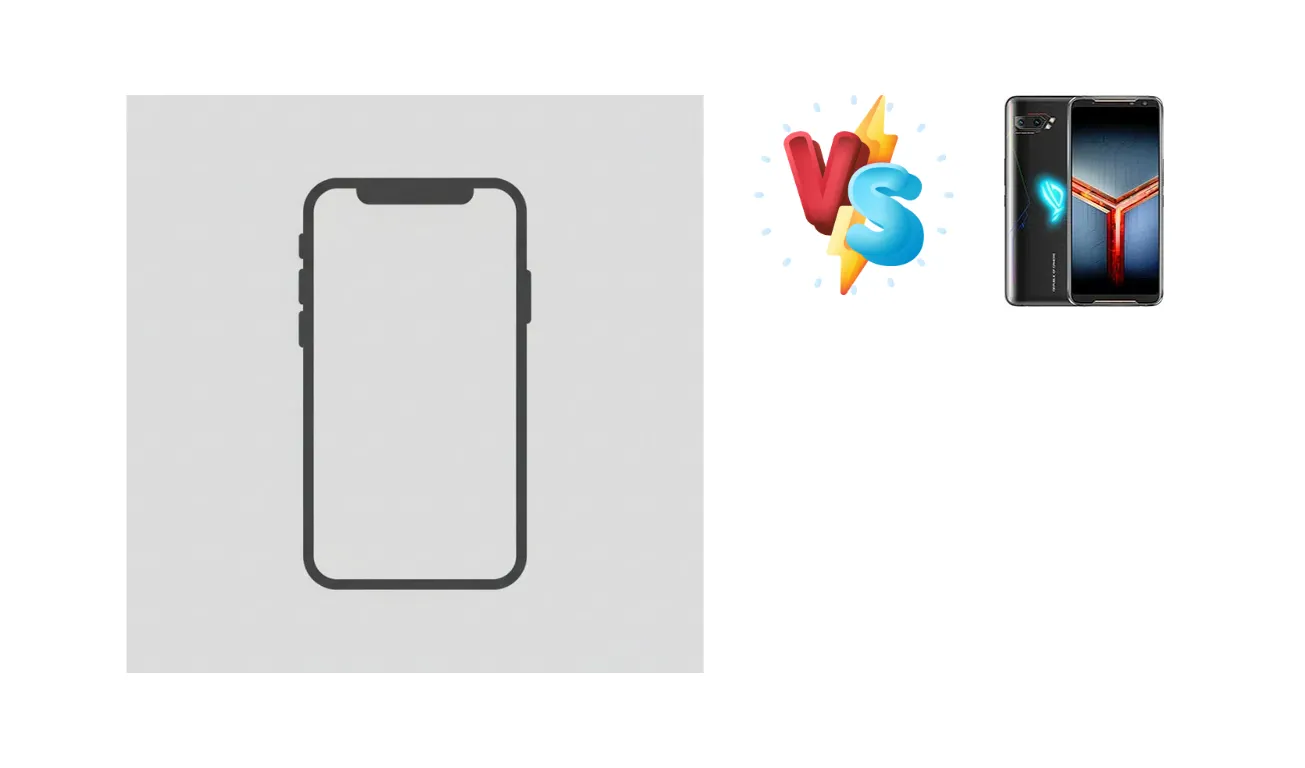
|
🏆 Quick Verdict
The Asus ROG Phone II edges out the Red Magic 3s thanks to its superior display brightness, faster charging, and reverse wireless charging. While both offer incredible performance, the ROG Phone II's overall package is more refined for serious mobile gamers.
| PHONES | ||
|---|---|---|
| Phone Names | ZTE nubia Red Magic 3s | Asus ROG Phone II ZS660KL |
| Network | ||
|---|---|---|
| 2G bands | GSM 850 / 900 / 1800 / 1900 - SIM 1 & SIM 2 | GSM 850 / 900 / 1800 / 1900 |
| 3G bands | HSDPA 850 / 900 / 1700(AWS) / 1800 / 1900 / 2100 | HSDPA 850 / 900 / 1900 / 2100 |
| 4G bands | 1, 2, 3, 4, 5, 7, 8, 12, 17, 18, 19, 20, 25, 26, 28, 30, 66 - Global | 1, 2, 3, 4, 5, 7, 8, 12, 13, 17, 18, 19, 20, 28, 29, 32, 34, 38, 39, 40, 41, 46 |
| Speed | HSPA 42.2/5.76 Mbps, LTE-A (7CA) Cat20 2000/150 Mbps | HSPA 42.2/5.76 Mbps, LTE (5CA) Cat18 (Cat20 Ultimate edition) 1200/150 Mbps |
| Technology | GSM / CDMA / HSPA / EVDO / LTE | GSM / HSPA / LTE |
| 1, 2, 3, 4, 5, 7, 8, 12, 17, 18, 19, 20, 25, 26, 28, 30, 34, 38, 39, 40, 41, 66 - NA | - | |
| Launch | ||
|---|---|---|
| Announced | 2019, September | 2019, July 22. Released 2019, September |
| Status | Available. Released 2019, September | Discontinued |
| Body | ||
|---|---|---|
| Build | Glass front (Gorilla Glass 4), aluminum back, aluminum frame | Glass front (Gorilla Glass 6), glass back (Gorilla Glass 3), aluminum frame |
| Dimensions | 171.7 x 78.5 x 9.7 mm (6.76 x 3.09 x 0.38 in) | 171 x 77.6 x 9.5 mm (6.73 x 3.06 x 0.37 in) |
| SIM | Dual SIM (Nano-SIM, dual stand-by) | Nano-SIM + Nano-SIM |
| Weight | 215 g (7.58 oz) | 240 g (8.47 oz) |
| RGB light panel (on the back) Pressure sensitive zones Built-in cooling fan | RGB light panel (on the back) | |
| Display | ||
|---|---|---|
| Protection | Corning Gorilla Glass 4 | Corning Gorilla Glass 6 |
| Resolution | 1080 x 2340 pixels, 19.5:9 ratio (~388 ppi density) | 1080 x 2340 pixels, 19.5:9 ratio (~391 ppi density) |
| Size | 6.65 inches, 108.6 cm2 (~80.5% screen-to-body ratio) | 6.59 inches, 106.6 cm2 (~80.3% screen-to-body ratio) |
| Type | AMOLED, 90Hz | AMOLED, 1B colors, 120Hz, HDR10 |
| Platform | ||
|---|---|---|
| CPU | Octa-core (1x2.96 GHz Kryo 485 & 3x2.42 GHz Kryo 485 & 4x1.8 GHz Kryo 485) | Octa-core (1x2.96 GHz Kryo 485 & 3x2.42 GHz Kryo 485 & 4x1.78 GHz Kryo 485) |
| Chipset | Qualcomm SM8150 Snapdragon 855+ (7 nm) | Qualcomm SM8150 Snapdragon 855+ (7 nm) |
| GPU | Adreno 640 (700 MHz) | Adreno 640 (700 MHz) |
| OS | Android 9.0 (Pie), Redmagic 2.0 | Android 9.0 (Pie), ROG UI |
| Memory | ||
|---|---|---|
| Card slot | No | No |
| Internal | 128GB 8GB RAM, 256GB 12GB RAM | 128GB 8GB RAM, 256GB 12GB RAM, 512GB 12GB RAM, 1TB 12GB RAM |
| UFS 3.0 | UFS 3.0 | |
| Main Camera | ||
|---|---|---|
| Dual | - | 48 MP, f/1.8, 26mm (wide), 1/2.0", 0.8µm, PDAF 13 MP, f/2.4, 11mm (ultrawide) |
| Features | LED flash, HDR, panorama | Laser AF, LED flash, HDR, panorama |
| Single | 48 MP, f/1.7, 26mm (wide), 1/2.0", 0.8µm, PDAF | 5 MP |
| Video | 8K@15fps, 4K@30/60fps, 1920fps | 4K@30/60fps, 1080p@30/60/240fps, 720p@480fps; gyro-EIS (except @240/480fps) |
| Selfie camera | ||
|---|---|---|
| Features | HDR | Panorama, HDR |
| Single | 16 MP, f/2.0, 26mm (wide), 1/3.06", 1.0µm | 24MP, f/2.2, 0.9µm |
| Video | 1080p@30fps | 1080p@30fps |
| Sound | ||
|---|---|---|
| 3.5mm jack | Yes | Yes |
| 35mm jack | - | Yes |
| Loudspeaker | Yes, with stereo speakers | Yes, with DTS:X stereo speakers (2 dedicated amplifiers) |
| 32-bit/384kHz audio | 24-bit/192kHz audio | |
| Comms | ||
|---|---|---|
| Bluetooth | 5.0, A2DP, aptX, LE | 5.0, A2DP, LE, aptX HD |
| NFC | No | Yes |
| Positioning | GPS (L1+L5), GLONASS, BDS, GALILEO | GPS (L1+L5), GLONASS, BDS, GALILEO, QZSS |
| Radio | No | FM radio |
| USB | USB Type-C 3.1, OTG, accessory connector | USB Type-C 3.1, accessory connector, OTG |
| WLAN | Wi-Fi 802.11 a/b/g/n/ac, dual-band, Wi-Fi Direct | Wi-Fi 802.11 a/b/g/n/ac/ad, dual-band, Wi-Fi Direct |
| Features | ||
|---|---|---|
| Sensors | Fingerprint (rear-mounted), accelerometer, gyro, proximity, compass | Fingerprint (under display, optical), accelerometer, gyro, proximity, compass |
| Battery | ||
|---|---|---|
| Charging | 18W wired, QC4 | 30W wired 10W reverse wired, QC4 |
| Stand-by | - | Up to 150 h (3G) |
| Talk time | - | Up to 5 h (3G) |
| Type | Li-Po 5000 mAh, non-removable | Li-Po 6000 mAh, non-removable |
| Misc | ||
|---|---|---|
| Colors | Mecha Silver, Cyber Shade, Eclipse Black | Matte Black, Glossy Black |
| Models | NX629J_V1S | ASUS_I001D, I001DA, I001DE, I001DC, I001DB, I001D, I001DD |
| Price | About 820 EUR | About 1070 EUR |
| Tests | ||
|---|---|---|
| Audio quality | Noise -95.5dB / Crosstalk -92.4dB | - |
| Battery life | Endurance rating 115h | Endurance rating 114h |
| Camera | Photo / Video | Photo / Video |
| Display | Contrast ratio: Infinite (nominal) | Contrast ratio: Infinite (nominal) |
| Loudspeaker | Voice 69dB / Noise 73dB / Ring 84dB | -19.5 LUFS (Excellent) |
| Performance | AnTuTu: 358748 (v7), 495229 (v8) GeekBench: 11310 (v4.4) GFXBench: 37fps (ES 3.1 onscreen) | AnTuTu: 398935 (v7), 483239 (v8) GeekBench: 10923 (v4.4) GFXBench: 40fps (ES 3.1 onscreen) |
ZTE nubia Red Magic 3s
- Excellent performance
- Dedicated gaming mode
- Aggressive cooling system
- Competitive price
- Slower charging
- Lower display brightness
- Less refined software
- Camera not a standout
Asus ROG Phone II ZS660KL
- Brighter display
- Faster charging (30W)
- Reverse wireless charging
- More robust accessory ecosystem
- Slightly larger battery
- Higher price
- Slightly less aggressive design
- Software can be bloated
Display Comparison
Both phones boast impressive displays with infinite contrast ratios. However, the ROG Phone II shines with a measured 626 nits of peak brightness, making it significantly easier to see in direct sunlight. The Red Magic 3s, while excellent, lacks this brightness advantage. Both feature high refresh rates for smooth gameplay.
Camera Comparison
Camera performance is generally comparable on both phones, offering decent photo and video capabilities. Neither phone excels in this area compared to flagship devices focused on photography, but they are adequate for quick snaps and social media sharing. Low-light performance is acceptable but not exceptional.
Performance
Both devices are powered by the Snapdragon 855+ chipset, ensuring blistering performance in games and demanding applications. The ROG Phone II has a slightly lower clock speed on its smaller Kryo cores (1.78 GHz vs 1.8 GHz), but this difference is negligible in real-world usage. Cooling systems are robust on both, preventing throttling during extended gaming sessions.
Battery Life
Both phones offer exceptional battery life, with endurance ratings of 115h and 114h respectively. The ROG Phone II's larger 6000mAh battery gives it a slight edge in longevity. The ROG Phone II also supports 30W fast charging, significantly faster than the Red Magic 3s' 18W charging. The ROG Phone II also features 10W reverse wireless charging.
Buying Guide
The ZTE nubia Red Magic 3s is ideal for budget-conscious gamers who prioritize raw performance and a dedicated gaming mode. The Asus ROG Phone II is for gamers willing to spend a bit more for a brighter screen, faster charging, and additional features like reverse wireless charging and a more robust ecosystem of accessories.