
ZTE nubia Red Magic 3 vs Xiaomi Black Shark 3 Pro: A Deep Dive for Mobile Gamers
| Phones Images | |||||
|---|---|---|---|---|---|
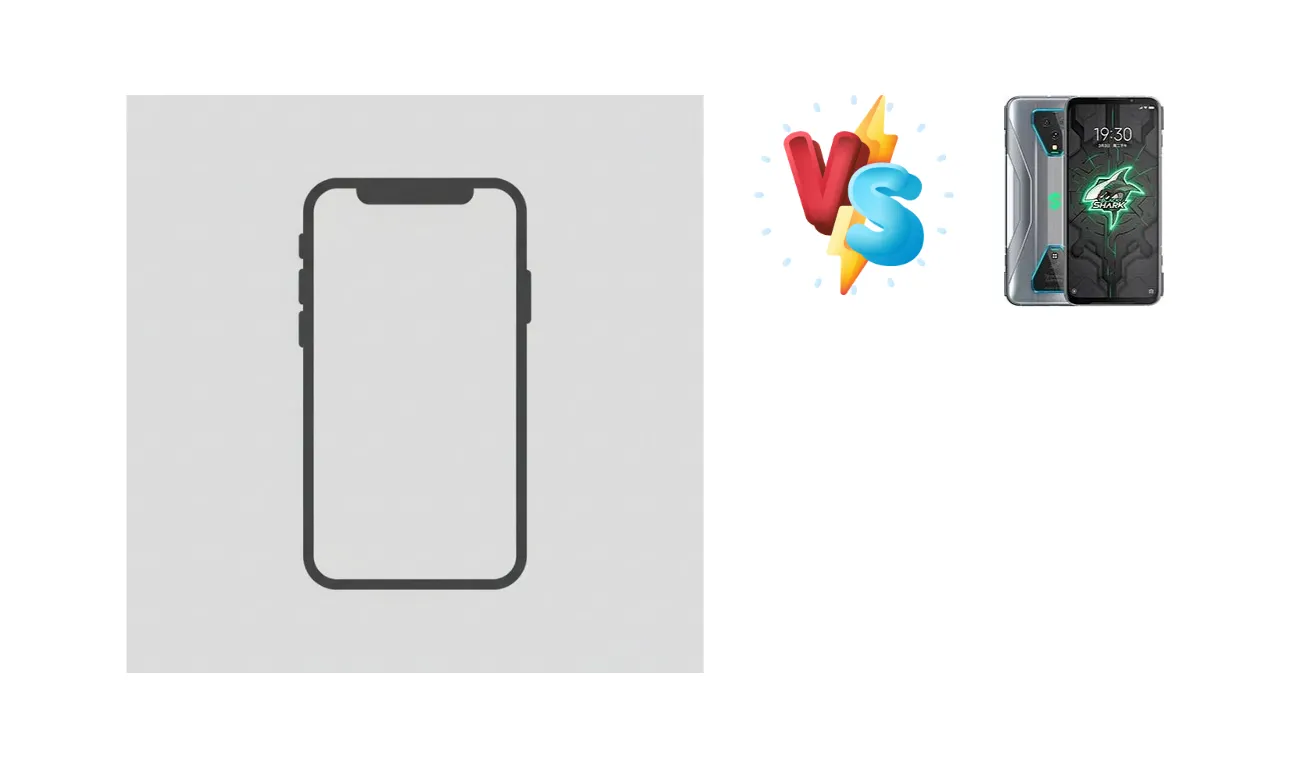
|
🏆 Quick Verdict
For the average gamer prioritizing future-proofing and raw power, the Xiaomi Black Shark 3 Pro is the clear winner. Its Snapdragon 865 offers a significant performance leap over the Red Magic 3’s Snapdragon 855, coupled with blazing-fast 65W charging. However, the Red Magic 3 remains a viable option for budget-conscious gamers.
| PHONES | ||
|---|---|---|
| Phone Names | ZTE nubia Red Magic 3 | Xiaomi Black Shark 3 Pro |
| Network | ||
|---|---|---|
| 2G bands | GSM 850 / 900 / 1800 / 1900 - SIM 1 & SIM 2 | GSM 850 / 900 / 1800 / 1900 |
| 3G bands | HSDPA 850 / 900 / 1700(AWS) / 1800 / 1900 / 2100 | HSDPA 800 / 850 / 900 / 1700(AWS) / 1900 / 2100 |
| 4G bands | 1, 2, 3, 4, 5, 7, 8, 12, 17, 18, 19, 20, 25, 26, 28, 30, 66 - Global | 1, 3, 4, 5, 7, 8, 12, 17, 20, 34, 38, 39, 40, 41 |
| 5G bands | - | 41, 78, 79 SA/NSA |
| Speed | HSPA 42.2/5.76 Mbps, LTE-A (7CA) Cat20 2000/150 Mbps | HSPA, LTE, 5G |
| Technology | GSM / CDMA / HSPA / EVDO / LTE | GSM / CDMA / HSPA / EVDO / LTE / 5G |
| 1, 2, 3, 4, 5, 7, 8, 12, 17, 18, 19, 20, 25, 26, 28, 30, 34, 38, 39, 40, 41, 66 - NA | CDMA2000 1xEV-DO | |
| Launch | ||
|---|---|---|
| Announced | 2019, May | 2020, March 03. Released 2020, March 17 |
| Status | Available. Released 2019, May | Discontinued |
| Body | ||
|---|---|---|
| Build | Glass front (Gorilla Glass 4), aluminum back, aluminum frame | Glass front, aluminum back, aluminum frame |
| Dimensions | 171.7 x 78.5 x 9.7 mm (6.76 x 3.09 x 0.38 in) | 177.8 x 83.3 x 10.1 mm (7.00 x 3.28 x 0.40 in) |
| SIM | Dual SIM (Nano-SIM, dual stand-by) | Nano-SIM + Nano-SIM |
| Weight | 215 g (7.58 oz) | 253 g (8.92 oz) |
| RGB light panel (on the back) Pressure sensitive zones Built-in cooling fan | Physical pop-up gaming triggers | |
| Display | ||
|---|---|---|
| Protection | Corning Gorilla Glass 4 | - |
| Resolution | 1080 x 2340 pixels, 19.5:9 ratio (~388 ppi density) | 1440 x 3120 pixels, 19.5:9 ratio (~484 ppi density) |
| Size | 6.65 inches, 108.6 cm2 (~80.5% screen-to-body ratio) | 7.1 inches, 123.7 cm2 (~83.6% screen-to-body ratio) |
| Type | AMOLED, 90Hz | AMOLED, 90Hz, HDR10+, 500 nits (typ) |
| - | Always-on display | |
| Platform | ||
|---|---|---|
| CPU | Octa-core (1x2.84 GHz Kryo 485 & 3x2.42 GHz Kryo 485 & 4x1.78 GHz Kryo 485) | Octa-core (1x2.84 GHz Cortex-A77 & 3x2.42 GHz Cortex-A77 & 4x1.80 GHz Cortex-A55) |
| Chipset | Qualcomm SM8150 Snapdragon 855 (7 nm) | Qualcomm SM8250 Snapdragon 865 5G (7 nm+) |
| GPU | Adreno 640 | Adreno 650 |
| OS | Android 9.0 (Pie), upgradable to Android 10, Redmagic 3.0 | Android 10 |
| Memory | ||
|---|---|---|
| Card slot | No | No |
| Internal | 64GB 6GB RAM, 128GB 6GB RAM, 128GB 8GB RAM, 256GB 12GB RAM | 256GB 8GB RAM, 256GB 12GB RAM, 512GB 12GB RAM |
| UFS 3.0 | UFS 3.0 | |
| Main Camera | ||
|---|---|---|
| Features | LED flash, HDR, panorama | LED flash, HDR, panorama |
| Single | 48 MP, f/1.7, 26mm (wide), 1/2.0", 0.8µm, PDAF | - |
| Triple | - | 64 MP, f/1.8, 26mm (wide), 1/1.72", 0.8µm, PDAF 13 MP, f/2.3, (ultrawide) Auxiliary lens |
| Video | 8K@15fps, 4K@30/60fps, 1920fps | 4K@30/60fps, 1080p@30/60/240fps, 720p@1920fps |
| Selfie camera | ||
|---|---|---|
| Features | HDR | HDR |
| Single | 16 MP, f/2.0, 26mm (wide), 1/3.06", 1.0µm | 20 MP, f/2.2, (wide), 1/3", 0.9µm |
| Video | 1080p@30fps | 1080p@30fps |
| Sound | ||
|---|---|---|
| 3.5mm jack | Yes | Yes |
| 35mm jack | - | Yes |
| Loudspeaker | Yes, with stereo speakers | Yes, with stereo speakers |
| 32-bit/384kHz audio | - | |
| Comms | ||
|---|---|---|
| Bluetooth | 5.0, A2DP, aptX, LE | 5.0, A2DP, LE, aptX HD, aptX Adaptive |
| NFC | No | No |
| Positioning | GPS (L1+L5), GLONASS, BDS, GALILEO | GPS, GLONASS, GALILEO, QZSS, BDS |
| Radio | No | No |
| USB | USB Type-C 2.0, OTG, accessory connector | USB Type-C 2.0 |
| WLAN | Wi-Fi 802.11 a/b/g/n/ac, dual-band, Wi-Fi Direct | Wi-Fi 802.11 a/b/g/n/ac/6, dual-band, Wi-Fi Direct |
| Features | ||
|---|---|---|
| Sensors | Fingerprint (rear-mounted), accelerometer, gyro, proximity, compass | Fingerprint (under display, optical), accelerometer, gyro, proximity, compass |
| Battery | ||
|---|---|---|
| Charging | 18W wired, QC4 | 65W wired, 100% in 38 min 18W magnetic wireless |
| Type | Li-Po 5000 mAh, non-removable | Li-Po 5000 mAh |
| Misc | ||
|---|---|---|
| Colors | Black, Red, Camouflage, Red/Blue | Phantom Black, Armor Gray |
| Models | NX629J | SHARK MBU-A0, SHARK MBU-H0 |
| Price | About 500 EUR | About 940 EUR |
| Tests | ||
|---|---|---|
| Audio quality | Noise -96.0dB / Crosstalk -92.4dB | - |
| Battery life | Endurance rating 112h | - |
| Camera | Photo / Video | - |
| Loudspeaker | Voice 66dB / Noise 73dB / Ring 86dB | - |
| Performance | AnTuTu: 387726 (v7) GeekBench: 11345 (v4.4) GFXBench: 37fps (ES 3.1 onscreen) | - |
ZTE nubia Red Magic 3
- Excellent battery endurance (112h rating)
- More affordable price point
- Aggressive cooling system for sustained performance
- Older Snapdragon 855 chipset
- Slower 18W charging
- Lacks wireless charging
Xiaomi Black Shark 3 Pro
- Powerful Snapdragon 865 5G chipset
- Blazing-fast 65W wired charging (38 min)
- Convenient 18W magnetic wireless charging
- Potentially shorter battery life compared to Red Magic 3
- Higher price tag
- May run hotter under extreme load (though 865 is more efficient)
Display Comparison
While both devices target gamers, display details are limited in the provided data. However, the Black Shark 3 Pro’s positioning suggests a higher-quality panel, potentially with a higher refresh rate (common in the Black Shark series). The Red Magic 3 likely features a standard 60Hz display. The absence of specifics like peak brightness or color gamut makes a direct comparison difficult, but the Black Shark 3 Pro’s premium status implies a superior visual experience.
Camera Comparison
Both phones list 'Photo / Video' capabilities, offering little to differentiate them. Given the gaming focus, camera quality is likely secondary. Without sensor size or aperture information, it’s safe to assume both offer adequate, but not exceptional, camera performance. The Black Shark 3 Pro, being a more premium device, *may* have a slightly better camera system, but this is speculative based on market positioning.
Performance
The core difference lies in the chipsets. The Xiaomi Black Shark 3 Pro’s Snapdragon 865 5G (7nm+) represents a substantial upgrade over the ZTE nubia Red Magic 3’s Snapdragon 855 (7nm). The 865 features the newer Cortex-A77 cores, offering improved IPC (Instructions Per Clock) and a more powerful Adreno 650 GPU. This translates to higher frame rates and smoother gameplay in demanding titles. While both utilize 7nm fabrication, the ‘+’ in the 865 indicates refinements for better efficiency and performance. The Red Magic 3’s cooling system is crucial to mitigating the 855’s thermal limitations, but the 865 inherently runs cooler and more efficiently.
Battery Life
The Red Magic 3 boasts an endurance rating of 112 hours, suggesting excellent battery life. However, the Black Shark 3 Pro compensates for potentially lower capacity with its significantly faster 65W wired charging, achieving a full charge in just 38 minutes. The Red Magic 3’s 18W charging is considerably slower. Furthermore, the Black Shark 3 Pro adds 18W magnetic wireless charging, a convenience the Red Magic 3 lacks. The faster charging of the Black Shark 3 Pro is a major advantage for gamers who need to quickly top up their battery between sessions.
Buying Guide
Buy the ZTE nubia Red Magic 3 if you need a capable gaming phone on a tight budget and prioritize long endurance over peak performance. It’s ideal for users who enjoy less demanding titles or older games. Buy the Xiaomi Black Shark 3 Pro if you prefer a premium experience with the latest hardware, faster charging, and the ability to handle the most graphically intensive mobile games at maximum settings. This is the phone for competitive gamers and those who want a device that will remain powerful for years to come.