
ZTE nubia Neo 3 vs. Google Pixel 7a: A Deep Dive into Performance, Battery, and Camera
| Phones Images | |||||
|---|---|---|---|---|---|
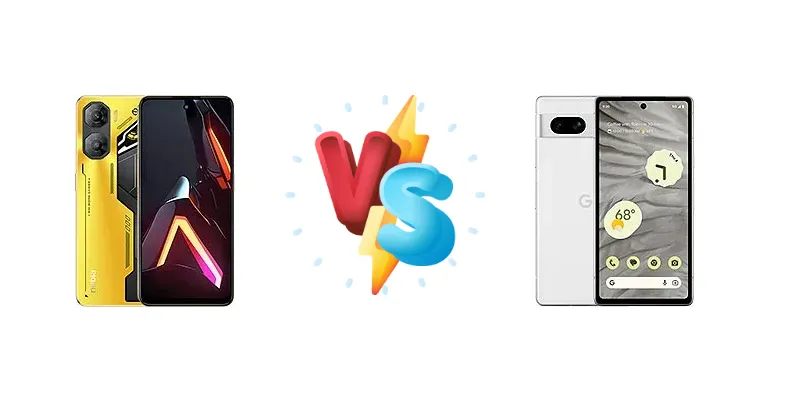
|
🏆 Quick Verdict
For the average user prioritizing camera quality and a polished software experience, the Google Pixel 7a is the clear winner. However, gamers and power users who value extended battery life and sustained performance will find the ZTE nubia Neo 3 a more compelling option.
| PHONES | ||
|---|---|---|
| Phone Names | ZTE nubia Neo 3 | Google Pixel 7a |
| Network | ||
|---|---|---|
| 2G bands | GSM 850 / 900 / 1800 / 1900 | GSM 850 / 900 / 1800 / 1900 |
| 3G bands | HSDPA 850 / 900 / 1900 / 2100 | HSDPA 800 / 850 / 900 / 1700(AWS) / 1900 / 2100 |
| 4G bands | LTE | 1, 2, 3, 4, 5, 7, 8, 12, 13, 14, 17, 20, 25, 26, 28, 29, 30, 38, 40, 41, 48, 66, 71 - GWKK3, G0DZQ |
| 5G bands | SA/NSA | 1, 2, 3, 5, 7, 8, 12, 14, 20, 25, 28, 30, 38, 41, 48, 66, 71, 77, 78 SA/NSA/Sub6 - GWKK3 |
| Speed | HSPA, LTE, 5G | HSPA, LTE, 5G |
| Technology | GSM / HSPA / LTE / 5G | GSM / HSPA / LTE / 5G |
| - | 1, 2, 3, 5, 7, 8, 12, 20, 25, 28, 38, 40, 41, 66, 75, 76, 77, 78, 79 SA/NSA/Sub6 - GHL1X, G82U8 | |
| Launch | ||
|---|---|---|
| Announced | 2025, March 03 | 2023, May 10 |
| Status | Available. Released 2025, June | Available. Released 2023, May 10 |
| Body | ||
|---|---|---|
| Build | - | Glass front (Gorilla Glass 3), aluminum frame, plastic back |
| Dimensions | 168.3 x 76.5 x 8.3 mm (6.63 x 3.01 x 0.33 in) | 152 x 72.9 x 9 mm (5.98 x 2.87 x 0.35 in) |
| SIM | Nano-SIM + Nano-SIM | Nano-SIM + eSIM |
| Weight | - | 193.5 g (6.84 oz) |
| - | IP67 dust/water resistant (up to 1m for 30 min) | |
| Display | ||
|---|---|---|
| Protection | Mohs level 4 | Corning Gorilla Glass 3 |
| Resolution | 1080 x 2392 pixels (~386 ppi density) | 1080 x 2400 pixels, 20:9 ratio (~429 ppi density) |
| Size | 6.8 inches, 111.9 cm2 (~86.9% screen-to-body ratio) | 6.1 inches, 90.7 cm2 (~81.8% screen-to-body ratio) |
| Type | IPS LCD, 120Hz, 1000 nits (HBM) | OLED, HDR, 90Hz |
| - | Always-on display | |
| Platform | ||
|---|---|---|
| CPU | Octa-core (2x2.2 GHz Cortex-A78 & 6x2.0 GHz Cortex-A55) | Octa-core (2x2.85 GHz Cortex-X1 & 2x2.35 GHz Cortex-A78 & 4x1.80 GHz Cortex-A55) |
| Chipset | Unisoc T8300 (6 nm) | Google Tensor G2 (5 nm) |
| GPU | Mali-G57 MP2 | Mali-G710 MP7 |
| OS | Android 15 | Android 13, upgradable to Android 15, up to 5 major Android upgrades |
| Memory | ||
|---|---|---|
| Card slot | No | No |
| Internal | 256GB 8GB RAM | 128GB 8GB RAM |
| - | UFS 3.1 | |
| Main Camera | ||
|---|---|---|
| Dual | 50 MP, f/1.8, (wide), PDAF Auxiliary lens | 64 MP, f/1.9, 26mm (wide), 1/1.73", 0.8µm, dual pixel PDAF, OIS 13 MP, f/2.2, 120˚ (ultrawide), 1.12µm |
| Features | LED flash, HDR, panorama | Dual-LED flash, Pixel Shift, Auto-HDR, panorama |
| Video | 1080p@30fps | 4K@30/60fps, 1080p@30/60/120/240fps, OIS |
| Selfie camera | ||
|---|---|---|
| Features | - | HDR, panorama |
| Single | 16 MP, f/2.0, (wide) | 13 MP, f/2.2, 20mm (ultrawide), 1.12µm |
| Video | 1080p@30fps | 4K@30fps, 1080p@30fps |
| Sound | ||
|---|---|---|
| 3.5mm jack | - | No |
| 35mm jack | No | No |
| Loudspeaker | Yes, with stereo speakers | Yes, with stereo speakers |
| Comms | ||
|---|---|---|
| Bluetooth | 5.4, A2DP, LE | 5.3, A2DP, LE |
| NFC | Yes (market/region dependent) | Yes |
| Positioning | GPS, GLONASS, GALILEO, BDS | GPS, GLONASS, GALILEO, BDS, QZSS, NavIC |
| Radio | Unspecified | No |
| USB | USB Type-C | USB Type-C 3.2 |
| WLAN | Wi-Fi 802.11 a/b/g/n/ac, dual-band | Wi-Fi 802.11 a/b/g/n/ac/6e, tri-band |
| Features | ||
|---|---|---|
| Sensors | Fingerprint (side-mounted), accelerometer, gyro, proximity, compass | Fingerprint (under display, optical), accelerometer, gyro, proximity, compass, barometer |
| Battery | ||
|---|---|---|
| Charging | 33W wired Bypass Charging | 18W wired, PD3.0 7.5W wireless |
| Type | 6000 mAh or 5000 mAh | Li-Po 4385 mAh |
| Misc | ||
|---|---|---|
| Colors | Shadow Black, Cyber Silver, Titanium Gold | Charcoal, Snow, Sea, Coral |
| Models | Z2464N | GWKK3, GHL1X, G0DZQ, G82U8 |
| Price | About 200 EUR | € 179.90 / $ 150.00 / £ 170.00 / ₹ 25,980 |
| EU LABEL | ||
|---|---|---|
| Battery | 60:37h endurance, 800 cycles | - |
| Energy | Class A | - |
| Free fall | Class D (45 falls) | - |
| Repairability | Class B | - |
ZTE nubia Neo 3
- Exceptional battery life (60+ hours)
- Faster 33W charging with bypass charging
- More affordable price point
- Less powerful chipset compared to Tensor G2
- Likely inferior camera performance
Google Pixel 7a
- Superior camera quality and image processing
- Brighter and more color-accurate display
- Powerful Google Tensor G2 chipset
- Shorter battery life
- Slower 18W charging
Display Comparison
The Pixel 7a boasts a significantly brighter display, reaching a measured 1070 nits, compared to the nubia Neo 3’s unspecified brightness. This makes the Pixel 7a far more usable outdoors under direct sunlight. While the nubia Neo 3’s panel specifications are missing, the Pixel 7a’s OLED panel delivers vibrant colors and excellent contrast. The Pixel 7a’s display is likely to have a higher pixel density, resulting in sharper images and text, though this is unconfirmed for the nubia Neo 3. The Pixel 7a’s display is a clear advantage for media consumption and general usability.
Camera Comparison
The Pixel 7a’s camera system is a standout feature, leveraging Google’s computational photography prowess. While specific sensor details are missing for both devices, the Pixel 7a’s image processing algorithms are renowned for their dynamic range, detail preservation, and accurate color reproduction. The nubia Neo 3’s camera capabilities are less emphasized, suggesting a more basic imaging experience. The Pixel 7a’s video recording capabilities are also expected to be superior, benefiting from the Tensor G2’s image signal processor (ISP). The Pixel 7a is the clear choice for photography enthusiasts.
Performance
The Google Pixel 7a’s Tensor G2 chipset, fabricated on a 5nm process, offers a substantial performance advantage over the nubia Neo 3’s Unisoc T8300 (6nm). The Tensor G2’s CPU configuration – 2x2.85 GHz Cortex-X1, 2x2.35 GHz Cortex-A78, and 4x1.80 GHz Cortex-A55 – is demonstrably faster than the nubia Neo 3’s 2x2.2 GHz Cortex-A78 & 6x2.0 GHz Cortex-A55. This translates to snappier app launches, smoother multitasking, and superior performance in demanding applications. While the nubia Neo 3’s chipset is adequate for everyday tasks, the Pixel 7a’s Tensor G2 provides a more future-proof and responsive experience. The 5nm process also contributes to better thermal efficiency, potentially reducing throttling during prolonged gaming.
Battery Life
The ZTE nubia Neo 3 boasts an impressive 60:37h endurance rating, significantly exceeding the Pixel 7a’s older 76h rating (which is likely conservative). This suggests the nubia Neo 3 can comfortably last through a full day of heavy use, even with demanding gaming. The nubia Neo 3 also supports 800 charge cycles, indicating a longer lifespan. While the Pixel 7a offers 18W wired charging with PD3.0 and 7.5W wireless charging, the nubia Neo 3’s 33W wired charging is faster, and its bypass charging feature minimizes heat generation during charging. The nubia Neo 3 is the clear winner in battery endurance and charging speed.
Buying Guide
Buy the ZTE nubia Neo 3 if you need exceptional battery life exceeding 60 hours, prioritize uninterrupted gaming sessions, and appreciate a more affordable price point. Buy the Google Pixel 7a if you prefer a superior camera system with Google’s renowned image processing, a brighter and more color-accurate display, and a seamless software experience with guaranteed updates.