
ZTE nubia Music 2 vs Motorola Moto G Stylus 5G (2023): A Deep Dive into Battery and Performance
| Phones Images | |||||
|---|---|---|---|---|---|
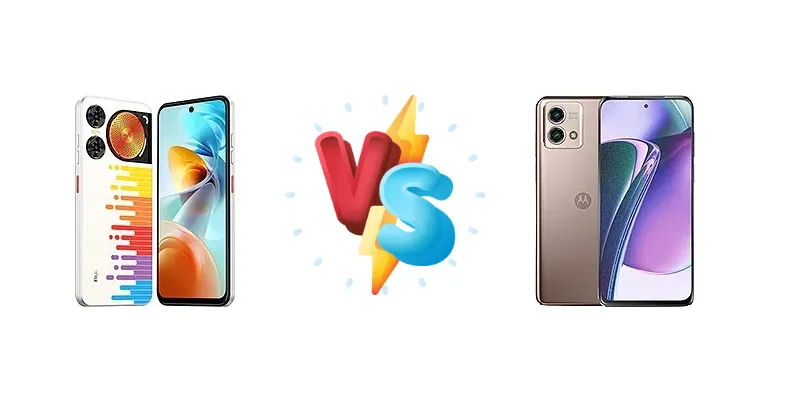
|
🏆 Quick Verdict
For users prioritizing all-day (and multi-day) battery life above all else, the ZTE nubia Music 2 is the clear winner. However, the Motorola Moto G Stylus 5G (2023) offers a more responsive experience thanks to its newer Snapdragon chipset and faster charging, making it ideal for those who value performance and convenience.
| PHONES | ||
|---|---|---|
| Phone Names | ZTE nubia Music 2 | Motorola Moto G Stylus 5G (2023) |
| Network | ||
|---|---|---|
| 2G bands | GSM 850 / 900 / 1800 / 1900 | GSM 850 / 900 / 1800 / 1900 |
| 3G bands | HSDPA 850 / 900 / 1900 / 2100 | HSDPA 850 / 900 / 1700(AWS) / 1900 / 2100 |
| 4G bands | 1, 3, 5, 7, 8, 20, 28, 38, 40, 41 | 1, 2, 3, 4, 5, 7, 8, 12, 13, 14, 17, 18, 19, 20, 25, 26, 29, 30, 38, 39, 40, 41, 48, 66, 71 |
| 5G bands | - | 1, 2, 3, 5, 7, 12, 13, 14, 25, 26, 29, 30, 38, 41, 48, 66, 70, 71, 77, 78 SA/NSA |
| Speed | HSPA, LTE | HSPA, LTE, 5G |
| Technology | GSM / HSPA / LTE | GSM / HSPA / LTE / 5G |
| Launch | ||
|---|---|---|
| Announced | 2025, January 07 | 2023, May 30 |
| Status | Available. Released 2025, January 07 | Available. Released 2023, June 02 |
| Body | ||
|---|---|---|
| Build | - | Glass front, plastic frame, plastic back |
| Dimensions | 163.6 x 74.9 x 8.6 mm (6.44 x 2.95 x 0.34 in) | 162.8 x 73.8 x 9.2 mm (6.41 x 2.91 x 0.36 in) |
| SIM | Nano-SIM + Nano-SIM | Nano-SIM |
| Weight | 202 g (7.13 oz) | 202 g (7.13 oz) |
| Display | ||
|---|---|---|
| Protection | Mohs level 4 | - |
| Resolution | 720 x 1612 pixels, 20:9 ratio (~264 ppi density) | 1080 x 2400 pixels, 20:9 ratio (~399 ppi density) |
| Size | 6.7 inches, 107.8 cm2 (~88.0% screen-to-body ratio) | 6.6 inches, 105.2 cm2 (~87.5% screen-to-body ratio) |
| Type | IPS LCD, 120Hz | IPS LCD, 120Hz |
| Platform | ||
|---|---|---|
| CPU | Octa-core (2x1.6 GHz Cortex-A75 & 6x1.6 GHz Cortex-A55) | Octa-core (4x2.2 GHz Cortex-A78 & 4x1.8 GHz Cortex-A55) |
| Chipset | Unisoc T7200 (12 nm) | Qualcomm SM6450 Snapdragon 6 Gen 1 (4 nm) |
| GPU | Mali-G57 MP1 | Adreno 710 |
| OS | Android 14 | Android 13, planned upgrade to Android 14 |
| Memory | ||
|---|---|---|
| Card slot | microSDXC (uses shared SIM slot) | microSDXC (dedicated slot) |
| Internal | 128GB 4GB RAM | 64GB 4GB RAM, 128GB 4GB RAM, 128GB 6GB RAM, 256GB 6GB RAM |
| Main Camera | ||
|---|---|---|
| Dual | - | 50 MP, f/1.9, (wide), 1.0µm, PDAF 8 MP, f/2.2, (ultrawide), 1/4.0", 1.12µm, AF |
| Features | LED flash, HDR | LED flash, HDR, panorama |
| Single | 50 MP, f/1.8, (wide), PDAF Auxiliary lens | - |
| Video | 1080p@30fps | 4K@30fps, 1080p@30/60fps |
| Selfie camera | ||
|---|---|---|
| Features | - | HDR |
| Single | 5 MP, f/2.4, (wide) | 16 MP, f/2.5, (wide), 1.0µm |
| Video | 720p@30fps | 1080p@30fps |
| Sound | ||
|---|---|---|
| 35mm jack | Yes | Yes |
| Loudspeaker | Yes, with stereo speakers (3 speakers) | Yes, with stereo speakers |
| Comms | ||
|---|---|---|
| Bluetooth | 5.2, A2DP, LE | 5.1, A2DP, LE |
| NFC | Yes (market/region dependent) | Yes |
| Positioning | GPS | GPS (L1+L5), GALILEO |
| Radio | Unspecified | FM radio |
| USB | USB Type-C 2.0, OTG | USB Type-C 2.0 |
| WLAN | Wi-Fi 802.11 b/g/n/ac, dual-band | Wi-Fi 802.11 a/b/g/n/ac, dual-band |
| Features | ||
|---|---|---|
| Sensors | Fingerprint (side-mounted); unspecified sensors | Fingerprint (side-mounted), accelerometer, gyro, proximity, compass, barometer |
| Battery | ||
|---|---|---|
| Charging | 10W wired | 20W wired |
| Type | 5000 mAh | Li-Po 5000 mAh |
| Misc | ||
|---|---|---|
| Colors | Yellow/Blue/Red, White | Cosmic Black, Rose Champagne |
| Models | Z2460 | XT2315-1, XT2315-4 |
| Price | € 87.51 / £ 78.27 | $ 93.43 |
| EU LABEL | ||
|---|---|---|
| Battery | 49:27h endurance, 800 cycles | - |
| Energy | Class B | - |
| Free fall | Class D (45 falls) | - |
| Repairability | Class B | - |
ZTE nubia Music 2
- Exceptional battery life (49:27h endurance)
- High battery cycle count (800 cycles)
- Potentially lower cost due to older chipset
- Slower processor (Unisoc T7200)
- Slow charging speed (10W)
- Likely less efficient chipset (12nm)
Motorola Moto G Stylus 5G (2023)
- More powerful processor (Snapdragon 6 Gen 1)
- Faster charging (20W)
- More efficient chipset (4nm)
- Shorter battery life compared to nubia Music 2
- Potentially higher price
- May require more frequent charging
Display Comparison
Display specifications are not provided, so a direct comparison is limited. However, given the price points, both likely utilize LCD panels. The nubia Music 2’s focus on endurance suggests a potentially lower-brightness panel to conserve power. The Moto G Stylus 5G, being a newer device, may benefit from improved color accuracy and viewing angles, but this is speculative without further data.
Camera Comparison
Camera details are absent, but we can infer that both phones target the budget segment. The Motorola, given its newer release, likely incorporates improved image processing algorithms. Without sensor size or aperture information, it’s difficult to assess image quality definitively. However, the Snapdragon’s ISP (Image Signal Processor) generally provides better noise reduction and dynamic range compared to Unisoc’s offerings. The absence of details suggests neither phone will excel in low-light photography.
Performance
The Motorola Moto G Stylus 5G (2023) boasts a significant advantage in processing power with its Qualcomm SM6450 Snapdragon 6 Gen 1 (4nm). Its octa-core CPU, featuring four Cortex-A78 cores clocked at 2.2 GHz, outperforms the ZTE nubia Music 2’s Unisoc T7200 (12nm) which utilizes older Cortex-A75 cores at 1.6 GHz. The 4nm fabrication process of the Snapdragon chip translates to superior power efficiency and reduced thermal throttling during sustained workloads, benefiting gamers and multitasking users. The nubia’s Unisoc chip, while adequate for basic tasks, will likely exhibit more noticeable slowdowns under heavy load.
Battery Life
The ZTE nubia Music 2’s standout feature is its exceptional 49:27h endurance rating, coupled with a claimed 800 charge cycles, indicating long-term battery health. While the battery capacity isn’t specified, this endurance suggests a large battery optimized for efficiency. The Motorola Moto G Stylus 5G (2023) compensates for potentially lower endurance with its 20W wired charging, significantly faster than the nubia’s 10W charging. This means the Motorola can replenish its battery much quicker, reducing downtime, even if it doesn’t last as long on a single charge.
Buying Guide
Buy the ZTE nubia Music 2 if you need a phone that can reliably last through extended periods without access to a charger – perfect for travelers, field workers, or anyone who dislikes daily charging. Buy the Motorola Moto G Stylus 5G (2023) if you prefer a smoother, more efficient user experience with faster app loading times, 5G connectivity, and the convenience of quicker charging, even if it means charging more frequently.