
OnePlus 12R vs. ZTE nubia Focus Pro: A Deep Dive into Performance and Value
| Phones Images | |||||
|---|---|---|---|---|---|
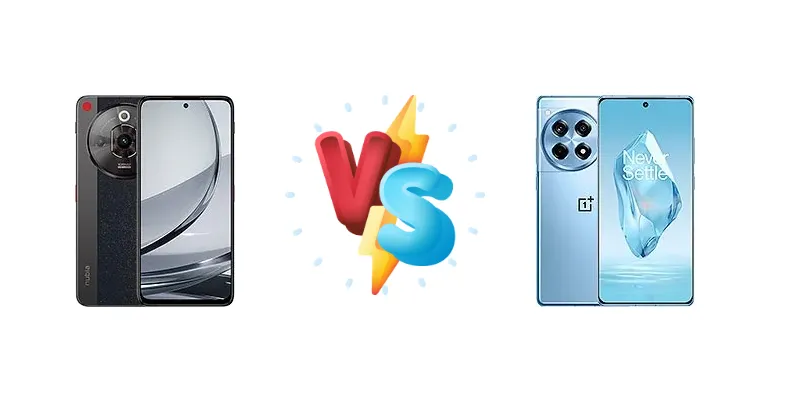
|
🏆 Quick Verdict
For most users, the OnePlus 12R is the superior choice. Its Snapdragon 8 Gen 2 chipset provides significantly faster performance and better thermal management, while the 100W charging is a game-changer. However, the nubia Focus Pro offers a compelling option for those on a very tight budget.
| PHONES | ||
|---|---|---|
| Phone Names | ZTE nubia Focus Pro | OnePlus 12R |
| Network | ||
|---|---|---|
| 2G bands | GSM 850 / 900 / 1800 / 1900 | GSM 850 / 900 / 1800 / 1900 |
| 3G bands | HSDPA 850 / 900 / 1900 / 2100 | HSDPA 850 / 900 / 1700(AWS) / 1900 / 2100 |
| 4G bands | 1, 2, 3, 4, 5, 7, 8, 20, 28, 38, 40, 41 | 1, 2, 3, 4, 5, 7, 8, 12, 17, 18, 19, 20, 26, 28, 32, 38, 39, 40, 41, 66 |
| 5G bands | 1, 3, 7, 8, 20, 28, 38, 40, 41, 71, 77, 78 SA/NSA | 1, 2, 3, 5, 7, 8, 12, 20, 28, 38, 40, 41, 66, 77, 78 SA/NSA |
| Speed | HSPA, LTE, 5G | HSPA, LTE, 5G |
| Technology | GSM / HSPA / LTE / 5G | GSM / CDMA / HSPA / LTE / 5G |
| Launch | ||
|---|---|---|
| Announced | 2024, February 28 | 2024, January 23 |
| Status | Available. Released 2024, Q2 | Available. Released 2024, February 06 |
| Body | ||
|---|---|---|
| Build | Glass front, plastic frame, glass back | Glass front (Gorilla Glass Victus 2), aluminum frame, glass back |
| Dimensions | 166 x 76.1 x 8.5 mm (6.54 x 3.00 x 0.33 in) | 163.3 x 75.3 x 8.8 mm (6.43 x 2.96 x 0.35 in) |
| SIM | Nano-SIM + Nano-SIM | · Nano-SIM + Nano-SIM + eSIM (max 2 at a time)· Nano-SIM + Nano-SIM |
| Weight | 222 g (7.83 oz) | 207 g (7.30 oz) |
| Display | ||
|---|---|---|
| Protection | - | Corning Gorilla Glass Victus 2 |
| Resolution | 1080 x 2400 pixels, 20:9 ratio (~392 ppi density) | 1264 x 2780 pixels (~450 ppi density) |
| Size | 6.72 inches, 109.0 cm2 (~86.3% screen-to-body ratio) | 6.78 inches, 111.7 cm2 (~90.9% screen-to-body ratio) |
| Type | IPS LCD, 120Hz | LTPO4 AMOLED, 1B colors, 120Hz, HDR10+, Dolby Vision, 1600 nits (HBM), 4500 nits (peak) |
| Platform | ||
|---|---|---|
| CPU | Octa-core (4x2.2 GHz Cortex-A76 & 4x2.0 GHz Cortex-A55) | Octa-core (1x3.2 GHz Cortex-X3 & 2x2.8 GHz Cortex-A715 & 2x2.8 GHz Cortex-A710 & 3x2.0 GHz Cortex-A510) |
| Chipset | Unisoc T760 (6 nm) | Qualcomm SM8550-AB Snapdragon 8 Gen 2 (4 nm) |
| GPU | Mali-G57 | Adreno 740 |
| OS | Android 13 | Android 14, up to 3 major Android upgrades, OxygenOS 15 |
| Memory | ||
|---|---|---|
| Card slot | No | No |
| Internal | 256GB 8GB RAM | 128GB 8GB RAM, 256GB 8GB RAM, 256GB 12GB RAM, 256GB 16GB RAM |
| Main Camera | ||
|---|---|---|
| Features | LED flash, HDR | Laser AF, color spectrum sensor, LED flash, HDR, panorama |
| Triple | 108 MP, f/1.8, 24mm (wide), 1/1.67", PDAF, OIS 5 MP, f/2.2, 17mm (ultrawide), AF Auxiliary lens | 50 MP, f/1.8, 24mm (wide), 1/1.56", 1.0µm, multi-directional PDAF, OIS 8 MP, f/2.2, 16mm, 112˚ (ultrawide), 1/4.0", 1.12µm 2 MP (macro) |
| Video | 4K@30fps, 1080p@30fps | 4K@30/60fps, 1080p@30/60/120/240fps, gyro-EIS, OIS |
| Selfie camera | ||
|---|---|---|
| Features | - | HDR, panorama |
| Single | 32 MP, f/2.5, (wide) | 16 MP, f/2.4, 26mm (wide), 1/3", 1.0µm |
| Video | 1080p@30fps | 1080p@30fps, gyro-EIS |
| Sound | ||
|---|---|---|
| 35mm jack | No | No |
| Loudspeaker | Yes | Yes, with stereo speakers |
| Comms | ||
|---|---|---|
| Bluetooth | 5.2, A2DP, LE | 5.3, A2DP, LE, aptX HD |
| Infrared port | - | Yes |
| NFC | Yes (market/region dependent) | Yes |
| Positioning | GPS | GPS, GALILEO, GLONASS, BDS, QZSS |
| Radio | FM radio | No |
| USB | USB Type-C 2.0, OTG | USB Type-C 2.0 |
| WLAN | Wi-Fi 802.11 a/b/g/n/ac, dual-band | Wi-Fi 802.11 a/b/g/n/ac/6/7, dual-band |
| Features | ||
|---|---|---|
| Sensors | Fingerprint (side-mounted), accelerometer, gyro, proximity, compass | Fingerprint (under display, optical), accelerometer, gyro, proximity, compass |
| Battery | ||
|---|---|---|
| Charging | 33W wired | 100W wired, 100% in 26 min |
| Type | 5000 mAh | Li-Ion 5500 mAh |
| Misc | ||
|---|---|---|
| Colors | Black, Gold | Iron Gray, Cool Blue, Electric Violet, Sunset Dune |
| Models | Z2351N | CPH2609, CPH2585, CPH2611 |
| Price | About 220 EUR | € 410.84 / $ 399.95 / £ 649.00 |
| SAR | - | 1.19 W/kg (head) 0.82 W/kg (body) |
ZTE nubia Focus Pro
- Significantly faster processor with Snapdragon 8 Gen 2
- 100W fast charging for quick top-ups
- Brighter display for better outdoor visibility
- Higher price point than the ZTE nubia Focus Pro
- May not offer expandable storage (typical for OnePlus)
OnePlus 12R
- More affordable price point
- Potentially longer battery life due to less demanding processor (depending on battery capacity)
- May include a headphone jack (common in ZTE devices)
- Slower processor with Unisoc T760
- Slower 33W charging
- Likely inferior camera performance
Display Comparison
The OnePlus 12R boasts a significantly brighter display, reaching a measured peak of 1181 nits. This translates to superior visibility outdoors under direct sunlight. While the nubia Focus Pro’s display specifications are not provided, it’s reasonable to assume it falls considerably short of this brightness level given its price point. The OnePlus 12R’s panel likely utilizes LTPO technology, enabling variable refresh rates for improved power efficiency, a feature likely absent on the Focus Pro. The OnePlus 12R’s higher brightness and potential for adaptive refresh rates provide a more premium viewing experience.
Camera Comparison
Without detailed camera specifications for the ZTE nubia Focus Pro, a direct comparison is limited. However, given its price bracket, it’s likely to feature a less sophisticated camera system. The OnePlus 12R, while not explicitly detailed in the provided data, typically features a flagship-level camera setup in its R series. The Snapdragon 8 Gen 2’s ISP (Image Signal Processor) also contributes to superior image processing capabilities, resulting in better dynamic range, noise reduction, and overall image quality. The OnePlus 12R is expected to deliver significantly better camera performance, particularly in challenging lighting conditions.
Performance
The core difference lies in the chipsets. The OnePlus 12R’s Snapdragon 8 Gen 2 (4nm) is a flagship-level processor, featuring a prime Cortex-X3 core clocked at 3.2 GHz, alongside high-performance Cortex-A715 and A710 cores. This architecture delivers a substantial performance advantage over the ZTE nubia Focus Pro’s Unisoc T760 (6nm). The T760, while capable for everyday tasks, relies on older Cortex-A76 and A55 cores, resulting in slower processing speeds and less efficient multitasking. The 4nm fabrication process of the Snapdragon 8 Gen 2 also contributes to better thermal efficiency, minimizing throttling during sustained workloads like gaming. The OnePlus 12R will handle demanding applications and games with ease, while the nubia Focus Pro may struggle with more intensive tasks.
Battery Life
The OnePlus 12R excels in charging speed with its 100W wired charging, achieving a full charge in just 26 minutes. This is a massive advantage over the ZTE nubia Focus Pro’s 33W charging. While the nubia Focus Pro’s battery capacity isn’t specified, the OnePlus 12R’s active use score of 14:32h demonstrates excellent battery life despite its faster charging. The combination of efficient power management and rapid charging makes the OnePlus 12R a more convenient option for users who need to quickly top up their battery.
Buying Guide
Buy the ZTE nubia Focus Pro if you prioritize affordability above all else and your usage primarily involves basic tasks like calling, texting, and light social media. You'll accept compromises in performance and charging speed. Buy the OnePlus 12R if you demand smooth multitasking, enjoy mobile gaming, and value fast charging – it's a substantial upgrade for a moderate price increase.