
ZTE nubia Flip vs. Samsung Galaxy Z Flip3 5G: A Detailed Comparison
| Phones Images | |||||
|---|---|---|---|---|---|
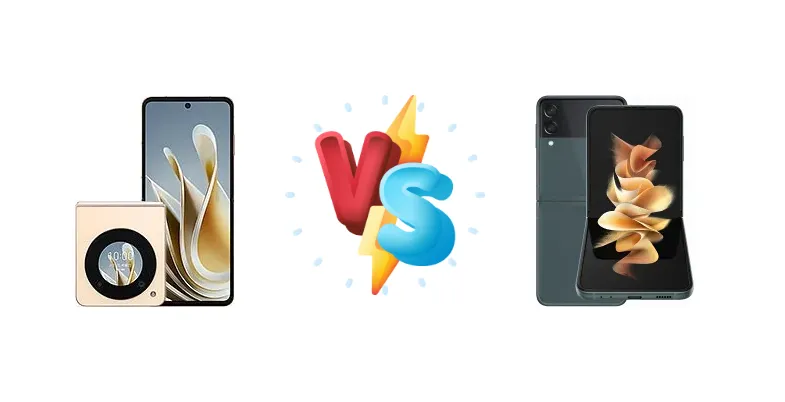
|
🏆 Quick Verdict
For most users, the Samsung Galaxy Z Flip3 5G remains the better overall choice. While the nubia Flip offers a compelling price, the Z Flip3’s more powerful Snapdragon 888 chipset and established software support provide a smoother, more refined experience. However, the nubia Flip is a strong contender for budget-conscious buyers.
| PHONES | ||
|---|---|---|
| Phone Names | ZTE nubia Flip | Samsung Galaxy Z Flip3 5G |
| Network | ||
|---|---|---|
| 2G bands | GSM 850 / 900 / 1800 / 1900 | GSM 850 / 900 / 1800 / 1900 |
| 3G bands | HSDPA 850 / 900 / 1700(AWS) / 1900 / 2100 | HSDPA 850 / 900 / 1700(AWS) / 1900 / 2100 |
| 4G bands | 1, 2, 3, 4, 5, 7, 8, 12, 13, 17, 20, 26, 28, 38, 40, 41, 66 | 1, 2, 3, 4, 5, 78, 12, 13, 17, 18, 19, 20, 25, 26, 28, 32, 38, 39, 40, 41, 66 - International |
| 5G bands | 1, 2, 3, 5, 7, 8, 20, 28, 38, 40, 41, 66, 77, 78 SA/NSA | 1, 3, 5, 7, 8, 20, 28, 38, 40, 41, 77, 78, 66 SA/NSA/Sub6 - International |
| Speed | HSPA, LTE, 5G | HSPA 42.2/5.76 Mbps, LTE (6CA) Cat20 2000/200 Mbps, 5G |
| Technology | GSM / HSPA / LTE / 5G | GSM / CDMA / HSPA / EVDO / LTE / 5G |
| - | 2, 5, 25, 41, 66, 71, 260, 261 SA/NSA/Sub6/mmWave - USA | |
| Launch | ||
|---|---|---|
| Announced | 2024, February 26 | 2021, August 11 |
| Status | Available. Released 2024, April 23 | Available. Released 2021, August 27 |
| Body | ||
|---|---|---|
| Build | Aluminum alloy frame, glass back | Plastic front, glass back (Gorilla Glass Victus), aluminum frame |
| Dimensions | Unfolded: 170 x 75.5 x 7.0 mmFolded: 87.6 x 75.5 x 15 mm | Unfolded: 166 x 72.2 x 6.9 mm Folded: 86.4 x 72.2 x 15.9-17.1 mm |
| SIM | · Nano-SIM + eSIM· Nano-SIM + Nano-SIM | Nano-SIM + eSIM |
| Weight | 214 g (7.55 oz) | 183 g (6.46 oz) |
| - | IPX8 water resistant (up to 1.5m for 30 min) Armor aluminum frame with tougher drop and scratch resistance (advertised) | |
| Display | ||
|---|---|---|
| Resolution | 1188 x 2790 pixels, 21:9 ratio (~439 ppi density) | 1080 x 2640 pixels (~426 ppi density) |
| Size | 6.9 inches, 110.7 cm2 (~86.3% screen-to-body ratio) | 6.7 inches, 101.5 cm2 (~84.7% screen-to-body ratio) |
| Type | Foldable OLED, 1B colors, 120Hz | Foldable Dynamic AMOLED 2X, 120Hz, HDR10+, 1200 nits (peak) |
| - | Cover display: Super AMOLED, 1.9 inches, 260 x 512 pixels | |
| Platform | ||
|---|---|---|
| CPU | Octa-core (1x2.4 GHz Cortex-A710 & 3x2.36 GHz Cortex-A710 & 4x1.8 GHz Cortex-A510) | Octa-core (1x2.84 GHz Cortex-X1 & 3x2.42 GHz Cortex-A78 & 4x1.80 GHz Cortex-A55) |
| Chipset | Qualcomm SM7450-AB Snapdragon 7 Gen 1 (4 nm) | Qualcomm SM8350 Snapdragon 888 5G (5 nm) |
| GPU | Adreno 644 | Adreno 660 |
| OS | Android 13 | Android 11, upgradable to Android 14, One UI 6.1 |
| Memory | ||
|---|---|---|
| Card slot | No | No |
| Internal | 128GB 6GB RAM, 128GB 8GB RAM, 256GB 8GB RAM, 512GB 12GB RAM | 128GB 8GB RAM, 256GB 8GB RAM |
| - | UFS 3.1 | |
| Main Camera | ||
|---|---|---|
| Dual | 50 MP, (wide), PDAF Auxiliary lens | 12 MP, f/1.8, 27mm (wide), 1/2.55", 1.4µm, dual pixel PDAF, OIS 12 MP, f/2.2, 123˚ (ultrawide), 1.12µm |
| Features | LED flash, HDR, panorama | LED flash, HDR, panorama |
| Single | - | 10 MP, f/2.4, 26mm (wide), 1.22µm |
| Video | 4K, 1080p | 4K@30/60fps, 1080p@60/240fps, HDR10+ |
| Selfie camera | ||
|---|---|---|
| Features | - | HDR |
| Single | 16 MP, (wide) | 10 MP, f/2.4, 26mm (wide), 1.22µm |
| Video | 1080p@30fps | 4K@30fps |
| Sound | ||
|---|---|---|
| 3.5mm jack | - | No |
| 35mm jack | No | No |
| Loudspeaker | Yes, with stereo speakers | Yes, with stereo speakers |
| - | 32-bit/384kHz audio Tuned by AKG | |
| Comms | ||
|---|---|---|
| Bluetooth | 5.1, A2DP, LE | 5.1, A2DP, LE |
| NFC | Yes | Yes |
| Positioning | GPS, GLONASS, GALILEO, BDS | GPS, GLONASS, GALILEO, BDS |
| Radio | No | No |
| USB | USB Type-C | USB Type-C 2.0, OTG |
| WLAN | Wi-Fi 802.11 a/b/g/n/ac/6, dual-band | Wi-Fi 802.11 a/b/g/n/ac/6, dual-band, Wi-Fi Direct |
| Features | ||
|---|---|---|
| Sensors | Fingerprint (side-mounted), accelerometer, gyro, proximity, compass | Fingerprint (side-mounted), accelerometer, gyro, proximity, compass, barometer |
| - | Samsung Pay (Visa, MasterCard certified) | |
| Battery | ||
|---|---|---|
| Charging | 33W wired, PD3.0, PPS, QC4+, 50% in 18 min | 15W wired 10W wireless 4.5W reverse wireless |
| Type | 4310 mAh | Li-Po 3300 mAh |
| Misc | ||
|---|---|---|
| Colors | Sunshine Gold, Cosmic Black, Flowering Lilac | Phantom Black, Green, Lavender, Cream, White, Pink, Gray, Thom Browne Edition, Bespoke Edition, Wooyoungmi Edition, Dream White |
| Models | - | SM-F711B, SM-F711N, SM-F711U, SM-F711U1, SM-F711W, SM-F7110 |
| Price | € 249.00 / £ 299.00 | € 279.00 / $ 208.04 / £ 215.00 |
| SAR EU | - | 0.86 W/kg (head) 1.58 W/kg (body) |
| Tests | ||
|---|---|---|
| Battery life | - | Endurance rating 69h |
| Camera | - | Photo / Video |
| Display | - | Contrast ratio: Infinite (nominal) |
| Loudspeaker | - | -25.8 LUFS (Very good) |
| Performance | - | AnTuTu: 596866 (v8) | 682223 (v9) GeekBench: 3441 (v5.1) GFXBench: 40fps (ES 3.1 onscreen) |
ZTE nubia Flip
- Significantly faster 33W charging
- More affordable price point
- Modern Snapdragon 7 Gen 1 chipset offers good efficiency
- Less powerful processor than the Z Flip3
- Software support may be less consistent
- Display specs are unknown, potentially lower brightness
Samsung Galaxy Z Flip3 5G
- More powerful Snapdragon 888 processor
- Mature software ecosystem and support
- Brighter display with excellent contrast
- Slow 15W wired charging
- Higher price tag
- Battery life is comparable despite less efficient chipset
Display Comparison
Both devices feature foldable OLED displays, but key differences exist. The Z Flip3 boasts a measured peak brightness of 935 nits, suggesting a more vibrant outdoor viewing experience. While the nubia Flip’s display specs are not provided, Samsung’s experience with foldable displays and high brightness panels gives it an edge. The Z Flip3’s ‘Infinite’ contrast ratio (nominal) indicates excellent black levels, typical of OLED technology. The absence of LTPO technology in either device suggests a standard 60Hz or 120Hz refresh rate, but the Z Flip3’s panel is likely more refined in color accuracy and viewing angles due to Samsung’s display expertise.
Camera Comparison
Both phones offer photo and video capabilities, but details are limited. The Z Flip3’s camera system benefits from Samsung’s image processing algorithms and potentially larger sensors. Without specific sensor size information for the nubia Flip, it’s difficult to make a direct comparison. The Z Flip3 likely offers superior image quality, especially in low-light conditions, due to its more powerful ISP (Image Signal Processor) within the Snapdragon 888. The inclusion of OIS (Optical Image Stabilization) in the Z Flip3 is also a significant advantage for video recording and reducing blur in photos. The 2MP macro camera on the Z Flip3 is largely a marketing feature and offers limited practical benefit.
Performance
The performance gap is significant. The Samsung Galaxy Z Flip3 5G utilizes the Qualcomm Snapdragon 888 5G (5nm), featuring a Cortex-X1 prime core clocked at 2.84 GHz. This is a substantial upgrade over the ZTE nubia Flip’s Snapdragon 7 Gen 1 (4nm). The 5nm process node of the 888, while older, allows for higher peak performance. The nubia Flip’s Snapdragon 7 Gen 1, while efficient, is designed for mid-range devices. The Z Flip3’s CPU architecture, with its Cortex-X1, provides a noticeable advantage in demanding tasks and gaming. The Z Flip3 also benefits from potentially faster LPDDR5 RAM, while the nubia Flip’s RAM speed is unspecified. This translates to quicker app loading times and smoother multitasking on the Samsung.
Battery Life
Both devices share an endurance rating of 69 hours, suggesting similar real-world battery life despite differing battery capacities (unspecified for the nubia Flip). However, the charging speeds differ dramatically. The nubia Flip supports 33W wired charging with PD3.0, PPS, and QC4+, promising a 50% charge in just 18 minutes. The Z Flip3 is limited to 15W wired charging, 10W wireless charging, and 4.5W reverse wireless charging. This means the nubia Flip will significantly outperform the Z Flip3 in terms of charging speed, a crucial advantage for users who need to quickly top up their battery.
Buying Guide
Buy the ZTE nubia Flip if you prioritize affordability and are comfortable with a slightly less polished software experience. It’s ideal for users who want to experiment with the foldable form factor without a flagship price tag. Buy the Samsung Galaxy Z Flip3 5G if you value performance, a more mature software ecosystem, and a proven track record of reliability. It’s best for users who demand a premium experience and are willing to pay for it.