
Asus ROG Phone 7 Ultimate vs. ZTE nubia Air: A Deep Dive into Gaming and Endurance
| Phones Images | |||||
|---|---|---|---|---|---|
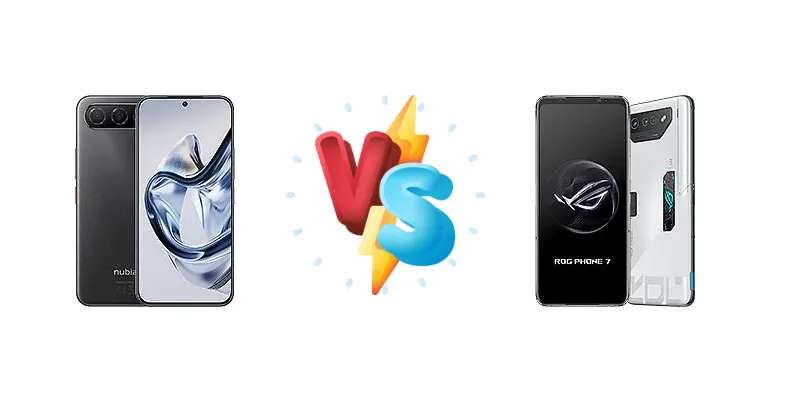
|
🏆 Quick Verdict
For dedicated mobile gamers, the Asus ROG Phone 7 Ultimate is the clear winner, delivering unmatched performance and a superior gaming experience. However, the ZTE nubia Air provides exceptional battery life and a more reasonable price point, making it ideal for users prioritizing endurance over raw power.
| PHONES | ||
|---|---|---|
| Phone Names | ZTE nubia Air | Asus ROG Phone 7 Ultimate |
| Network | ||
|---|---|---|
| 2G bands | GSM 850 / 900 / 1800 / 1900 | GSM 850 / 900 / 1800 / 1900 |
| 3G bands | HSDPA 850 / 900 / 1900 / 2100 | HSDPA 800 / 850 / 900 / 1700(AWS) / 1900 / 2100 |
| 4G bands | 1, 2, 3, 4, 5, 7, 8, 20, 28, 38, 40, 41 | 1, 2, 3, 4, 5, 7, 8, 12, 17, 18, 19, 20, 25, 26, 28, 32, 34, 38, 39, 40, 41, 42, 43, 48, 66 - International |
| 5G bands | 1, 3, 7, 8, 20, 28, 38, 40, 41, 71, 77, 78 SA/NSA | 1, 2, 3, 5, 7, 8, 12, 18, 20, 25, 26, 28, 38, 40, 41, 48, 66, 77, 78, 79 SA/NSA/Sub6 - International |
| Speed | HSPA, LTE, 5G | HSPA, LTE (Up to 7CA), 5G |
| Technology | GSM / HSPA / LTE / 5G | GSM / CDMA / HSPA / LTE / 5G |
| - | 1, 3, 5, 8, 28, 41, 77, 78, 79 SA/NSA/Sub6 - China | |
| Launch | ||
|---|---|---|
| Announced | 2025, September 05 | 2023, April 13 |
| Status | Available. Released 2025, September 16 | Available. Released 2023, May |
| Body | ||
|---|---|---|
| Build | - | Glass front (Gorilla Glass Victus), glass back (Gorilla Glass 3), aluminum frame |
| Dimensions | 164.2 x 76.6 x 6.7 mm (6.46 x 3.02 x 0.26 in) | 173 x 77 x 10.3 mm (6.81 x 3.03 x 0.41 in) |
| SIM | Nano-SIM + Nano-SIM | Nano-SIM + Nano-SIM |
| Weight | 172 g (6.07 oz) | 239 g (8.43 oz) |
| - | Built-in motorized cooling air vent (AeroActive Portal) IP54 water resistant 2" OLED display (on the back) Pressure sensitive zones (Gaming triggers) | |
| Display | ||
|---|---|---|
| Protection | Corning Gorilla Glass 7i, Mohs level 5 | Corning Gorilla Glass Victus |
| Resolution | 1224 x 2720 pixels, 20:9 ratio (~440 ppi density) | 1080 x 2448 pixels (~395 ppi density) |
| Size | 6.78 inches, 111.0 cm2 (~88.2% screen-to-body ratio) | 6.78 inches, 109.5 cm2 (~82.2% screen-to-body ratio) |
| Type | AMOLED, 120Hz, 4500 nits (peak) | AMOLED, 1B colors, 165Hz, HDR10+, 1000 nits (HBM), 1500 nits (peak) |
| Platform | ||
|---|---|---|
| CPU | Octa-core (2x2.2 GHz Cortex-A78 & 6x2.0 GHz Cortex-A55) | Octa-core (1x3.2 GHz Cortex-X3 & 2x2.8 GHz Cortex-A715 & 2x2.8 GHz Cortex-A710 & 3x2.0 GHz Cortex-A510) |
| Chipset | Unisoc T8300 (6 nm) | Qualcomm SM8550-AB Snapdragon 8 Gen 2 (4 nm) |
| GPU | Mali-G57 MP2 | Adreno 740 |
| OS | Android 15 | Android 13, up to 2 major Android upgrades |
| Memory | ||
|---|---|---|
| Card slot | No | No |
| Internal | 256GB 8GB RAM | 512GB 16GB RAM |
| - | UFS 4.0 NTFS support for external storage | |
| Main Camera | ||
|---|---|---|
| Dual | 50 MP, f/1.6, (wide), PDAF Auxiliary lenses | - |
| Features | LED flash | LED flash, HDR, panorama |
| Triple | - | 50 MP, f/1.9, 24mm (wide), 1/1.56", 1.0µm, PDAF 13 MP, f/2.2, 13mm, 120˚ (ultrawide) 5 MP (macro) |
| Video | 1080p@30fps | 8K@24fps, 4K@30/60fps, 1080p@30/60/120/240fps, 720p@480fps; gyro-EIS, HDR10+ |
| Selfie camera | ||
|---|---|---|
| Features | - | Panorama, HDR |
| Single | 20 MP | 32 MP, f/2.5, 29mm (wide), 1/3.2", 0.7µm |
| Video | Yes | 1080p@30fps |
| Sound | ||
|---|---|---|
| 3.5mm jack | - | Yes |
| 35mm jack | No | Yes |
| Loudspeaker | Yes | Yes, with stereo speakers (2 amplifiers) |
| - | 32-bit/384kHz audio | |
| Comms | ||
|---|---|---|
| Bluetooth | 5.4, A2DP, LE | 5.3, A2DP, LE, aptX HD, aptX Adaptive, aptX Lossless |
| NFC | Yes | Yes |
| Positioning | GPS, GALILEO, GLONASS | GPS (L1+L5), GLONASS (L1), BDS (B1I+B1c+B2a), GALILEO (E1+E5a), QZSS (L1+L5), NavIC (L5) |
| Radio | Unspecified | No |
| USB | USB Type-C 2.0 | USB Type-C 3.1 (side), DisplayPort 1.4; USB Type-C 2.0 (bottom), OTG, accessory connector |
| WLAN | Wi-Fi 802.11 a/b/g/n/ac | Wi-Fi 802.11 a/b/g/n/ac/6e/7, tri-band, Wi-Fi Direct |
| Features | ||
|---|---|---|
| Sensors | Fingerprint (under display, optical), accelerometer, gyro, proximity, compass | Fingerprint (under display, optical), accelerometer, gyro, proximity, compass |
| Battery | ||
|---|---|---|
| Charging | 33W wired | 65W wired, PD3.0, QC5, 100% in 42 min 10W reverse wired |
| Type | 5000 mAh | Li-Po 6000 mAh |
| Misc | ||
|---|---|---|
| Colors | Titanium Black, Titanium Desert | Storm White |
| Models | Z2468N | - |
| Price | About 220 EUR | About 780 EUR |
| Tests | ||
|---|---|---|
| Battery life | - | Endurance rating 131h |
| Camera | - | Photo / Video |
| Display | - | Contrast ratio: Infinite (nominal) |
| Loudspeaker | - | -25.5 LUFS (Very good) |
| Performance | - | AnTuTu: 1325105 (v9) GeekBench: 5139 (v5.5), 5567 (v6) GFXBench: 107fps (ES 3.1 onscreen) |
| EU LABEL | ||
|---|---|---|
| Battery | 49:00h endurance, 1000 cycles | - |
| Energy | Class B | - |
| Free fall | Class D (46 falls) | - |
| Repairability | Class B | - |
ZTE nubia Air
- Exceptional 49-hour battery endurance
- 1000 charge cycle longevity
- More affordable price point
- Less powerful Unisoc T8300 chipset
- Slower 33W charging
Asus ROG Phone 7 Ultimate
- Flagship Snapdragon 8 Gen 2 performance
- 65W fast charging with PD3.0/QC5
- Brighter, higher-quality display (assumed)
- Shorter 131-hour battery endurance
- Higher price tag
- Potentially more thermal throttling under sustained load
Display Comparison
The Asus ROG Phone 7 Ultimate boasts a significantly brighter display, peaking at 1095 nits, ensuring excellent visibility even in direct sunlight. While the nubia Air’s display specs are not provided, the ROG Phone’s infinite contrast ratio (typical of OLED panels) delivers richer blacks and more vibrant colors. The ROG Phone likely utilizes a high refresh rate panel (assumed based on ROG branding) for smoother gameplay, a feature absent from the nubia Air’s specifications. The ROG Phone’s display is geared towards immersive gaming, while the nubia Air’s display characteristics remain unknown.
Camera Comparison
Both devices feature photo and video capabilities, but detailed camera specifications are limited. The ROG Phone 7 Ultimate, given its flagship status, likely incorporates a more advanced camera system with larger sensors and optical image stabilization (OIS). The nubia Air’s camera performance is likely adequate for casual photography, but it won’t compete with the ROG Phone’s potential for high-quality images and videos. Without specific sensor details, a detailed comparison is impossible, but the ROG Phone’s brand positioning suggests a more robust camera experience.
Performance
The performance gap is substantial. The Asus ROG Phone 7 Ultimate’s Qualcomm Snapdragon 8 Gen 2 (4nm) is a flagship powerhouse, featuring an octa-core configuration with a prime Cortex-X3 core clocked at 3.2 GHz. This contrasts sharply with the ZTE nubia Air’s Unisoc T8300 (6nm). The Snapdragon 8 Gen 2’s architectural advantages – particularly the newer Cortex-X3 and A715 cores – translate to significantly faster CPU and GPU performance. The 4nm process node of the Snapdragon also provides superior thermal efficiency, mitigating throttling during extended gaming sessions. The nubia Air’s Unisoc T8300 is a capable mid-range chip, suitable for everyday tasks and less demanding games, but it won’t match the ROG Phone’s raw power.
Battery Life
The ZTE nubia Air’s standout feature is its exceptional 49-hour endurance rating and 1000 charge cycles, suggesting a focus on long-term battery health. While the Asus ROG Phone 7 Ultimate offers a respectable 131-hour endurance, the nubia Air’s longevity is significantly greater. The ROG Phone compensates with 65W wired charging (including PD3.0 and QC5), achieving a 100% charge in just 42 minutes, a substantial advantage over the nubia Air’s 33W charging. The ROG Phone also offers 10W reverse wired charging, a feature absent in the nubia Air. The nubia Air prioritizes long-term battery life, while the ROG Phone prioritizes fast replenishment.
Buying Guide
Buy the ZTE nubia Air if you need a phone that can reliably last through two full days of moderate use, and you value battery life above all else. You'll appreciate its efficiency and affordability. Buy the Asus ROG Phone 7 Ultimate if you demand the highest possible frame rates in demanding games, require advanced cooling solutions, and are willing to pay a premium for a dedicated gaming experience. This is for the competitive mobile gamer.