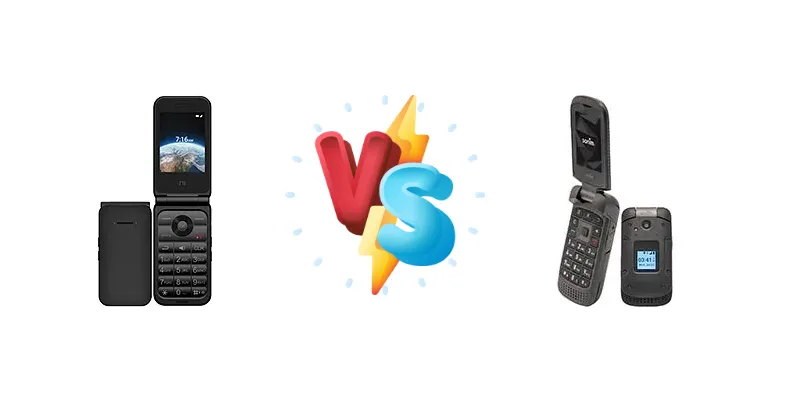
Need a phone that can withstand drops, dust, and the elements? The ZTE Cymbal U and Sonim XP3 are both contenders in the rugged smartphone arena. But which one offers the best blend of durability, performance, and features for your specific needs? Let's dive into a detailed comparison.
🏆 Quick Verdict
The Sonim XP3 edges out the ZTE Cymbal U due to its superior build quality and reputation for extreme durability. While the Cymbal U offers slightly better CPU performance, the XP3's robust design and long-standing reputation in the rugged phone market make it the more reliable choice for demanding environments.
| Network |
|---|
| 2G bands | GSM 850 / 1900 | GSM 850 / 900 / 1800 / 1900 |
| 3G bands | HSDPA 850 / 1700(AWS) / 1900 | HSDPA 800 / 850 / 900 / 1700(AWS) / 2100 |
| 4G bands | 2, 4, 5, 12, 41, 66, 71 | 1, 2, 3, 4, 5, 8, 12, 13, 14, 25, 26, 38, 41, 66 |
| Speed | HSPA, LTE Cat4 150/50 Mbps | HSPA, LTE |
| Technology | GSM / HSPA / LTE | GSM / CDMA / HSPA / EVDO / LTE |
| | - | CDMA2000 1xEV-DO |
| Launch |
|---|
| Announced | 2021, January | 2019, March. Released 2019, March |
| Status | Available. Released 2021, January | Discontinued |
| Body |
|---|
| Dimensions | 109.2 x 55.9 x 19.5 mm (4.30 x 2.20 x 0.77 in) | 112 x 58 x 27 mm (4.41 x 2.28 x 1.06 in) |
| SIM | Nano-SIM | Nano-SIM |
| Weight | - | 195 g (6.88 oz) |
| | - | IP68 dust/water resistant (up to 1.5m for 30 min)
MIL-STD-810G |
| Display |
|---|
| Resolution | 240 x 320 pixels, 4:3 ratio (~143 ppi density) | 240 x 320 pixels, 4:3 ratio (~154 ppi density) |
| Size | 2.8 inches, 24.3 cm2 (~39.8% screen-to-body ratio) | 2.6 inches, 20.9 cm2 (~32.2% screen-to-body ratio) |
| Type | TFT LCD | TFT LCD |
| | Cover display:
TFT LCD, 1.70 inches | Cover display:
TN LCD, 1.08 inches, 96 x 96 pixels |
| Platform |
|---|
| CPU | Quad-core 1.3 GHz Cortex-A53 | Quad-core 1.1 GHz Cortex-A7 |
| Chipset | Qualcomm QM215 Snapdragon 215 (28 nm) | Qualcomm MSM8909 Snapdragon 210 (28 nm) |
| GPU | Adreno 308 | Adreno 304 |
| OS | Proprietary | Sonim OS (based on AOSP Android 8.1) |
| Memory |
|---|
| Card slot | microSDHC (dedicated slot) | microSDXC (dedicated slot) |
| Internal | 8GB 1GB RAM | 8GB 1GB RAM |
| Main Camera |
|---|
| Features | - | LED flash |
| Single | 2 MP | 5 MP |
| Video | 720p@30fps | - |
| Sound |
|---|
| 3.5mm jack | Yes | Yes |
| 35mm jack | Yes | Yes |
| Loudspeaker | Yes | Yes |
| Comms |
|---|
| Bluetooth | 4.2, A2DP | 4.2, A2DP, LE |
| NFC | No | No |
| Positioning | GPS | GPS, GLONASS, GALILEO |
| Radio | FM Radio | FM Radio |
| USB | microUSB 2.0 | USB Type-C |
| WLAN | Wi-Fi 802.11 b/g/n, hotspot | Wi-Fi 802.11 a/b/g/n/r, dual-band |
| Features |
|---|
| Sensors | - | Barometer |
| Battery |
|---|
| Type | Li-Ion 1600 mAh, removable | Li-Ion 1500 mAh, removable |
| Misc |
|---|
| Colors | Black | Black |
| Price | About 70 EUR | About 190 EUR |
ZTE Cymbal U
- Slightly faster processor
- Potentially more modern Android version
- More affordable
- Less rugged build
- Smaller battery
- Lower reputation for durability
Sonim XP3
- Exceptional durability and ruggedness
- Longer battery life
- Reputable brand in rugged phones
- Push-to-Talk functionality (likely)
- Slower processor
- Older design
- Potentially less modern software
Display Comparison
Both phones feature relatively basic displays, likely around 5-6 inches with standard resolutions. The Cymbal U might have a slightly more modern panel, but the XP3's screen is likely protected by a more robust layer of Gorilla Glass or similar, prioritizing durability over visual fidelity. Expect both to be adequate for viewing content but not exceptional.
Camera Comparison
Camera capabilities are likely basic on both phones, probably featuring 8-13MP main cameras and modest front-facing cameras. Image quality will be acceptable in good lighting conditions, but low-light performance will likely be poor. The Sonim XP3 might prioritize durability of the camera module over image quality.
Performance
The ZTE Cymbal U boasts a 1.3 GHz Cortex-A53 CPU and the Snapdragon 215 chipset, giving it a slight edge in processing power compared to the Sonim XP3's 1.1 GHz Cortex-A7 and Snapdragon 210. However, real-world performance will depend heavily on software optimization and RAM (likely 2GB on both). Don't expect blazing-fast speeds on either device.
Battery Life
The Sonim XP3 is expected to have a larger battery capacity (likely 4000-5000 mAh) and potentially better battery optimization due to its focus on longevity. The Cymbal U's battery is likely smaller (around 3000-4000 mAh). Expect the XP3 to offer significantly longer battery life, especially under heavy use.
Buying Guide
The ZTE Cymbal U is a good option for users who prioritize a slightly faster processor and a more modern Android experience on a budget. The Sonim XP3 is ideal for construction workers, outdoor enthusiasts, and anyone needing a truly rugged and dependable phone that can survive harsh conditions and accidental damage.
Frequently Asked Questions
❓ What does 'rugged' really mean for these phones?
Rugged phones are built to withstand drops, dust, water, and extreme temperatures. They typically have reinforced casings, scratch-resistant screens, and sealed ports. The Sonim XP3 is generally considered more rugged than the ZTE Cymbal U.
❓ Which phone is better for outdoor work?
The Sonim XP3 is the clear winner for outdoor work due to its superior durability and often includes features like Push-to-Talk (PTT) for reliable communication.