
Asus ROG Phone 5s vs. ZTE Blade V80 Pro: A Deep Dive into Performance and Value
| Phones Images | |||||
|---|---|---|---|---|---|
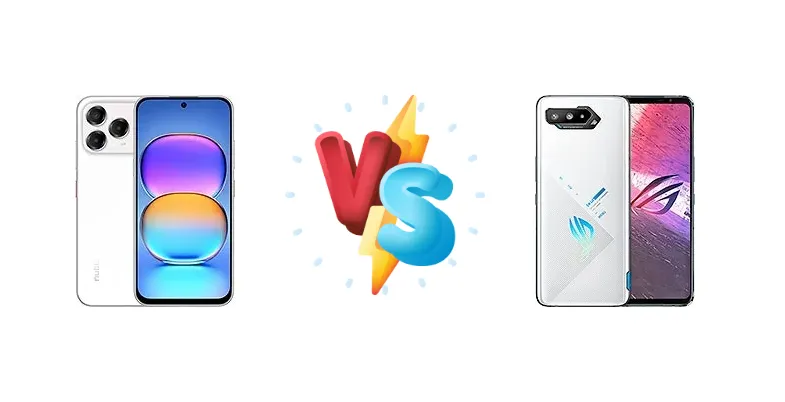
|
🏆 Quick Verdict
For gamers and power users, the Asus ROG Phone 5s is the clear winner. Its Snapdragon 888+ chipset and 65W charging are in a different league. However, the ZTE Blade V80 Pro offers excellent value for budget-conscious users who prioritize essential smartphone functionality over raw performance.
| PHONES | ||
|---|---|---|
| Phone Names | ZTE Blade V80 Pro | Asus ROG Phone 5s |
| Network | ||
|---|---|---|
| 2G bands | GSM 850 / 900 / 1800 / 1900 | GSM 850 / 900 / 1800 / 1900 |
| 3G bands | HSDPA 850 / 900 / 1900 / 2100 | HSDPA 800 / 850 / 900 / 1700(AWS) / 1800 / 1900 / 2100 - Version 1 |
| 4G bands | LTE | 1, 2, 3, 4, 5, 7, 8, 12, 13, 17, 18, 19, 20, 25, 26, 28, 29, 30, 32, 34, 38, 39, 40, 41, 42, 48, 66, 71 - Version 1 |
| 5G bands | - | 1, 2, 3, 5, 7, 8, 12, 20, 25, 28, 38, 40, 41, 66, 71, 77, 78, 79 SA/NSA - Version 1 |
| Speed | HSPA, LTE | HSPA 42.2/5.76 Mbps, LTE (7CA) Cat20 1400/150 Mbps, 5G 4 Gbps DL |
| Technology | GSM / HSPA / LTE | GSM / HSPA / LTE / 5G |
| - | 2, 3, 5, 7, 12, 20, 25, 28, 38, 40, 66, 71, 77, 78, 79 SA/NSA - Version 4 | |
| Launch | ||
|---|---|---|
| Announced | 2025, November | 2021, August 16 |
| Status | Coming soon. Exp. release 2025, December | Available. Released 2021, August 26 |
| Body | ||
|---|---|---|
| Build | Glass front, plastic frame | Glass front (Gorilla Glass Victus), glass back (Gorilla Glass 3), aluminum frame |
| Dimensions | 166 x 79 x 7.7 mm (6.54 x 3.11 x 0.30 in) | 172.8 x 77.3 x 9.9 mm (6.80 x 3.04 x 0.39 in) |
| SIM | Nano-SIM + Nano-SIM | Nano-SIM + Nano-SIM |
| Weight | 195 g (6.88 oz) | 238 g (8.40 oz) |
| - | RGB light panel (on the back) Pressure sensitive zones (Gaming triggers) | |
| Display | ||
|---|---|---|
| Protection | - | Corning Gorilla Glass Victus |
| Resolution | 900 x 1940 pixels, 19.5:9 ratio (~317 ppi density) | 1080 x 2448 pixels (~395 ppi density) |
| Size | 6.75 inches, 112.2 cm2 (~85.6% screen-to-body ratio) | 6.78 inches, 109.5 cm2 (~82.0% screen-to-body ratio) |
| Type | IPS LCD, 120Hz, 1000 nits (HBM) | AMOLED, 1B colors, 144Hz, HDR10+, 800 nits (typ), 1200 nits (peak) |
| Platform | ||
|---|---|---|
| CPU | Octa-core (2x2.2 GHz Cortex-A75 & 6x2.0 GHz Cortex-A55) | Octa-core (1x2.99 GHz Cortex-X1 & 3x2.42 GHz Cortex-A78 & 4x1.80 GHz Cortex-A55) |
| Chipset | Unisoc T7280 (12 nm) | Qualcomm SM8350 Snapdragon 888+ 5G (5 nm) |
| GPU | Mali-G57 MP1 | Adreno 660 |
| OS | Android 16 | Android 11, upgradable to Android 13, ROG UI |
| Memory | ||
|---|---|---|
| Card slot | microSDXC | No |
| Internal | 256GB 8GB RAM | 128GB 8GB RAM, 128GB 12GB RAM, 256GB 12GB RAM, 256GB 16GB RAM, 512GB 16GB RAM, 512GB 18GB RAM |
| - | UFS 3.1 | |
| Main Camera | ||
|---|---|---|
| Dual | 108 MP, f/1.8, (wide), PDAF Auxiliary lenses | - |
| Features | LED flash, HDR, panorama | LED flash, HDR, panorama |
| Triple | - | 64 MP, f/1.8, 26mm (wide), 1/1.73", 0.8µm, PDAF 13 MP, f/2.4, 11mm, 125˚ (ultrawide) 5 MP (macro) |
| Video | 1080p@30fps | 8K@30fps, 4K@30/60/120fps, 1080p@30/60/120/240fps, 720p@480fps; gyro-EIS |
| Selfie camera | ||
|---|---|---|
| Features | - | Panorama, HDR |
| Single | 16 MP | 24 MP, f/2.5, 27mm (wide), 0.9µm |
| Video | 1080p@30fps | 1080p@30fps |
| Sound | ||
|---|---|---|
| 3.5mm jack | - | Yes |
| 35mm jack | Yes | Yes |
| Loudspeaker | Yes | Yes, with stereo speakers (2 amplifiers) |
| - | 24-bit/192kHz audio | |
| Comms | ||
|---|---|---|
| Bluetooth | 5.2, A2DP, LE | 5.2, A2DP, LE, aptX HD, aptX Adaptive |
| NFC | Unspecified | Yes |
| Positioning | GPS, GALILEO, GLONASS | GPS (L1+L5), GLONASS (L1), BDS (B1I+B1c+B2a), GALILEO (E1+E5a), QZSS (L1+L5), NavIC (L5) |
| Radio | Unspecified | No |
| USB | USB Type-C 2.0, OTG | USB Type-C 3.1 (side), USB Type-C 2.0 (bottom), OTG, accessory connector |
| WLAN | Wi-Fi 802.11 a/b/g/n/ac, dual-band | Wi-Fi 802.11 a/b/g/n/ac/6e, dual-band, Wi-Fi Direct |
| Features | ||
|---|---|---|
| Sensors | Fingerprint (side-mounted), accelerometer, proximity, compass | Fingerprint (under display, optical), accelerometer, gyro, proximity, compass |
| Battery | ||
|---|---|---|
| Charging | 22.5W wired 10W reverse wired | 65W wired, PD3.0, QC5, 70% in 30 min, 100% in 52 min 10W reverse wired |
| Type | 5000 mAh | Li-Po 6000 mAh |
| Misc | ||
|---|---|---|
| Colors | White | Phantom Black, Storm White |
| Models | - | ZS676KS |
| Price | - | About 1030 EUR |
ZTE Blade V80 Pro
- Excellent value for money
- Decent performance for everyday tasks
- Reverse wired charging capability
- Significantly weaker performance than the ROG Phone 5s
- Slower charging speeds
- Likely lower-quality display
Asus ROG Phone 5s
- Flagship-level performance with Snapdragon 888+
- Ultra-fast 65W charging
- Superior gaming experience
- Significantly higher price
- Potentially shorter battery life under heavy load (though mitigated by efficiency)
- Larger and heavier form factor
Display Comparison
While display specifications for the ZTE Blade V80 Pro are not provided, it's reasonable to expect a standard LCD panel targeting cost-effectiveness. The Asus ROG Phone 5s, however, benefits from a higher-end AMOLED display, likely with a high refresh rate (typically 120Hz or 144Hz in ROG phones). The Snapdragon 888+’s image signal processor (ISP) also supports higher resolution displays and faster refresh rates. This difference translates to a significantly more vibrant and fluid visual experience on the ROG Phone 5s, crucial for immersive gaming.
Camera Comparison
Without detailed camera specifications for the ZTE Blade V80 Pro, a conservative expectation is a basic camera setup focused on functionality. The Asus ROG Phone 5s, while not primarily camera-focused, likely features a more advanced camera system leveraging the Snapdragon 888+'s ISP capabilities. The 5nm process allows for more complex image processing algorithms, resulting in better low-light performance and dynamic range. The ROG Phone 5s is likely to have a larger main sensor and potentially optical image stabilization (OIS), features unlikely to be found on the Blade V80 Pro.
Performance
The core disparity lies in the chipsets. The Asus ROG Phone 5s’s Snapdragon 888+ (5nm) is a flagship-level processor built on a smaller fabrication node than the ZTE Blade V80 Pro’s Unisoc T7280 (12nm). This means the Snapdragon 888+ is significantly more power-efficient and delivers substantially higher performance. The Snapdragon 888+’s Cortex-X1 prime core, clocked at 2.99 GHz, provides a substantial performance boost over the Cortex-A75 cores in the Unisoc T7280. The ROG Phone 5s also benefits from faster RAM (likely LPDDR5) and a more sophisticated cooling system, mitigating thermal throttling during prolonged gaming sessions.
Battery Life
The Asus ROG Phone 5s’s 65W wired charging is a game-changer, achieving a 70% charge in 30 minutes and 100% in 52 minutes. This drastically reduces downtime for gamers. The ZTE Blade V80 Pro’s 22.5W charging is considerably slower. While battery capacity isn’t specified for either device, the ROG Phone 5s’s more efficient chipset and optimized power management likely offset any potential capacity difference, providing comparable or even superior real-world battery life despite the higher performance demands.
Buying Guide
Buy the ZTE Blade V80 Pro if you need a reliable, affordable smartphone for everyday communication, social media, and light tasks. It’s ideal for users who prioritize battery life and don’t require demanding gaming or intensive applications. Buy the Asus ROG Phone 5s if you prioritize a top-tier gaming experience, fast charging, and are willing to invest in a device designed for sustained high performance. This is the phone for mobile esports enthusiasts and those who demand the best.