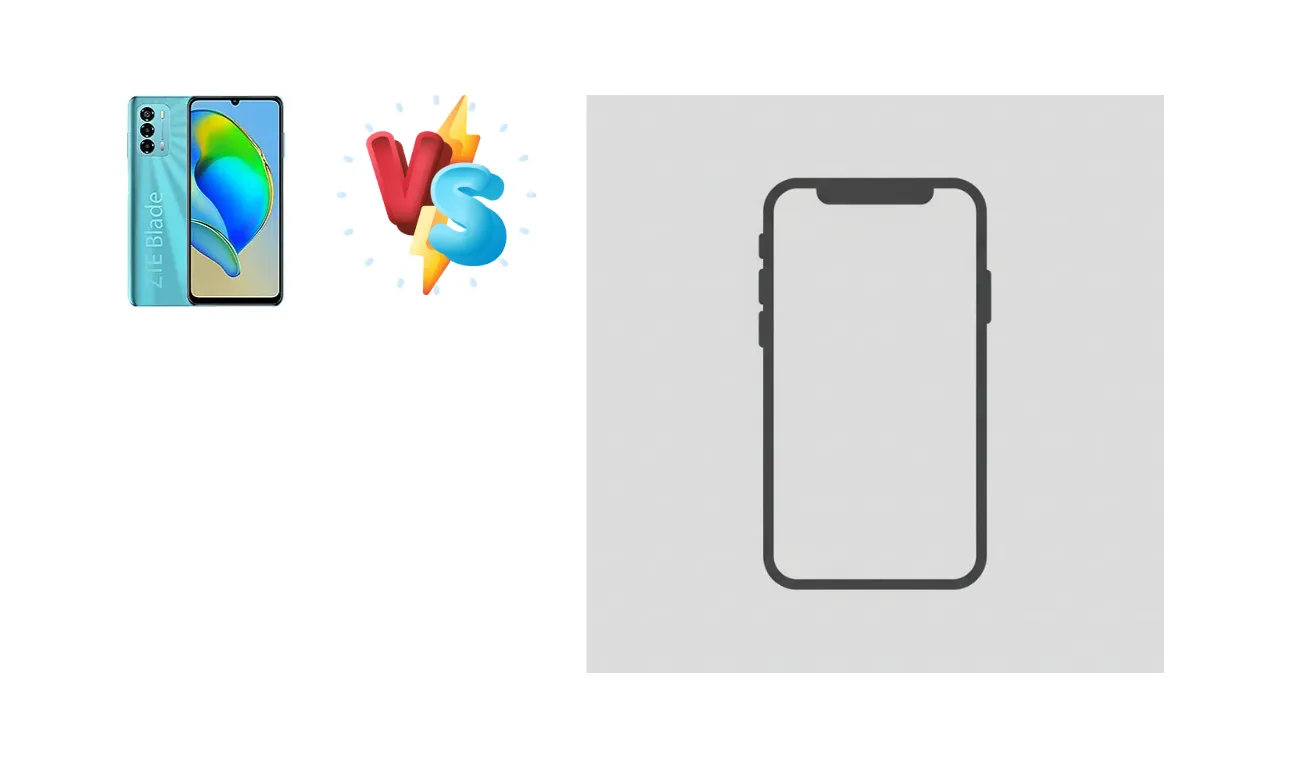
Looking for an affordable smartphone? The ZTE Blade V40 Vita and Blackview Oscal Pad 10 both promise great value, but which one truly delivers? We're diving deep into a head-to-head comparison to help you decide.
🏆 Quick Verdict
The ZTE Blade V40 Vita edges out the Blackview Oscal Pad 10 thanks to its significantly faster charging speed and likely better software support. While both share the same Unisoc T606 chipset, the Vita's advantages make it the more compelling choice for most users.
| Network |
|---|
| 2G bands | GSM 850 / 900 / 1800 / 1900 | GSM 850 / 900 / 1800 / 1900 - SIM 1 & SIM 2 |
| 3G bands | HSDPA 850 / 900 / 1900 / 2100 | HSDPA 900 / 2100 |
| 4G bands | LTE | 1, 3, 7, 8, 19, 20, 28, 40 |
| Speed | HSPA, LTE | HSPA, LTE |
| Technology | GSM / HSPA / LTE | GSM / HSPA / LTE |
| Launch |
|---|
| Announced | 2022, May 31 | 2022, December 29 |
| Status | Available. Released 2022, July 13 | Available. Released Exp. release 2023, January 09 |
| Body |
|---|
| Dimensions | 168 x 77.5 x 9.4 mm (6.61 x 3.05 x 0.37 in) | 241.3 x 160 x 8.9 mm (9.50 x 6.30 x 0.35 in) |
| SIM | Nano-SIM + Nano-SIM | Hybrid Dual SIM (Nano-SIM, dual stand-by) |
| Weight | 214.3 g (7.55 oz) | 536 g (1.18 lb) |
| Display |
|---|
| Resolution | 720 x 1600 pixels, 20:9 ratio (~260 ppi density) | 1200 x 1920 pixels, 16:10 ratio (~224 ppi density) |
| Size | 6.75 inches, 110.0 cm2 (~84.5% screen-to-body ratio) | 10.1 inches, 295.8 cm2 (~76.6% screen-to-body ratio) |
| Type | IPS LCD, 90Hz | IPS LCD |
| Platform |
|---|
| CPU | Octa-core (2x1.6 GHz Cortex-A75 & 6x1.6 GHz Cortex-A55) | Octa-core (2x1.6 GHz Cortex-A75 & 6x1.6 GHz Cortex-A55) |
| Chipset | Unisoc T606 (12 nm) | Unisoc T606 (12 nm) |
| GPU | Mali-G57 MP1 | Mali-G57 MP1 |
| OS | Android 12 | Android 12, Doke-OS 3.0 |
| Memory |
|---|
| Card slot | microSDXC (dedicated slot) | microSDXC (uses shared SIM slot) |
| Internal | 128GB 4GB RAM | 128GB 8GB RAM |
| | UFS 2.2 | - |
| Main Camera |
|---|
| Features | LED flash, HDR, panorama | LED flash |
| Single | 8 MP, f/2.0, (wide) | 13 MP |
| Triple | 48 MP, f/1.8, 26mm (wide), PDAF
2 MP (macro)
Auxiliary lens | - |
| Video | 1080p@30fps | 1080p@30fps |
| Selfie camera |
|---|
| Single | 8 MP, f/2.0, (wide) | 8 MP, 1/4", 1.12µm |
| Video | 1080p@30fps | Yes |
| Sound |
|---|
| 3.5mm jack | Yes | No |
| 35mm jack | Yes | - |
| Loudspeaker | Yes | Yes, with dual speakers |
| Comms |
|---|
| Bluetooth | 5.0, A2DP, LE | 5.0, A2DP, LE |
| NFC | No | No |
| Positioning | GPS | GPS, GLONASS, GALILEO, BDS |
| Radio | Unspecified | FM radio |
| USB | USB Type-C 2.0, OTG | USB Type-C, OTG |
| WLAN | Yes | Wi-Fi 802.11 a/b/g/n/ac, dual-band |
| Features |
|---|
| Sensors | Fingerprint (side-mounted), accelerometer, proximity | Unspecified |
| Battery |
|---|
| Charging | 22.5W wired | 10W wired |
| Type | Li-Po 6000 mAh | Li-Ion 6580 mAh, non-removable |
| Misc |
|---|
| Colors | Black, Blue, Red | Mint Green, Moonlight Silver, Diamond Grey |
| Models | 8045 | - |
| Price | About 130 EUR | About 130 EUR |
ZTE Blade V40 Vita
- Faster 22.5W Charging
- Likely better software support
- Potentially better camera (50MP main)
- More compact design
- Smaller battery capacity compared to Pad 10
- Performance limited by Unisoc T606
Blackview Oscal Pad 10
- Larger display for media consumption
- Potentially longer battery life
- More affordable (potentially)
- Slow 10W charging
- Likely less frequent software updates
- Unknown camera quality
- Larger, less pocketable size
Display Comparison
The Blackview Oscal Pad 10 likely boasts a larger display, potentially around 10 inches, making it better suited for watching videos and browsing. The ZTE Blade V40 Vita will likely have a more compact, standard smartphone display (around 6.6 inches). Expect similar display technology (likely IPS LCD) and resolution on both, though the Pad 10's larger size might result in a slightly lower pixel density.
Camera Comparison
Camera specs are generally unknown for the Blackview Oscal Pad 10. The ZTE Blade V40 Vita is known to have a 50MP main camera, suggesting a potential advantage in image quality, especially in well-lit conditions. However, software processing will heavily influence the final results.
Performance
Both devices utilize the Unisoc T606 chipset, meaning raw performance will be very similar. Expect adequate performance for everyday tasks like browsing, social media, and light gaming. Don't expect flagship-level speeds or the ability to handle demanding games smoothly. Software optimization will play a crucial role in the perceived performance.
Battery Life
The Blackview Oscal Pad 10 likely has a larger battery capacity (potentially 7000mAh or more) due to its larger size, potentially offering longer battery life. However, the 10W charging speed will significantly slow down the charging process compared to the Vita's 22.5W charging.
Buying Guide
The ZTE Blade V40 Vita is ideal for users prioritizing fast charging and a more polished software experience. The Blackview Oscal Pad 10 might appeal to those seeking a larger screen for media consumption and are less concerned about charging speed or long-term software updates.
Frequently Asked Questions
❓ What is the difference in charging speed?
The ZTE Blade V40 Vita supports 22.5W fast charging, while the Blackview Oscal Pad 10 only supports 10W charging. This means the Vita will charge significantly faster.
❓ Which phone is better for gaming?
Both phones share the same Unisoc T606 chipset, so gaming performance will be similar. Neither is ideal for demanding games, but they can handle lighter titles.