
ZTE Blade Max View vs. iPhone SE (2020): A Tale of Two Architectures
| Phones Images | |||||
|---|---|---|---|---|---|
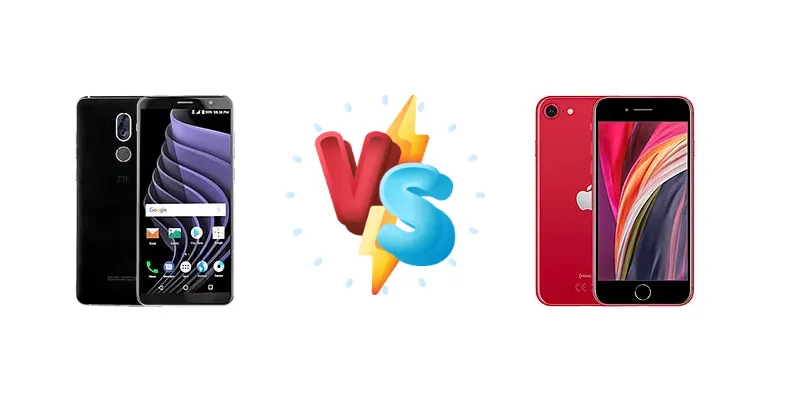
|
🏆 Quick Verdict
For the average user prioritizing long-term performance and software support, the Apple iPhone SE (2020) is the clear winner. While the ZTE Blade Max View offers a larger display, the A13 Bionic’s superior processing power and Apple’s optimized software ecosystem provide a smoother, more responsive experience that will age far better.
| PHONES | ||
|---|---|---|
| Phone Names | ZTE Blade Max View | Apple iPhone SE (2020) |
| Network | ||
|---|---|---|
| 2G bands | GSM 850 / 900 / 1800 / 1900 | GSM 850 / 900 / 1800 / 1900 |
| 3G bands | HSDPA 850 / 1700(AWS) / 1900 | HSDPA 850 / 900 / 1700(AWS) / 1900 / 2100 |
| 4G bands | 2, 4, 5, 12, 13, 66 | 1, 2, 3, 4, 5, 7, 8, 11, 12, 13, 17, 18, 19, 20, 21, 25, 26, 28, 29, 30, 32, 34, 38, 39, 40, 41, 42, 46, 48, 66 - A2296 |
| Speed | HSPA 42.2/5.76 Mbps, LTE (2CA) Cat6 300/50 Mbps | HSPA 42.2/5.76 Mbps, LTE (5CA) Cat16 1024/150 Mbps, EV-DO Rev.A 3.1 Mbps |
| Technology | GSM / CDMA / HSPA / EVDO / LTE | GSM / CDMA / HSPA / EVDO / LTE |
| CDMA2000 1xEV-DO | 1, 2, 3, 4, 5, 7, 8, 12, 13, 14, 17, 18, 19, 20, 25, 26, 29, 30, 34, 38, 39, 40, 41, 42, 46, 48, 66, 71 - A2275, A2298 | |
| Launch | ||
|---|---|---|
| Announced | 2019. Released 2019 | 2020, April 15 |
| Status | Discontinued | Available. Released 2020, April 24 |
| Body | ||
|---|---|---|
| Build | Glass front, plastic back, plastic frame | Glass front, glass back, aluminum frame |
| Dimensions | 163.1 x 74.9 x 8.1 mm (6.42 x 2.95 x 0.32 in) | 138.4 x 67.3 x 7.3 mm (5.45 x 2.65 x 0.29 in) |
| SIM | Nano-SIM | Nano-SIM + eSIM |
| Weight | 160 g (5.64 oz) | 148 g (5.22 oz) |
| - | IP67 dust/water resistant (up to 1m for 30 min) Apple Pay (Visa, MasterCard, AMEX certified) | |
| Display | ||
|---|---|---|
| Protection | - | Ion-strengthened glass |
| Resolution | 1080 x 2160 pixels, 18:9 ratio (~402 ppi density) | 750 x 1334 pixels, 16:9 ratio (~326 ppi density) |
| Size | 6.0 inches, 92.9 cm2 (~76.0% screen-to-body ratio) | 4.7 inches, 60.9 cm2 (~65.4% screen-to-body ratio) |
| Type | IPS LCD | Retina IPS LCD, 625 nits (typ) |
| Platform | ||
|---|---|---|
| CPU | Octa-core 1.4 GHz Cortex-A53 | Hexa-core (2x2.65 GHz Lightning + 4x1.8 GHz Thunder) |
| Chipset | Qualcomm MSM8940 Snapdragon 435 (28 nm) | Apple A13 Bionic (7 nm+) |
| GPU | Adreno 505 | Apple GPU (4-core graphics) |
| OS | Android 7.1.1 (Nougat), upgradable to Android 8.1 (Oreo) | iOS 13, upgradable to iOS 26.1 |
| Memory | ||
|---|---|---|
| Card slot | microSDXC | No |
| Internal | 32GB 3GB RAM | 64GB 3GB RAM, 128GB 3GB RAM, 256GB 3GB RAM |
| eMMC 5.1 | NVMe | |
| Main Camera | ||
|---|---|---|
| Dual | 16 MP, f/2.0, 25mm (wide), 1/3.1", 1.0µm, PDAF Auxiliary lens | - |
| Features | LED flash, HDR, panorama | Quad-LED dual-tone flash, HDR, panorama |
| Single | - | 12 MP, f/1.8 (wide), PDAF, OIS |
| Video | 1080p@30fps | 4K@24/30/60fps, 1080p@30/60/120/240fps, HDR, OIS, stereo sound rec. |
| Selfie camera | ||
|---|---|---|
| Features | - | HDR |
| Single | 8 MP | 7 MP, f/2.2 |
| Video | - | 1080p@30fps; gyro-EIS |
| Sound | ||
|---|---|---|
| 3.5mm jack | Yes | No |
| 35mm jack | Yes | No |
| Loudspeaker | Yes | Yes, with stereo speakers |
| Comms | ||
|---|---|---|
| Bluetooth | 4.2, A2DP, LE | 5.0, A2DP, LE |
| NFC | No | Yes |
| Positioning | GPS | GPS, GLONASS |
| Radio | Unspecified | No |
| USB | USB Type-C 2.0 | Lightning, USB 2.0 |
| WLAN | Wi-Fi 802.11 b/g/n/ac, dual-band, Wi-Fi Direct | Wi-Fi 802.11 a/b/g/n/ac/6, dual-band, hotspot |
| Features | ||
|---|---|---|
| Sensors | Fingerprint (rear-mounted), accelerometer, proximity | Fingerprint (front-mounted), accelerometer, proximity, gyro, compass, barometer |
| Battery | ||
|---|---|---|
| Charging | - | 18W wired, 50% in 30 min 7.5W wireless (Qi) |
| Type | Li-Po 4000 mAh | Li-Ion 1821 mAh (6.91 Wh) |
| Misc | ||
|---|---|---|
| Colors | Black | Black, White, Red |
| Models | Z610DL | A2275, A2296, A2298, iPhone12,8 |
| Price | About 90 EUR | $ 120.00 / C$ 165.75 / £ 99.95 / € 130.89 |
| SAR | - | 1.17 W/kg (head) 1.16 W/kg (body) |
| SAR EU | - | 0.98 W/kg (head) 0.99 W/kg (body) |
| Tests | ||
|---|---|---|
| Battery life | - | Endurance rating 59h |
| Camera | - | Photo / Video |
| Display | - | Contrast ratio: 1544:1 (nominal) |
| Loudspeaker | - | -24.1 LUFS (Very good) |
| Performance | - | AnTuTu: 462253 (v8) GeekBench: 3237 (v5.1) |
ZTE Blade Max View
- Larger display size for media consumption.
- Potentially lower price point.
- Expandable storage (likely via microSD).
- Significantly weaker processor performance.
- Outdated chipset architecture.
- Less refined software experience.
Apple iPhone SE (2020)
- Exceptional performance thanks to the A13 Bionic.
- Long-term software support from Apple.
- Fast charging and wireless charging capabilities.
- Smaller display size.
- Higher initial cost.
- Limited storage options.
Display Comparison
The iPhone SE (2020) boasts a 670 nit max brightness, providing excellent visibility even outdoors, and a 1544:1 contrast ratio for vibrant colors. While the ZTE Blade Max View’s display specs are unavailable, its larger size is its primary advantage. However, the iPhone’s superior contrast and brightness, combined with Apple’s color calibration, deliver a significantly better viewing experience. The lack of information on the Blade Max View’s panel type suggests it likely lacks the color accuracy and viewing angles of the iPhone’s Retina display.
Camera Comparison
Both devices offer photo and video capabilities, but the iPhone SE (2020) benefits from Apple’s renowned image processing pipeline. While sensor sizes aren’t specified, Apple’s computational photography algorithms compensate for any potential hardware limitations. The ZTE Blade Max View’s camera performance is likely to be significantly less consistent, particularly in low-light conditions. The absence of details regarding features like optical image stabilization (OIS) on the Blade Max View further suggests a less sophisticated camera system.
Performance
This is where the gulf between these devices is most apparent. The Apple A13 Bionic, built on a 7nm+ process, features a hexa-core CPU (2x2.65 GHz Lightning + 4x1.8 GHz Thunder) and a powerful GPU. This dwarfs the Qualcomm MSM8940 Snapdragon 435 (28nm) with its octa-core 1.4 GHz Cortex-A53 CPU. The A13’s architectural advantages – wider execution units, more efficient instruction decoding – translate to significantly faster app loading times, smoother multitasking, and a far more responsive user interface. The Snapdragon 435, while adequate for basic tasks, will struggle with demanding applications and modern games. The A13’s superior GPU also provides a much better gaming experience.
Battery Life
Both devices achieve an endurance rating of 59 hours, a surprising similarity. However, this doesn’t tell the whole story. The iPhone SE (2020) supports 18W wired charging (50% in 30 minutes) and 7.5W wireless charging (Qi), offering greater convenience. The ZTE Blade Max View’s charging specifications are unknown, but it likely lacks fast charging and wireless capabilities. The A13 Bionic’s power efficiency also contributes to better real-world battery life, despite potentially having a smaller battery capacity.
Buying Guide
Buy the ZTE Blade Max View if you need a larger screen on a very tight budget and are comfortable with a less refined software experience. It’s a viable option for basic tasks and media consumption. Buy the Apple iPhone SE (2020) if you prioritize performance, a polished user interface, long-term software updates, and a more capable camera, even if it means a smaller display and a higher initial cost.