
ZTE Blade A76 vs Google Pixel 6a: A Deep Dive into Budget and Mid-Range Choices
| Phones Images | |||||
|---|---|---|---|---|---|
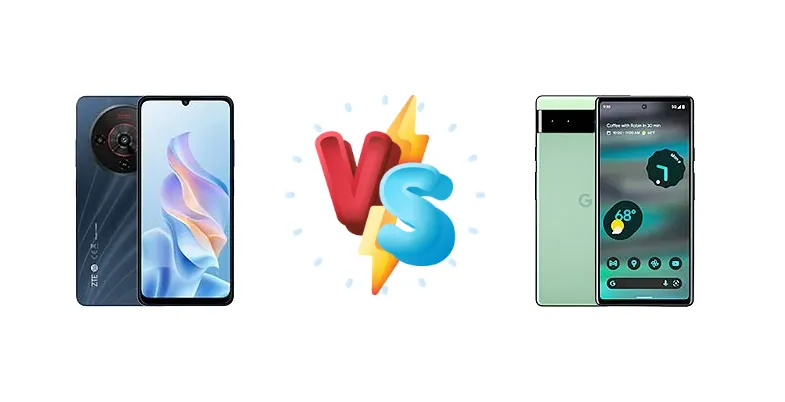
|
🏆 Quick Verdict
For the average user prioritizing battery life and affordability, the ZTE Blade A76 emerges as the winner. Its exceptional 47:24h endurance significantly outlasts the Pixel 6a’s 94h rating, making it ideal for heavy users. However, the Pixel 6a’s superior processing power and camera capabilities justify its higher price for those seeking a more refined experience.
| PHONES | ||
|---|---|---|
| Phone Names | ZTE Blade A76 | Google Pixel 6a |
| Network | ||
|---|---|---|
| 2G bands | GSM 850 / 900 / 1800 / 1900 | GSM 850 / 900 / 1800 / 1900 |
| 3G bands | HSDPA 850 / 900 / 1900 / 2100 | HSDPA 800 / 850 / 900 / 1700(AWS) / 1900 / 2100 |
| 4G bands | 1, 2, 3, 4, 5, 7, 8, 20, 28, 38, 40, 41 | 1, 2, 3, 4, 5, 7, 8, 12, 13, 14, 17, 18, 19, 20, 25, 26, 28, 29, 30, 38, 39, 40, 41, 42, 48, 66, 71 - GX7AS, GB62Z (USA/Canada) |
| 5G bands | 1, 3, 7, 8, 20, 28, 38, 40, 41, 77, 78 SA/NSA | 1, 2, 3, 5, 7, 8, 12, 20, 25, 28, 30, 38, 40, 41, 48, 66, 71, 77, 78 SA/NSA/Sub6 - GX7AS (USA/Canada) |
| Speed | HSPA, LTE, 5G | HSPA, LTE, 5G |
| Technology | GSM / HSPA / LTE / 5G | GSM / HSPA / LTE / 5G |
| - | 1, 2, 3, 5, 7, 8, 12, 20, 25, 28, 30, 40, 48, 66, 71, 77, 78 SA/NSA/Sub6 - G1AZG (International) | |
| Launch | ||
|---|---|---|
| Announced | 2025, June 03 | 2022, May 11 |
| Status | Available. Released 2025, June | Available. Released 2022, July 21 |
| Body | ||
|---|---|---|
| Build | - | Glass front (Gorilla Glass 3), aluminum frame, plastic back |
| Dimensions | 163.6 x 74.9 x 8.6 mm (6.44 x 2.95 x 0.34 in) | 152.2 x 71.8 x 8.9 mm (5.99 x 2.83 x 0.35 in) |
| SIM | Nano-SIM + Nano-SIM | Nano-SIM + eSIM |
| Weight | - | 178 g (6.28 oz) |
| - | IP67 dust/water resistant (up to 1m for 30 min) | |
| Display | ||
|---|---|---|
| Protection | Mohs level 4 | Corning Gorilla Glass 3 |
| Resolution | 720 x 1612 pixels, 20:9 ratio (~262 ppi density) | 1080 x 2400 pixels, 20:9 ratio (~429 ppi density) |
| Size | 6.75 inches, 109.5 cm2 (~89.3% screen-to-body ratio) | 6.1 inches, 90.7 cm2 (~83.0% screen-to-body ratio) |
| Type | IPS LCD, 90Hz | OLED, HDR |
| - | Always-on display | |
| Platform | ||
|---|---|---|
| CPU | Octa-core (2x2.2 GHz Cortex-A78 & 6x2.0 GHz Cortex-A55) | Octa-core (2x2.80 GHz Cortex-X1 & 2x2.25 GHz Cortex-A76 & 4x1.80 GHz Cortex-A55) |
| Chipset | Unisoc T8300 (6 nm) | Google Tensor (5 nm) |
| GPU | Mali-G57 MP2 | Mali-G78 MP20 |
| OS | Android | Android 12, upgradable to Android 15, up to 5 major Android upgrades |
| Memory | ||
|---|---|---|
| Card slot | No | No |
| Internal | 128GB 4GB RAM, 128GB 6GB RAM | 128GB 6GB RAM |
| - | UFS 3.1 | |
| Main Camera | ||
|---|---|---|
| Dual | 50 MP, f/1.8, 27mm (wide), AF Auxiliary lens | 12.2 MP, f/1.7, 27mm, (wide), 1/2.55", 1.4µm, dual pixel PDAF, OIS 12 MP, f/2.2, 17mm, 114˚ (ultrawide), 1.25µm |
| Features | LED flash, HDR | Dual-LED flash, Pixel Shift, Auto-HDR, panorama |
| Single | - | 8 MP, f/2.0, 24mm (wide), 1.12µm |
| Video | 4K@30fps, 1080p@30fps | 4K@30/60fps, 1080p@30/60/120/240fps; gyro-EIS, OIS |
| Selfie camera | ||
|---|---|---|
| Features | - | HDR, panorama |
| Single | 8 MP, (wide) | 8 MP, f/2.0, 24mm (wide), 1.12µm |
| Video | 1080p@30fps | 1080p@30fps |
| Sound | ||
|---|---|---|
| 3.5mm jack | - | No |
| 35mm jack | Yes | No |
| Loudspeaker | Yes | Yes, with stereo speakers |
| Comms | ||
|---|---|---|
| Bluetooth | Yes | 5.2, A2DP, LE |
| NFC | Yes (market/region dependent) | Yes |
| Positioning | GPS | GPS, GLONASS, GALILEO, QZSS |
| Radio | Unspecified | No |
| USB | USB Type-C 2.0 | USB Type-C 3.1 |
| WLAN | Wi-Fi 802.11 a/b/g/n/ac, dual-band | Wi-Fi 802.11 a/b/g/n/ac/6e, dual-band, Wi-Fi Direct |
| Features | ||
|---|---|---|
| Sensors | Yes | Fingerprint (under display, optical), accelerometer, gyro, proximity, compass, barometer |
| Battery | ||
|---|---|---|
| Charging | - | 18W wired, PD3.0 |
| Type | 5000 mAh | Li-Po 4410 mAh |
| Misc | ||
|---|---|---|
| Colors | Black, Blue | Chalk, Charcoal, Sage |
| Models | Z2469N | GX7AS, GB62Z, G1AZG, GB17L |
| Price | £ 150.97 / € 116.90 | $ 138.99 / C$ 228.74 / ₹ 23,999 |
| Tests | ||
|---|---|---|
| Battery life | - | Endurance rating 94h |
| Display | - | Contrast ratio: Infinite (nominal) |
| EU LABEL | ||
|---|---|---|
| Battery | 47:24h endurance, 800 cycles | - |
| Energy | Class B | - |
| Free fall | Class D (45 falls) | - |
| Repairability | Class B | - |
ZTE Blade A76
- Exceptional battery life (47:24h endurance)
- Long-term battery health (800 charge cycles)
- More affordable price point
- Less powerful processor compared to the Pixel 6a
- Likely inferior camera performance
Google Pixel 6a
- Superior processing power with Google Tensor
- Brighter and higher-quality display
- Excellent camera with Google’s computational photography
- Significantly shorter battery life
- Higher price tag
Display Comparison
The Google Pixel 6a boasts a notably brighter display, peaking at 876 nits, which translates to excellent visibility outdoors. While the ZTE Blade A76’s display brightness isn’t specified, the Pixel 6a’s infinite contrast ratio (nominal) suggests a superior viewing experience with deeper blacks. The Pixel 6a’s display is likely to be more color accurate and offer better viewing angles, catering to media consumption and gaming. The Blade A76 likely prioritizes efficiency over display fidelity.
Camera Comparison
The Pixel 6a’s camera system benefits from Google’s exceptional computational photography, leveraging the Tensor chip’s AI capabilities. While specific sensor details are missing for the Blade A76, the Pixel 6a’s image processing excels in dynamic range, low-light performance, and overall image quality. The Pixel 6a’s focus is on delivering consistently excellent photos with minimal effort, while the Blade A76 likely relies more on hardware specifications. The absence of details on the Blade A76’s camera suggests it’s not a primary selling point.
Performance
The core difference lies in the chipsets. The Google Pixel 6a’s Google Tensor (5nm) is a flagship-level processor featuring a Cortex-X1 prime core clocked at 2.80 GHz, designed for demanding tasks like AI processing and image manipulation. The ZTE Blade A76 utilizes the Unisoc T8300 (6nm), an octa-core chip with Cortex-A78 cores peaking at 2.2 GHz. While the T8300 is a capable processor, the Tensor’s architectural advantages and 5nm process provide a significant performance edge, particularly in sustained workloads. The Pixel 6a will handle multitasking, gaming, and complex applications with greater ease. The Unisoc T8300’s 6nm process is more efficient, but the Tensor’s raw power is undeniable.
Battery Life
The ZTE Blade A76 truly shines in battery endurance, achieving an impressive 47:24h rating with 800 charge cycles, indicating long-term battery health. The Google Pixel 6a, while still respectable at 94h, falls significantly behind. The Blade A76’s endurance is likely due to a combination of its less power-hungry chipset and optimized software. The Pixel 6a supports 18W wired charging with PD3.0, offering a faster charging experience than the Blade A76’s charging speed (unspecified), potentially mitigating its lower endurance rating to some extent.
Buying Guide
Buy the ZTE Blade A76 if you need a phone that can reliably last through two full days of moderate use, and prioritize value over cutting-edge features. It’s perfect for travelers, commuters, or anyone who dislikes frequent charging. Buy the Google Pixel 6a if you prefer a smoother, more responsive user experience, a significantly brighter display, and Google’s renowned computational photography, even if it means sacrificing some battery longevity.