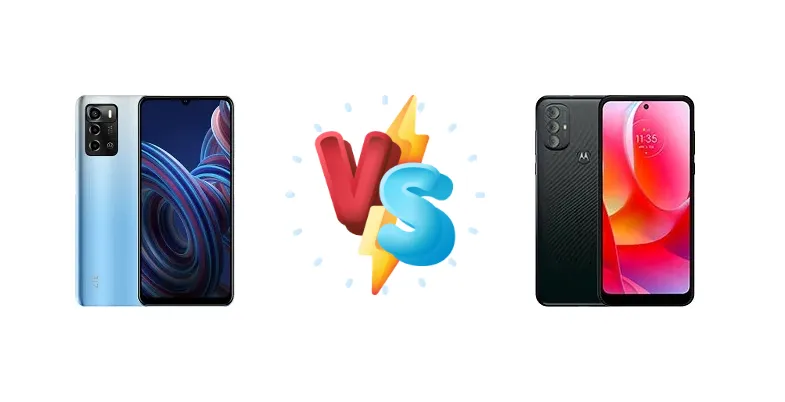
The sub-$200 smartphone market is fiercely competitive. The ZTE Blade A72 and Motorola Moto G Power (2022) both aim to deliver essential features at an accessible price. However, they take different approaches: the A72 offers a potentially more modern chipset in some versions, while the Moto G Power prioritizes massive battery capacity. This comparison dissects their key differences to help you choose the right device.
🏆 Quick Verdict
For most users, the Motorola Moto G Power (2022) is the better choice. While the ZTE Blade A72 (version 2 with the Unisoc T606) offers a more modern CPU architecture, the Moto G Power’s significantly larger battery and more efficient chipset translate to demonstrably longer real-world battery life, a crucial factor in this price segment.
| Network |
|---|
| 2G bands | GSM 850 / 900 / 1800 / 1900 | GSM 850 / 900 / 1800 / 1900 |
| 3G bands | HSDPA 850 / 900 / 1900 / 2100 | HSDPA 850 / 900 / 1700(AWS) / 1900 / 2100 |
| 4G bands | 1, 3, 5, 7, 8, 20, 28, 38, 40, 41 | 1, 2, 3, 4, 5, 7, 8, 12, 13, 14, 17, 25, 26, 29, 30, 38, 41, 66, 71 - USA |
| Speed | HSPA, LTE | HSPA, LTE |
| Technology | GSM / HSPA / LTE | GSM / HSPA / LTE |
| Launch |
|---|
| Announced | 2022, June 10 | 2021, November 17 |
| Status | Available. Released 2022, June 10 | Available. Released 2022, February 22 |
| Body |
|---|
| Build | - | Glass front, plastic back, plastic frame |
| Dimensions | 168 x 77.5 x 9.4 mm (6.61 x 3.05 x 0.37 in) | 167.2 x 76.5 x 9.4 mm (6.58 x 3.01 x 0.37 in) |
| SIM | Nano-SIM + Nano-SIM | Nano-SIM |
| Weight | 214 g (7.55 oz) | 203 g (7.16 oz) |
| | - | Water-repellent coating |
| Display |
|---|
| Resolution | 1080 x 2400 pixels, 20:9 ratio (~390 ppi density) | 720 x 1600 pixels, 20:9 ratio (~270 ppi density) |
| Size | 6.75 inches, 110.0 cm2 (~84.5% screen-to-body ratio) | 6.5 inches, 102.0 cm2 (~79.7% screen-to-body ratio) |
| Type | IPS LCD, 90Hz | IPS LCD, 90Hz |
| Platform |
|---|
| CPU | Octa-core (4x1.6 GHz Cortex-A55 & 4x1.2 GHz Cortex-A55) - version 1Octa-core (2x1.6 GHz Cortex-A75 & 6x1.6 GHz Cortex-A55) - version 2 | - |
| Chipset | Unisoc SC9863A (28 nm) - version 1Unisoc T606 (12 nm) - version 2 | Mediatek MT6765 Helio G37 (12 nm) |
| GPU | IMG8322 - version 1Mali-G57 MP1 - version 2 | - |
| OS | Android 11 | Android 11 |
| Memory |
|---|
| Card slot | microSDXC | microSDXC (dedicated slot) |
| Internal | 64GB 3GB RAM, 128GB 3GB RAM | 64GB 4GB RAM, 128GB 4GB RAM |
| | - | eMMC 5.1 |
| Main Camera |
|---|
| Features | LED flash, HDR | LED flash, HDR |
| Single | 5 MP | - |
| Triple | 13 MP, AF
2 MP (macro)
Auxiliary lens | 50 MP, f/1.8, (wide), 0.65µm, PDAF
2 MP (macro)
Auxiliary lens |
| Video | 1080p@30fps | 1080p@30fps, gyro-EIS |
| Selfie camera |
|---|
| Single | 5 MP | 8 MP, f/2.0, 1.12µm |
| Video | 720p@30fps | 1080p@30fps |
| Sound |
|---|
| 3.5mm jack | Yes | Yes |
| 35mm jack | Yes | Yes |
| Loudspeaker | Yes | Yes |
| Comms |
|---|
| Bluetooth | Yes | 5.0, A2DP, LE |
| NFC | No | No |
| Positioning | GPS, GLONASS | GPS, GLONASS, GALILEO |
| Radio | Unspecified | Unspecified |
| USB | USB Type-C 2.0, OTG | USB Type-C 2.0 |
| WLAN | Yes | Wi-Fi 802.11 a/b/g/n/ac, dual-band, Wi-Fi Direct |
| Features |
|---|
| Sensors | Fingerprint (side-mounted), accelerometer, proximity | Fingerprint (side-mounted), accelerometer, gyro, proximity, compass, barometer |
| Battery |
|---|
| Charging | 22.5W wired | 10W wired |
| Type | Li-Ion 6000 mAh | Li-Po 5000 mAh |
| Misc |
|---|
| Colors | Space Gray, Sky Blue | Black |
| Price | About 110 EUR | About 70 EUR |
ZTE Blade A72
- Potentially faster CPU (with Unisoc T606 version)
- Faster charging speed (22.5W)
- More modern chipset architecture (T606 version)
- Inconsistent chipset (SC9863A vs T606)
- Likely shorter battery life
- Uncertain battery capacity
Motorola Moto G Power (2022)
- Exceptional battery life
- Reliable performance for basic tasks
- Consistent chipset (Helio G37)
- Slow charging speed (10W)
- Less powerful CPU compared to T606 version of A72
- Basic camera system
Display Comparison
Neither device boasts a standout display. Details regarding panel type, resolution, and brightness are missing, but both likely utilize LCD panels common in this price bracket. The focus here isn't on visual fidelity. The absence of high refresh rates is expected. Bezels are likely substantial on both, impacting the overall screen-to-body ratio. Color accuracy will likely be standard for the price point, prioritizing power efficiency over color calibration.
Camera Comparison
Camera performance is expected to be modest on both devices. Details regarding sensor sizes and lens apertures are unavailable, but both likely feature a primary sensor paired with basic auxiliary lenses (potentially a depth or macro sensor). The ZTE Blade A72’s camera system is likely optimized for general-purpose photography, while Motorola’s image processing tends towards more natural color reproduction. The absence of Optical Image Stabilization (OIS) on both devices means low-light performance will be limited. Focusing on the main sensor is key; any 2MP macro or depth sensors are unlikely to deliver meaningful improvements to image quality.
Performance
The performance disparity hinges on the ZTE Blade A72’s chipset variations. The initial version with the Unisoc SC9863A (28nm) is significantly less efficient and offers weaker CPU performance compared to the later version with the Unisoc T606 (12nm). The T606, featuring Cortex-A75 cores, provides a noticeable uplift in responsiveness for everyday tasks. However, the Motorola Moto G Power’s MediaTek Helio G37 (12nm) is a competent performer for basic usage. While the T606 has architectural advantages, the G37’s optimization for MediaTek’s software stack could close the gap in real-world performance. RAM configurations are not specified, but both likely utilize LPDDR4X, limiting memory bandwidth. Thermal management is unlikely to be a concern on either device given the low-power chipsets.
Battery Life
This is where the Moto G Power truly shines. While the exact battery capacity isn’t specified, the ‘Power’ branding indicates a significantly larger battery – likely 5000mAh or greater – compared to the ZTE Blade A72. The Moto G Power’s 10W charging is slow, but the large battery capacity mitigates the need for frequent top-ups. The ZTE Blade A72’s 22.5W charging is faster, but the smaller battery capacity means it won’t offset the Moto G Power’s overall endurance. Users prioritizing longevity will overwhelmingly favor the Moto G Power.
Buying Guide
Buy the ZTE Blade A72 if you prioritize potential processing power for light multitasking and are willing to compromise on battery life, *and* you can confirm you are getting the version with the Unisoc T606 chipset. Buy the Motorola Moto G Power (2022) if you value all-day (and potentially multi-day) battery life above all else, and need a reliable device for basic communication and media consumption.
Frequently Asked Questions
❓ Is the ZTE Blade A72 a good phone for gaming?
The ZTE Blade A72, even with the Unisoc T606, is not ideal for demanding gaming. While it can handle casual games, the limited GPU power and potential for thermal throttling will result in a subpar experience with graphically intensive titles. The Moto G Power is similarly limited.
❓ How long will the Motorola Moto G Power (2022) battery last on a single charge?
The Motorola Moto G Power (2022) is designed for exceptional battery life. With moderate usage (calls, texts, social media, some video streaming), you can realistically expect 2-3 days of use on a single charge. Heavy users can still achieve a full day of battery life.
❓ Which phone is better for taking photos in low light?
Neither phone excels in low-light photography. The lack of OIS and relatively small sensors will result in noisy and blurry images. The ZTE Blade A72 might offer slightly better image processing, but the difference will be minimal.
❓ What version of Android do these phones run?
Details on the specific Android version are not provided. However, both devices likely ship with a relatively recent version of Android (likely Android 11 or 12) with manufacturer-specific customizations. Software update support is typically limited on budget smartphones.