
ZTE Blade 20 Pro 5G vs Nokia 8.3 5G: A Detailed Comparison of Two 5G Contenders
| Phones Images | |||||
|---|---|---|---|---|---|
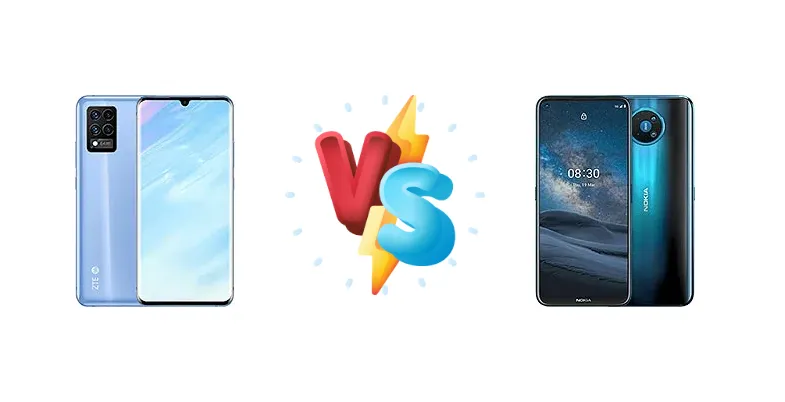
|
🏆 Quick Verdict
For the average user prioritizing a balance of features and affordability, the Nokia 8.3 5G edges out the ZTE Blade 20 Pro 5G. While both share the same chipset, Nokia’s established software support and potentially more refined camera processing give it a slight advantage. However, the ZTE offers a compelling alternative for those seeking maximum value.
| PHONES | ||
|---|---|---|
| Phone Names | ZTE Blade 20 Pro 5G | Nokia 8.3 5G |
| Network | ||
|---|---|---|
| 2G bands | GSM 850 / 900 / 1800 / 1900 | GSM 850 / 900 / 1800 / 1900 |
| 3G bands | HSDPA 850 / 900 / 1700(AWS) / 1900 / 2100 | HSDPA 850 / 900 / 1700(AWS) / 1900 / 2100 |
| 4G bands | 1, 3, 4, 5, 7, 8, 12, 17, 20, 34, 38, 39, 40, 41 | 1, 2, 3, 4, 5, 7, 8, 12, 13, 17, 20, 28, 32, 38, 39, 40, 41, 66, 71 |
| 5G bands | 1, 3, 41, 78, 79 SA/NSA | 1, 2, 3, 5, 7, 8, 28, 38, 40, 41, 66, 71, 78 SA/NSA |
| Speed | HSPA, LTE, 5G | HSPA 42.2/5.76 Mbps, LTE (4CA) Cat18 1200/150 Mbps, 5G 2.4/1.2 Gbps |
| Technology | GSM / CDMA / HSPA / LTE / 5G | GSM / HSPA / LTE / 5G |
| CDMA 800 | - | |
| Launch | ||
|---|---|---|
| Announced | 2020, November 30. Released 2021, January 04 | 2020, March 19. Released 2020, September 15 |
| Status | Discontinued | Discontinued |
| Body | ||
|---|---|---|
| Build | - | Glass front, plastic frame, glass back |
| Dimensions | 159.2 x 73.4 x 7.9 mm (6.27 x 2.89 x 0.31 in) | 171.9 x 78.6 x 9 mm (6.77 x 3.09 x 0.35 in) |
| SIM | Nano-SIM + Nano-SIM | · Nano-SIM· Nano-SIM + Nano-SIM |
| Weight | 168 g (5.93 oz) | 220 g (7.76 oz) |
| Display | ||
|---|---|---|
| Resolution | 1080 x 2340 pixels, 19.5:9 ratio (~398 ppi density) | 1080 x 2400 pixels, 20:9 ratio (~386 ppi density) |
| Size | 6.47 inches, 102.8 cm2 (~87.9% screen-to-body ratio) | 6.81 inches, 112.0 cm2 (~82.9% screen-to-body ratio) |
| Type | AMOLED | IPS LCD |
| Platform | ||
|---|---|---|
| CPU | Octa-core (1x2.4 GHz Kryo 475 Prime & 1x2.2 GHz Kryo 475 Gold & 6x1.8 GHz Kryo 475 Silver) | Octa-core (1x2.4 GHz Kryo 475 Prime & 1x2.2 GHz Kryo 475 Gold & 6x1.8 GHz Kryo 475 Silver) |
| Chipset | Qualcomm SM7250 Snapdragon 765G 5G (7 nm) | Qualcomm SM7250 Snapdragon 765G 5G (7 nm) |
| GPU | Adreno 620 | Adreno 620 |
| OS | Android 10, MiFavor 10 | Android 10, upgradable to Android 12, Android One |
| Memory | ||
|---|---|---|
| Card slot | microSDXC (uses shared SIM slot) | microSDXC (uses shared SIM slot) |
| Internal | 128GB 8GB RAM | 64GB 6GB RAM, 64GB 8GB RAM, 128GB 8GB RAM |
| Main Camera | ||
|---|---|---|
| Features | LED flash, panorama, HDR | Zeiss optics, Dual-LED flash, panorama, HDR |
| Quad | 64 MP, f/1.9, 25mm (wide), 1/1.72", 0.8µm, PDAF 8 MP, f/2.2, 120˚, 16mm (ultrawide) 2 MP (macro) Auxiliary lens | 64 MP, f/1.9, (wide), 1/1.72", 0.8µm, PDAF 12 MP, f/2.2, 120˚ (ultrawide), 1/2.43", 1.4µm, AF 2 MP (macro) Auxiliary lens |
| Video | 4K@30/60fps, 1080p@30fps; gyro-EIS | 4K@30/60fps, 1080p@30/240fps, 720p@960fps, gyro-EIS |
| Selfie camera | ||
|---|---|---|
| Features | HDR | Zeiss optics, HDR |
| Single | 20 MP, f/2.0, (wide), 1/2.8", 1.0µm | 24 MP, f/2.0, (wide), 1/2.8", 0.9µm |
| Video | 1080p@30fps | 1080p@30fps |
| Sound | ||
|---|---|---|
| 3.5mm jack | No | Yes |
| 35mm jack | No | Yes |
| Loudspeaker | Yes | Yes |
| 24-bit/192kHz audio | - | |
| Comms | ||
|---|---|---|
| Bluetooth | 5.1, A2DP, LE | 5.0, A2DP, EDR, LE |
| NFC | Yes | Yes |
| Positioning | GPS, GLONASS, GALILEO, BDS | GPS, GLONASS, BDS |
| Radio | No | FM radio |
| USB | USB Type-C 3.1 | USB Type-C 2.0, OTG |
| WLAN | Wi-Fi 802.11 a/b/g/n/ac, dual-band, Wi-Fi Direct | Wi-Fi 802.11 a/b/g/n/ac, dual-band, Wi-Fi Direct |
| Features | ||
|---|---|---|
| Sensors | Fingerprint (under display, optical), accelerometer, gyro, proximity, compass | Fingerprint (side-mounted), accelerometer, gyro, proximity, compass |
| Battery | ||
|---|---|---|
| Charging | 18W wired, QC4 | 18W wired |
| Type | Li-Ion 4000 mAh | Li-Po 4500 mAh |
| Misc | ||
|---|---|---|
| Colors | Blue | Polar Night |
| Models | - | TA-1243, TA-1251 |
| Price | About 350 EUR | About 470 EUR |
| SAR | - | 0.96 W/kg (head) 1.41 W/kg (body) |
| SAR EU | - | 0.96 W/kg (head) 1.41 W/kg (body) |
ZTE Blade 20 Pro 5G
- Highly competitive price point
- Snapdragon 765G 5G chipset offers solid performance
- QC4 fast charging support
- Potentially less refined software experience
- Uncertainty regarding long-term software support
Nokia 8.3 5G
- Clean Android experience with guaranteed updates
- Nokia’s reputation for durability
- Potentially better camera image processing
- Slightly higher price compared to ZTE
- 18W charging is relatively slow
Display Comparison
Both the ZTE Blade 20 Pro 5G and Nokia 8.3 5G lack detailed display specifications in the provided data. However, given their price points, we can infer both likely utilize IPS LCD panels. The absence of information regarding refresh rates (60Hz is probable for both) or peak brightness suggests neither prioritizes a premium visual experience. The Nokia 8.3 5G, historically, has focused on larger displays, potentially offering a more immersive viewing experience, but this is speculative without concrete data.
Camera Comparison
Without detailed sensor information, a direct camera comparison is difficult. However, the market positioning suggests the Nokia 8.3 5G likely prioritizes image processing and software features more than the ZTE Blade 20 Pro 5G. While both may feature a multi-camera setup, the Nokia’s brand reputation leans towards more consistent and natural-looking photos. The absence of OIS information suggests neither phone excels in low-light photography without significant software intervention. Any 2MP macro or depth sensors on either device should be considered supplementary features, offering limited practical benefit.
Performance
The core of both devices is the Qualcomm SM7250 Snapdragon 765G 5G (7 nm) chipset, featuring an identical CPU configuration: Octa-core (1x2.4 GHz Kryo 475 Prime & 1x2.2 GHz Kryo 475 Gold & 6x1.8 GHz Kryo 475 Silver). This means CPU performance will be virtually indistinguishable between the two. Real-world performance will likely hinge on RAM management and thermal throttling, areas where Nokia’s software optimization *could* provide a slight edge. The 7nm process node ensures reasonable efficiency, but sustained heavy workloads will still generate heat.
Battery Life
Both devices feature 18W wired charging with Quick Charge 4 (QC4) support. While the wattage is identical, the actual 0-100% charging time can vary based on battery capacity and charging circuitry efficiency. Without knowing the battery capacity of each device, it’s impossible to definitively say which charges faster. However, 18W is relatively slow by modern standards, meaning both phones will require over an hour to fully charge. The Snapdragon 765G’s 7nm process contributes to reasonable power efficiency, but heavy 5G usage will still impact battery life.
Buying Guide
Buy the ZTE Blade 20 Pro 5G if you need a highly affordable 5G phone and are comfortable with a potentially less polished software experience. It’s ideal for users who prioritize raw connectivity and aren’t heavily invested in a specific ecosystem. Buy the Nokia 8.3 5G if you prefer a cleaner Android experience with guaranteed software updates, and value a brand known for durability and long-term support, even if it means paying a slight premium.