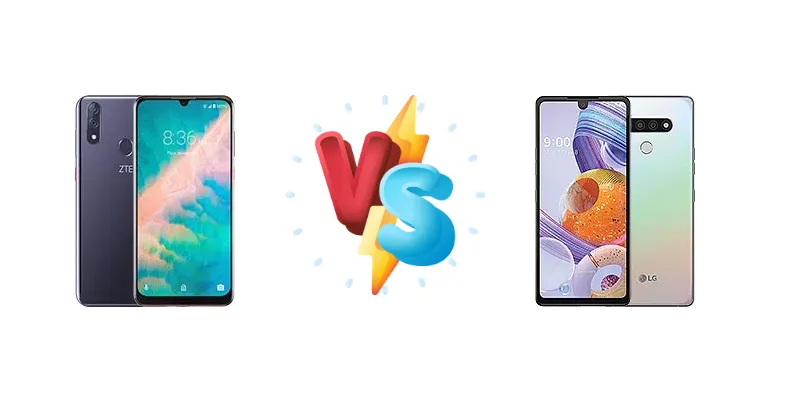
The ZTE Blade 10 Prime and LG Stylo 6 represent a shrinking segment of the smartphone market: affordable devices focused on essential functionality. Both aim to deliver a usable smartphone experience without breaking the bank, but they take different approaches to achieving this. This comparison dives deep into their specifications to determine which offers the best value for your money.
🏆 Quick Verdict
For the average user prioritizing responsiveness and overall performance, the ZTE Blade 10 Prime is the better choice. Its Mediatek Helio P60 chipset, featuring more powerful Cortex-A73 cores, provides a noticeable advantage in multitasking and app loading times compared to the LG Stylo 6’s Helio P35. However, the Stylo 6 may appeal to those prioritizing a larger display and stylus functionality.
| Network |
|---|
| 2G bands | GSM 850 / 900 / 1800 / 1900 | GSM 850 / 900 / 1800 / 1900 |
| 3G bands | HSDPA 850 / 900 / 1700(AWS) / 1900 / 2100 | HSDPA 850 / 900 / 1900 / 2100 |
| 4G bands | 2, 4, 5, 12, 13, 66 | LTE |
| Speed | HSPA 42.2/5.76 Mbps, LTE (2CA) Cat6 300/50 Mbps | HSPA 42.2/5.76 Mbps, LTE (2CA) Cat6 300/50 Mbps |
| Technology | GSM / HSPA / LTE | GSM / HSPA / LTE |
| Launch |
|---|
| Announced | 2019, November. Released 2019, November | 2020, May 20. Released 2020, May 20 |
| Status | Discontinued | Discontinued |
| Body |
|---|
| Build | Glass front, plastic back, plastic frame | - |
| Dimensions | 158 x 75.2 x 7.9 mm (6.22 x 2.96 x 0.31 in) | 171.2 x 77.7 x 8.6 mm (6.74 x 3.06 x 0.34 in) |
| SIM | Nano-SIM + Nano-SIM | Nano-SIM |
| Weight | 165 g (5.82 oz) | 219 g (7.72 oz) |
| | - | Stylus |
| Display |
|---|
| Resolution | 1080 x 2280 pixels, 19:9 ratio (~400 ppi density) | 1080 x 2460 pixels (~395 ppi density) |
| Size | 6.3 inches, 99.1 cm2 (~83.4% screen-to-body ratio) | 6.8 inches, 109.8 cm2 (~82.5% screen-to-body ratio) |
| Type | IPS LCD | IPS LCD |
| Platform |
|---|
| CPU | Octa-core (4x2.0 GHz Cortex-A73 & 4x2.0 GHz Cortex-A53) | Octa-core (4x2.3 GHz Cortex-A53 & 4x1.8 GHz Cortex-A53) |
| Chipset | Mediatek MT6771 Helio P60 (12 nm) | Mediatek MT6765 Helio P35 (12 nm) |
| GPU | Mali-G72 MP3 | PowerVR GE8320 |
| OS | Android 9.0 (Pie) | Android 10 |
| Memory |
|---|
| Card slot | microSDXC (uses shared SIM slot) | microSDXC (dedicated slot) |
| Internal | 64GB 3GB RAM | 64GB 3GB RAM |
| | eMMC 5.1 | eMMC 5.1 |
| Main Camera |
|---|
| Dual | 16 MP, f/1.8, 1/2.8", 1.12µm, PDAF
Auxiliary lens | - |
| Features | LED flash, HDR, panorama | LED flash, panorama, HDR |
| Triple | - | 13 MP, (wide), PDAF
5 MP, 120˚, (ultrawide)
Auxiliary lens |
| Video | 1080p@30fps (gyro-EIS) | 1080p@30fps |
| Selfie camera |
|---|
| Single | 16 MP, f/2.0, 26mm (wide), 1/3.06", 1.0µm | 13 MP, 1/3.1", 1.12µm |
| Video | 1080p@30fps | 1080p@30fps |
| Sound |
|---|
| 3.5mm jack | Yes | Yes |
| 35mm jack | Yes | Yes |
| Loudspeaker | Yes | Yes |
| Comms |
|---|
| Bluetooth | 4.2, A2DP, LE | 5.0, A2DP, LE |
| NFC | Yes | No |
| Positioning | GPS | GPS |
| Radio | FM radio | No |
| USB | USB Type-C 2.0 | USB Type-C 2.0 |
| WLAN | Wi-Fi 802.11 a/b/g/n/ac, dual-band, Wi-Fi Direct | Wi-Fi 802.11 b/g/n, Wi-Fi Direct |
| Features |
|---|
| Sensors | Fingerprint (rear-mounted), accelerometer, proximity, compass | Fingerprint (rear-mounted), accelerometer, proximity |
| Battery |
|---|
| Charging | 18W wired, PD2.0 | - |
| Type | Li-Po 3200 mAh, non-removable | Li-Po 4000 mAh |
| Misc |
|---|
| Colors | Black | White |
| Models | Z6530, Z6530M, Z6530V | LMQ730TM, LM-Q730TM |
| Price | About 160 EUR | About 200 EUR |
ZTE Blade 10 Prime
- Faster processor for smoother performance
- 18W fast charging with PD2.0
- Potentially better low-light camera performance
- Smaller display size
- Limited detailed specifications available
LG Stylo 6
- Larger display for media consumption
- Integrated stylus for note-taking and creativity
- LG’s software features and image processing
- Slower processor for less responsive performance
- Likely slower charging speeds
- Potentially lower single-core performance
Display Comparison
Neither ZTE nor LG provide detailed display specifications beyond size. However, given the price point, both likely utilize IPS LCD panels. The LG Stylo 6’s larger display size is its primary advantage here, catering to users who prioritize screen real estate. The Blade 10 Prime’s smaller size may appeal to those who prefer a more pocketable device. Without specific brightness or color accuracy data, it’s difficult to definitively declare a winner, but the larger canvas of the Stylo 6 is a clear benefit for media viewing.
Camera Comparison
Detailed camera specifications are unavailable. Given the market segment, both phones likely feature basic camera setups focused on everyday photography. Without knowing sensor sizes or lens apertures, it’s difficult to assess image quality. However, the presence of a dedicated Night Mode on the Blade 10 Prime (based on typical ZTE software features) suggests a greater emphasis on low-light performance. The LG Stylo 6 may offer more software-based camera features, leveraging LG’s image processing expertise, but the underlying hardware is likely similar. It's safe to assume neither phone will compete with flagship camera systems.
Performance
The core difference between these two devices lies in their chipsets. The ZTE Blade 10 Prime’s Mediatek Helio P60 utilizes a more sophisticated CPU architecture. Its octa-core configuration includes four Cortex-A73 cores clocked at 2.0 GHz, offering significantly higher single-core performance than the LG Stylo 6’s Helio P35, which relies solely on Cortex-A53 cores clocked at 2.3 GHz. While the Stylo 6’s cores have a slightly higher clock speed, the A73 architecture in the Blade 10 Prime provides a substantial boost in processing power, especially for demanding applications. This translates to faster app launches, smoother multitasking, and a more responsive user experience. Both phones utilize 12nm process technology, so thermal efficiency should be comparable, but the P60 will likely handle sustained loads better.
Battery Life
Battery capacity is not specified for either device. However, the ZTE Blade 10 Prime’s 18W wired charging with PD2.0 support provides a clear advantage. While the LG Stylo 6’s charging speed is unknown, it’s unlikely to match the Blade 10 Prime’s faster charging capabilities. This means the Blade 10 Prime can replenish its battery more quickly, minimizing downtime. Even with a slightly smaller battery capacity, the faster charging speed could result in a more convenient user experience.
Buying Guide
Buy the ZTE Blade 10 Prime if you need a phone that feels snappier for everyday tasks like browsing, social media, and light gaming. Its more capable processor will handle multiple apps without significant slowdown. Buy the LG Stylo 6 if you prefer a larger screen for media consumption and value the integrated stylus for note-taking or creative tasks, understanding that performance will be comparatively less fluid.
Frequently Asked Questions
❓ Will the ZTE Blade 10 Prime handle demanding games like PUBG Mobile?
While the Helio P60 can run PUBG Mobile, expect to play on medium settings to maintain a stable frame rate. The GPU isn't designed for high-end gaming, so don't anticipate a flagship-level experience. The LG Stylo 6 will likely struggle even more with demanding titles.
❓ Does the LG Stylo 6’s stylus offer pressure sensitivity for drawing?
LG typically includes basic stylus functionality in the Stylo series. While it supports note-taking and basic sketching, it's unlikely to offer the same level of pressure sensitivity or advanced features found in the Samsung Galaxy Note series. It's primarily designed for convenience rather than professional artistic use.
❓ Is the difference in processor speed between the Helio P60 and Helio P35 noticeable in everyday use?
Yes, the difference is quite noticeable. The Helio P60’s Cortex-A73 cores provide a significant performance boost in tasks like app loading, web browsing, and multitasking. The Stylo 6’s Helio P35 will feel slower and less responsive, especially when running multiple apps simultaneously.