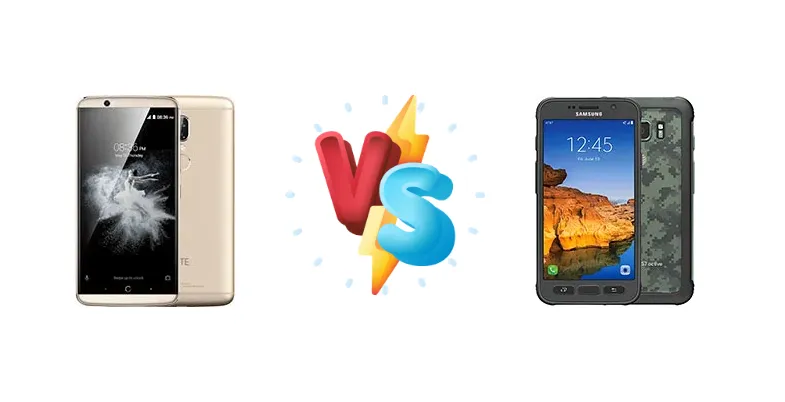
The ZTE Axon 7s and Samsung Galaxy S7 Active were both contenders in their time, offering premium features at competitive prices. But which one holds up better today? We're diving deep into a detailed comparison to help you decide which of these older flagships is the right choice for you.
🏆 Quick Verdict
The Galaxy S7 Active edges out the Axon 7s thanks to its exceptional battery life and rugged design. While the Axon 7s boasts a slightly faster processor, the S7 Active's durability and proven track record make it the more compelling option for many users.
| Network |
|---|
| 2G bands | GSM 850 / 900 / 1800 / 1900 - SIM 1 & SIM 2 | GSM 850 / 900 / 1800 / 1900 |
| 3G bands | HSDPA 850 / 900 / 1700(AWS) / 1900 / 2100 & TD-SCDMA | HSDPA 850 / 1900 / 2100 |
| 4G bands | 1, 2, 3, 4, 5, 7, 8, 12, 38, 39, 40, 41 | 1, 2, 3, 4, 5, 7, 8, 12, 20, 29, 30, 38, 39, 40, 41 |
| Speed | HSPA 42.2/5.76 Mbps, LTE Cat6 300/50 Mbps | HSPA 42.2/5.76 Mbps, LTE (3CA) Cat9 450/50 Mbps |
| Technology | GSM / CDMA / HSPA / EVDO / LTE | GSM / HSPA / LTE |
| | CDMA2000 1xEV-DO | - |
| Launch |
|---|
| Announced | 2017, April. Released 2017, June | 2016, June. Released 2016, June |
| Status | Discontinued | Discontinued |
| Body |
|---|
| Build | - | Glass front (Gorilla Glass 4), plastic back, aluminum frame |
| Dimensions | 151.7 x 75 x 7.9 mm (5.97 x 2.95 x 0.31 in) | 148.8 x 74.9 x 9.9 mm (5.86 x 2.95 x 0.39 in) |
| SIM | Nano-SIM + Nano-SIM | Nano-SIM |
| Weight | 170 g (6.00 oz) | 184.8 g (6.53 oz) |
| | - | IP68 dust/water resistant (up to 1.5m for 30 mins)
MIL-STD-810G compliant |
| Display |
|---|
| Protection | - | Corning Gorilla Glass 4 |
| Resolution | 1440 x 2560 pixels, 16:9 ratio (~534 ppi density) | 1440 x 2560 pixels, 16:9 ratio (~576 ppi density) |
| Size | 5.5 inches, 83.4 cm2 (~73.3% screen-to-body ratio) | 5.1 inches, 71.7 cm2 (~64.3% screen-to-body ratio) |
| Type | AMOLED | Super AMOLED |
| | - | Always-on display |
| Platform |
|---|
| CPU | Quad-core (2x2.35 GHz Kryo & 2x1.6 GHz Kryo) | Quad-core (2x2.15 GHz Kryo & 2x1.6 GHz Kryo) |
| Chipset | Qualcomm MSM8996 Snapdragon 821 (14 nm) | Qualcomm MSM8996 Snapdragon 820 (14 nm) |
| GPU | Adreno 530 | Adreno 530 |
| OS | Android 7 (Nougat), MiFavor 4 | Android 6.0 (Marshmallow), upgradable to 7.0 (Nougat), TouchWiz UI |
| Memory |
|---|
| Card slot | microSDXC (uses shared SIM slot) | microSDXC (dedicated slot) |
| Internal | 128GB 6GB RAM | 32GB 4GB RAM |
| Main Camera |
|---|
| Dual | 12 MP, f/1.8, 1/2.8", 1.0µm, PDAF
20 MP | - |
| Features | Dual-LED dual-tone flash, HDR, panorama | LED flash, auto-HDR, panorama |
| Single | - | 12 MP, f/1.7, 26mm (wide), 1/2.55", 1.4µm, dual pixel PDAF, OIS |
| Video | 4K@30fps, 1080p@30fps | 4K@30fps, 1080p@30fps (gyro-EIS), 1080p@60fps, 720p@240fps, HDR, stereo sound rec., OIS |
| Selfie camera |
|---|
| Features | - | HDR |
| Single | 8 MP | 5 MP, f/1.7, 22mm (wide), 1/4.1", 1.34µm |
| Sound |
|---|
| 3.5mm jack | Yes | Yes |
| 35mm jack | Yes | Yes |
| Loudspeaker | Yes | Yes |
| | 24-bit/192kHz audio
| - |
| Comms |
|---|
| Bluetooth | v4.2, A2DP, LE | 4.2, A2DP, LE, aptX |
| NFC | Yes | Yes |
| Positioning | GPS, GLONASS | GPS, GLONASS |
| Radio | No | Stereo FM radio, RDS |
| USB | USB Type-C | microUSB 2.0, OTG |
| WLAN | Wi-Fi 802.11 a/b/g/n/ac, dual-band, Wi-Fi Direct | Wi-Fi 802.11 a/b/g/n/ac, dual-band, Wi-Fi Direct |
| Features |
|---|
| Sensors | Fingerprint (rear-mounted), accelerometer, gyro, proximity, compass | Fingerprint (front-mounted), accelerometer, gyro, proximity, compass, barometer, heart rate, SpO2 |
| | - | ANT+
S-Voice natural language commands and dictation
Samsung Pay (Visa, MasterCard certified) |
| Battery |
|---|
| Charging | 18W wired, QC3 | 15W wired, QC2
Wireless (Qi) (market dependent) |
| Music play | - | Up to 110 h |
| Stand-by | - | Up to 384 h (3G) |
| Talk time | - | Up to 32 h (3G) |
| Type | Li-Ion 3400 mAh, non-removable | Li-Ion 4000 mAh, non-removable |
| Misc |
|---|
| Colors | Gold | Camo Green, Titanium Gray, Sandy Gold |
| Models | A2018 | SM-G891A |
| Price | About 450 EUR | About 360 EUR |
| SAR | - | 0.92 W/kg (head) 0.75 W/kg (body) |
| SAR EU | - | 0.32 W/kg (head) 0.98 W/kg (body) |
| Tests |
|---|
| Audio quality | - |
Noise -94.3dB / Crosstalk -93.4dB |
| Battery life | - | Endurance rating 96h |
| Loudspeaker | - |
Voice 72dB / Noise 66dB / Ring 78dB |
| Performance | - |
Basemark OS II 2.0: 2487Basemark X: 32362 |
ZTE Axon 7s
- Slightly faster processor
- Higher resolution display
- Better front-facing camera megapixels
- QC3 fast charging
- Shorter battery life
- Less durable design
- Potentially less reliable software updates
Samsung Galaxy S7 active
- Exceptional battery life
- Rugged and durable design
- Water and dust resistance (IP68)
- Proven track record for reliability
- Wireless charging (market dependent)
- Slightly slower processor
- Smaller screen
- Older software support
Display Comparison
The Axon 7s features a 5.5-inch AMOLED display with a resolution of 2560 x 1440 (QHD), offering vibrant colors and sharp details. The S7 Active has a 5.1-inch Super AMOLED display with a resolution of 2560 x 1440. While both are excellent, the Axon 7s has a slightly larger screen and potentially better color accuracy.
Camera Comparison
The S7 Active typically features a 12MP rear camera with optical image stabilization (OIS) and a 5MP front camera. The Axon 7s has a 20MP rear camera and an 8MP front camera. While the Axon 7s has higher megapixel counts, the S7 Active's OIS often results in better low-light performance and more stable videos. Image quality is generally comparable.
Performance
The Axon 7s utilizes a Snapdragon 821, slightly faster than the S7 Active's Snapdragon 820. However, real-world performance differences are minimal. Both phones handle everyday tasks and moderate gaming with ease. The Axon 7s might show a slight edge in demanding games.
Battery Life
This is where the S7 Active truly shines. Its endurance rating of 96 hours is exceptional. The Axon 7s, while supporting 18W QC3 charging, has a smaller battery and significantly shorter battery life. The S7 Active's battery is a major advantage.
Buying Guide
The ZTE Axon 7s is ideal for users prioritizing performance and a cleaner Android experience. The Samsung Galaxy S7 Active is perfect for those needing a durable, long-lasting phone for outdoor adventures or demanding work environments.
Frequently Asked Questions
❓ Is the ZTE Axon 7s still worth buying?
If you prioritize performance and a clean Android experience and don't mind shorter battery life, the Axon 7s can be a decent budget option. However, be aware of limited software updates.
❓ How durable is the Samsung Galaxy S7 Active?
The S7 Active is built to withstand harsh conditions. It's water and dust resistant (IP68) and features a ruggedized design with a protective shell.