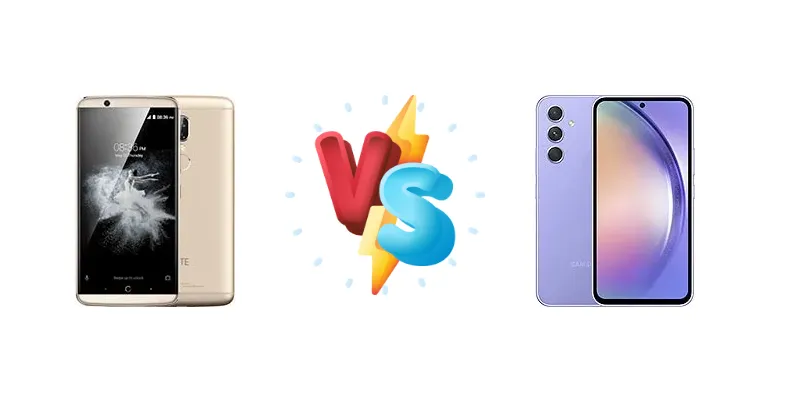
The ZTE Axon 7s, a flagship from a bygone era, faces off against the modern Samsung Galaxy A54. This comparison explores how these phones stack up, considering their age difference and current relevance. We'll dive into display quality, performance, camera capabilities, and battery endurance to help you decide which device best suits your needs.
🏆 Quick Verdict
The Samsung Galaxy A54 is the clear winner. While the Axon 7s boasts a Snapdragon 821, the A54's modern chipset, superior display, significantly improved camera, and longer software support make it the more compelling choice for most users in 2024.
| Network |
|---|
| 2G bands | GSM 850 / 900 / 1800 / 1900 - SIM 1 & SIM 2 | GSM 850 / 900 / 1800 / 1900 |
| 3G bands | HSDPA 850 / 900 / 1700(AWS) / 1900 / 2100 & TD-SCDMA | HSDPA 850 / 900 / 1700(AWS) / 1900 / 2100 |
| 4G bands | 1, 2, 3, 4, 5, 7, 8, 12, 38, 39, 40, 41 | 1, 2, 3, 4, 5, 7, 8, 12, 17, 20, 26, 28, 32, 38, 40, 41, 66 - International |
| 5G bands | - | 1, 3, 7, 8, 20, 28, 38, 40, 41, 77, 78 SA/NSA/Sub6 - International |
| Speed | HSPA 42.2/5.76 Mbps, LTE Cat6 300/50 Mbps | HSPA, LTE, 5G |
| Technology | GSM / CDMA / HSPA / EVDO / LTE | GSM / HSPA / LTE / 5G |
| | CDMA2000 1xEV-DO | 25, 41, 66, 71 SA/NSA/Sub6/mmWave - USA |
| Launch |
|---|
| Announced | 2017, April. Released 2017, June | 2023, March 15 |
| Status | Discontinued | Available. Released 2023, March 24 |
| Body |
|---|
| Build | - | Glass front (Gorilla Glass 5), glass back (Gorilla Glass 5), plastic frame |
| Dimensions | 151.7 x 75 x 7.9 mm (5.97 x 2.95 x 0.31 in) | 158.2 x 76.7 x 8.2 mm (6.23 x 3.02 x 0.32 in) |
| SIM | Nano-SIM + Nano-SIM | · Nano-SIM + eSIM· Nano-SIM + Nano-SIM |
| Weight | 170 g (6.00 oz) | 202 g (7.13 oz) |
| | - | IP67 dust/water resistant (up to 1m for 30 min) |
| Display |
|---|
| Protection | - | Corning Gorilla Glass 5 |
| Resolution | 1440 x 2560 pixels, 16:9 ratio (~534 ppi density) | 1080 x 2340 pixels, 19.5:9 ratio (~403 ppi density) |
| Size | 5.5 inches, 83.4 cm2 (~73.3% screen-to-body ratio) | 6.4 inches, 100.5 cm2 (~82.9% screen-to-body ratio) |
| Type | AMOLED | Super AMOLED, 120Hz, HDR10+, 1000 nits (HBM) |
| Platform |
|---|
| CPU | Quad-core (2x2.35 GHz Kryo & 2x1.6 GHz Kryo) | Octa-core (4x2.4 GHz Cortex-A78 & 4x2.0 GHz Cortex-A55) |
| Chipset | Qualcomm MSM8996 Snapdragon 821 (14 nm) | Exynos 1380 (5 nm) |
| GPU | Adreno 530 | Mali-G68 MP5 |
| OS | Android 7 (Nougat), MiFavor 4 | Android 13, up to 4 major Android upgrades, One UI 7 |
| Memory |
|---|
| Card slot | microSDXC (uses shared SIM slot) | microSDXC (uses shared SIM slot) |
| Internal | 128GB 6GB RAM | 128GB 4GB RAM, 128GB 6GB RAM, 128GB 8GB RAM, 256GB 6GB RAM, 256GB 8GB RAM |
| Main Camera |
|---|
| Dual | 12 MP, f/1.8, 1/2.8", 1.0µm, PDAF
20 MP | - |
| Features | Dual-LED dual-tone flash, HDR, panorama | LED flash, panorama, HDR |
| Single | - | 32 MP, f/2.2, 26mm (wide), 1/2.8", 0.8µm |
| Triple | - | 50 MP, f/1.8, 23mm (wide), 1/1.56", 1.0µm, PDAF, OIS
12 MP, f/2.2, 13mm, 123˚ (ultrawide), 1/3.X", 1.12µm
5 MP (macro) |
| Video | 4K@30fps, 1080p@30fps | 4K@30fps, 1080p@30/60fps, 720p@480fps, gyro-EIS |
| Selfie camera |
|---|
| Single | 8 MP | 32 MP, f/2.2, 26mm (wide), 1/2.8", 0.8µm |
| Video | - | 4K@30fps, 1080p@30/60fps |
| Sound |
|---|
| 3.5mm jack | Yes | No |
| 35mm jack | Yes | No |
| Loudspeaker | Yes | Yes, with stereo speakers |
| | 24-bit/192kHz audio
| - |
| Comms |
|---|
| Bluetooth | v4.2, A2DP, LE | 5.3, A2DP, LE |
| NFC | Yes | Yes (market/region dependent) |
| Positioning | GPS, GLONASS | GPS, GLONASS, GALILEO, BDS |
| Radio | No | No |
| USB | USB Type-C | USB Type-C 2.0, OTG |
| WLAN | Wi-Fi 802.11 a/b/g/n/ac, dual-band, Wi-Fi Direct | Wi-Fi 802.11 a/b/g/n/ac/6, dual-band, Wi-Fi Direct |
| Features |
|---|
| Sensors | Fingerprint (rear-mounted), accelerometer, gyro, proximity, compass | Fingerprint (under display, optical), accelerometer, gyro, compass, barometer (USA only) |
| | - | Virtual proximity sensing |
| Battery |
|---|
| Charging | 18W wired, QC3 | 25W wired |
| Type | Li-Ion 3400 mAh, non-removable | 5000 mAh |
| Misc |
|---|
| Colors | Gold | Lime, Graphite, Violet, White |
| Models | A2018 | SM-A546V, SM-A546U, SM-A546U1, SM-A546B, SM-A546B/DS, SM-A546E, SM-A546E/DS, SM-A5460, SM-A546M, SM-A546M/DS, SM-A546W |
| Price | About 450 EUR | € 210.00 / $ 119.11 / £ 169.95 / ₹ 28,999 |
| SAR | - | 0.81 W/kg (head) 0.67 W/kg (body) |
| SAR EU | - | 0.69 W/kg (head) 1.34 W/kg (body) |
| Tests |
|---|
| Battery life | - |
Endurance rating 119h
|
| Camera | - |
Photo / Video |
| Display | - |
Contrast ratio: Infinite (nominal) |
| Loudspeaker | - |
-26.6 LUFS (Good)
|
| Performance | - |
AnTuTu: 506678 (v9)
GeekBench: 2703 (v5.1), 2797 (v6)
GFXBench: 25fps (ES 3.1 onscreen) |
ZTE Axon 7s
- Affordable
- Decent performance for its age
- Compact size
- Outdated software
- Lower camera quality
- Limited battery life
- No future updates
Samsung Galaxy A54
- Excellent display
- Great camera
- Long battery life
- Regular software updates
- Modern design
- Can be slightly expensive
- Exynos chipset performance not top-tier
Display Comparison
The Galaxy A54's 980 nits peak brightness and infinite contrast ratio offer a significantly better viewing experience than the Axon 7s. The A54's display is likely AMOLED, providing richer colors and deeper blacks, while the Axon 7s likely uses an LCD panel. The A54's display is also larger and more modern.
Camera Comparison
The Galaxy A54's camera system is a major upgrade. It likely features a higher resolution main sensor, improved image processing, and better low-light performance. The Axon 7s camera, while decent for its time, simply can't compete with the A54's capabilities. The A54 also offers more versatile shooting modes and video recording options.
Performance
While the Snapdragon 821 was a powerhouse in its day, the Exynos 1380 in the Galaxy A54 offers better efficiency and sustained performance. The A54's 5nm process allows for cooler operation and improved power management. Modern apps and games are also better optimized for the A54's architecture.
Battery Life
The Galaxy A54 excels in battery life, boasting an impressive endurance rating of 119 hours. The Axon 7s, while having a decent battery, falls short in comparison. The A54's efficient chipset and optimized software contribute to its superior battery performance.
Buying Guide
The ZTE Axon 7s is for enthusiasts seeking a budget-friendly phone with a powerful (for its time) processor and a nostalgic Android experience. The Samsung Galaxy A54 is ideal for users prioritizing a vibrant display, excellent camera, long battery life, and guaranteed software updates for years to come.
Frequently Asked Questions
❓ Is the ZTE Axon 7s still worth buying?
Only if you're a collector or looking for a very budget-friendly phone and don't need modern features or software updates. Otherwise, the Galaxy A54 is a much better investment.
❓ How long will the Samsung Galaxy A54 receive software updates?
Samsung typically provides 4 years of major Android updates and 5 years of security patches for their A-series phones, ensuring long-term support for the Galaxy A54.