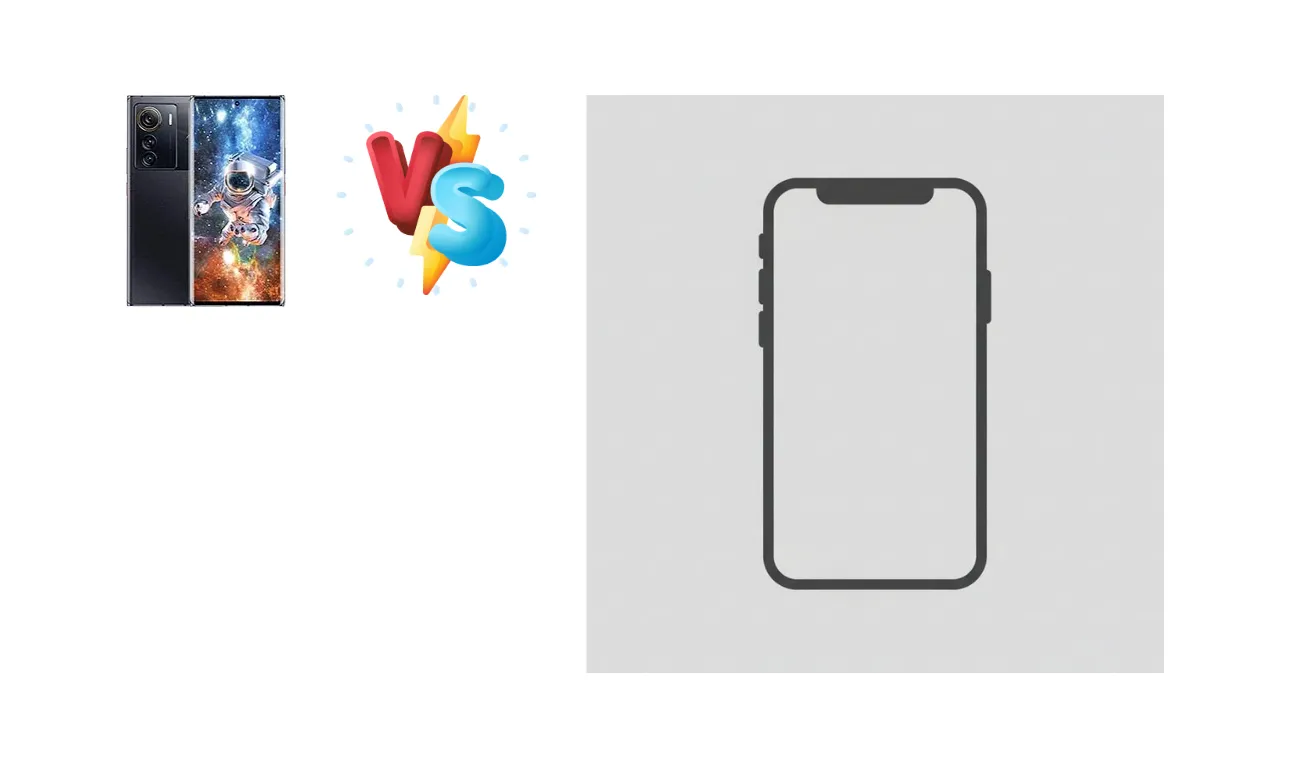
ZTE has been making waves with its innovative smartphones, and the Axon 50 Ultra and nubia Red Magic 8 Pro are prime examples. Both offer premium features, but cater to slightly different audiences. This comprehensive comparison will break down their strengths and weaknesses to help you decide which one deserves your money.
🏆 Quick Verdict
The nubia Red Magic 8 Pro takes the crown thanks to its Snapdragon 8 Gen 2, superior display, and exceptional battery life. While the Axon 50 Ultra offers a compelling package, the Red Magic 8 Pro's gaming-focused features and overall performance edge make it the better choice for most users.
| Network |
|---|
| 2G bands | GSM 850 / 900 / 1800 / 1900 | GSM 850 / 900 / 1800 / 1900 - SIM 1 & SIM 2 |
| 3G bands | HSDPA 850 / 900 / 1700(AWS) / 1900 / 2100 | HSDPA 850 / 900 / 1700(AWS) / 1900 / 2100 |
| 4G bands | LTE | 1, 2, 3, 4, 5, 7, 8, 12, 17, 18, 19, 20, 26, 28, 34, 38, 39, 40, 41, 66 |
| 5G bands | SA/NSA | 1, 3, 5, 7, 8, 20, 28, 38, 41, 66, 77, 78 SA/NSA |
| Speed | HSPA, LTE, 5G | HSPA, LTE-A, 5G |
| Technology | GSM / CDMA / HSPA / CDMA2000 / LTE / 5G | GSM / CDMA / HSPA / EVDO / LTE / 5G |
| | CDMA2000 1x | CDMA2000 1xEV-DO |
| Launch |
|---|
| Announced | 2023, April 12 | 2022, December 26 |
| Status | Cancelled | Available. Released 2022, December 28 |
| Body |
|---|
| Build | Glass front, glass back, aluminum frame | Glass front (Gorilla Glass 5), glass back, aluminum frame |
| Dimensions | 161.8 x 73.1 x 8.9 mm (6.37 x 2.88 x 0.35 in) | 164 x 76.4 x 8.9 mm (6.46 x 3.01 x 0.35 in) |
| SIM | Nano-SIM + Nano-SIM | Dual SIM (Nano-SIM, dual stand-by) |
| Weight | 199 g (7.02 oz) | 228 g (8.04 oz) |
| | - | Pressure sensitive zones (520Hz touch-sensing)
Built-in cooling fan
Aviation aluminum middle frame |
| Display |
|---|
| Protection | - | Corning Gorilla Glass 5 |
| Resolution | 1080 x 2400 pixels, 20:9 ratio (~395 ppi density) | 1116 x 2480 pixels, 20:9 ratio (~400 ppi density) |
| Size | 6.67 inches, 107.4 cm2 (~90.8% screen-to-body ratio) | 6.8 inches, 111.6 cm2 (~89.1% screen-to-body ratio) |
| Type | AMOLED, 1B colors, 144Hz | AMOLED, 1B colors (China only), 120Hz, 1300 nits (peak) |
| Platform |
|---|
| CPU | Octa-core (1x3.0 GHz Cortex-X2 & 3x2.75 GHz Cortex-A710 & 4x2.0 GHz Cortex-A510) | Octa-core (1x3.2 GHz Cortex-X3 & 2x2.8 GHz Cortex-A715 & 2x2.8 GHz Cortex-A710 & 3x2.0 GHz Cortex-A510) |
| Chipset | Qualcomm SM8475 Snapdragon 8+ Gen 1 (4 nm) | Qualcomm SM8550-AB Snapdragon 8 Gen 2 (4 nm) |
| GPU | Adreno 730 | Adreno 740 |
| OS | Android 12, MyOS 12 | Android 13, Redmagic OS 6 |
| Memory |
|---|
| Card slot | No | No |
| Internal | 256GB 12GB RAM, 512GB 12GB RAM | 128GB 8GB RAM, 256GB 8GB RAM, 256GB 12GB RAM, 512GB 16GB RAM |
| | UFS 3.1 | UFS 4.0 |
| Main Camera |
|---|
| Features | Laser AF, Dual-LED dual-tone flash, panorama, HDR | LED flash, HDR, panorama |
| Single | - | 16 MP, f/2.0, (wide), 1.12µm, under display |
| Triple | 64 MP, f/1.9, 24mm (wide), 1/1.73", 0.8µm, PDAF, OIS
50 MP, f/2.0, (telephoto), PDAF, 3x optical zoom
50 MP, f/2.2, 116˚ (ultrawide), PDAF | 50 MP, f/1.9, 25mm (wide), 1/1.57", 1.0µm, PDAF
8 MP, f/2.2, 120˚, 13mm (ultrawide), 1/4.0", 1.12µm
2 MP, f/2.4, (macro) |
| Video | 8K@30fps, 4K@30/60/120fps, 1080p@30/60fps, gyro-EIS, HDR10, 10‑bit video | 8K@30fps, 4K@30/60fps, 1080p@30/60/120/240fps |
| Selfie camera |
|---|
| Features | HDR | HDR |
| Single | 32 MP, f/2.5, (wide) | 16 MP, f/2.0, (wide), 1.12µm, under display |
| Video | 1080p@30fps | 1080p@30/60fps |
| Sound |
|---|
| 3.5mm jack | No | Yes |
| 35mm jack | No | - |
| Loudspeaker | Yes, with stereo speakers | Yes, with stereo speakers |
| | 24-bit/192kHz audio | 32-bit/384kHz audio |
| Comms |
|---|
| Bluetooth | 5.2, A2DP, LE, aptX HD, aptX Adaptive | 5.3, A2DP, LE |
| Infrared port | Yes | - |
| NFC | Yes | Yes (market/region dependent) |
| Positioning | GPS (L1+L5), GLONASS, BDS, GALILEO | GPS (L1+L5), GLONASS, BDS, GALILEO |
| Radio | No | No |
| USB | USB Type-C 3.1, OTG | USB Type-C 3.2 (China), 3.1 (International), OTG, accessory connector, DisplayPort |
| WLAN | Wi-Fi 802.11 a/b/g/n/ac/6, dual-band, Wi-Fi Direct | Wi-Fi 802.11 a/b/g/n/ac/6e/7, tri-band, Wi-Fi Direct |
| Features |
|---|
| Sensors | Fingerprint (under display, optical), accelerometer, gyro, proximity, compass | Fingerprint (under display, optical), accelerometer, gyro, proximity, compass |
| | BDS Satellite Message (Emergency SOS service) | - |
| Battery |
|---|
| Charging | 80W wired, PD3.0, QC4 | 80W wired, PD3.0, 100% in 35 min (advertised) - China
65W wired, PD3.0, 100% in 43 min (advertised) - International |
| Type | Li-Po 5000 mAh | Li-Po 6000 mAh, non-removable |
| Misc |
|---|
| Colors | Black | Black, Transparent |
| Models | - | NX729J |
| Price | - | $ 659.00 |
| Tests |
|---|
| Battery life | - |
Endurance rating 131h
|
| Camera | - |
Photo / Video |
| Display | - |
Contrast ratio: Infinite (nominal) |
| Loudspeaker | - |
-24.1 LUFS (Very good)
|
| Performance | - |
AnTuTu: 1288866 (v9)
GeekBench: 5211 (v5.1)
GFXBench: 97fps (ES 3.1 onscreen) |
ZTE Axon 50 Ultra
- Stylish Design
- Good Camera Performance
- Solid Performance for Everyday Tasks
- 80W Fast Charging
- Older Chipset
- Potentially Shorter Battery Life
- Less Gaming-Focused Features
ZTE nubia Red Magic 8 Pro
- Snapdragon 8 Gen 2 Performance
- High Refresh Rate Display (Likely 165Hz)
- Exceptional Battery Life
- Gaming-Focused Features (Cooling System)
- Fast Charging (Advertised)
- Design May Not Appeal to Everyone
- Camera Performance Not Top-Tier (Compared to Dedicated Camera Phones)
- International Charging Speed Slower
Display Comparison
The nubia Red Magic 8 Pro boasts a superior display with a potentially infinite contrast ratio (nominal) and likely a higher refresh rate (often 165Hz, though not explicitly stated). The Axon 50 Ultra's display is still good, but lacks the gaming-centric features and potentially the peak brightness of the Red Magic. Expect smoother visuals and more vibrant colors on the Red Magic.
Camera Comparison
While both phones offer capable cameras, the Red Magic 8 Pro likely has a slight edge in image processing and low-light performance. The Axon 50 Ultra is known for its color accuracy, but the Red Magic's camera system is generally considered more versatile. Specific camera specs are missing, so a direct comparison is difficult.
Performance
The Snapdragon 8 Gen 2 in the Red Magic 8 Pro significantly outperforms the Snapdragon 8+ Gen 1 in the Axon 50 Ultra. This translates to faster app loading, smoother multitasking, and better performance in demanding games. The Red Magic's cooling system also helps maintain peak performance for longer periods.
Battery Life
The Red Magic 8 Pro's endurance rating of 131h suggests significantly better battery life than the Axon 50 Ultra. The faster charging speeds (advertised) further solidify its advantage in this category. While both support 80W charging, the Red Magic's larger battery capacity contributes to its longevity.
Buying Guide
The ZTE Axon 50 Ultra is ideal for users seeking a stylish, well-rounded flagship with a good camera and solid performance for everyday tasks. The nubia Red Magic 8 Pro is the clear winner for gamers and power users who prioritize raw performance, a high refresh rate display, and extended battery life.
Frequently Asked Questions
❓ Is the Red Magic 8 Pro good for non-gamers?
Yes, the Red Magic 8 Pro's powerful processor and excellent display make it a great phone for everyday use, even if you don't game. However, its design might not appeal to everyone.
❓ Which phone has faster charging?
The Red Magic 8 Pro advertises faster charging speeds, particularly in the Chinese market. International versions have slightly slower advertised charging times, but both support 80W wired charging.