
ZTE Axon 40 Ultra vs. Nubia Z40 Pro: A Clash of Flagships
| Phones Images | |||||
|---|---|---|---|---|---|
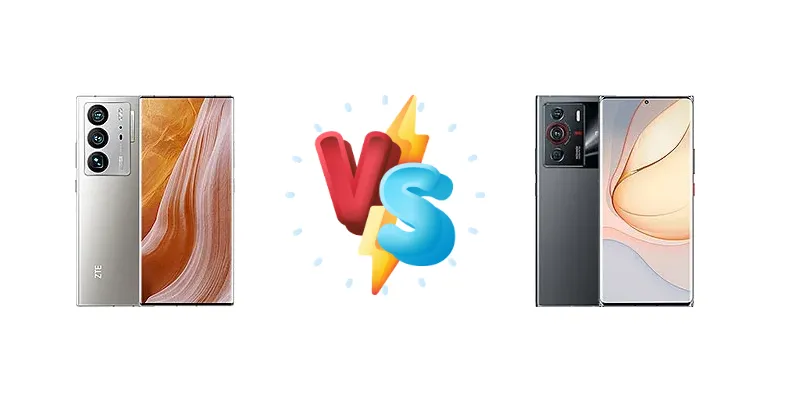
|
🏆 Quick Verdict
The Nubia Z40 Pro edges out the Axon 40 Ultra thanks to its potentially faster charging (depending on the version) and likely superior camera software optimization. Both offer flagship performance, but the Z40 Pro’s refinements make it the slightly better choice for most users.
| PHONES | ||
|---|---|---|
| Phone Names | ZTE Axon 40 Ultra | ZTE nubia Z40 Pro |
| Network | ||
|---|---|---|
| 2G bands | GSM 850 / 900 / 1800 / 1900 | GSM 850 / 900 / 1800 / 1900 |
| 3G bands | HSDPA 850 / 900 / 1900 / 2100 - Europe | HSDPA 850 / 900 / 1700(AWS) / 1900 / 2100 |
| 4G bands | 1, 3, 5, 7, 8, 20, 28, 38, 40, 41 - Europe | 1, 3, 5, 7, 8, 4, 12, 17, 20, 34, 38, 39, 40, 41 |
| 5G bands | 1, 3, 5, 7, 28, 38, 40, 41, 78 SA/NSA - Europe | 1, 3, 5, 8, 28, 41, 78 SA/NSA |
| Speed | HSPA, LTE, 5G | HSPA, LTE, 5G |
| Technology | GSM / CDMA / HSPA / CDMA2000 / LTE / 5G | GSM / CDMA / HSPA / LTE / 5G |
| 1, 2, 3, 5, 7, 28, 38, 40, 41, 66, 77, 78 SA/NSA - International | CDMA 800 | |
| Launch | ||
|---|---|---|
| Announced | 2022, May 09 | 2022, February 25 |
| Status | Available. Released 2022, May 13 | Available. Released 2022, March 02 |
| Body | ||
|---|---|---|
| Build | Glass front, glass back, aluminum frame | Glass front, aluminum frame, glass back |
| Dimensions | 163.3 x 73.6 x 8.4 mm (6.43 x 2.90 x 0.33 in) | 161.9 x 72.9 x 8.4 mm (6.37 x 2.87 x 0.33 in) |
| SIM | Nano-SIM + Nano-SIM | Nano-SIM + Nano-SIM |
| Weight | 204 g (7.20 oz) | 199 g (7.02 oz) |
| Display | ||
|---|---|---|
| Resolution | 1116 x 2480 pixels, 20:9 ratio (~400 ppi density) | 1080 x 2400 pixels, 20:9 ratio (~395 ppi density) |
| Size | 6.8 inches, 111.6 cm2 (~92.9% screen-to-body ratio) | 6.67 inches, 107.4 cm2 (~91.0% screen-to-body ratio) |
| Type | AMOLED, 1B colors, 120Hz, HDR10+, 1500 nits (peak) | AMOLED, 1B colors, 144Hz, HDR10+, 1000 nits |
| Platform | ||
|---|---|---|
| CPU | Octa-core (1x3.00 GHz Cortex-X2 & 3x2.50 GHz Cortex-A710 & 4x1.80 GHz Cortex-A510) | Octa-core (1x3.00 GHz Cortex-X2 & 3x2.50 GHz Cortex-A710 & 4x1.80 GHz Cortex-A510) |
| Chipset | Qualcomm SM8450 Snapdragon 8 Gen 1 (4 nm) | Qualcomm SM8450 Snapdragon 8 Gen 1 (4 nm) |
| GPU | Adreno 730 | Adreno 730 |
| OS | Android 12, upgradable to Android 13, MyOS 13 | Android 12, MyOS 12 |
| Memory | ||
|---|---|---|
| Card slot | No | No |
| Internal | 128GB 8GB RAM, 256GB 8GB RAM, 256GB 12GB RAM, 512GB 12GB RAM, 1TB 16GB RAM | 128GB 8GB RAM, 256GB 8GB RAM, 256GB 12GB RAM, 512GB 12GB RAM, 1TB 16GB RAM |
| UFS 3.1 | UFS 3.1 | |
| Main Camera | ||
|---|---|---|
| Features | Laser AF, Dual-LED dual-tone flash, panorama, HDR | Dual-LED flash, panorama, HDR |
| Single | 16 MP, f/2.0, 26mm (wide), 1/2.8", 1.22µm, under display | 16 MP, f/2.5, (wide) |
| Triple | 64 MP, f/1.6, 35mm (standard), 1/1.7", PDAF, OIS 64 MP, f/3.5, 91mm (periscope telephoto), 1/2.0", PDAF, OIS, 3.5x optical zoom (vs. 26mm cam) 64 MP, f/2.4, 16mm, 112˚ (ultrawide), 1/1.7", PDAF | 64 MP, f/1.7, 35mm (standard), 1/1.7", PDAF, OIS 8 MP, f/3.4, 125mm (periscope telephoto), 1/4.0", PDAF, OIS, 5x optical zoom 50 MP, f/2.2, 14mm, 116˚ (ultrawide) |
| Video | 8K@30fps, 4K@30/60/120fps, 1080p@30/60fps, gyro-EIS, HDR10, 10‑bit video | Yes |
| Selfie camera | ||
|---|---|---|
| Features | HDR | HDR |
| Single | 16 MP, f/2.0, 26mm (wide), 1/2.8", 1.22µm, under display | 16 MP, f/2.5, (wide) |
| Video | 1080p@30fps | Yes |
| Sound | ||
|---|---|---|
| 3.5mm jack | No | No |
| 35mm jack | No | No |
| Loudspeaker | Yes, with stereo speakers | Yes, with stereo speakers |
| 24-bit/192kHz audio | 24-bit/192kHz audio | |
| Comms | ||
|---|---|---|
| Bluetooth | 5.2, A2DP, LE, aptX HD, aptX Adaptive | 5.2, A2DP, LE, aptX HD, aptX Adaptive |
| NFC | Yes | Yes |
| Positioning | GPS (L1+L5), GLONASS, BDS, GALILEO | GPS, GLONASS, GALILEO, BDS |
| Radio | No | No |
| USB | USB Type-C 3.1, OTG | USB Type-C 3.1, OTG |
| WLAN | Wi-Fi 802.11 a/b/g/n/ac/6e, dual-band, Wi-Fi Direct | Wi-Fi 802.11 a/b/g/n/ac/6, dual-band, Wi-Fi Direct |
| Features | ||
|---|---|---|
| Sensors | Fingerprint (under display, optical), accelerometer, gyro, proximity, compass | Fingerprint (under display, optical), accelerometer, gyro, proximity, compass |
| Battery | ||
|---|---|---|
| Charging | 65W wired, PD3.0, QC4 | 66W wired; 15W magnetic wireless (gravity version) 80W wired (regular version) |
| Type | Li-Po 5000 mAh | Market-dependent versions:· Li-Po 5000 mAh (regular version)· Li-Po 4600 mAh (gravity version) |
| Misc | ||
|---|---|---|
| Colors | Black, Gold, Silver | Interstellar Black, Star Black, Silver |
| Models | A2023P, A2023PG | NX701J |
| Price | About 380 EUR | About 500 EUR |
| Tests | ||
|---|---|---|
| Battery life | Endurance rating 104h | - |
| Camera | Photo / Video | - |
| Loudspeaker | -25.8 LUFS (Very good) | - |
ZTE Axon 40 Ultra
- Exceptional battery life (104h endurance rating)
- Bright display (680 nits)
- Unique under-display camera
- 65W fast charging
- Under-display camera image quality may be compromised
- Design may be less refined than Nubia Z40 Pro
ZTE nubia Z40 Pro
- Potentially better camera software and image quality
- Faster charging (66W/80W wired, 15W wireless)
- Gaming-focused design
- Sleeker aesthetics
- Battery life likely less than Axon 40 Ultra
- Wireless charging only on gravity version
Display Comparison
Both phones feature AMOLED displays, likely with 120Hz refresh rates (though the Axon 40 Ultra's specs explicitly mention 680 nits max brightness, which is impressive). The Axon 40 Ultra's higher measured brightness suggests better outdoor visibility. The Nubia Z40 Pro may have a slightly more refined color calibration, but this is often subjective.
Camera Comparison
The Axon 40 Ultra is known for its under-display camera, a unique feature. However, image quality from this camera is often a compromise. The Nubia Z40 Pro likely has a more conventional front-facing camera setup and potentially superior rear camera software processing, leading to better overall image quality, especially in challenging lighting conditions. Both phones should offer excellent video recording capabilities.
Performance
Both devices share the same Qualcomm Snapdragon 8 Gen 1 chipset and CPU configuration. Real-world performance will be very similar, with minor differences potentially arising from software optimization and thermal management. The Nubia Z40 Pro's gaming-focused design might offer slightly better sustained performance under heavy load.
Battery Life
The Axon 40 Ultra boasts an incredibly impressive endurance rating of 104 hours. This is a significant advantage. The Nubia Z40 Pro offers 66W or 80W wired charging, which is fast, but doesn't compensate for a potentially smaller battery capacity. The magnetic wireless charging on the gravity version is a nice bonus.
Buying Guide
The ZTE Axon 40 Ultra is ideal for users prioritizing exceptional battery life and a bright display. The Nubia Z40 Pro is best suited for those who value faster charging, potentially better camera performance, and a more streamlined, gaming-focused design.