
ZTE Axon 40 Ultra vs Google Pixel 7 Pro: A Deep Dive into Flagship Android
| Phones Images | |||||
|---|---|---|---|---|---|
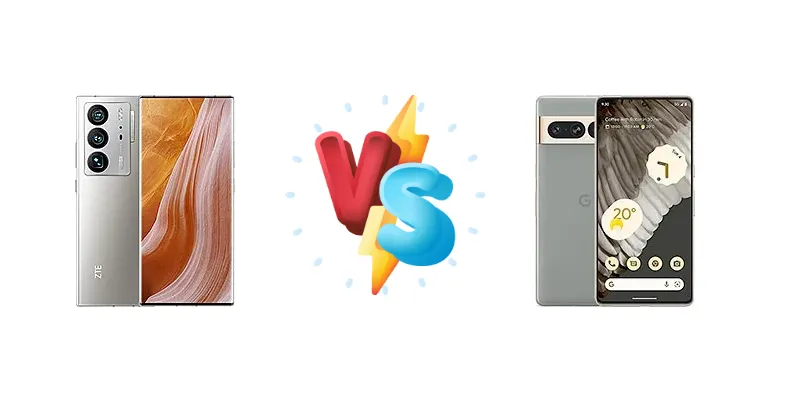
|
🏆 Quick Verdict
For most users, the Google Pixel 7 Pro emerges as the more compelling choice. Its Tensor G2 chip, while not the raw performance leader, delivers a smoother, more integrated experience, and its camera system consistently produces excellent results. However, the Axon 40 Ultra’s faster charging and potentially lower price make it a strong contender for power users prioritizing speed and value.
| PHONES | ||
|---|---|---|
| Phone Names | ZTE Axon 40 Ultra | Google Pixel 7 Pro |
| Network | ||
|---|---|---|
| 2G bands | GSM 850 / 900 / 1800 / 1900 | GSM 850 / 900 / 1800 / 1900 |
| 3G bands | HSDPA 850 / 900 / 1900 / 2100 - Europe | HSDPA 800 / 850 / 900 / 1700(AWS) / 1900 / 2100 |
| 4G bands | 1, 3, 5, 7, 8, 20, 28, 38, 40, 41 - Europe | 1, 2, 3, 4, 5, 7, 8, 12, 13, 14, 17, 18, 19, 20, 25, 26, 28, 29, 30, 38, 39, 40, 41, 42, 46, 48, 66, 71 - GE2AE |
| 5G bands | 1, 3, 5, 7, 28, 38, 40, 41, 78 SA/NSA - Europe | 1, 2, 3, 5, 7, 8, 12, 14, 20, 25, 28, 30, 38, 40, 41, 48, 66, 71, 77, 78, 257, 258, 260, 261 SA/NSA/Sub6/mmWave - GE2AE |
| Speed | HSPA, LTE, 5G | HSPA, LTE, 5G |
| Technology | GSM / CDMA / HSPA / CDMA2000 / LTE / 5G | GSM / CDMA / HSPA / EVDO / LTE / 5G |
| 1, 2, 3, 5, 7, 28, 38, 40, 41, 66, 77, 78 SA/NSA - International | 1, 2, 3, 5, 7, 8, 12, 14, 20, 25, 28, 30, 38, 40, 41, 48, 66, 71, 75, 76, 77, 78 SA/NSA/Sub6 - GP4BC | |
| Launch | ||
|---|---|---|
| Announced | 2022, May 09 | 2022, October 06 |
| Status | Available. Released 2022, May 13 | Available. Released 2022, October 13 |
| Body | ||
|---|---|---|
| Build | Glass front, glass back, aluminum frame | Glass front (Gorilla Glass Victus), glass back (Gorilla Glass Victus), aluminum frame |
| Dimensions | 163.3 x 73.6 x 8.4 mm (6.43 x 2.90 x 0.33 in) | 162.9 x 76.6 x 8.9 mm (6.41 x 3.02 x 0.35 in) |
| SIM | Nano-SIM + Nano-SIM | Nano-SIM + eSIM |
| Weight | 204 g (7.20 oz) | 212 g (7.48 oz) |
| - | IP68 dust/water resistant (up to 1.5m for 30 min) | |
| Display | ||
|---|---|---|
| Protection | - | Corning Gorilla Glass Victus |
| Resolution | 1116 x 2480 pixels, 20:9 ratio (~400 ppi density) | 1440 x 3120 pixels, 19.5:9 ratio (~512 ppi density) |
| Size | 6.8 inches, 111.6 cm2 (~92.9% screen-to-body ratio) | 6.7 inches, 110.6 cm2 (~88.7% screen-to-body ratio) |
| Type | AMOLED, 1B colors, 120Hz, HDR10+, 1500 nits (peak) | LTPO AMOLED, 120Hz, HDR10+, 1000 nits (HBM), 1500 nits (peak) |
| - | Always-on display | |
| Platform | ||
|---|---|---|
| CPU | Octa-core (1x3.00 GHz Cortex-X2 & 3x2.50 GHz Cortex-A710 & 4x1.80 GHz Cortex-A510) | Octa-core (2x2.85 GHz Cortex-X1 & 2x2.35 GHz Cortex-A78 & 4x1.80 GHz Cortex-A55) |
| Chipset | Qualcomm SM8450 Snapdragon 8 Gen 1 (4 nm) | Google Tensor G2 (5 nm) |
| GPU | Adreno 730 | Mali-G710 MP7 |
| OS | Android 12, upgradable to Android 13, MyOS 13 | Android 13, upgradable to Android 15, up to 5 major Android upgrades |
| Memory | ||
|---|---|---|
| Card slot | No | No |
| Internal | 128GB 8GB RAM, 256GB 8GB RAM, 256GB 12GB RAM, 512GB 12GB RAM, 1TB 16GB RAM | 128GB 8GB RAM, 256GB 8GB RAM, 128GB 12GB RAM, 256GB 12GB RAM, 512GB 12GB RAM |
| UFS 3.1 | UFS 3.1 | |
| Main Camera | ||
|---|---|---|
| Features | Laser AF, Dual-LED dual-tone flash, panorama, HDR | Laser AF, Dual-LED flash, Pixel Shift, Auto-HDR, panorama |
| Single | 16 MP, f/2.0, 26mm (wide), 1/2.8", 1.22µm, under display | 10.8 MP, f/2.2, 21mm (ultrawide), 1/3.1", 1.22µm |
| Triple | 64 MP, f/1.6, 35mm (standard), 1/1.7", PDAF, OIS 64 MP, f/3.5, 91mm (periscope telephoto), 1/2.0", PDAF, OIS, 3.5x optical zoom (vs. 26mm cam) 64 MP, f/2.4, 16mm, 112˚ (ultrawide), 1/1.7", PDAF | 50 MP, f/1.9, 25mm (wide), 1/1.31", 1.2µm, dual pixel PDAF, OIS 48 MP, f/3.5, 120mm (periscope telephoto), 1/2.55", 0.7µm, dual pixel PDAF, OIS, 5x optical zoom 12 MP, f/2.2, 126˚ (ultrawide), 1/2.9", 1.25µm, AF |
| Video | 8K@30fps, 4K@30/60/120fps, 1080p@30/60fps, gyro-EIS, HDR10, 10‑bit video | 4K@30/60fps, 1080p@30/60/120/240fps; gyro-EIS, OIS, 10-bit HDR |
| Selfie camera | ||
|---|---|---|
| Features | HDR | HDR, panorama |
| Single | 16 MP, f/2.0, 26mm (wide), 1/2.8", 1.22µm, under display | 10.8 MP, f/2.2, 21mm (ultrawide), 1/3.1", 1.22µm |
| Video | 1080p@30fps | 4K@30/60fps, 1080p@30/60fps |
| Sound | ||
|---|---|---|
| 3.5mm jack | No | No |
| 35mm jack | No | No |
| Loudspeaker | Yes, with stereo speakers | Yes, with stereo speakers |
| 24-bit/192kHz audio | - | |
| Comms | ||
|---|---|---|
| Bluetooth | 5.2, A2DP, LE, aptX HD, aptX Adaptive | 5.2, A2DP, LE, aptX HD |
| NFC | Yes | Yes |
| Positioning | GPS (L1+L5), GLONASS, BDS, GALILEO | GPS (L1+L5), GLONASS (G1), BDS (B1I+B1c+B2a), GALILEO (E1+E5a), QZSS (L1+L5) |
| Radio | No | No |
| USB | USB Type-C 3.1, OTG | USB Type-C 3.2 |
| WLAN | Wi-Fi 802.11 a/b/g/n/ac/6e, dual-band, Wi-Fi Direct | Wi-Fi 802.11 a/b/g/n/ac/6e, tri-band, Wi-Fi Direct |
| Features | ||
|---|---|---|
| Sensors | Fingerprint (under display, optical), accelerometer, gyro, proximity, compass | Fingerprint (under display, optical), accelerometer, gyro, proximity, compass, barometer |
| - | Ultra Wideband (UWB) support | |
| Battery | ||
|---|---|---|
| Charging | 65W wired, PD3.0, QC4 | 23W wired, PD3.0, 50% in 30 min 23W wireless Reverse wireless |
| Type | Li-Po 5000 mAh | Li-Ion 5000 mAh |
| Misc | ||
|---|---|---|
| Colors | Black, Gold, Silver | Obsidian, Snow, Hazel |
| Models | A2023P, A2023PG | GP4BC, GE2AE, GFE4J |
| Price | About 380 EUR | € 248.84 / $ 204.00 / £ 259.99 / ₹ 36,999 |
| Tests | ||
|---|---|---|
| Battery life | Endurance rating 104h | Endurance rating 83h |
| Camera | Photo / Video | Photo / Video |
| Display | - | Contrast ratio: Infinite (nominal) |
| Loudspeaker | -25.8 LUFS (Very good) | -24.8 LUFS (Very good) |
| Performance | - | AnTuTu: 796369 (v9) GeekBench: 3187 (v5.1) GFXBench: 34fps (ES 3.1 onscreen) |
ZTE Axon 40 Ultra
- Significantly faster 65W charging
- Potentially better raw processing power with Snapdragon 8 Gen 1
- Higher endurance rating suggests longer battery life
- Less refined software experience
- Camera performance is an unknown quantity
- Display is less bright than the Pixel 7 Pro
Google Pixel 7 Pro
- Superior camera system with Google’s computational photography
- Smoother, more integrated software experience
- Brighter display for better outdoor visibility
- Slower 23W wired charging
- Tensor G2 chip isn’t the performance leader
- Lower battery endurance rating
Display Comparison
The Pixel 7 Pro boasts a brighter display, reaching 1090 nits compared to the Axon 40 Ultra’s 680 nits. This translates to better visibility under direct sunlight. While both support PD3.0, the Pixel 7 Pro’s ‘Infinite’ contrast ratio (nominal) suggests a superior OLED panel with deeper blacks. The Axon 40 Ultra’s display specs don’t mention refresh rate or PWM dimming, potentially making the Pixel 7 Pro a safer choice for users sensitive to flicker, assuming it employs a higher PWM frequency.
Camera Comparison
Both phones feature capable camera systems, but approach image processing differently. While detailed sensor specs are missing for the Axon 40 Ultra, its marketing emphasizes photography and videography. The Pixel 7 Pro excels in computational photography, leveraging the Tensor G2’s AI capabilities for features like Magic Eraser and Photo Unblur. The Pixel 7 Pro’s image processing is known for its realistic color reproduction and excellent dynamic range, while the Axon 40 Ultra’s output is likely to be more dependent on scene detection and potentially more saturated. The absence of detailed camera specs for the Axon 40 Ultra makes a direct comparison difficult, but the Pixel 7 Pro’s established reputation gives it an edge.
Performance
The ZTE Axon 40 Ultra utilizes the Qualcomm Snapdragon 8 Gen 1 (4nm), known for its peak performance. However, the Google Pixel 7 Pro’s Google Tensor G2 (5nm) prioritizes AI and machine learning tasks. The 4nm process of the Snapdragon 8 Gen 1 *should* offer better thermal efficiency than the 5nm Tensor G2, but real-world throttling will depend on ZTE’s cooling solution. The Pixel 7 Pro’s CPU, with its Cortex-X1 cores clocked at 2.85 GHz, is architecturally more advanced than the Axon 40 Ultra’s Cortex-X2 at 3.00 GHz, focusing on sustained performance rather than burst speeds. The Pixel 7 Pro’s Tensor G2 also benefits from tight software integration, optimizing performance for Google’s apps and services.
Battery Life
The ZTE Axon 40 Ultra boasts an endurance rating of 104 hours, significantly exceeding the Pixel 7 Pro’s 83 hours. However, this doesn’t tell the whole story. The Axon 40 Ultra’s 65W wired charging (with PD3.0 and QC4 support) is substantially faster than the Pixel 7 Pro’s 23W wired charging, allowing for a full charge in a fraction of the time. The Pixel 7 Pro compensates with 23W wireless charging and reverse wireless charging, features absent on the Axon 40 Ultra. The Axon 40 Ultra’s larger endurance rating suggests a more efficient chipset or larger battery capacity, but the Pixel 7 Pro’s wireless charging options add convenience.
Buying Guide
Buy the ZTE Axon 40 Ultra if you need the fastest possible charging speeds (65W) and prioritize raw processing power for demanding tasks like video editing or gaming, and are comfortable with a less polished software experience. Buy the Google Pixel 7 Pro if you prefer a seamless software experience, exceptional camera performance with Google’s computational photography, and a phone that receives timely software updates and feature drops.