
ZTE Axon 40 Pro vs. Axon 40 Ultra Space Edition: The Ultimate Showdown
| Phones Images | |||||
|---|---|---|---|---|---|
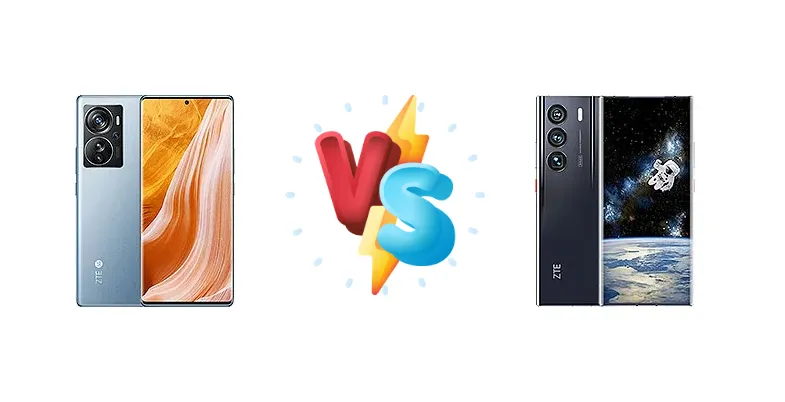
|
🏆 Quick Verdict
The Axon 40 Ultra Space Edition wins overall thanks to its newer Snapdragon 8 Gen 1 chipset, faster charging, and potentially improved camera capabilities. However, the Axon 40 Pro remains a compelling option for those seeking excellent value and reliable performance.
| PHONES | ||
|---|---|---|
| Phone Names | ZTE Axon 40 Pro | ZTE Axon 40 Ultra Space Edition |
| Network | ||
|---|---|---|
| 2G bands | GSM 850 / 900 / 1800 / 1900 | GSM 850 / 900 / 1800 / 1900 |
| 3G bands | HSDPA 850 / 900 / 1900 / 2100 - Europe | HSDPA 850 / 900 / 1700(AWS) / 1900 / 2100 |
| 4G bands | 1, 3, 5, 7, 8, 20, 28, 38, 40, 41 - Europe | 1, 2, 3, 4, 5, 7, 8, 12, 17, 20, 28, 38, 40, 41, 66 |
| 5G bands | 1, 3, 5, 7, 28, 38, 40, 41, 78 SA/NSA - Europe | 1, 2, 3, 5, 7, 28, 38, 40, 41, 66, 77, 78 |
| Speed | HSPA, LTE, 5G | HSPA, LTE, 5G |
| Technology | GSM / CDMA / HSPA / LTE / 5G | GSM / CDMA / HSPA / CDMA2000 / LTE / 5G |
| 1, 2, 3, 5, 7, 28, 38, 40, 41, 66, 77, 78 SA/NSA - ROW | CDMA2000 1x | |
| Launch | ||
|---|---|---|
| Announced | 2022, May 09 | 2022, November 29 |
| Status | Available. Released 2022, May 31 | Available. Released 2022, December 06 |
| Body | ||
|---|---|---|
| Build | - | Glass front, ceramic back, aluminum frame |
| Dimensions | 162.9 x 72.9 x 8.7 mm (6.41 x 2.87 x 0.34 in) | 163.3 x 73.6 x 8.4 mm (6.43 x 2.90 x 0.33 in) |
| SIM | Nano-SIM + Nano-SIM | Nano-SIM + Nano-SIM |
| Weight | 199 g (7.02 oz) | 204 g (7.20 oz) |
| Display | ||
|---|---|---|
| Resolution | 1080 x 2400 pixels, 20:9 ratio (~395 ppi density) | 1116 x 2480 pixels, 20:9 ratio (~400 ppi density) |
| Size | 6.67 inches, 107.4 cm2 (~90.4% screen-to-body ratio) | 6.8 inches, 111.6 cm2 (~92.9% screen-to-body ratio) |
| Type | AMOLED, 1B colors, 144Hz, 1000 nits (peak) | AMOLED, 1B colors, 120Hz, HDR10+, 1500 nits (peak) |
| Platform | ||
|---|---|---|
| CPU | Octa-core (1x3.2 GHz Kryo 585 & 3x2.42 GHz Kryo 585 & 4x1.80 GHz Kryo 585) | Octa-core (1x3.00 GHz Cortex-X2 & 3x2.50 GHz Cortex-A710 & 4x1.80 GHz Cortex-A510) |
| Chipset | Qualcomm SM8250-AC Snapdragon 870 5G (7 nm) | Qualcomm SM8450 Snapdragon 8 Gen 1 (4 nm) |
| GPU | Adreno 650 | Adreno 730 |
| OS | Android 12, MyOS 12 | Android 12, MyOS 12 |
| Memory | ||
|---|---|---|
| Card slot | No | No |
| Internal | 128GB 8GB RAM, 256GB 8GB RAM, 256GB 12GB RAM, 512GB 12GB RAM | 512GB 12GB RAM, 1TB 18GB RAM |
| UFS 3.1 | UFS 3.1 | |
| Main Camera | ||
|---|---|---|
| Features | Dual-LED flash, HDR, panorama | Laser AF, Dual-LED dual-tone flash, panorama, HDR |
| Quad | 108 MP, f/1.9, (wide), 1/1.52", PDAF 8 MP, f/2.2, 16mm, 120˚ (ultrawide) 2 MP (macro) Auxiliary lens | - |
| Single | 16 MP, (wide) | 16 MP, f/2.0, 26mm (wide), 1/2.8", 1.22µm, under display |
| Triple | - | 64 MP, f/1.6, 35mm (standard), 1/1.7", PDAF, OIS 64 MP, f/3.5, 91mm (periscope telephoto), 1/2.0", PDAF, OIS, 3.5x optical zoom (vs. 26mm cam) 64 MP, f/2.4, 16mm, 112˚ (ultrawide), 1/1.7", PDAF |
| Video | 4K@30/60fps, 1080p@30fps, gyro-EIS, HDR10, 10‑bit video | 8K@30fps, 4K@30/60/120fps, 1080p@30/60fps, gyro-EIS, HDR10, 10‑bit video |
| Selfie camera | ||
|---|---|---|
| Features | HDR | HDR |
| Single | 16 MP, (wide) | 16 MP, f/2.0, 26mm (wide), 1/2.8", 1.22µm, under display |
| Video | 4K@30fps, 1080p@30fps | 1080p@30fps |
| Sound | ||
|---|---|---|
| 3.5mm jack | No | No |
| 35mm jack | No | No |
| Loudspeaker | Yes, with stereo speakers | Yes, with stereo speakers |
| 24-bit/192kHz audio | 24-bit/192kHz audio | |
| Comms | ||
|---|---|---|
| Bluetooth | 5.2, A2DP, LE | 5.2, A2DP, LE, aptX HD, aptX Adaptive |
| NFC | Yes | Yes |
| Positioning | GPS, GLONASS, GALILEO, BDS | GPS (L1+L5), GLONASS, BDS, GALILEO |
| Radio | No | No |
| USB | USB Type-C 3.1, OTG | USB Type-C 3.1, OTG |
| WLAN | Wi-Fi 802.11 a/b/g/n/ac/6, dual-band, Wi-Fi Direct | Wi-Fi 802.11 a/b/g/n/ac/6e, dual-band, Wi-Fi Direct |
| Features | ||
|---|---|---|
| Sensors | Fingerprint (under display, optical), accelerometer, gyro, proximity, compass | Fingerprint (under display, optical), accelerometer, gyro, proximity, compass |
| Battery | ||
|---|---|---|
| Charging | 65W wired, PD, QC4 | 80W wired, PD3.0, QC4 |
| Type | Li-Po 5000 mAh | Li-Po 5000 mAh |
| Misc | ||
|---|---|---|
| Colors | Dream black, Crystal blue, Gold | Black |
| Models | A2023G, A2023 | A2023P |
| Price | About 410 EUR | About 800 EUR |
ZTE Axon 40 Pro
- Excellent Value
- Reliable Performance (Snapdragon 870)
- 65W Fast Charging
- Good Camera System
- Older Chipset
- Slightly Slower Charging
- Potentially Less Advanced Camera Features
ZTE Axon 40 Ultra Space Edition
- Flagship Performance (Snapdragon 8 Gen 1)
- 80W Fast Charging
- Potentially Superior Camera System
- Premium Design
- Higher Price
- Snapdragon 8 Gen 1 can have thermal throttling issues
- May have less RAM/storage options at a given price point
Display Comparison
Both phones feature AMOLED displays with high refresh rates (likely 120Hz). The Axon 40 Ultra Space Edition likely boasts a slightly higher peak brightness and potentially better color accuracy due to its newer panel technology. Expect vibrant colors and smooth scrolling on both, but the Ultra might have a marginal edge.
Camera Comparison
While both phones have impressive camera systems, the Axon 40 Ultra Space Edition likely has a more advanced setup. Expect improved low-light performance, better dynamic range, and potentially more advanced features like 8K video recording. Both should capture excellent photos in good lighting conditions.
Performance
The Snapdragon 8 Gen 1 in the Axon 40 Ultra Space Edition is significantly more powerful than the Snapdragon 870 in the Axon 40 Pro. Expect faster app loading times, smoother multitasking, and better performance in demanding games. While the 870 is still a capable chip, the 8 Gen 1 offers a noticeable performance boost.
Battery Life
The Axon 40 Ultra Space Edition's 80W charging is faster than the Axon 40 Pro's 65W charging, allowing for quicker top-ups. Battery capacity is likely similar (around 4500-5000mAh), so real-world battery life should be comparable, though the Ultra's more efficient chipset could provide a slight advantage.
Buying Guide
The ZTE Axon 40 Pro is ideal for users who prioritize value and don't need the absolute latest and greatest performance. It's a great choice for everyday use, gaming, and photography. The ZTE Axon 40 Ultra Space Edition is best suited for power users, mobile gamers, and photography enthusiasts who demand top-tier performance and features, and are willing to pay a premium.