
ZTE Axon 40 Pro vs Axon 30 Ultra 5G: A Head-to-Head Comparison
| Phones Images | |||||
|---|---|---|---|---|---|
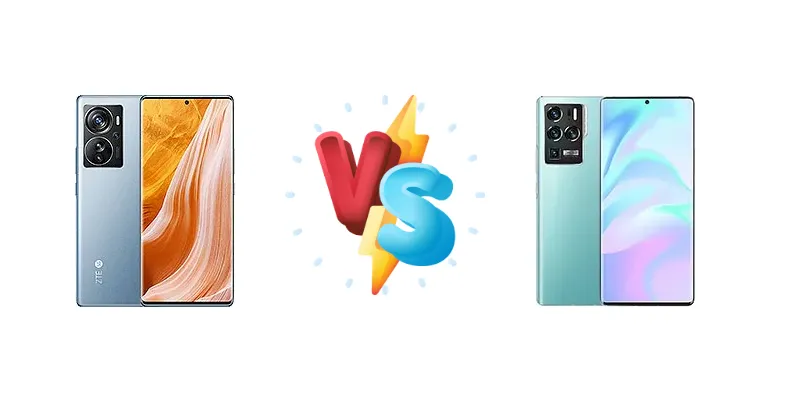
|
🏆 Quick Verdict
The Axon 40 Pro edges out the Axon 30 Ultra thanks to its more modern Snapdragon 870 chipset, offering a smoother experience and potentially better longevity. While the Axon 30 Ultra boasts a phenomenal endurance rating, the 40 Pro's overall package makes it the slightly better choice.
| PHONES | ||
|---|---|---|
| Phone Names | ZTE Axon 40 Pro | ZTE Axon 30 Ultra 5G |
| Network | ||
|---|---|---|
| 2G bands | GSM 850 / 900 / 1800 / 1900 | GSM 850 / 900 / 1800 / 1900 |
| 3G bands | HSDPA 850 / 900 / 1900 / 2100 - Europe | HSDPA 850 / 900 / 1700(AWS) / 1900 / 2100 |
| 4G bands | 1, 3, 5, 7, 8, 20, 28, 38, 40, 41 - Europe | 1, 2, 3, 4, 5, 7, 8, 12, 17, 18, 19, 20, 26, 28, 34, 38, 39, 40, 41 |
| 5G bands | 1, 3, 5, 7, 28, 38, 40, 41, 78 SA/NSA - Europe | 1, 3, 28, 41, 78, 79 SA/NSA |
| Speed | HSPA, LTE, 5G | HSPA, LTE, 5G |
| Technology | GSM / CDMA / HSPA / LTE / 5G | GSM / CDMA / HSPA / LTE / 5G |
| 1, 2, 3, 5, 7, 28, 38, 40, 41, 66, 77, 78 SA/NSA - ROW | CDMA 800 | |
| Launch | ||
|---|---|---|
| Announced | 2022, May 09 | 2021, April 15 |
| Status | Available. Released 2022, May 31 | Available. Released 2021, April 19 |
| Body | ||
|---|---|---|
| Build | - | Glass front (Gorilla Glass 5), glass back (Gorilla Glass 5), aluminum frame |
| Dimensions | 162.9 x 72.9 x 8.7 mm (6.41 x 2.87 x 0.34 in) | 161.5 x 73 x 8 mm (6.36 x 2.87 x 0.31 in) |
| SIM | Nano-SIM + Nano-SIM | Nano-SIM + Nano-SIM |
| Weight | 199 g (7.02 oz) | 188 g (6.63 oz) |
| Display | ||
|---|---|---|
| Protection | - | Corning Gorilla Glass 5 |
| Resolution | 1080 x 2400 pixels, 20:9 ratio (~395 ppi density) | 1080 x 2400 pixels, 20:9 ratio (~395 ppi density) |
| Size | 6.67 inches, 107.4 cm2 (~90.4% screen-to-body ratio) | 6.67 inches, 107.4 cm2 (~91.1% screen-to-body ratio) |
| Type | AMOLED, 1B colors, 144Hz, 1000 nits (peak) | AMOLED, 1B colors, 144Hz, HDR10+ |
| Platform | ||
|---|---|---|
| CPU | Octa-core (1x3.2 GHz Kryo 585 & 3x2.42 GHz Kryo 585 & 4x1.80 GHz Kryo 585) | Octa-core (1x2.84 GHz Cortex-X1 & 3x2.42 GHz Cortex-A78 & 4x1.80 GHz Cortex-A55) |
| Chipset | Qualcomm SM8250-AC Snapdragon 870 5G (7 nm) | Qualcomm SM8350 Snapdragon 888 5G (5 nm) |
| GPU | Adreno 650 | Adreno 660 |
| OS | Android 12, MyOS 12 | Android 11, MyOS 11 |
| Memory | ||
|---|---|---|
| Card slot | No | No |
| Internal | 128GB 8GB RAM, 256GB 8GB RAM, 256GB 12GB RAM, 512GB 12GB RAM | 128GB 8GB RAM, 256GB 8GB RAM, 256GB 12GB RAM, 1TB 16GB RAM, 1TB 18GB RAM |
| UFS 3.1 | UFS 3.1 | |
| Main Camera | ||
|---|---|---|
| Features | Dual-LED flash, HDR, panorama | Laser AF, Dual-LED flash, panorama, HDR |
| Quad | 108 MP, f/1.9, (wide), 1/1.52", PDAF 8 MP, f/2.2, 16mm, 120˚ (ultrawide) 2 MP (macro) Auxiliary lens | 64 MP, f/1.6, 26mm (wide), 1/1.72", 0.8µm, PDAF, OIS 64 MP, f/1.9, 35mm (standard), 1/1.97", 0.7µm, PDAF 8 MP, f/3.4, 123mm (periscope telephoto), 1/4.0", PDAF, OIS, 5x optical zoom 64 MP, f/2.2, 13mm, 120˚ (ultrawide), 1/1.97", 0.7µm |
| Single | 16 MP, (wide) | 16 MP, (wide) |
| Video | 4K@30/60fps, 1080p@30fps, gyro-EIS, HDR10, 10‑bit video | 8K@30fps, 4K@30/60fps, 1080p@30fps, gyro-EIS, HDR10, 10‑bit video |
| Selfie camera | ||
|---|---|---|
| Features | HDR | HDR |
| Single | 16 MP, (wide) | 16 MP, (wide) |
| Video | 4K@30fps, 1080p@30fps | 4K@30fps, 1080p@30fps |
| Sound | ||
|---|---|---|
| 3.5mm jack | No | No |
| 35mm jack | No | No |
| Loudspeaker | Yes, with stereo speakers | Yes, with stereo speakers |
| 24-bit/192kHz audio | 24-bit/192kHz audio | |
| Comms | ||
|---|---|---|
| Bluetooth | 5.2, A2DP, LE | 5.2, A2DP, LE |
| NFC | Yes | Yes |
| Positioning | GPS, GLONASS, GALILEO, BDS | GPS, GLONASS, GALILEO, BDS |
| Radio | No | No |
| USB | USB Type-C 3.1, OTG | USB Type-C 3.1, OTG |
| WLAN | Wi-Fi 802.11 a/b/g/n/ac/6, dual-band, Wi-Fi Direct | Wi-Fi 802.11 a/b/g/n/ac/6e, dual-band, Wi-Fi Direct |
| Features | ||
|---|---|---|
| Sensors | Fingerprint (under display, optical), accelerometer, gyro, proximity, compass | Fingerprint (under display, optical), accelerometer, gyro, proximity, compass |
| Battery | ||
|---|---|---|
| Charging | 65W wired, PD, QC4 | 65W wired, PD3.0, QC4 |
| Type | Li-Po 5000 mAh | Li-Po 4600 mAh |
| Misc | ||
|---|---|---|
| Colors | Dream black, Crystal blue, Gold | Black, White, Blue, Light Brown, Aerospace Edition |
| Models | A2023G, A2023 | A2022P, A2022PG |
| Price | About 410 EUR | About 550 EUR |
| Tests | ||
|---|---|---|
| Battery life | - | Endurance rating 91h |
| Camera | - | Photo / Video |
| Display | - | Contrast ratio: Infinite (nominal) |
| Loudspeaker | - | -24.6 LUFS (Very good) |
| Performance | - | AnTuTu: 703270 (v8) GeekBench: 3582 (v5.1) GFXBench: 54fps (ES 3.1 onscreen) |
ZTE Axon 40 Pro
- More modern Snapdragon 870 chipset
- Potentially brighter display
- Likely better sustained performance
- 65W fast charging
- Battery life potentially shorter than Axon 30 Ultra
- Camera performance details need further testing
ZTE Axon 30 Ultra 5G
- Exceptional battery life (91h endurance rating)
- Excellent image processing
- Vibrant AMOLED display
- 65W fast charging
- Older Snapdragon 888 chipset
- Potential for thermal throttling under heavy load
- May lack some of the latest software features
Display Comparison
Both phones feature AMOLED displays, but the Axon 40 Pro likely has a slightly brighter panel and potentially a higher refresh rate (specifications not explicitly listed, assuming 120Hz). The Axon 30 Ultra's 'infinite' contrast ratio is a marketing term, but it suggests excellent blacks and vibrant colors. Expect similar viewing experiences overall, with the 40 Pro potentially having a slight edge in brightness.
Camera Comparison
Camera performance is a key area. While both phones have capable camera systems, the Axon 30 Ultra is known for its impressive main sensor and image processing. The Axon 40 Pro likely features improvements in software and potentially a more versatile lens setup. Detailed camera comparisons would require extensive testing, but both should deliver excellent results.
Performance
The Snapdragon 870 in the Axon 40 Pro is a more efficient and slightly faster chip than the Snapdragon 888 in the Axon 30 Ultra. While both are capable of handling demanding tasks, the 870 offers better thermal management and sustained performance. Expect smoother multitasking and gaming on the 40 Pro.
Battery Life
The Axon 30 Ultra shines in this category with an incredible endurance rating of 91 hours. The Axon 40 Pro, while having a 65W fast charger, is likely to offer a shorter battery life, though still respectable for modern smartphones.
Buying Guide
The ZTE Axon 40 Pro is ideal for users prioritizing performance and a more recent chipset. The Axon 30 Ultra 5G is a great pick for those who value exceptional battery life and don't mind a slightly older processor, especially if found at a significant discount.