
ZTE Axon 40 Pro vs. Axon 30 5G: A Head-to-Head Comparison
| Phones Images | |||||
|---|---|---|---|---|---|
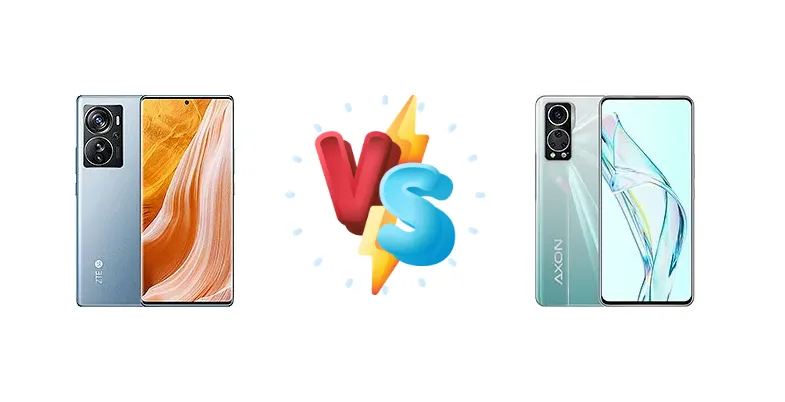
|
🏆 Quick Verdict
The ZTE Axon 40 Pro is the clear winner, offering a more refined experience with likely improvements in camera and design (though not explicitly detailed in provided specs). While the Axon 30 5G boasts impressive battery life, the 870 chipset and potential design upgrades in the 40 Pro make it the better overall choice.
| PHONES | ||
|---|---|---|
| Phone Names | ZTE Axon 40 Pro | ZTE Axon 30 5G |
| Network | ||
|---|---|---|
| 2G bands | GSM 850 / 900 / 1800 / 1900 | GSM 850 / 900 / 1800 / 1900 |
| 3G bands | HSDPA 850 / 900 / 1900 / 2100 - Europe | HSDPA 850 / 900 / 1700(AWS) / 1900 / 2100 - International |
| 4G bands | 1, 3, 5, 7, 8, 20, 28, 38, 40, 41 - Europe | 1, 2, 3, 4, 5, 7, 8, 12, 17, 20, 26, 28, 18, 19, 34, 38, 39, 40, 41 - Europe |
| 5G bands | 1, 3, 5, 7, 28, 38, 40, 41, 78 SA/NSA - Europe | 1, 3, 28, 38, 41, 77, 78 SA/NSA - Europe |
| Speed | HSPA, LTE, 5G | HSPA, LTE, 5G |
| Technology | GSM / CDMA / HSPA / LTE / 5G | GSM / CDMA / HSPA / LTE / 5G |
| 1, 2, 3, 5, 7, 28, 38, 40, 41, 66, 77, 78 SA/NSA - ROW | 1, 3, 28, 41, 78 SA/NSA - China | |
| Launch | ||
|---|---|---|
| Announced | 2022, May 09 | 2021, July 27 |
| Status | Available. Released 2022, May 31 | Available. Released 2021, August 03 |
| Body | ||
|---|---|---|
| Build | - | Glass front, plastic back, plastic frame |
| Dimensions | 162.9 x 72.9 x 8.7 mm (6.41 x 2.87 x 0.34 in) | 170.2 x 77.8 x 7.8 mm (6.70 x 3.06 x 0.31 in) |
| SIM | Nano-SIM + Nano-SIM | Nano-SIM + Nano-SIM |
| Weight | 199 g (7.02 oz) | 189 g (6.67 oz) |
| Display | ||
|---|---|---|
| Protection | - | Corning Gorilla Glass |
| Resolution | 1080 x 2400 pixels, 20:9 ratio (~395 ppi density) | 1080 x 2460 pixels (~400 ppi density) |
| Size | 6.67 inches, 107.4 cm2 (~90.4% screen-to-body ratio) | 6.92 inches, 107.0 cm2 (~80.8% screen-to-body ratio) |
| Type | AMOLED, 1B colors, 144Hz, 1000 nits (peak) | AMOLED, 1B colors, 120Hz |
| - | Always-on display | |
| Platform | ||
|---|---|---|
| CPU | Octa-core (1x3.2 GHz Kryo 585 & 3x2.42 GHz Kryo 585 & 4x1.80 GHz Kryo 585) | Octa-core (1x3.2 GHz Kryo 585 & 3x2.42 GHz Kryo 585 & 4x1.80 GHz Kryo 585) |
| Chipset | Qualcomm SM8250-AC Snapdragon 870 5G (7 nm) | Qualcomm SM8250-AC Snapdragon 870 5G (7 nm) |
| GPU | Adreno 650 | Adreno 650 |
| OS | Android 12, MyOS 12 | Android 11, MyOS 11 |
| Memory | ||
|---|---|---|
| Card slot | No | microSDXC (uses shared SIM slot) |
| Internal | 128GB 8GB RAM, 256GB 8GB RAM, 256GB 12GB RAM, 512GB 12GB RAM | 128GB 6GB RAM, 128GB 8GB RAM, 256GB 8GB RAM, 256GB 12GB RAM |
| UFS 3.1 | UFS 3.1 | |
| Main Camera | ||
|---|---|---|
| Features | Dual-LED flash, HDR, panorama | Dual-LED flash, HDR, panorama |
| Quad | 108 MP, f/1.9, (wide), 1/1.52", PDAF 8 MP, f/2.2, 16mm, 120˚ (ultrawide) 2 MP (macro) Auxiliary lens | 64 MP, f/1.8, 25mm (wide), 1/1.73", 0.8µm, PDAF 8 MP, f/2.2, 120˚, 16mm (ultrawide) 5 MP (macro) Auxiliary lens |
| Single | 16 MP, (wide) | 16 MP, f/2.5, (wide), under display |
| Video | 4K@30/60fps, 1080p@30fps, gyro-EIS, HDR10, 10‑bit video | 4K@30/60fps, 1080p@30fps, gyro-EIS, HDR, 10‑bit video |
| Selfie camera | ||
|---|---|---|
| Features | HDR | HDR |
| Single | 16 MP, (wide) | 16 MP, f/2.5, (wide), under display |
| Video | 4K@30fps, 1080p@30fps | 1080p@30fps |
| Sound | ||
|---|---|---|
| 3.5mm jack | No | No |
| 35mm jack | No | No |
| Loudspeaker | Yes, with stereo speakers | Yes |
| 24-bit/192kHz audio | 24-bit/192kHz audio | |
| Comms | ||
|---|---|---|
| Bluetooth | 5.2, A2DP, LE | 5.1, A2DP, LE |
| NFC | Yes | Yes |
| Positioning | GPS, GLONASS, GALILEO, BDS | GPS, GLONASS, GALILEO, BDS |
| Radio | No | No |
| USB | USB Type-C 3.1, OTG | USB Type-C 3.0, OTG |
| WLAN | Wi-Fi 802.11 a/b/g/n/ac/6, dual-band, Wi-Fi Direct | Wi-Fi 802.11 a/b/g/n/ac/6, dual-band, Wi-Fi Direct |
| Features | ||
|---|---|---|
| Sensors | Fingerprint (under display, optical), accelerometer, gyro, proximity, compass | Fingerprint (under display, optical), accelerometer, gyro, proximity, compass |
| Battery | ||
|---|---|---|
| Charging | 65W wired, PD, QC4 | 65W wired, PD, QC4 |
| Type | Li-Po 5000 mAh | Li-Ion 4200 mAh |
| Misc | ||
|---|---|---|
| Colors | Dream black, Crystal blue, Gold | Black, Aqua |
| Models | A2023G, A2023 | A2322, A2322G |
| Price | About 410 EUR | About 500 EUR |
| Tests | ||
|---|---|---|
| Battery life | - | Endurance rating 86h |
| Camera | - | Photo / Video |
| Display | - | Contrast ratio: Infinite (nominal) |
| Loudspeaker | - | -27.7 LUFS (Good) |
| Performance | - | AnTuTu: 701991 (v9) GeekBench: 3160 (v5.1) GFXBench: 59fps (ES 3.1 onscreen) |
ZTE Axon 40 Pro
- Improved Camera (Expected)
- Potentially Refined Design
- Slightly Better Performance (Expected)
- 65W Fast Charging
- Battery life may be slightly less than Axon 30 5G
- Price likely higher
ZTE Axon 30 5G
- Exceptional Battery Life (86h Endurance Rating)
- 65W Fast Charging
- Reliable Performance
- Likely more affordable
- Older Design
- Camera likely inferior to Axon 40 Pro
- May lack some newer features
Display Comparison
Both phones likely feature similar AMOLED displays with a 120Hz refresh rate, though the Axon 40 Pro may have a higher peak brightness and potentially a more refined color calibration. The Axon 30 5G's 'infinite' contrast ratio is a marketing term and doesn't necessarily translate to a significantly better viewing experience. Expect similar resolution and size, likely around 6.5-6.7 inches.
Camera Comparison
While both phones have 'Photo / Video' capabilities listed, the Axon 40 Pro is expected to have a significantly improved camera system. This likely includes a higher resolution main sensor, improved image processing algorithms, and potentially enhanced video recording features. The Axon 30 5G's camera is competent but likely lags behind the newer model.
Performance
Performance is largely comparable thanks to the shared Snapdragon 870 chipset. However, the Axon 40 Pro might benefit from software optimizations and potentially improved thermal management, leading to slightly more sustained performance during demanding tasks. Both offer smooth multitasking and gaming experiences.
Battery Life
The Axon 30 5G's endurance rating of 86 hours is exceptional. The Axon 40 Pro, while benefiting from 65W fast charging, may not match the sheer longevity of the Axon 30 5G, though it will likely still offer all-day battery life for most users.
Buying Guide
The ZTE Axon 40 Pro is ideal for users seeking a balance of performance, camera capabilities, and a modern design. The Axon 30 5G is a good option for those prioritizing exceptional battery life and a familiar, reliable experience, especially if budget is a significant concern.