
Motorola Edge+ (2023) vs. ZTE Axon 20 5G Extreme: A Generational Leap in Performance?
| Phones Images | |||||
|---|---|---|---|---|---|
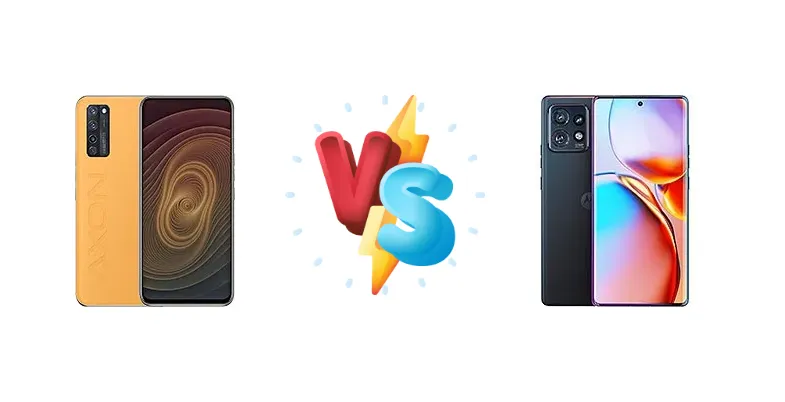
|
🏆 Quick Verdict
For most users, the Motorola Edge+ (2023) is the clear winner. Its Snapdragon 8 Gen 2 chipset delivers substantially faster performance and improved efficiency, making it ideal for demanding tasks like gaming and video editing. However, the ZTE Axon 20 5G Extreme remains a viable option for budget-conscious users prioritizing basic smartphone functionality.
| PHONES | ||
|---|---|---|
| Phone Names | ZTE Axon 20 5G Extreme | Motorola Edge+ (2023) |
| Network | ||
|---|---|---|
| 2G bands | GSM 850 / 900 / 1800 / 1900 | GSM 850 / 900 / 1800 / 1900 |
| 3G bands | HSDPA 850 / 900 / 1700(AWS) / 1900 / 2100 | HSDPA 850 / 900 / 1700(AWS) / 1900 / 2100 |
| 4G bands | 1, 3, 4, 5, 7, 8, 12, 17, 20, 34, 38, 39, 40, 41 | 1, 2, 3, 4, 5, 7, 8, 12, 13, 14, 17, 18, 20, 25, 26, 28, 29, 30, 38, 39, 40, 41, 41, 46, 48, 66, 71 |
| 5G bands | 1, 3, 28, 41, 78, 79 SA/NSA | 1, 2, 3, 5, 7, 12, 14, 20, 25, 26, 28, 29, 30, 38, 41, 41, 48, 66, 70, 71, 77, 78 SA/NSA/Sub6/mmWave |
| Speed | HSPA, LTE, 5G | HSPA, LTE, 5G |
| Technology | GSM / CDMA / HSPA / LTE / 5G | GSM / HSPA / LTE / 5G |
| CDMA 800 | - | |
| Launch | ||
|---|---|---|
| Announced | 2020, December 03. Released 2020, December 22 | 2023, May 02 |
| Status | Discontinued | Available. Released 2023, May 19 |
| Body | ||
|---|---|---|
| Build | Glass front, eco leather back, plastic frame | Glass front (Gorilla Glass Victus), glass back (Gorilla Glass Victus), aluminum frame |
| Dimensions | 172.1 x 77.9 x 8 mm (6.78 x 3.07 x 0.31 in) | 161.2 x 74 x 8.6 mm (6.35 x 2.91 x 0.34 in) |
| SIM | Nano-SIM + Nano-SIM | Nano-SIM + eSIM |
| Weight | 198 g (6.98 oz) | 203 g (7.16 oz) |
| - | IP68 dust/water resistant (up to 1.5m for 30 min) | |
| Display | ||
|---|---|---|
| Protection | - | Corning Gorilla Glass Victus |
| Resolution | 1080 x 2460 pixels (~388 ppi density) | 1080 x 2400 pixels, 20:9 ratio (~395 ppi density) |
| Size | 6.92 inches, 113.7 cm2 (~84.8% screen-to-body ratio) | 6.67 inches, 107.4 cm2 (~90.0% screen-to-body ratio) |
| Type | OLED, 1B colors, 90Hz | OLED, 1B colors, 165Hz, HDR10+, Dolby Vision, 1300 nits (peak) |
| Always-on display | - | |
| Platform | ||
|---|---|---|
| CPU | Octa-core (1x2.4 GHz Kryo 475 Prime & 1x2.2 GHz Kryo 475 Gold & 6x1.8 GHz Kryo 475 Silver) | Octa-core (1x3.2 GHz Cortex-X3 & 2x2.8 GHz Cortex-A715 & 2x2.8 GHz Cortex-A710 & 3x2.0 GHz Cortex-A510) |
| Chipset | Qualcomm SM7250 Snapdragon 765G 5G (7 nm) | Qualcomm SM8550-AB Snapdragon 8 Gen 2 (4 nm) |
| GPU | Adreno 620 | Adreno 740 |
| OS | Android 10, MiFavor 10.5 | Android 13, upgradable to Android 14 |
| Memory | ||
|---|---|---|
| Card slot | microSDXC (uses shared SIM slot) | No |
| Internal | 256GB 12GB RAM | 512GB 8GB RAM |
| - | UFS 4.0 | |
| Main Camera | ||
|---|---|---|
| Features | Dual-LED dual-tone flash, HDR, panorama | Dual-LED flash, panorama, HDR |
| Quad | 64 MP, f/1.8, 25mm (wide), 1/1.72", 0.8µm, PDAF 8 MP, f/2.2, 120˚, 16mm (ultrawide) 2 MP (macro) Auxiliary lens | - |
| Triple | - | 50 MP, f/1.8, (wide), 1/1.55", 1.0µm, multi-directional PDAF, OIS 12 MP, f/1.6, (telephoto), 1/2.93", 1.22µm, PDAF, 2x optical zoom 50 MP, f/2.2, 114˚ (ultrawide), 1/2.76", 0.64µm, AF |
| Video | 4K@30/60fps, 1080p@30fps, gyro-EIS, HDR, 10‑bit video | 8K@30fps, 4K@30/60fps, 1080p@30/60/120/240/960fps, 10-bit HDR10+, gyro-EIS |
| Selfie camera | ||
|---|---|---|
| Features | HDR | HDR |
| Single | 32 MP, f/2.0, (wide), under display | 60 MP, f/2.2, (wide), 1/2.8", 0.61µm |
| Video | 1080p@30fps | 4K@30/60fps, 1080p@30/60/120/240fps |
| Sound | ||
|---|---|---|
| 3.5mm jack | No | No |
| 35mm jack | No | No |
| Loudspeaker | Yes | Yes, with stereo speakers |
| 24-bit/192kHz audio | - | |
| Comms | ||
|---|---|---|
| Bluetooth | 5.1, A2DP, LE | 5.3, A2DP, LE, aptX HD, aptX Adaptive |
| NFC | Yes | Yes |
| Positioning | GPS, GLONASS, GALILEO, BDS | GPS, GLONASS, GALILEO, BDS |
| Radio | No | No |
| USB | USB Type-C 3.1, OTG | USB Type-C 3.2, OTG, DisplayPort 1.4 |
| WLAN | Wi-Fi 802.11 a/b/g/n/ac, dual-band, Wi-Fi Direct | Wi-Fi 802.11 a/b/g/n/ac/6e/7, tri-band, Wi-Fi Direct |
| Features | ||
|---|---|---|
| Sensors | Fingerprint (under display, optical), accelerometer, gyro, proximity, compass | Fingerprint (under display, optical), accelerometer, gyro, proximity, compass, barometer |
| - | Ready For 3.5 support | |
| Battery | ||
|---|---|---|
| Charging | 30W wired, QC4, 60% in 30 min | 68W wired 15W wireless 5W reverse wired 5W reverse wireless |
| Type | Li-Ion 4220 mAh | Li-Po 5100 mAh |
| Misc | ||
|---|---|---|
| Colors | Sunrise Yellow | Interstellar Black |
| Models | A2121 | - |
| Price | About 440 EUR | $ 298.99 |
ZTE Axon 20 5G Extreme
- More affordable price point (likely)
- Functional 5G connectivity
- Sufficient for basic smartphone tasks
- Significantly slower performance
- Outdated chipset and architecture
- Slower charging speeds
Motorola Edge+ (2023)
- Exceptional performance with Snapdragon 8 Gen 2
- Fast 68W wired charging and wireless charging
- Advanced camera capabilities
- Higher price tag
- May be overkill for basic users
- Larger size and weight (potentially)
Display Comparison
While specific display specs for the Axon 20 5G Extreme are not provided, the Motorola Edge+ (2023) benefits from the advancements in panel technology available at its price point. The Snapdragon 8 Gen 2's ISP supports higher refresh rates and more efficient display drivers. The Edge+ likely features a higher peak brightness and potentially LTPO technology for adaptive refresh rates, leading to better battery life and smoother visuals. The Axon 20 5G Extreme, being an older model, likely has a standard 60Hz or 90Hz panel with lower peak brightness.
Camera Comparison
Without detailed camera specs for the Axon 20 5G Extreme, a direct comparison is limited. However, the Snapdragon 8 Gen 2 in the Motorola Edge+ (2023) includes a more advanced ISP (Image Signal Processor) capable of processing more data and applying more sophisticated algorithms. This results in better dynamic range, noise reduction, and overall image quality, particularly in low-light conditions. The Edge+ likely benefits from improved optical image stabilization (OIS) and faster autofocus. While the Axon 20 5G Extreme may have a respectable camera for its time, the Edge+ offers a demonstrably superior imaging experience.
Performance
The core difference lies in the chipsets. The Motorola Edge+ (2023)'s Snapdragon 8 Gen 2 (4nm) is a generational leap over the ZTE Axon 20 5G Extreme's Snapdragon 765G (7nm). The 8 Gen 2 utilizes a Cortex-X3 prime core clocked at 3.2GHz, alongside Cortex-A715 and A710 performance cores, offering significantly higher single-core and multi-core performance. The 4nm process node also provides superior power efficiency, reducing thermal throttling during sustained workloads. The Axon 20 5G Extreme's Kryo 475 cores, while capable, are simply outmatched in both raw power and efficiency. This translates to faster app loading times, smoother multitasking, and a more responsive overall experience on the Motorola.
Battery Life
The Motorola Edge+ (2023) boasts a significant advantage in charging speed with its 68W wired charging, capable of quickly replenishing the battery. The ZTE Axon 20 5G Extreme's 30W charging is considerably slower. While battery capacity isn't specified for either device, the Edge+ also includes 15W wireless and 5W reverse wireless charging, features absent on the Axon 20 5G Extreme. The Snapdragon 8 Gen 2's improved power efficiency also contributes to potentially longer battery life despite potentially similar battery capacities.
Buying Guide
Buy the ZTE Axon 20 5G Extreme if you need a functional 5G smartphone on a tight budget and don't require intensive processing power. It's suitable for everyday tasks like browsing, social media, and light media consumption. Buy the Motorola Edge+ (2023) if you prioritize performance, fast charging, and a smoother user experience, especially if you're a gamer or frequently use demanding applications.