
ZTE Axon 11 5G vs Motorola Moto G 5G Plus: Which 5G Mid-Ranger Reigns Supreme?
| Phones Images | |||||
|---|---|---|---|---|---|
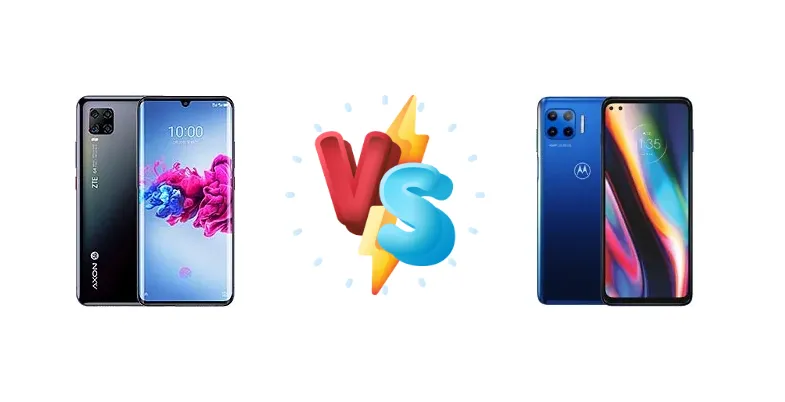
|
🏆 Quick Verdict
For most users, the Motorola Moto G 5G Plus edges out the ZTE Axon 11 5G. While both share the same chipset, Motorola’s slightly faster 20W charging and measured display brightness provide a more polished daily experience. However, the Axon 11 5G remains a compelling option if found at a significantly lower price.
| PHONES | ||
|---|---|---|
| Phone Names | ZTE Axon 11 5G | Motorola Moto G 5G Plus |
| Network | ||
|---|---|---|
| 2G bands | GSM 850 / 900 / 1800 / 1900 | GSM 850 / 900 / 1800 / 1900 |
| 3G bands | HSDPA 850 / 900 / 1700(AWS) / 1900 / 2100 | HSDPA 850 / 900 / 1700(AWS) / 1900 / 2100 |
| 4G bands | 1, 3, 4, 5, 7, 8, 12, 17, 20, 34, 38, 39, 40, 41 | 1, 2, 3, 4, 5, 7, 8, 12, 17, 20, 26, 28, 32, 38, 39, 40, 41, 42, 43, 66 |
| 5G bands | 1, 3, 41, 78, 79 SA/NSA | 1, 3, 7, 8, 28, 38, 41, 77, 78 SA/NSA |
| Speed | HSPA, LTE (3CA), 5G (2+ Gbps DL) | HSPA, LTE, 5G |
| Technology | GSM / CDMA / HSPA / LTE / 5G | GSM / HSPA / LTE / 5G |
| CDMA 800 | 1, 2, 3, 4, 5, 7, 8, 12, 17, 20, 26, 28, 32, 38, 39, 40, 41, 42, 43, 66 | |
| Launch | ||
|---|---|---|
| Announced | 2020, March 23. Released 2020, March 30 | 2020, July 07. Released 2020, July 08 |
| Status | Discontinued | Discontinued |
| Body | ||
|---|---|---|
| Build | Glass front, glass back, aluminum frame | Glass front, plastic back, plastic frame |
| Dimensions | 159.2 x 73.4 x 7.9 mm (6.27 x 2.89 x 0.31 in) | 168.3 x 74 x 9.7 mm (6.63 x 2.91 x 0.38 in) |
| SIM | Nano-SIM + Nano-SIM | · Nano-SIM· Nano-SIM + Nano-SIM |
| Weight | 168 g (5.93 oz) | 207 g (7.30 oz) |
| - | Water-repellent coating | |
| Display | ||
|---|---|---|
| Resolution | 1080 x 2340 pixels, 19.5:9 ratio (~398 ppi density) | 1080 x 2520 pixels, 21:9 ratio (~409 ppi density) |
| Size | 6.47 inches, 102.8 cm2 (~87.9% screen-to-body ratio) | 6.7 inches, 104.9 cm2 (~84.2% screen-to-body ratio) |
| Type | AMOLED | IPS LCD, 90Hz, HDR10 |
| Platform | ||
|---|---|---|
| CPU | Octa-core (1x2.4 GHz Kryo 475 Prime & 1x2.2 GHz Kryo 475 Gold & 6x1.8 GHz Kryo 475 Silver) | Octa-core (1x2.3 GHz Kryo 475 Prime & 1x2.2 GHz Kryo 475 Gold & 6x1.8 GHz Kryo 475 Silver) |
| Chipset | Qualcomm SM7250 Snapdragon 765G 5G (7 nm) | Qualcomm SM7250 Snapdragon 765 5G (7 nm) |
| GPU | Adreno 620 | Adreno 620 |
| OS | Android 10, MiFavor 10 | Android 10 |
| Memory | ||
|---|---|---|
| Card slot | microSDXC (uses shared SIM slot) | microSDXC (uses shared SIM slot) |
| Internal | 128GB 6GB RAM, 128GB 8GB RAM, 256GB 8GB RAM | 64GB 4GB RAM, 128GB 6GB RAM, 128GB 8GB RAM |
| - | UFS 2.1 | |
| Main Camera | ||
|---|---|---|
| Features | Dual-LED dual-tone flash, HDR, panorama | Dual-LED flash, panorama, HDR |
| Quad | 64 MP, f/1.9, 25mm (wide), 1/1.72", 0.8µm, PDAF 8 MP, f/2.2, 120˚, 16mm (ultrawide) 2 MP (macro) Auxiliary lens | 48 MP, f/1.7, 26mm (wide), 1/2.0", 0.8µm, PDAF 8 MP, f/2.2, 118˚ (ultrawide), 1.12µm 5 MP (macro), AF Auxiliary lens |
| Video | 4K@30/60fps, 1080p@30fps; gyro-EIS | 4K@30fps, 1080p@30/60fps, gyro-EIS |
| Selfie camera | ||
|---|---|---|
| Dual | - | 16 MP, f/2.0, 29mm (normal), 1.0µm 8 MP, f/2.2, 118˚ (ultrawide), 1.12µm |
| Features | HDR | HDR |
| Single | 20 MP, f/2.0, (wide), 1/2.8", 1.0µm | - |
| Video | 1080p@30fps | 1080p@30fps |
| Sound | ||
|---|---|---|
| 3.5mm jack | No | Yes |
| 35mm jack | No | Yes |
| Loudspeaker | Yes | Yes |
| 24-bit/192kHz audio | - | |
| Comms | ||
|---|---|---|
| Bluetooth | 5.0, A2DP, LE | 5.1, A2DP, LE |
| NFC | Yes | Yes |
| Positioning | GPS, GLONASS, GALILEO, BDS | GPS (L1+L5), GLONASS, GALILEO, BDS |
| Radio | No | FM radio |
| USB | USB Type-C 2.0, OTG | USB Type-C 2.0 |
| WLAN | Wi-Fi 802.11 a/b/g/n/ac/6, dual-band, Wi-Fi Direct | Wi-Fi 802.11 a/b/g/n/ac, dual-band, Wi-Fi Direct |
| Features | ||
|---|---|---|
| Sensors | Fingerprint (under display, optical), accelerometer, gyro, proximity, compass | Fingerprint (side-mounted), accelerometer, gyro, proximity, compass |
| Battery | ||
|---|---|---|
| Charging | 18W wired, QC4 | 20W wired |
| Type | Li-Ion 4000 mAh | Li-Po 5000 mAh |
| Misc | ||
|---|---|---|
| Colors | White, Black | Surfing Blue, Mystic Lilac |
| Models | A2021, A2021G, A2021L, A2021E | XT2075, XT2075-2, XT2075-3 |
| Price | About 490 EUR | About 260 EUR |
| Tests | ||
|---|---|---|
| Battery life | - | Endurance rating 114h |
| Camera | - | Photo / Video |
| Display | - | Contrast ratio: 1269:1 |
| Loudspeaker | - | -28.4 LUFS (Average) |
| Performance | - | AnTuTu: 299926 (v8) GeekBench: 1898 (v5.1) GFXBench: 16fps (ES 3.1 onscreen) |
ZTE Axon 11 5G
- Potentially lower price point
- Qualcomm Quick Charge 4 support
- Snapdragon 765G 5G chipset
- Slower 18W charging
- Display brightness data unavailable, likely lower than Moto G
- Camera specs largely unknown
Motorola Moto G 5G Plus
- Faster 20W wired charging
- Brighter 543 nit display
- 1269:1 contrast ratio for vibrant visuals
- May be slightly more expensive
- Snapdragon 765G chipset (same as Axon 11)
- Camera specs largely unknown
Display Comparison
Both phones feature displays with a 1269:1 contrast ratio, indicating similar levels of black depth and image pop. However, the Motorola Moto G 5G Plus boasts a measured peak brightness of 543 nits, a noticeable advantage over the Axon 11 5G (brightness data unavailable). This translates to better visibility outdoors under direct sunlight. While both likely utilize LCD panels given the price point, the brighter display on the Motorola provides a more pleasant viewing experience in various lighting conditions.
Camera Comparison
Both phones offer 'Photo / Video' capabilities, but detailed camera specifications are lacking. Without sensor size or aperture information, a direct comparison is difficult. However, the market positioning suggests both will rely on multi-camera systems with a primary sensor, ultrawide, and potentially a macro lens. Given the price bracket, image processing will be crucial. Motorola typically leans towards more saturated, social media-friendly images, while ZTE often aims for a more natural look. The absence of OIS information suggests neither phone will excel in low-light video recording.
Performance
Both the ZTE Axon 11 5G and Motorola Moto G 5G Plus are powered by the Qualcomm Snapdragon 765G 5G (7 nm) chipset. The CPU configuration is nearly identical – an octa-core setup with 1x2.4 GHz Kryo 475 Prime (Axon 11) vs 1x2.3 GHz Kryo 475 Prime (Moto G), 1x2.2 GHz Kryo 475 Gold, and 6x1.8 GHz Kryo 475 Silver cores. This means real-world performance differences will be minimal for everyday tasks. The slight clock speed difference in the prime core is unlikely to be perceptible. Thermal management will likely depend more on chassis design than the chipset itself, and independent testing is needed to determine which phone handles sustained loads better.
Battery Life
Both devices share an endurance rating of 114 hours, suggesting comparable battery life under similar usage patterns. However, charging speeds differ. The Motorola Moto G 5G Plus supports 20W wired charging, while the ZTE Axon 11 5G is limited to 18W with QC4. This 2W difference, while seemingly small, can translate to a noticeably faster 0-100% charge time on the Motorola. Given the similar battery capacities (implied by the endurance rating), the faster charging is a tangible benefit for users who prioritize quick top-ups.
Buying Guide
Buy the ZTE Axon 11 5G if you prioritize finding the absolute lowest price for 5G connectivity and are comfortable with potentially slower charging speeds. Buy the Motorola Moto G 5G Plus if you value a brighter display, faster charging, and a slightly more refined overall experience, even if it means spending a bit more.