
Asus ROG Phone II vs. ZTE Axon 10 Pro: A Deep Dive into Gaming and Everyday Use
| Phones Images | |||||
|---|---|---|---|---|---|
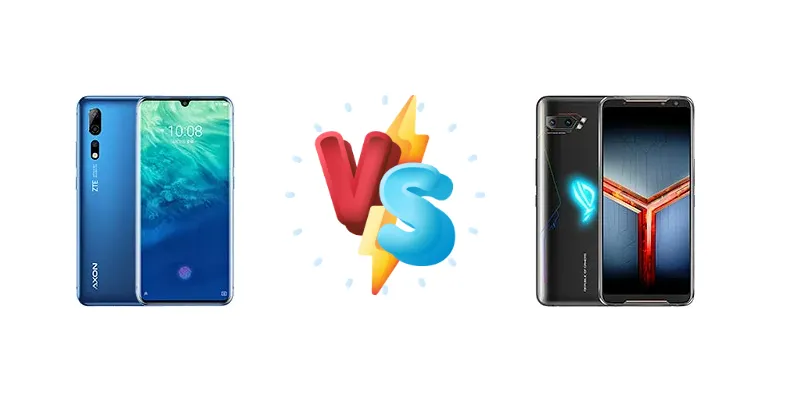
|
🏆 Quick Verdict
For the average user, the ZTE Axon 10 Pro offers a more refined and versatile experience. While the ROG Phone II boasts a slightly faster processor and comparable battery life, the Axon 10 Pro’s more balanced feature set, including wireless charging and a sleeker design, makes it the better all-rounder.
| PHONES | ||
|---|---|---|
| Phone Names | ZTE Axon 10 Pro | Asus ROG Phone II ZS660KL |
| Network | ||
|---|---|---|
| 2G bands | GSM 850 / 900 / 1800 / 1900 | GSM 850 / 900 / 1800 / 1900 |
| 3G bands | HSDPA 850 / 900 / 1700(AWS) / 1900 / 2100 | HSDPA 850 / 900 / 1900 / 2100 |
| 4G bands | 1, 2, 3, 4, 5, 7, 8, 12, 17, 18, 19, 20, 26, 28, 34, 38, 39, 40, 41 - China | 1, 2, 3, 4, 5, 7, 8, 12, 13, 17, 18, 19, 20, 28, 29, 32, 34, 38, 39, 40, 41, 46 |
| Speed | HSPA 42.2/5.76 Mbps, LTE (4CA) Cat18 1200/150 Mbps | HSPA 42.2/5.76 Mbps, LTE (5CA) Cat18 (Cat20 Ultimate edition) 1200/150 Mbps |
| Technology | GSM / CDMA / HSPA / LTE | GSM / HSPA / LTE |
| 1, 2, 3, 4, 5, 7, 8, 12, 13, 17, 18, 19, 20, 25, 26, 28, 30, 34, 38, 39, 40, 41, 66, 71 - USA | - | |
| Launch | ||
|---|---|---|
| Announced | 2019, February. Released 2019, May | 2019, July 22. Released 2019, September |
| Status | Discontinued | Discontinued |
| Body | ||
|---|---|---|
| Build | Glass front, glass back, aluminum frame | Glass front (Gorilla Glass 6), glass back (Gorilla Glass 3), aluminum frame |
| Dimensions | 159.2 x 73.4 x 7.9 mm (6.27 x 2.89 x 0.31 in) | 171 x 77.6 x 9.5 mm (6.73 x 3.06 x 0.37 in) |
| SIM | Nano-SIM + Nano-SIM | Nano-SIM + Nano-SIM |
| Weight | 175 g (6.17 oz) | 240 g (8.47 oz) |
| - | RGB light panel (on the back) | |
| Display | ||
|---|---|---|
| Protection | - | Corning Gorilla Glass 6 |
| Resolution | 1080 x 2340 pixels, 19.5:9 ratio (~398 ppi density) | 1080 x 2340 pixels, 19.5:9 ratio (~391 ppi density) |
| Size | 6.47 inches, 102.8 cm2 (~87.9% screen-to-body ratio) | 6.59 inches, 106.6 cm2 (~80.3% screen-to-body ratio) |
| Type | AMOLED, HDR10 | AMOLED, 1B colors, 120Hz, HDR10 |
| Platform | ||
|---|---|---|
| CPU | Octa-core (1x2.84 GHz Kryo 485 & 3x2.42 GHz Kryo 485 & 4x1.78 GHz Kryo 485) | Octa-core (1x2.96 GHz Kryo 485 & 3x2.42 GHz Kryo 485 & 4x1.78 GHz Kryo 485) |
| Chipset | Qualcomm SM8150 Snapdragon 855 (7 nm) | Qualcomm SM8150 Snapdragon 855+ (7 nm) |
| GPU | Adreno 640 | Adreno 640 (700 MHz) |
| OS | Android 9.0 (Pie), upgradable to Android 10, MiFavor 10.0 | Android 9.0 (Pie), ROG UI |
| Memory | ||
|---|---|---|
| Card slot | microSDXC (uses shared SIM slot) | No |
| Internal | 128GB 6GB RAM, 256GB 8GB RAM, 256GB 12GB RAM | 128GB 8GB RAM, 256GB 12GB RAM, 512GB 12GB RAM, 1TB 12GB RAM |
| UFS 2.1 | UFS 3.0 | |
| Main Camera | ||
|---|---|---|
| Dual | - | 48 MP, f/1.8, 26mm (wide), 1/2.0", 0.8µm, PDAF 13 MP, f/2.4, 11mm (ultrawide) |
| Features | Dual-LED dual-tone flash, HDR, panorama | Laser AF, LED flash, HDR, panorama |
| Single | - | 5 MP |
| Triple | 48 MP, f/1.7, (wide), 1/2.0", 0.8µm, PDAF, OIS 8 MP, f/2.4, (telephoto), PDAF, OIS, 3x optical zoom 20 MP, f/2.2, 11mm (ultrawide) | - |
| Video | 4K@30fps, 1080p@30fps | 4K@30/60fps, 1080p@30/60/240fps, 720p@480fps; gyro-EIS (except @240/480fps) |
| Selfie camera | ||
|---|---|---|
| Features | HDR | Panorama, HDR |
| Single | 20 MP, f/2.0, (wide), 1/2.8", 1.0µm | 24MP, f/2.2, 0.9µm |
| Video | 1080p@30fps | 1080p@30fps |
| Sound | ||
|---|---|---|
| 3.5mm jack | No | Yes |
| 35mm jack | No | Yes |
| Loudspeaker | Yes, with stereo speakers | Yes, with DTS:X stereo speakers (2 dedicated amplifiers) |
| 24-bit/192kHz audio | 24-bit/192kHz audio | |
| Comms | ||
|---|---|---|
| Bluetooth | 5.0, A2DP, LE | 5.0, A2DP, LE, aptX HD |
| NFC | Yes | Yes |
| Positioning | GPS, GLONASS, GALILEO, BDS | GPS (L1+L5), GLONASS, BDS, GALILEO, QZSS |
| Radio | No | FM radio |
| USB | USB Type-C 2.0 | USB Type-C 3.1, accessory connector, OTG |
| WLAN | Wi-Fi 802.11 a/b/g/n/ac, dual-band, Wi-Fi Direct | Wi-Fi 802.11 a/b/g/n/ac/ad, dual-band, Wi-Fi Direct |
| Features | ||
|---|---|---|
| Sensors | Fingerprint (under display, optical), accelerometer, gyro, proximity, compass | Fingerprint (under display, optical), accelerometer, gyro, proximity, compass |
| Battery | ||
|---|---|---|
| Charging | 18W wired, QC4 Wireless (Qi) | 30W wired 10W reverse wired, QC4 |
| Stand-by | - | Up to 150 h (3G) |
| Talk time | - | Up to 5 h (3G) |
| Type | Li-Ion 4000 mAh, non-removable | Li-Po 6000 mAh, non-removable |
| Misc | ||
|---|---|---|
| Colors | Blue | Matte Black, Glossy Black |
| Models | A10P3251, A10P3351 | ASUS_I001D, I001DA, I001DE, I001DC, I001DB, I001D, I001DD |
| Price | About 470 EUR | About 1070 EUR |
| Tests | ||
|---|---|---|
| Battery life | - | Endurance rating 114h |
| Camera | - | Photo / Video |
| Display | - | Contrast ratio: Infinite (nominal) |
| Loudspeaker | - | -19.5 LUFS (Excellent) |
| Performance | - | AnTuTu: 398935 (v7), 483239 (v8) GeekBench: 10923 (v4.4) GFXBench: 40fps (ES 3.1 onscreen) |
ZTE Axon 10 Pro
- Sleek and refined design
- Wireless charging support (Qi)
- More versatile for everyday use
- Slightly less powerful processor
- Potentially more thermal throttling under load
Asus ROG Phone II ZS660KL
- Faster Snapdragon 855+ processor
- Excellent battery life (114h endurance)
- 30W fast charging and reverse charging
- Bulky and gamer-centric design
- Lacks wireless charging
Display Comparison
The Asus ROG Phone II features a 6.59-inch display capable of reaching 626 nits of peak brightness, ensuring excellent visibility even outdoors. While the Axon 10 Pro’s display specs aren’t provided, its focus on aesthetics suggests a high-quality panel, though likely with a lower peak brightness. The ROG Phone II’s infinite contrast ratio, typical of AMOLED displays, delivers deep blacks and vibrant colors. The ROG Phone II’s larger size caters to immersive gaming, while the Axon 10 Pro likely prioritizes a more manageable form factor. The lack of refresh rate data for the Axon 10 Pro means the ROG Phone II likely has a smoother experience for gaming.
Camera Comparison
Both phones offer photo and video capabilities, but detailed camera specifications are limited. The ROG Phone II’s camera system is geared towards general use, while the Axon 10 Pro likely emphasizes image quality and color accuracy. Without sensor size or aperture data, it’s difficult to definitively assess camera performance. However, the ROG Phone II’s gaming focus suggests less emphasis on advanced camera features compared to the Axon 10 Pro, which aimed for a more well-rounded flagship experience. The absence of specific details prevents a meaningful comparison of image processing algorithms.
Performance
Both devices utilize the Qualcomm Snapdragon 855 series, but the ROG Phone II steps up to the Snapdragon 855+ (7nm). This translates to a slightly higher peak CPU clock speed – 2.96 GHz on the ROG Phone II versus 2.84 GHz on the Axon 10 Pro. While the core architecture remains identical, the 855+ offers a modest performance boost, particularly in sustained workloads. Both phones share the same octa-core configuration (1x Kryo 485 at high clock, 3x Kryo 485 at mid clock, and 4x Kryo 485 at low clock). The ROG Phone II’s superior thermal design, a hallmark of the ROG series, allows it to maintain peak performance for longer periods, minimizing throttling during intense gaming sessions. The Axon 10 Pro, while capable, may experience more thermal throttling under sustained load.
Battery Life
The Asus ROG Phone II boasts an endurance rating of 114 hours, indicating excellent battery life. It supports 30W wired charging, allowing for rapid replenishment, and even offers 10W reverse wired charging. The ZTE Axon 10 Pro, with 18W wired charging and Qi wireless charging, provides more charging flexibility. While the Axon 10 Pro’s battery capacity isn’t specified, the ROG Phone II’s endurance rating suggests a larger battery. The ROG Phone II’s faster charging speed compensates for any potential capacity difference, allowing for quicker top-ups. The Axon 10 Pro’s wireless charging is a significant convenience feature absent on the ROG Phone II.
Buying Guide
Buy the ZTE Axon 10 Pro if you prioritize a premium design, wireless charging convenience, and a more balanced smartphone experience for everyday use. Buy the Asus ROG Phone II ZS660KL if you are a dedicated mobile gamer who demands maximum performance, extended battery life during gaming sessions, and doesn't mind a bulkier form factor.