
ZTE A41 Ultra vs Xiaomi 12 Pro (Dimensity): Which Flagship Reigns Supreme?
| Phones Images | |||||
|---|---|---|---|---|---|
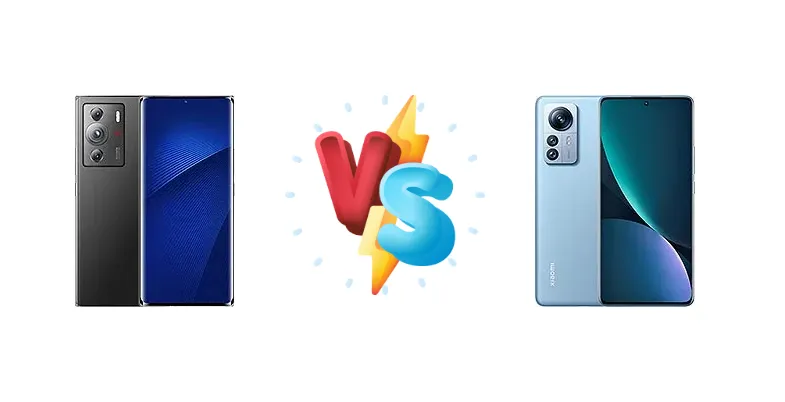
|
🏆 Quick Verdict
For the average user prioritizing raw CPU performance and sustained gaming, the Xiaomi 12 Pro (Dimensity) is the stronger choice. Its Dimensity 9000+ chipset offers a slight edge in processing power and potentially better thermal management, while both phones offer comparable fast charging and a premium experience.
| PHONES | ||
|---|---|---|
| Phone Names | ZTE A41 Ultra | Xiaomi 12 Pro (Dimensity) |
| Network | ||
|---|---|---|
| 2G bands | GSM 850 / 900 / 1800 / 1900 | GSM 850 / 900 / 1800 / 1900 |
| 3G bands | HSDPA 850 / 900 / 2100 | HSDPA 800 / 850 / 900 / 1700(AWS) / 1900 / 2100 |
| 4G bands | LTE | 1, 2, 3, 4, 5, 7, 8, 18, 19, 26, 34, 38, 39, 40, 41, 42 |
| 5G bands | SA/NSA | 1, 3, 5, 8, 28, 38, 40, 41, 77, 78 SA/NSA |
| Speed | HSPA, LTE, 5G | HSPA, LTE, 5G |
| Technology | GSM / CDMA / HSPA / LTE / 5G | GSM / CDMA / HSPA / EVDO / LTE / 5G |
| - | CDMA2000 1xEV-DO | |
| Launch | ||
|---|---|---|
| Announced | 2022 | 2022, July 04 |
| Status | Available. Released 2022 | Available. Released 2022, July 13 |
| Body | ||
|---|---|---|
| Build | Glass front, glass back, aluminum frame | - |
| Dimensions | 161.9 x 72.9 x 8.5 mm (6.37 x 2.87 x 0.33 in) | 163.6 x 74.6 x 8.2 mm (6.44 x 2.94 x 0.32 in) |
| SIM | Nano-SIM + Nano-SIM | Nano-SIM + Nano-SIM |
| Weight | 199 g (7.02 oz) | 201 g (7.09 oz) |
| Display | ||
|---|---|---|
| Protection | - | Corning Gorilla Glass Victus |
| Resolution | 1080 x 2400 pixels, 20:9 ratio (~395 ppi density) | 1440 x 3200 pixels, 20:9 ratio (~521 ppi density) |
| Size | 6.67 inches, 107.4 cm2 (~91.0% screen-to-body ratio) | 6.73 inches, 109.4 cm2 (~89.6% screen-to-body ratio) |
| Type | AMOLED, 1B colors, 144Hz | LTPO2 AMOLED, 1B colors, 120Hz, Dolby Vision, HDR10+, 1000 nits (HBM), 1500 nits (peak) |
| Platform | ||
|---|---|---|
| CPU | Octa-core (1x3.00 GHz Cortex-X2 & 3x2.50 GHz Cortex-A710 & 4x1.80 GHz Cortex-A510) | Octa-core (1x3.20 GHz Cortex-X2 & 3x2.85 GHz Cortex-A710 & 4x1.80 GHz Cortex-A510) |
| Chipset | Qualcomm SM8450 Snapdragon 8 Gen 1 (4 nm) | Mediatek Dimensity 9000+ (4 nm) |
| GPU | Adreno 730 | Mali-G710 MC10 |
| OS | Android 12, MyOS 12 | Android 12, MIUI 13 |
| Memory | ||
|---|---|---|
| Card slot | No | No |
| Internal | 256GB 8GB RAM, 256GB 12GB RAM, 512GB 12GB RAM | 128GB 8GB RAM, 256GB 12GB RAM |
| - | UFS 3.1 | |
| Main Camera | ||
|---|---|---|
| Features | LED flash, HDR, panorama | Color spectrum sensor, Dual-LED dual-tone flash, HDR, panorama |
| Single | - | 32 MP, f/2.5, 26mm (wide), 0.7µm |
| Triple | 64 MP, f/1.7, 35mm (standard), 1/1.7", PDAF, OIS 8 MP, f/3.4, 125mm (periscope telephoto), 1/4.0", PDAF, OIS, 5x optical zoom 50 MP, f/2.2, 14mm, 116˚ (ultrawide) | 50 MP, f/1.9, 24mm (wide), 1/1.28", 1.22µm, dual pixel PDAF, OIS 13 MP, f/2.4, 15mm, 123˚ (ultrawide), 1/3.06", 1.12µm 5 MP, f/2.4, 50mm (telephoto macro), AF |
| Video | Yes | 4K@30/60fps, 1080p@30/60/120fps, gyro-EIS |
| Selfie camera | ||
|---|---|---|
| Features | - | HDR, panorama |
| Single | 44 MP, (wide) | 32 MP, f/2.5, 26mm (wide), 0.7µm |
| Video | Yes | 1080p@30/60fps, 720p@120fps |
| Sound | ||
|---|---|---|
| 3.5mm jack | - | No |
| 35mm jack | Unspecified | No |
| Loudspeaker | Yes | Yes, with stereo speakers |
| - | 24-bit/192kHz audio Tuned by Harman Kardon | |
| Comms | ||
|---|---|---|
| Bluetooth | 5.2, A2DP, LE, aptX HD, aptX Adaptive | 5.3, A2DP, LE |
| Infrared port | - | Yes |
| NFC | Yes | Yes |
| Positioning | GPS (L1+L5), GLONASS, GALILEO, BDS, QZSS | GPS (L1+L5), GLONASS (L1), BDS (B1I+B1c+B2a), GALILEO (E1+E5a), QZSS (L1+L5), NavIC (L5) |
| Radio | No | No |
| USB | USB Type-C 3.1, OTG | USB Type-C 2.0, OTG |
| WLAN | Wi-Fi 802.11 a/b/g/n/ac/6e, dual-band, Wi-Fi Direct | Wi-Fi 802.11 a/b/g/n/ac/6, dual-band, Wi-Fi Direct |
| Features | ||
|---|---|---|
| Sensors | Fingerprint (under display, optical), accelerometer, gyro, proximity, compass | Fingerprint (under display, optical), accelerometer, gyro, proximity, compass |
| Battery | ||
|---|---|---|
| Charging | 66W wired, PD3.0, QC4 | 67W wired, PD3.0, QC4 |
| Type | 5000 mAh | Li-Po 5160 mAh |
| Misc | ||
|---|---|---|
| Colors | Black | Gray, Blue |
| Models | - | 2207122MC |
| Price | - | About 570 EUR |
ZTE A41 Ultra
- Potentially lower price point
- Qualcomm Snapdragon ecosystem
- Fast 66W charging
- Slightly lower CPU performance
- Potential for more thermal throttling
Xiaomi 12 Pro (Dimensity)
- Superior CPU performance with Dimensity 9000+
- Potentially better thermal management
- Fast 67W charging
- May be more expensive
- MediaTek chipset – some users prefer Qualcomm
Display Comparison
While both devices likely feature high-quality AMOLED panels, the provided data doesn't allow for a direct comparison of display characteristics. However, given Xiaomi’s history with flagship devices, the 12 Pro likely boasts a higher peak brightness and potentially LTPO technology for adaptive refresh rates, contributing to better battery efficiency. The ZTE A41 Ultra’s display quality will be competitive, but without specific details, it’s difficult to assess its advantage.
Camera Comparison
Without detailed camera specifications, a direct comparison is limited. However, both phones are expected to feature multi-camera systems. The image processing style will likely differ – Qualcomm typically leans towards more saturated colors, while MediaTek often aims for a more natural look. The absence of sensor size information makes it impossible to determine which device has an advantage in low-light photography. The inclusion of OIS (Optical Image Stabilization) on the main sensor is crucial for both, and its effectiveness will be a key differentiator.
Performance
The core difference lies in the chipsets. The Xiaomi 12 Pro (Dimensity) utilizes the Mediatek Dimensity 9000+ with a Cortex-X2 clocked at 3.20 GHz, exceeding the ZTE A41 Ultra’s Snapdragon 8 Gen 1’s 3.00 GHz Cortex-X2. While both feature the same Cortex-A710 and A510 configurations, the higher clock speeds on the Dimensity 9000+ translate to a noticeable performance advantage in CPU-intensive tasks. The 4nm fabrication process is shared, but the Dimensity 9000+'s architecture is generally considered more efficient, potentially leading to less thermal throttling under sustained load. Both devices will likely utilize LPDDR5 RAM, but the speed and configuration could vary, impacting multitasking performance.
Battery Life
Both devices offer comparable fast charging at 66W and 67W respectively, both supporting PD3.0 and QC4. This suggests similar 0-100% charging times, likely around 35-45 minutes. The actual battery life will depend on the battery capacity (not provided) and software optimization. The Dimensity 9000+'s potentially better power efficiency could translate to slightly longer battery life for the Xiaomi 12 Pro, offsetting any capacity differences.
Buying Guide
Buy the ZTE A41 Ultra if you prioritize a potentially lower price point and are comfortable with Qualcomm’s Snapdragon ecosystem. It’s a solid performer for everyday tasks and photography. Buy the Xiaomi 12 Pro (Dimensity) if you demand the best possible CPU performance for demanding applications, gaming, and multitasking, and appreciate MediaTek’s advancements in flagship silicon.