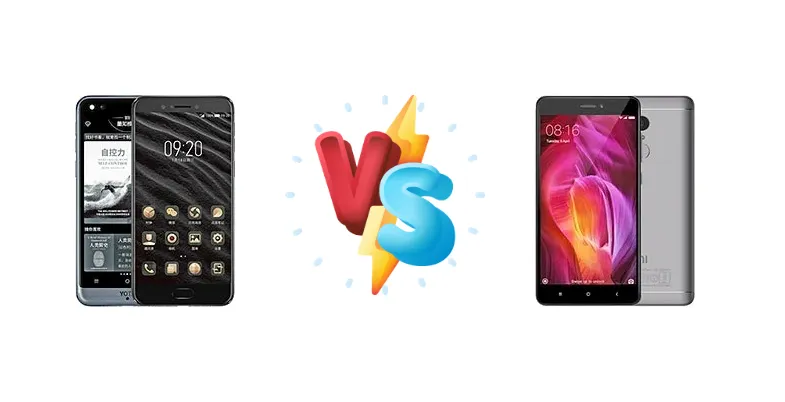
The YotaPhone 3 offered a truly unique feature: a second, e-ink display on the back. Meanwhile, the Xiaomi Redmi Note 4 was a champion of battery life and affordability. But which phone ultimately delivers the better experience? Let's dive into a comprehensive comparison.
🏆 Quick Verdict
The Redmi Note 4 wins on value and battery endurance, offering exceptional longevity for a budget price. The YotaPhone 3's dual-screen is innovative but hampered by limited software support and a higher price tag. For most users, the Redmi Note 4 is the more practical choice.
| Network |
|---|
| 2G bands | GSM 850 / 900 / 1800 / 1900 - SIM 1 & SIM 2 | GSM 900 / 1800 / 1900 - SIM 1 & SIM 2 |
| 3G bands | HSDPA 850 / 900 / 1900 / 2100 | HSDPA 850 / 900 / 1900 / 2100 |
| 4G bands | LTE | 1, 3, 4, 5, 7, 8, 20, 38, 40 |
| Speed | HSPA, LTE | HSPA 42.2/5.76 Mbps, LTE (2CA) Cat6 300/50 Mbps |
| Technology | GSM / HSPA / LTE | GSM / HSPA / LTE |
| Launch |
|---|
| Announced | 2017, August. Released 2017, September | 2017, January. Released 2017, January |
| Status | Discontinued | Discontinued |
| Body |
|---|
| Build | Glass front (Gorilla Glass 4), glass back (Gorilla Glass 4), aluminum frame | Glass front, aluminum back, aluminum frame |
| Dimensions | 153.6 x 75.2 x 7.9 mm (6.05 x 2.96 x 0.31 in) | 151 x 76 x 8.5 mm (5.94 x 2.99 x 0.33 in) |
| SIM | Nano-SIM + Nano-SIM | Nano-SIM + Micro-SIM |
| Weight | 170 g (6.00 oz) | 165 g (5.82 oz) |
| Display |
|---|
| Protection | Corning Gorilla Glass 4 | - |
| Resolution | 1080 x 1920 pixels, 16:9 ratio (~401 ppi density) | 1080 x 1920 pixels, 16:9 ratio (~401 ppi density) |
| Size | 5.5 inches, 83.4 cm2 (~72.2% screen-to-body ratio) | 5.5 inches, 83.4 cm2 (~72.7% screen-to-body ratio) |
| Type | AMOLED | IPS LCD |
| | Secondary always-on grayscale capacitive touchscreen, 720 x 1280 pixels (282 ppi), 5.2 inches | - |
| Platform |
|---|
| CPU | Octa-core 2.0 GHz Cortex-A53 | Octa-core 2.0 GHz Cortex-A53 |
| Chipset | Qualcomm MSM8953 Snapdragon 625 (14 nm) | Qualcomm MSM8953 Snapdragon 625 (14 nm) |
| GPU | Adreno 506 | Adreno 506 |
| OS | Android 7.1.1 (Nougat), Yota 3 | Android 6.0 (Marshmallow), upgradable to 7.0 (Nougat), MIUI 11 |
| Memory |
|---|
| Card slot | No | microSDXC (uses shared SIM slot) |
| Internal | 64GB 4GB RAM, 128GB 4GB RAM | 32GB 3GB RAM, 64GB 3GB RAM, 64GB 4GB RAM |
| | eMMC 5.1 | eMMC 5.1 |
| Main Camera |
|---|
| Features | Dual-LED dual-tone flash, panorama, HDR | Dual-LED dual-tone flash, panorama, HDR |
| Single | 12 MP, f/1.9, AF | 13 MP, f/2.0, 1/3.1", 1.12µm, PDAF |
| Video | 1080p@30fps | 1080p@30fps, 720p@120fps |
| Selfie camera |
|---|
| Single | 13 MP, f/2.2 | 5 MP, f/2.0 |
| Video | - | 1080p@30fps |
| Sound |
|---|
| 3.5mm jack | No | Yes |
| 35mm jack | No | Yes |
| Loudspeaker | Yes | Yes |
| | - | 24-bit/192kHz audio
|
| Comms |
|---|
| Bluetooth | 4.2, A2DP, LE | 4.1, A2DP, LE |
| Infrared port | - | Yes |
| NFC | Yes | No |
| Positioning | GPS, GLONASS | GPS, GLONASS, BDS |
| Radio | FM radio | FM radio |
| USB | USB Type-C | microUSB 2.0, OTG |
| WLAN | Wi-Fi 802.11 a/b/g/n/ac, dual-band, Wi-Fi Direct | Wi-Fi 802.11 a/b/g/n, Wi-Fi Direct |
| Features |
|---|
| Sensors | Fingerprint (front-mounted), accelerometer, gyro, proximity, compass | Fingerprint (rear-mounted), accelerometer, gyro, proximity, compass |
| Battery |
|---|
| Charging | 18W wired | - |
| Type | Li-Po 3300 mAh, non-removable | Li-Po 4100 mAh, non-removable |
| Misc |
|---|
| Colors | Black | Dark Gray, Gold, Black, Lake Blue |
| Models | - | 2016100 |
| Price | About 310 EUR | About 150 EUR |
| SAR EU | - | 0.72 W/kg (head) 0.67 W/kg (body) |
| Tests |
|---|
| Audio quality | - |
Noise -94.6dB / Crosstalk -94.3dB |
| Battery life | - | Endurance rating 119h |
| Camera | - |
Photo / Video |
| Display | - |
Contrast ratio: 1503:1 (nominal), 2.714 (sunlight) |
| Loudspeaker | - |
Voice 67dB / Noise 70dB / Ring 81dB |
| Performance | - |
GFXBench: 3.4fps (ES 3.1 onscreen) |
Yota YotaPhone 3
- Unique dual-screen design
- E-ink display for reading and notifications
- AMOLED display for vibrant colors
- 18W fast charging
- Higher price
- Limited software support for e-ink display
- Shorter battery life compared to Redmi Note 4
- Camera not as impressive
Xiaomi Redmi Note 4
- Exceptional battery life
- Excellent value for money
- Reliable camera
- Good display visibility in sunlight
- Design is less distinctive
- IPS LCD display not as vibrant as AMOLED
- Performance can be limited with demanding games
Display Comparison
The YotaPhone 3's standout feature is its 4.7-inch e-ink display alongside a 5.5-inch AMOLED screen. The e-ink display is great for reading and notifications, consuming less power. The Redmi Note 4 boasts a 5.5-inch IPS LCD with a reported contrast ratio of 1503:1, offering vibrant colors and good visibility, especially in sunlight (2.714 contrast ratio). While the YotaPhone 3 offers novelty, the Redmi Note 4 provides a more conventional and arguably better overall viewing experience.
Camera Comparison
The Redmi Note 4 generally has a better camera reputation. While specific megapixel counts aren't provided, reviews consistently praise the Redmi Note 4's camera for its image quality, especially in well-lit conditions. The YotaPhone 3's camera is adequate but doesn't stand out. Both offer photo and video capabilities.
Performance
Both phones share the same Qualcomm Snapdragon 625 chipset and Octa-core 2.0 GHz Cortex-A53 CPU. Performance is generally smooth for everyday tasks, but demanding games might show some limitations. The Redmi Note 4's software optimization and slightly better thermal management could give it a marginal edge in sustained performance.
Battery Life
This is where the Redmi Note 4 truly shines. Its endurance rating of 119 hours is exceptional. The YotaPhone 3's battery life is respectable, but significantly shorter than the Redmi Note 4, especially when utilizing the e-ink display. The 18W wired charging on the YotaPhone 3 is a plus, but doesn't compensate for the overall battery disadvantage.
Buying Guide
The YotaPhone 3 is for early adopters and those fascinated by e-ink technology who are willing to pay a premium for a unique feature. The Xiaomi Redmi Note 4 is ideal for users prioritizing long battery life, a reliable camera, and excellent value for money.
Frequently Asked Questions
❓ Is the YotaPhone 3's e-ink display worth it?
It's a unique feature, great for reading and notifications, but the limited software support and higher price make it a niche appeal.
❓ Which phone has better battery life?
The Xiaomi Redmi Note 4 offers significantly better battery life with an endurance rating of 119 hours.