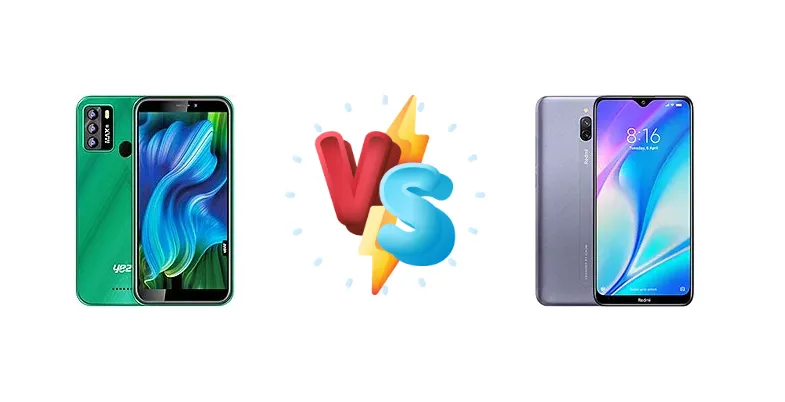
The sub-$150 smartphone market is fiercely competitive. The Yezz Max 3 and Xiaomi Redmi 8A Pro represent attempts to deliver functionality at an incredibly low price point. However, significant differences in chipset architecture and features mean one phone offers a far more compelling experience for most users.
🏆 Quick Verdict
For the average user, the Xiaomi Redmi 8A Pro is the clear winner. Its Snapdragon 439 chipset, with its octa-core configuration and 12nm process, delivers substantially better performance than the Yezz Max 3’s quad-core Unisoc SC9832E. While the Yezz Max 3 may offer a slightly longer battery life due to its less powerful processor, the Redmi 8A Pro’s 18W charging and overall responsiveness make it the superior choice.
| Network |
|---|
| 2G bands | GSM 850 / 900 / 1800 / 1900 | GSM 850 / 900 / 1800 / 1900 |
| 3G bands | HSDPA 850 / 900 / 1900 / 2100 | HSDPA 850 / 900 / 1900 / 2100 |
| 4G bands | 2, 3, 4, 7, 12, 17, 28 | 1, 3, 5, 8, 40, 41 |
| Speed | HSPA, LTE | HSPA, LTE |
| Technology | GSM / HSPA / LTE | GSM / HSPA / LTE |
| Launch |
|---|
| Announced | 2022, September | 2020, April 02. Released 2020, April 02 |
| Status | Available. Released 2023, January | Discontinued |
| Body |
|---|
| Build | - | Glass front (Gorilla Glass 5), plastic back, plastic frame |
| Dimensions | 149.3 x 77.2 x 9.7 mm (5.88 x 3.04 x 0.38 in) | 156.5 x 75.4 x 9.4 mm (6.16 x 2.97 x 0.37 in) |
| SIM | Nano-SIM + Nano-SIM | Nano-SIM + Nano-SIM |
| Weight | - | 188 g (6.63 oz) |
| | - | Water-repellent coating |
| Display |
|---|
| Protection | - | Corning Gorilla Glass 5 |
| Resolution | 720 x 1440 pixels, 18:9 ratio (~295 ppi density) | 720 x 1520 pixels, 19:9 ratio (~270 ppi density) |
| Size | 5.45 inches, 76.7 cm2 (~66.5% screen-to-body ratio) | 6.22 inches, 96.6 cm2 (~81.8% screen-to-body ratio) |
| Type | IPS LCD | IPS LCD, 400 nits (typ) |
| Platform |
|---|
| CPU | Quad-core 1.3 GHz | Octa-core (4x1.95 GHz Cortex-A53 & 4x1.45 GHz Cortex A53) |
| Chipset | Unisoc SC9832E (28 nm) | Qualcomm SDM439 Snapdragon 439 (12 nm) |
| GPU | Mali-T820 MP1 | Adreno 505 |
| OS | Android 12 | Android 9.0 (Pie), planned upgrade to Android 10, MIUI 12 |
| Memory |
|---|
| Card slot | microSDXC | microSDXC (dedicated slot) |
| Internal | 32GB 2GB RAM | 32GB 2GB RAM, 32GB 3GB RAM |
| | eMMC 5.1 | eMMC 5.1 |
| Main Camera |
|---|
| Dual | - | 13 MP, f/2.2, (wide), 1/3.1", 1.12µm, PDAF
Auxiliary lens |
| Features | LED flash | LED flash, HDR, panorama |
| Triple | 13 MP, AF
0.3 MP
0.3 MP | - |
| Video | 1080p@30fps | 1080p@30fps |
| Selfie camera |
|---|
| Features | - | HDR |
| Single | 8 MP | 8 MP, f/2.0, 1/4.0", 1.12µm |
| Video | Yes | 1080p@30fps |
| Sound |
|---|
| 3.5mm jack | Yes | Yes |
| 35mm jack | Yes | Yes |
| Loudspeaker | Yes | Yes |
| Comms |
|---|
| Bluetooth | 4.2, A2DP, LE | 4.2, A2DP, LE |
| NFC | No | No |
| Positioning | GPS | GPS, GLONASS, BDS |
| Radio | Stereo FM radio, recording | FM Radio, built-in antenna |
| USB | microUSB 2.0 | USB Type-C 2.0, OTG |
| WLAN | Wi-Fi 802.11 b/g/n | Wi-Fi 802.11 b/g/n, Wi-Fi Direct |
| Features |
|---|
| Sensors | Fingerprint (rear-mounted) | Accelerometer, proximity, compass |
| Battery |
|---|
| Charging | - | 18W wired
2.5W reverse wired |
| Type | Li-Ion 2600 mAh, removable | Li-Po 5000 mAh |
| Misc |
|---|
| Colors | Denim Blue, Aurora Green, Glacier Blue, Space Gray, Coral Red | Sky White, Sea Blue, Midnight Grey |
| Price | About 70 EUR | About 90 EUR |
Yezz Max 3
- Potentially lower price point
- May offer slightly longer battery life due to less powerful processor
- Basic smartphone functionality
- Significantly slower performance
- Outdated 28nm chipset
- Likely lower quality display
Xiaomi Redmi 8A Pro
- Faster and more responsive performance
- 18W fast charging
- More efficient 12nm Snapdragon 439 chipset
- May be slightly more expensive
- Camera performance is still limited by price point
- Basic design
Display Comparison
Neither device is expected to boast a high-end display. Details on panel technology (IPS, TFT) and resolution are missing for the Yezz Max 3, but given its price point, it’s likely a lower-quality panel than the Redmi 8A Pro. The Redmi 8A Pro’s display is adequate for everyday use, but neither phone will impress with color accuracy or brightness. The absence of features like high refresh rates or HDR support is standard for this segment.
Camera Comparison
Both phones likely feature modest camera systems. Without detailed sensor information for the Yezz Max 3, it’s difficult to make a direct comparison. However, the Redmi 8A Pro’s camera is likely to offer better image quality due to Qualcomm’s image signal processing capabilities. The prevalence of low-resolution auxiliary cameras (often 2MP) in this price range suggests that focusing on the main sensor’s quality is more important than the number of lenses. Expect acceptable results in good lighting conditions from both, but poor performance in low light.
Performance
The performance gap is the most significant differentiator. The Xiaomi Redmi 8A Pro’s Snapdragon 439, built on a 12nm process, features an octa-core CPU (4x1.95 GHz Cortex-A53 & 4x1.45 GHz Cortex A53). This contrasts sharply with the Yezz Max 3’s Unisoc SC9832E, a quad-core 1.3 GHz processor fabricated on a larger 28nm node. The 12nm process of the Snapdragon 439 translates to better power efficiency and significantly improved performance in multi-threaded tasks and gaming. The Redmi 8A Pro will handle app switching and basic games with far less lag. The Unisoc chip will struggle with anything beyond the most basic operations.
Battery Life
Battery capacity details for the Yezz Max 3 are unavailable. The Redmi 8A Pro packs a 5000mAh battery, which, combined with the Snapdragon 439’s efficiency, provides all-day battery life for moderate users. Crucially, the Redmi 8A Pro supports 18W wired charging, allowing for a significantly faster recharge time than the Yezz Max 3, which likely relies on slower charging speeds. The 2.5W reverse wired charging on the Redmi 8A Pro is a niche feature, allowing it to act as a power bank for smaller devices.
Buying Guide
Buy the Yezz Max 3 if your primary need is a very basic smartphone for essential communication – calls, texts, and light app usage – and you prioritize absolute minimal cost. Buy the Xiaomi Redmi 8A Pro if you want a phone that can handle multitasking, social media, and occasional gaming without frustrating lag, and you value faster charging and a more responsive user experience.
Frequently Asked Questions
❓ Will the Redmi 8A Pro handle popular games like PUBG Mobile?
The Snapdragon 439 in the Redmi 8A Pro can run PUBG Mobile, but you’ll need to lower the graphics settings to medium or low to achieve playable frame rates. Expect some occasional stuttering, especially in intense firefights. The Yezz Max 3’s Unisoc chip will struggle significantly with PUBG Mobile.
❓ Is the 2.5W reverse charging on the Redmi 8A Pro useful?
The 2.5W reverse charging is a slow trickle charge, best suited for topping up very small devices like Bluetooth earbuds or a smartwatch. It won’t significantly charge a smartphone, but it can be a convenient emergency feature.
❓ How much storage does each phone offer, and is it expandable?
The Redmi 8A Pro typically comes in 32GB or 64GB storage configurations, with a dedicated microSD card slot for expansion up to 512GB. Storage options for the Yezz Max 3 are less clear, but it likely offers similar options with microSD expansion.
❓ What version of Android do these phones run?
The Redmi 8A Pro launched with Android 9 Pie and has received updates. The Yezz Max 3 likely runs an older version of Android, potentially Android 8 Oreo, and may not receive frequent updates.