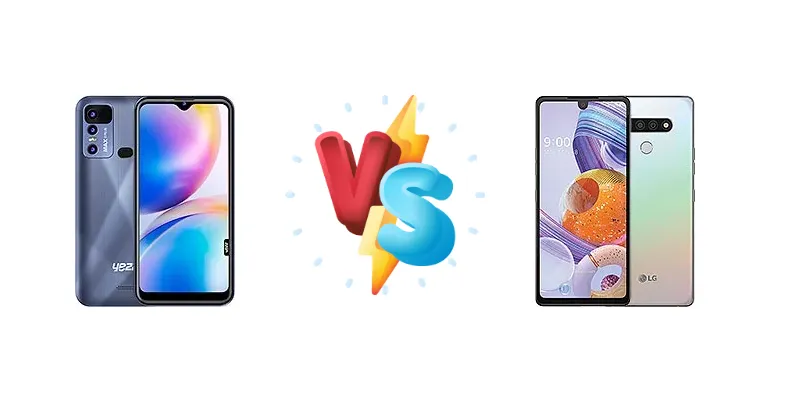
The Yezz Max 3 Plus and LG Stylo 6 represent the lower end of the smartphone market, targeting users prioritizing affordability. However, significant differences in their core hardware – specifically the chipset – dictate vastly different user experiences. This comparison dissects these differences to determine which device offers the best value for budget-conscious consumers.
🏆 Quick Verdict
For the average user, the LG Stylo 6 is the superior choice. Its Mediatek Helio P35 chipset, built on a more efficient 12nm process, delivers significantly better performance than the Yezz Max 3 Plus’s Unisoc SC9832E. While the Yezz may offer slightly longer battery life due to the less powerful processor, the performance gains of the Stylo 6 outweigh this benefit.
| Network |
|---|
| 2G bands | GSM 850 / 900 / 1800 / 1900 | GSM 850 / 900 / 1800 / 1900 |
| 3G bands | HSDPA 850 / 900 / 1900 / 2100 | HSDPA 850 / 900 / 1900 / 2100 |
| 4G bands | 2, 3, 4, 7, 12, 17, 28 | LTE |
| Speed | HSPA, LTE | HSPA 42.2/5.76 Mbps, LTE (2CA) Cat6 300/50 Mbps |
| Technology | GSM / HSPA / LTE | GSM / HSPA / LTE |
| Launch |
|---|
| Announced | 2022, October | 2020, May 20. Released 2020, May 20 |
| Status | Available. Released 2023, January | Discontinued |
| Body |
|---|
| Dimensions | 159.8 x 77.2 x 9.5 mm (6.29 x 3.04 x 0.37 in) | 171.2 x 77.7 x 8.6 mm (6.74 x 3.06 x 0.34 in) |
| SIM | Nano-SIM + Nano-SIM | Nano-SIM |
| Weight | - | 219 g (7.72 oz) |
| | - | Stylus |
| Display |
|---|
| Protection | INX Glass | - |
| Resolution | 480 x 1010 pixels, 19:9 ratio (~183 ppi density) | 1080 x 2460 pixels (~395 ppi density) |
| Size | 6.1 inches, 93.1 cm2 (~75.4% screen-to-body ratio) | 6.8 inches, 109.8 cm2 (~82.5% screen-to-body ratio) |
| Type | IPS LCD | IPS LCD |
| Platform |
|---|
| CPU | Quad-core 1.4 GHz | Octa-core (4x2.3 GHz Cortex-A53 & 4x1.8 GHz Cortex-A53) |
| Chipset | Unisoc SC9832E (28 nm) | Mediatek MT6765 Helio P35 (12 nm) |
| GPU | Mali-T820 MP1 | PowerVR GE8320 |
| OS | Android 12 | Android 10 |
| Memory |
|---|
| Card slot | microSDXC | microSDXC (dedicated slot) |
| Internal | 32GB 2GB RAM | 64GB 3GB RAM |
| | eMMC 5.1 | eMMC 5.1 |
| Main Camera |
|---|
| Features | LED flash | LED flash, panorama, HDR |
| Triple | 13 MP, AF
0.3 MP
0.3 MP | 13 MP, (wide), PDAF
5 MP, 120˚, (ultrawide)
Auxiliary lens |
| Video | 1080p@30fps | 1080p@30fps |
| Selfie camera |
|---|
| Single | 8 MP | 13 MP, 1/3.1", 1.12µm |
| Video | Yes | 1080p@30fps |
| Sound |
|---|
| 3.5mm jack | Yes | Yes |
| 35mm jack | Yes | Yes |
| Loudspeaker | Yes | Yes |
| Comms |
|---|
| Bluetooth | 4.2, A2DP, LE | 5.0, A2DP, LE |
| NFC | No | No |
| Positioning | GPS | GPS |
| Radio | Stereo FM radio, recording | No |
| USB | microUSB 2.0 | USB Type-C 2.0 |
| WLAN | Wi-Fi 802.11 b/g/n | Wi-Fi 802.11 b/g/n, Wi-Fi Direct |
| Features |
|---|
| Sensors | Fingerprint (rear-mounted) | Fingerprint (rear-mounted), accelerometer, proximity |
| Battery |
|---|
| Type | Li-Ion 3700 mAh, removable | Li-Po 4000 mAh |
| Misc |
|---|
| Colors | Midnight Black, Glacier Blue, Cosmic Blue, Carbon Grey | White |
| Models | - | LMQ730TM, LM-Q730TM |
| Price | About 90 EUR | About 200 EUR |
Yezz Max 3 Plus
- Potentially longer battery life due to less powerful processor
- Lower price point (likely)
- Basic smartphone functionality
- Significantly slower performance
- Less responsive user interface
- Struggles with multitasking
LG Stylo 6
- Faster and more responsive performance
- More efficient chipset (12nm)
- Better multitasking capabilities
- Potentially shorter battery life
- May be slightly more expensive
- Basic camera system
Display Comparison
Neither device is expected to boast a high-end display. Details on panel type and resolution are missing, but given the price point, both likely utilize IPS LCD panels. The key difference lies in the underlying processing power needed to drive the display, which the Stylo 6 handles more efficiently. Bezels are likely comparable, and color accuracy will be standard for this segment.
Camera Comparison
Without detailed camera specifications, a direct comparison is difficult. However, both phones likely feature basic camera setups geared towards casual photography. The presence of a 2MP macro camera on either device is largely marketing fluff. The larger sensor size (if any) and aperture will be the determining factors, but the image processing capabilities of the Helio P35 in the Stylo 6 will likely result in better overall image quality, particularly in low-light conditions. The chipset's ISP (Image Signal Processor) plays a vital role in noise reduction and detail preservation.
Performance
The LG Stylo 6’s Mediatek Helio P35 is the clear winner here. Its octa-core configuration (4x2.3 GHz Cortex-A53 & 4x1.8 GHz Cortex-A53) provides a substantial performance advantage over the Yezz Max 3 Plus’s quad-core 1.4 GHz Unisoc SC9832E. Crucially, the Helio P35 is fabricated on a 12nm process, offering improved power efficiency compared to the Yezz’s 28nm chip. This translates to better multitasking, smoother app launches, and a more responsive user interface. The Cortex-A53 cores in the Stylo 6, while not cutting-edge, are significantly more capable than those found in the Unisoc chip. The Yezz will struggle with demanding applications and multitasking.
Battery Life
While battery capacity isn't specified, the Yezz Max 3 Plus likely benefits from the less power-hungry Unisoc SC9832E chipset. This could translate to slightly longer battery life under light usage. However, the LG Stylo 6’s more efficient 12nm process and optimized power management could mitigate this difference. Charging wattage is also unknown, but both are likely to support slow charging speeds, meaning 0-100% times will be several hours.
Buying Guide
Buy the Yezz Max 3 Plus if your primary need is extremely basic smartphone functionality – calls, texts, and light web browsing – and you prioritize maximizing battery life above all else. Buy the LG Stylo 6 if you want a more responsive experience for social media, streaming video, and occasional gaming, even if it means slightly shorter battery life. The Stylo 6 is the better all-rounder.
Frequently Asked Questions
❓ Will the LG Stylo 6 overheat during extended use, like gaming or video recording?
The Mediatek Helio P35 is a relatively efficient chipset. While it may get warm during prolonged intensive tasks, it's unlikely to experience significant overheating or thermal throttling. The 12nm process helps manage heat dissipation effectively, unlike the 28nm Unisoc chip in the Yezz Max 3 Plus which is more prone to heat build-up.
❓ Is the Unisoc SC9832E in the Yezz Max 3 Plus capable of running popular social media apps like TikTok and Instagram smoothly?
The Unisoc SC9832E will likely struggle with smooth operation of demanding apps like TikTok and Instagram, especially when multitasking. Expect noticeable lag and slow loading times. The limited processing power and RAM will be a bottleneck for these applications.
❓ Can the LG Stylo 6 handle basic mobile games like Candy Crush or Subway Surfers?
Yes, the LG Stylo 6 with its Helio P35 chipset should handle casual mobile games like Candy Crush and Subway Surfers without issue. While it won't be able to run graphically intensive games at high settings, it provides a playable experience for less demanding titles.
❓ What type of storage does each phone use, and is it expandable?
Storage type is not specified in the provided data. However, both phones likely utilize eMMC storage, common in this price range. Expandable storage via microSD card is highly probable for both devices, given their target market, but this needs to be verified.