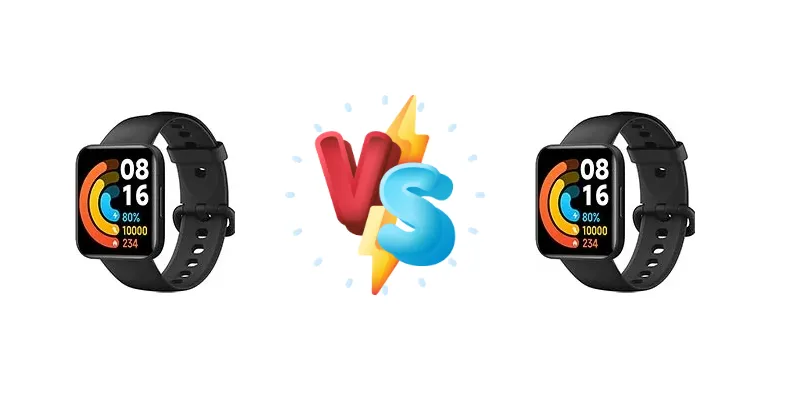
Xiaomi's smartwatch lineup continues to expand, offering options for various budgets and needs. The Redmi Watch 2 and Poco Watch are two contenders vying for your wrist. But which one truly stands out? This comprehensive comparison will break down their features, performance, and overall value.
🏆 Quick Verdict
The Poco Watch generally edges out the Redmi Watch 2 with its slightly more modern design and potentially better integration with the wider Xiaomi ecosystem. However, the Redmi Watch 2 might offer a more budget-friendly entry point, depending on pricing and availability. Ultimately, the best choice depends on your priorities.
| Network |
|---|
| 2G bands | N/A | N/A |
| 3G bands | N/A | N/A |
| 4G bands | N/A | N/A |
| EDGE | No | No |
| GPRS | No | No |
| Speed | No | No |
| Technology | No cellular connectivity | No cellular connectivity |
| | - | No |
| Launch |
|---|
| Announced | 2021, October 28 | 2022, April 26 |
| Status | Available. Released 2021, November 11 | Available. Released 2022, April 28 |
| Body |
|---|
| Build | Plastic back, plastic frame | Plastic back, plastic frame |
| Dimensions | 39.1 x 34.4 x 10 mm (1.54 x 1.35 x 0.39 in) | 39.1 x 34.4 x 10 mm (1.54 x 1.35 x 0.39 in) |
| SIM | No | No |
| Weight | 31 g (1.09 oz) | 31 g (1.09 oz) |
| | Waterproof (5ATM)
50m water resistant | Waterproof (5ATM)
50m water resistant |
| Display |
|---|
| Resolution | 360 x 320 pixels (~301 ppi density) | 360 x 320 pixels (~301 ppi density) |
| Size | 1.6 inches | 1.6 inches |
| Type | AMOLED | AMOLED |
| Platform |
|---|
| OS | Proprietary OS | Proprietary OS |
| Memory |
|---|
| Card slot | No | No |
| Internal | Unspecified storage | Unspecified storage |
| Sound |
|---|
| 3.5mm jack | No | No |
| 35mm jack | No | No |
| Loudspeaker | No | No |
| Comms |
|---|
| Bluetooth | 5.0, A2DP, LE | 5.0, A2DP, LE |
| NFC | Yes | Unspecified |
| Positioning | GPS, GLONASS, GALILEO, BDS | GPS, GLONASS, GALILEO, BDS |
| Radio | No | No |
| USB | No | No |
| WLAN | No | No |
| Features |
|---|
| Sensors | Accelerometer, heart rate, compass, SpO2 | Accelerometer, heart rate, compass, SpO2 |
| Battery |
|---|
| Type | Li-Ion 225 mAh | Li-Ion 225 mAh |
| Misc |
|---|
| Colors | Black, Blue, Ivory | Black, Blue, Ivory |
| Models | M2102W1 | - |
| Price | About 60 EUR | About 90 EUR |
Xiaomi Redmi Watch 2
- Likely more affordable
- Basic fitness tracking features
- Decent battery life
- Potentially older design
- Limited app ecosystem
- May lack advanced features
Xiaomi Poco Watch
- Potentially more modern design
- Possible better app integration
- Slightly improved performance
- Likely more expensive
- Still limited compared to high-end smartwatches
- Battery life may not be significantly better
Display Comparison
Both watches likely feature AMOLED displays, offering vibrant colors and good visibility. The Poco Watch might have a slightly larger display or a more refined bezel design, contributing to a more premium look. Expect similar resolution and brightness levels.
Camera Comparison
Neither watch is expected to have a built-in camera. They will rely on smartphone connectivity for taking photos.
Performance
Performance will largely depend on the chipset used. Both are likely to handle basic smartwatch functions smoothly, but the Poco Watch might offer slightly faster app loading times or smoother animations due to potentially more efficient hardware. Expect both to be adequate for fitness tracking.
Battery Life
Battery life is a crucial factor. Both watches likely offer around 5-7 days of typical usage. The Poco Watch might have a slightly larger battery capacity, potentially extending its battery life under heavy use.
Buying Guide
The Xiaomi Redmi Watch 2 is ideal for budget-conscious users seeking basic fitness tracking and smartwatch functionality. The Poco Watch is a better choice for those who prioritize a more stylish design, potentially better app integration, and are willing to spend a bit more.
Frequently Asked Questions
❓ What is the difference between the Redmi Watch 2 and the Poco Watch?
The Poco Watch generally has a more modern design and potentially better app integration. The Redmi Watch 2 is likely more budget-friendly.
❓ Which watch is better for fitness tracking?
Both offer basic fitness tracking. Performance will be similar, but the Poco Watch might have slightly more accurate sensors.