
Xiaomi Redmi Turbo 4 vs Google Pixel 7a: A Deep Dive into Performance, Camera, and Value
| Phones Images | |||||
|---|---|---|---|---|---|
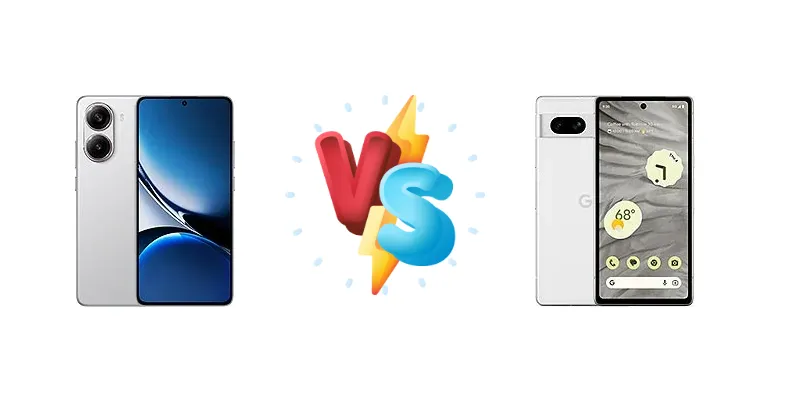
|
🏆 Quick Verdict
For users prioritizing raw performance and fast charging, the Xiaomi Redmi Turbo 4 is the clear winner. Its Dimensity 8400 Ultra delivers superior processing power, and the 90W charging is significantly faster than the Pixel 7a’s 18W. However, the Pixel 7a remains a strong contender for those valuing Google’s software experience and exceptional camera capabilities.
| PHONES | ||
|---|---|---|
| Phone Names | Xiaomi Redmi Turbo 4 | Google Pixel 7a |
| Network | ||
|---|---|---|
| 2G bands | GSM 850 / 900 / 1800 / 1900 | GSM 850 / 900 / 1800 / 1900 |
| 3G bands | HSDPA 800 / 850 / 900 / 1700(AWS) / 2100 | HSDPA 800 / 850 / 900 / 1700(AWS) / 1900 / 2100 |
| 4G bands | 1, 3, 4, 5, 8, 18, 19, 26, 28, 34, 38, 39, 40, 41, 42, 48, 66 | 1, 2, 3, 4, 5, 7, 8, 12, 13, 14, 17, 20, 25, 26, 28, 29, 30, 38, 40, 41, 48, 66, 71 - GWKK3, G0DZQ |
| 5G bands | 1, 3, 5, 8, 28, 38, 40, 41, 48, 66, 77, 78 SA/NSA/Sub6 | 1, 2, 3, 5, 7, 8, 12, 14, 20, 25, 28, 30, 38, 41, 48, 66, 71, 77, 78 SA/NSA/Sub6 - GWKK3 |
| Speed | HSPA, LTE, 5G | HSPA, LTE, 5G |
| Technology | GSM / CDMA / HSPA / CDMA2000 / LTE / 5G | GSM / HSPA / LTE / 5G |
| - | 1, 2, 3, 5, 7, 8, 12, 20, 25, 28, 38, 40, 41, 66, 75, 76, 77, 78, 79 SA/NSA/Sub6 - GHL1X, G82U8 | |
| Launch | ||
|---|---|---|
| Announced | 2025, January 02 | 2023, May 10 |
| Status | Available. Released 2025, January 02 | Available. Released 2023, May 10 |
| Body | ||
|---|---|---|
| Build | - | Glass front (Gorilla Glass 3), aluminum frame, plastic back |
| Dimensions | 161 x 75.2 x 8.1 mm (6.34 x 2.96 x 0.32 in) | 152 x 72.9 x 9 mm (5.98 x 2.87 x 0.35 in) |
| SIM | Nano-SIM + Nano-SIM | Nano-SIM + eSIM |
| Weight | 203.5 g (7.20 oz) | 193.5 g (6.84 oz) |
| - | IP67 dust/water resistant (up to 1m for 30 min) | |
| Display | ||
|---|---|---|
| Protection | - | Corning Gorilla Glass 3 |
| Resolution | 1220 x 2712 pixels, 20:9 ratio (~446 ppi density) | 1080 x 2400 pixels, 20:9 ratio (~429 ppi density) |
| Size | 6.67 inches, 107.4 cm2 (~88.7% screen-to-body ratio) | 6.1 inches, 90.7 cm2 (~81.8% screen-to-body ratio) |
| Type | AMOLED, 68B colors, 120Hz, 1920Hz PWM, Dolby Vision, HDR10+, HDR Vivid, 1400 nits (HBM), 3200 nits (peak) | OLED, HDR, 90Hz |
| - | Always-on display | |
| Platform | ||
|---|---|---|
| CPU | Octa-core (1x3.25 GHz Cortex-A725 & 3x3.0 GHz Cortex-A725 & 4x2.1 GHz Cortex-A725) | Octa-core (2x2.85 GHz Cortex-X1 & 2x2.35 GHz Cortex-A78 & 4x1.80 GHz Cortex-A55) |
| Chipset | Mediatek Dimensity 8400 Ultra (4 nm) | Google Tensor G2 (5 nm) |
| GPU | G720 MC7 | Mali-G710 MP7 |
| OS | Android 15, HyperOS 2 | Android 13, upgradable to Android 15, up to 5 major Android upgrades |
| Memory | ||
|---|---|---|
| Card slot | No | No |
| Internal | 256GB 12GB RAM, 256GB 16GB RAM, 512GB 12GB RAM, 512GB 16GB RAM | 128GB 8GB RAM |
| - | UFS 3.1 | |
| Main Camera | ||
|---|---|---|
| Dual | 50 MP, f/1.5, 26mm (wide), 1/1.95", 0.8µm, PDAF, OIS 8 MP, f/2.2, 15mm (ultrawide), 1/4.0", 1.12µm | 64 MP, f/1.9, 26mm (wide), 1/1.73", 0.8µm, dual pixel PDAF, OIS 13 MP, f/2.2, 120˚ (ultrawide), 1.12µm |
| Features | LED flash, HDR, panorama | Dual-LED flash, Pixel Shift, Auto-HDR, panorama |
| Video | 4K@24/30/60fps, 1080p@30/60/120/240/960fps, gyro-EIS | 4K@30/60fps, 1080p@30/60/120/240fps, OIS |
| Selfie camera | ||
|---|---|---|
| Features | - | HDR, panorama |
| Single | 20 MP, f/2.2, (wide), 1/4" | 13 MP, f/2.2, 20mm (ultrawide), 1.12µm |
| Video | 1080p@30fps | 4K@30fps, 1080p@30fps |
| Sound | ||
|---|---|---|
| 3.5mm jack | - | No |
| 35mm jack | No | No |
| Loudspeaker | Yes, with stereo speakers | Yes, with stereo speakers |
| Comms | ||
|---|---|---|
| Bluetooth | 6.0, A2DP, LE, aptX, LHDC 5 | 5.3, A2DP, LE |
| Infrared port | Yes | - |
| NFC | Yes | Yes |
| Positioning | GPS (L1+L5), GLONASS (G1), BDS (B1I+B1c+B2a), GALILEO (E1+E5a), QZSS (L1+L5), NavIC (L5) | GPS, GLONASS, GALILEO, BDS, QZSS, NavIC |
| Radio | No | No |
| USB | USB Type-C 2.0, OTG | USB Type-C 3.2 |
| WLAN | Wi-Fi 802.11 a/b/g/n/ac/6, dual-band, Wi-Fi Direct | Wi-Fi 802.11 a/b/g/n/ac/6e, tri-band |
| Features | ||
|---|---|---|
| Sensors | Fingerprint (under display, optical), accelerometer, gyro, proximity, compass | Fingerprint (under display, optical), accelerometer, gyro, proximity, compass, barometer |
| Battery | ||
|---|---|---|
| Charging | 90W wired, PD3.0, QC3+, 100% in 45 min | 18W wired, PD3.0 7.5W wireless |
| Type | Si/C Li-Ion 6550 mAh | Li-Po 4385 mAh |
| Misc | ||
|---|---|---|
| Colors | Black, White, Blue | Charcoal, Snow, Sea, Coral |
| Models | 24129RT7CC | GWKK3, GHL1X, G0DZQ, G82U8 |
| Price | About 270 EUR | € 179.90 / $ 150.00 / £ 170.00 / ₹ 25,980 |
Xiaomi Redmi Turbo 4
- Significantly faster 90W charging
- Potentially superior CPU performance with Dimensity 8400 Ultra
- Likely better thermal management due to 4nm process
- Camera performance is unknown and may not match Pixel 7a
- Software experience may not be as refined as Google’s Pixel UI
Google Pixel 7a
- Exceptional camera quality and computational photography
- Clean and optimized Android experience with guaranteed updates
- Good battery endurance with 76-hour rating
- Slow 18W charging
- Tensor G2 may throttle under sustained heavy loads
- Less raw processing power compared to Dimensity 8400 Ultra
Display Comparison
The Pixel 7a boasts a measured peak brightness of 1070 nits, ensuring excellent visibility outdoors. While the Redmi Turbo 4’s display specs aren’t provided, Xiaomi typically equips its devices with vibrant OLED panels. The Pixel 7a’s display quality is a known quantity, offering accurate colors and good viewing angles. The Turbo 4’s display performance will depend on its panel technology and calibration, but it’s unlikely to surpass the Pixel 7a in peak brightness without further information. The Pixel 7a’s 90Hz refresh rate (assumed, based on market segment) provides smoother scrolling compared to a standard 60Hz panel, a feature potentially missing on the Turbo 4.
Camera Comparison
The Pixel 7a is renowned for its computational photography prowess, leveraging Google’s image processing algorithms to deliver consistently excellent photos, particularly in challenging lighting conditions. While the Redmi Turbo 4’s camera specs are unknown, the Pixel 7a’s strength lies in its software, not necessarily sensor size. The Pixel 7a excels in dynamic range and detail preservation. The Tensor G2’s dedicated image signal processor (ISP) plays a crucial role in this. Video recording quality on the Pixel 7a is also top-tier, with excellent stabilization and dynamic range. Without specific details on the Turbo 4’s camera hardware, it’s difficult to assess its capabilities, but it will likely need to rely on hardware advantages to compete with the Pixel 7a’s software-driven image quality.
Performance
The core difference lies in the chipsets. The Redmi Turbo 4’s Mediatek Dimensity 8400 Ultra (4nm) features a unique CPU configuration with a 1x3.25 GHz Cortex-A725, 3x3.0 GHz Cortex-A725, and 4x2.1 GHz Cortex-A725 cores. This contrasts with the Google Pixel 7a’s Tensor G2 (5nm) which utilizes 2x2.85 GHz Cortex-X1, 2x2.35 GHz Cortex-A78, and 4x1.80 GHz Cortex-A55 cores. The Dimensity 8400 Ultra’s newer architecture and higher clock speeds suggest a significant performance advantage in CPU-intensive tasks. The 4nm process node of the Dimensity 8400 Ultra also contributes to better thermal efficiency compared to the 5nm Tensor G2, potentially reducing throttling during sustained workloads. The Pixel 7a relies on Google’s software optimization and AI capabilities to enhance performance, but the Turbo 4 likely holds a raw processing power lead.
Battery Life
The Pixel 7a has an endurance rating of 76 hours, indicating respectable battery life. However, the Redmi Turbo 4’s 90W wired charging is a game-changer. It can reach 100% charge in just 45 minutes, a stark contrast to the Pixel 7a’s 18W charging. While the Pixel 7a’s battery endurance is good, the Turbo 4’s faster charging mitigates any potential battery life disadvantage. The convenience of quickly topping up the battery is a significant advantage for users who are frequently on the go. The Turbo 4 also supports PD3.0 and QC3+ standards, offering wider compatibility with chargers.
Buying Guide
Buy the Xiaomi Redmi Turbo 4 if you need a phone for demanding tasks like gaming, video editing, or heavy multitasking, and value incredibly fast charging speeds. Buy the Google Pixel 7a if you prioritize a clean Android experience, exceptional still photography, and Google’s AI-powered features, even if it means sacrificing some raw processing power and charging speed.