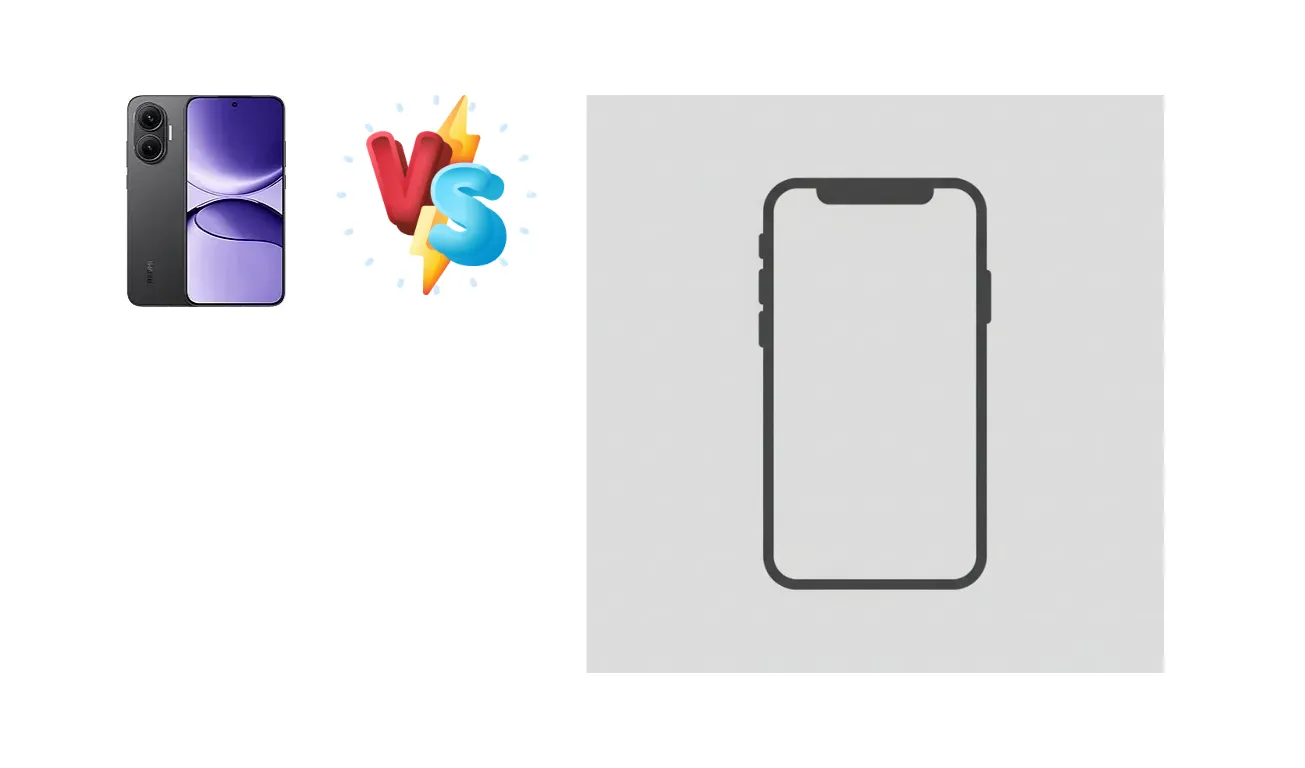
The Xiaomi Redmi Turbo 4 Pro arrives with the latest Snapdragon 8s Gen 4, aiming to disrupt the flagship space with a focus on value. It directly challenges established gaming phones like the ZTE nubia Red Magic 8 Pro+, which boasts the older but still potent Snapdragon 8 Gen 2 and a suite of gaming-centric features. This comparison dissects the core differences to determine which phone delivers the best experience for your money.
🏆 Quick Verdict
For the average user prioritizing a balance of performance, battery life, and price, the Xiaomi Redmi Turbo 4 Pro emerges as the winner. While the Red Magic 8 Pro+ offers faster charging and a more dedicated gaming aesthetic, the Turbo 4 Pro’s Snapdragon 8s Gen 4 provides comparable performance at a significantly lower cost.
| Network |
|---|
| 2G bands | GSM 850 / 900 / 1800 / 1900 | GSM 850 / 900 / 1800 / 1900 - SIM 1 & SIM 2 |
| 3G bands | HSDPA 800 / 850 / 900 / 1700(AWS) / 2100 | HSDPA 850 / 900 / 1700(AWS) / 1900 / 2100 |
| 4G bands | 1, 3, 4, 5, 8, 19, 28, 34, 38, 39, 40, 41, 42, 48, 66 | LTE |
| 5G bands | 1, 3, 5, 8, 28, 38, 40, 41, 48, 66, 77, 78 SA/NSA/Sub6 | SA/NSA |
| Speed | HSPA, LTE, 5G | HSPA, LTE-A, 5G |
| Technology | GSM / CDMA / HSPA / CDMA2000 / LTE / 5G | GSM / CDMA / HSPA / EVDO / LTE / 5G |
| | - | CDMA2000 1xEV-DO |
| Launch |
|---|
| Announced | 2025, April 24 | 2022, December 26 |
| Status | Available. Released 2025, April 24 | Available. Released 2022, December 28 |
| Body |
|---|
| Build | Glass front, aluminum frame, glass back | Glass front, glass back, aluminum frame |
| Dimensions | 163.1 x 77.9 x 8 mm (6.42 x 3.07 x 0.31 in) | 164 x 76.4 x 8.9 mm (6.46 x 3.01 x 0.35 in) |
| SIM | Nano-SIM + Nano-SIM | Dual SIM (Nano-SIM, dual stand-by) |
| Weight | 219 g (7.72 oz) | 230 g (8.11 oz) |
| | - | Pressure sensitive zones (520Hz touch-sensing)
Built-in cooling fan
Aviation aluminum middle frame |
| Display |
|---|
| Protection | - | Unspecified |
| Resolution | 1280 x 2772 pixels, 19.5:9 ratio (~447 ppi density) | 1116 x 2480 pixels, 20:9 ratio (~400 ppi density) |
| Size | 6.83 inches, 114.5 cm2 (~90.2% screen-to-body ratio) | 6.8 inches, 111.6 cm2 (~89.1% screen-to-body ratio) |
| Type | AMOLED, 68B colors, 120Hz, 3840Hz PWM, Dolby Vision, HDR10+, HDR Vivid, 800 nits (typ), 1800 nits (HBM), 3200 nits (peak | AMOLED, 1B colors, 120Hz, 1300 nits (peak) |
| Platform |
|---|
| CPU | Octa-core (1x3.21 GHz Cortex-X4 & 3x3.0 GHz Cortex-A720 & 2x2.8 GHz Cortex-A720 & 2x2.0 GHz Cortex-A720) | Octa-core (1x3.2 GHz Cortex-X3 & 2x2.8 GHz Cortex-A715 & 2x2.8 GHz Cortex-A710 & 3x2.0 GHz Cortex-A510) |
| Chipset | Qualcomm SM8735 Snapdragon 8s Gen 4 (4 nm) | Qualcomm SM8550-AB Snapdragon 8 Gen 2 (4 nm) |
| GPU | Adreno 825 | Adreno 740 |
| OS | Android 15, HyperOS 2 | Android 13, Redmagic OS 6 |
| Memory |
|---|
| Card slot | No | No |
| Internal | 256GB 12GB RAM, 256GB 16GB RAM, 512GB 12GB RAM, 512GB 16GB RAM, 1TB 16GB RAM | 256GB 12GB RAM, 512GB 16GB RAM, 1TB 16GB RAM |
| | - | UFS 4.0 |
| Main Camera |
|---|
| Dual | 50 MP, f/1.5, 26mm (wide), 1/1.95", 0.8µm, PDAF, OIS
8 MP, f/2.2, 15mm (ultrawide), 1/4.0", 1.12µm | - |
| Features | LED flash, HDR, panorama | LED flash, HDR, panorama |
| Single | - | 16 MP, f/2.0, (wide), 1.12µm, under display |
| Triple | - | 50 MP, f/1.9, 25mm (wide), 1/1.57", 1.0µm, PDAF
8 MP, f/2.2, 120˚, 13mm (ultrawide), 1/4.0", 1.12µm
2 MP, f/2.4, (macro) |
| Video | 4K@30/60fps, 1080p@30/60/120/240/960fps, gyro-EIS | 8K@30fps, 4K@30/60fps, 1080p@30/60/120/240fps |
| Selfie camera |
|---|
| Features | - | HDR |
| Single | 20 MP, f/2.2, (wide), 1/4" | 16 MP, f/2.0, (wide), 1.12µm, under display |
| Video | 1080p@30/60fps | 1080p@30/60fps |
| Sound |
|---|
| 3.5mm jack | - | Yes |
| 35mm jack | No | - |
| Loudspeaker | Yes, with stereo speakers | Yes, with stereo speakers |
| | - | 32-bit/384kHz audio |
| Comms |
|---|
| Bluetooth | 5.4, A2DP, LE, aptX, LHDC 5 | 5.3, A2DP, LE |
| Infrared port | Yes | - |
| NFC | Yes | Yes (market/region dependent) |
| Positioning | GPS (L1+L5), BDS (B1I+B1c+B2a), GALILEO (E1+E5a), QZSS (L1+L5), NavIC (L5), GLONASS | GPS (L1+L5), GLONASS, BDS, GALILEO |
| Radio | No | No |
| USB | USB Type-C 2.0, OTG | USB Type-C 3.2, OTG, accessory connector, DisplayPort |
| WLAN | Wi-Fi 802.11 a/b/g/n/ac/6/7, dual-band, Wi-Fi Direct | Wi-Fi 802.11 a/b/g/n/ac/6e, tri-band, Wi-Fi Direct |
| Features |
|---|
| Sensors | Fingerprint (under display, optical), accelerometer, gyro, proximity, compass | Fingerprint (under display, optical), accelerometer, gyro, proximity, compass |
| Battery |
|---|
| Charging | 90W wired, PD3.0, QC3+
22.5W reverse wired | 165W wired, PD3.0, 100% in 14 min (advertised) |
| Type | Si/C Li-Ion 7550 mAh | Li-Po 5000 mAh, non-removable |
| Misc |
|---|
| Colors | Black, White, Green, Harry Potter edition | Black, Transparent |
| Models | 25053RT47C | - |
| Price | About 240 EUR | About 700 EUR |
Xiaomi Redmi Turbo 4 Pro
- More affordable price point
- Latest Snapdragon 8s Gen 4 processor
- 22.5W reverse wired charging
- Slower charging speed (90W)
- Potentially less optimized gaming experience
ZTE nubia Red Magic 8 Pro+
- Ultra-fast 165W charging
- Snapdragon 8 Gen 2 with mature optimization
- Dedicated gaming features (likely active cooling, triggers)
- Higher price
- Potentially less efficient processor (older node)
Display Comparison
While both devices likely feature high refresh rate AMOLED panels (data not provided), the core difference lies in the processing power driving them. The Snapdragon 8 Gen 2 in the Red Magic 8 Pro+ benefits from a mature driver ecosystem optimized for gaming displays. The Turbo 4 Pro’s panel specs are unknown, but the 8s Gen 4’s ISP should provide excellent image processing. The Red Magic 8 Pro+’s focus on gaming suggests a potentially higher peak brightness and optimized color calibration for gaming visuals.
Camera Comparison
Camera details are absent for both devices, but given their target audiences, the Red Magic 8 Pro+ likely prioritizes gaming features over camera prowess. The Xiaomi Redmi Turbo 4 Pro, aiming for broader appeal, may offer a more versatile camera system. The Snapdragon 8s Gen 4’s ISP should deliver strong image processing capabilities, but sensor size and lens quality will be key differentiators. Without specific sensor information, it’s difficult to assess the camera performance gap.
Performance
The ZTE nubia Red Magic 8 Pro+ leverages the Snapdragon 8 Gen 2 (4nm), featuring a 1x3.2 GHz Cortex-X3 prime core. The Xiaomi Redmi Turbo 4 Pro counters with the Snapdragon 8s Gen 4 (4nm), utilizing a 1x3.21 GHz Cortex-X4 prime core. While clock speeds are similar, the Cortex-X4 in the 8s Gen 4 offers architectural improvements over the X3, potentially leading to better single-core performance. However, the 8 Gen 2’s more mature Adreno 740 GPU versus the 8s Gen 4’s Adreno 735 gives the Red Magic 8 Pro+ an edge in sustained gaming performance. Both utilize LPDDR5x RAM, but thermal management will be crucial; the Red Magic 8 Pro+’s active cooling system is a significant advantage.
Battery Life
The Red Magic 8 Pro+ boasts a massive 165W wired charging capability, advertised to reach 100% in just 14 minutes. This is a significant advantage for users who prioritize rapid charging. The Redmi Turbo 4 Pro offers a respectable 90W wired charging with PD3.0 and QC3+ support, but it’s considerably slower. Battery capacity is unknown for both, but the faster charging of the Red Magic 8 Pro+ can mitigate the impact of a potentially smaller battery. The Turbo 4 Pro also offers 22.5W reverse wired charging, a feature absent in the Red Magic 8 Pro+.
Buying Guide
Buy the Xiaomi Redmi Turbo 4 Pro if you need a powerful all-rounder with excellent performance for everyday tasks and gaming, coupled with a competitive price. It’s ideal for users who want flagship-level specs without the premium price tag. Buy the ZTE nubia Red Magic 8 Pro+ if you prioritize ultimate gaming performance, extremely fast charging (165W), and a dedicated gaming phone experience with features like built-in cooling and gaming triggers. It’s geared towards hardcore mobile gamers who demand the best possible performance and are willing to pay a premium.
Frequently Asked Questions
❓ Will the Snapdragon 8s Gen 4 in the Redmi Turbo 4 Pro throttle during extended gaming sessions?
The Snapdragon 8s Gen 4 is a highly efficient chip, but throttling is always a possibility during prolonged, demanding gaming. The Redmi Turbo 4 Pro’s thermal solution (details unknown) will be critical. While it may not match the Red Magic 8 Pro+'s active cooling, the 4nm process and architectural improvements of the 8s Gen 4 should mitigate throttling compared to older generation chips.
❓ Does the Red Magic 8 Pro+’s 165W charging degrade the battery health faster?
While extremely fast charging is convenient, it can contribute to slightly faster battery degradation over the long term. However, ZTE likely incorporates battery health management features to minimize this effect. The Red Magic 8 Pro+’s charging system is designed to optimize the charging process and prevent overcharging, mitigating potential damage.
❓ Is the difference in GPU performance between the Adreno 735 (Turbo 4 Pro) and Adreno 740 (Red Magic 8 Pro+) noticeable in real-world gaming?
Yes, the Adreno 740 in the Red Magic 8 Pro+ generally offers a performance advantage, particularly in graphically intensive games at higher settings. While the 8s Gen 4 is no slouch, the 8 Gen 2’s GPU provides a more consistent and higher frame rate experience, especially during extended gaming sessions.