
Xiaomi Redmi Turbo 4 Pro vs. vivo iQOO 11S: A Detailed Performance and Charging Showdown
| Phones Images | |||||
|---|---|---|---|---|---|
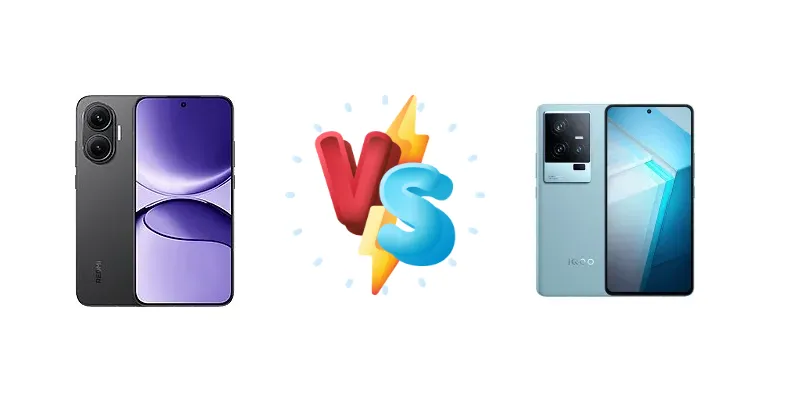
|
🏆 Quick Verdict
For the average user prioritizing raw performance and future-proofing, the vivo iQOO 11S emerges as the winner. Its Snapdragon 8 Gen 2 offers a demonstrable performance edge, coupled with the industry-leading 200W charging. However, the Redmi Turbo 4 Pro presents a strong value proposition for budget-conscious gamers.
| PHONES | ||
|---|---|---|
| Phone Names | Xiaomi Redmi Turbo 4 Pro | vivo iQOO 11S |
| Network | ||
|---|---|---|
| 2G bands | GSM 850 / 900 / 1800 / 1900 | GSM 850 / 900 / 1800 / 1900 |
| 3G bands | HSDPA 800 / 850 / 900 / 1700(AWS) / 2100 | HSDPA 800 / 850 / 900 / 1700(AWS) / 1900 / 2100 |
| 4G bands | 1, 3, 4, 5, 8, 19, 28, 34, 38, 39, 40, 41, 42, 48, 66 | 1, 2, 3, 4, 5, 7, 8, 12, 17, 18, 19, 20, 26, 28, 34, 38, 39, 40, 41 |
| 5G bands | 1, 3, 5, 8, 28, 38, 40, 41, 48, 66, 77, 78 SA/NSA/Sub6 | 1, 3, 5, 8, 28, 40, 41, 77, 78 SA/NSA |
| Speed | HSPA, LTE, 5G | HSPA, LTE, 5G |
| Technology | GSM / CDMA / HSPA / CDMA2000 / LTE / 5G | GSM / CDMA / HSPA / CDMA2000 / LTE / 5G |
| Launch | ||
|---|---|---|
| Announced | 2025, April 24 | 2023, July 04 |
| Status | Available. Released 2025, April 24 | Available. Released 2023, July 10 |
| Body | ||
|---|---|---|
| Build | Glass front, aluminum frame, glass back | - |
| Dimensions | 163.1 x 77.9 x 8 mm (6.42 x 3.07 x 0.31 in) | 164.9 x 77.1 x 8.4 mm or 8.7 mm |
| SIM | Nano-SIM + Nano-SIM | Nano-SIM + Nano-SIM |
| Weight | 219 g (7.72 oz) | 207 g or 210 g (7.30 oz) |
| Display | ||
|---|---|---|
| Protection | - | Corning Gorilla Glass Victus |
| Resolution | 1280 x 2772 pixels, 19.5:9 ratio (~447 ppi density) | 1440 x 3200 pixels, 20:9 ratio (~518 ppi density) |
| Size | 6.83 inches, 114.5 cm2 (~90.2% screen-to-body ratio) | 6.78 inches, 111.0 cm2 (~87.3% screen-to-body ratio) |
| Type | AMOLED, 68B colors, 120Hz, 3840Hz PWM, Dolby Vision, HDR10+, HDR Vivid, 800 nits (typ), 1800 nits (HBM), 3200 nits (peak | LTPO4 AMOLED, 1B colors, 144Hz, HDR10+, 1800 nits (peak) |
| Platform | ||
|---|---|---|
| CPU | Octa-core (1x3.21 GHz Cortex-X4 & 3x3.0 GHz Cortex-A720 & 2x2.8 GHz Cortex-A720 & 2x2.0 GHz Cortex-A720) | Octa-core (1x3.2 GHz Cortex-X3 & 2x2.8 GHz Cortex-A715 & 2x2.8 GHz Cortex-A710 & 3x2.0 GHz Cortex-A510) |
| Chipset | Qualcomm SM8735 Snapdragon 8s Gen 4 (4 nm) | Qualcomm SM8550-AB Snapdragon 8 Gen 2 (4 nm) |
| GPU | Adreno 825 | Adreno 740 |
| OS | Android 15, HyperOS 2 | Android 13, OriginOS 3 (China) |
| Memory | ||
|---|---|---|
| Card slot | No | No |
| Internal | 256GB 12GB RAM, 256GB 16GB RAM, 512GB 12GB RAM, 512GB 16GB RAM, 1TB 16GB RAM | 256GB 12GB RAM, 256GB 16GB RAM, 512GB 16GB RAM, 1TB 16GB RAM |
| Main Camera | ||
|---|---|---|
| Dual | 50 MP, f/1.5, 26mm (wide), 1/1.95", 0.8µm, PDAF, OIS 8 MP, f/2.2, 15mm (ultrawide), 1/4.0", 1.12µm | - |
| Features | LED flash, HDR, panorama | Dual-LED flash, HDR, panorama |
| Triple | - | 50 MP, f/1.9, 23mm (wide), 1/1.49", 1.0µm, PDAF, OIS 13 MP, f/2.5, 47mm (telephoto), PDAF, 2x optical zoom 8 MP, f/2.2, 16mm (ultrawide) |
| Video | 4K@30/60fps, 1080p@30/60/120/240/960fps, gyro-EIS | 8K@30fps, 4K@30/60fps, 1080p@30/60/120/240fps, gyro-EIS |
| Selfie camera | ||
|---|---|---|
| Features | - | HDR |
| Single | 20 MP, f/2.2, (wide), 1/4" | 16 MP, f/2.5, (wide) |
| Video | 1080p@30/60fps | 1080p@30fps, gyro-EIS |
| Sound | ||
|---|---|---|
| 35mm jack | No | No |
| Loudspeaker | Yes, with stereo speakers | Yes, with stereo speakers |
| Comms | ||
|---|---|---|
| Bluetooth | 5.4, A2DP, LE, aptX, LHDC 5 | 5.3, A2DP, LE, aptX HD, aptX Adaptive, aptX Lossless |
| Infrared port | Yes | Yes |
| NFC | Yes | Yes |
| Positioning | GPS (L1+L5), BDS (B1I+B1c+B2a), GALILEO (E1+E5a), QZSS (L1+L5), NavIC (L5), GLONASS | GPS, GLONASS, GALILEO, BDS, NavIC |
| Radio | No | No |
| USB | USB Type-C 2.0, OTG | USB Type-C 2.0, OTG |
| WLAN | Wi-Fi 802.11 a/b/g/n/ac/6/7, dual-band, Wi-Fi Direct | Wi-Fi 802.11 a/b/g/n/ac/6, dual-band, Wi-Fi Direct |
| Features | ||
|---|---|---|
| Sensors | Fingerprint (under display, optical), accelerometer, gyro, proximity, compass | Fingerprint (under display, optical), accelerometer, gyro, proximity, compass |
| Battery | ||
|---|---|---|
| Charging | 90W wired, PD3.0, QC3+ 22.5W reverse wired | 200W wired, PD3.0, UFCS |
| Type | Si/C Li-Ion 7550 mAh | 4700 mAh |
| Misc | ||
|---|---|---|
| Colors | Black, White, Green, Harry Potter edition | Black, Sky Blue, Legendary White (BMW M branding) |
| Models | 25053RT47C | V2304A |
| Price | About 240 EUR | About 500 EUR |
Xiaomi Redmi Turbo 4 Pro
- More affordable price point
- Latest Snapdragon 8s Gen 4 chipset
- 22.5W reverse wired charging
- Slower 90W charging
- Potentially less sustained performance than the 8 Gen 2
- Likely a less refined camera system
vivo iQOO 11S
- Superior Snapdragon 8 Gen 2 performance
- Industry-leading 200W wired charging
- Likely a more advanced camera system
- Higher price tag
- Potential for more heat generation under sustained load (though well-managed)
- May lack reverse wireless charging
Display Comparison
While display specifications aren't provided, both devices likely feature high refresh rate AMOLED panels, typical of their market segments. The iQOO 11S, given its flagship positioning, may boast a slightly higher peak brightness and potentially LTPO technology for adaptive refresh rates, improving power efficiency. However, without specific data, it's difficult to definitively state a display advantage. Both brands are known for color accuracy, so this is likely a wash.
Camera Comparison
Without detailed camera specs, a direct comparison is limited. However, the iQOO 11S, being a higher-tier device, likely incorporates a larger main sensor with optical image stabilization (OIS), resulting in better low-light performance and dynamic range. The Redmi Turbo 4 Pro will likely focus on computational photography to compensate for a potentially smaller sensor. Image processing styles will also differ; vivo typically leans towards vibrant, saturated colors, while Xiaomi often aims for a more natural look. The presence or absence of features like 8K video recording would further differentiate the camera capabilities.
Performance
The core difference lies in the chipsets. The iQOO 11S’s Snapdragon 8 Gen 2 (4nm) utilizes the Cortex-X3 prime core clocked at 3.2 GHz, alongside Cortex-A715 and A710 performance cores. The Redmi Turbo 4 Pro features the newer Snapdragon 8s Gen 4 (4nm) with a Cortex-X4 prime core at 3.21 GHz, but utilizes a different core configuration with more A720 cores. While the X4 core offers incremental improvements, the 8 Gen 2’s more mature architecture and optimized drivers generally translate to superior sustained performance and GPU capabilities. The iQOO 11S benefits from the 8 Gen 2’s established thermal management profiles, potentially leading to less throttling during extended gaming sessions. Both devices likely utilize LPDDR5x RAM, but the iQOO 11S’s superior chipset will maximize its effectiveness.
Battery Life
The iQOO 11S’s 200W wired charging is a game-changer, promising a full charge in under 20 minutes. The Redmi Turbo 4 Pro’s 90W charging is still fast, but significantly slower. While battery capacity isn’t specified, the iQOO 11S’s faster charging mitigates the impact of a potentially smaller battery. The inclusion of PD3.0 and QC3+ on the Redmi Turbo 4 Pro, alongside UFCS on the iQOO 11S, ensures compatibility with a wide range of chargers. The 22.5W reverse wired charging on the Redmi Turbo 4 Pro is a useful addition for topping up accessories.
Buying Guide
Buy the Xiaomi Redmi Turbo 4 Pro if you need a highly capable gaming phone at a more accessible price point and appreciate a balance between performance and battery life. Buy the vivo iQOO 11S if you prioritize absolute performance, the fastest possible charging speeds, and are willing to invest a bit more for a premium experience.