
Xiaomi Redmi Turbo 4 Pro vs. Asus ROG Phone 7 Ultimate: A Deep Dive Comparison
| Phones Images | |||||
|---|---|---|---|---|---|
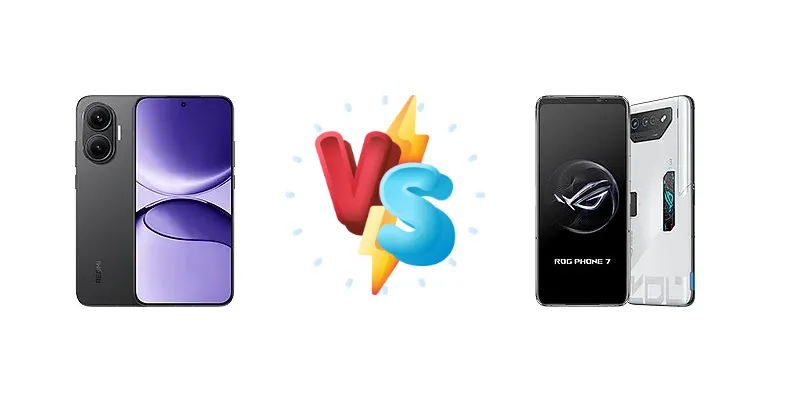
|
🏆 Quick Verdict
For the average user prioritizing value and a balanced experience, the Xiaomi Redmi Turbo 4 Pro emerges as the winner. Its Snapdragon 8s Gen 4 offers excellent performance at a significantly lower price point. However, dedicated gamers will find the ROG Phone 7 Ultimate’s specialized features and optimized cooling a worthwhile investment.
| PHONES | ||
|---|---|---|
| Phone Names | Xiaomi Redmi Turbo 4 Pro | Asus ROG Phone 7 Ultimate |
| Network | ||
|---|---|---|
| 2G bands | GSM 850 / 900 / 1800 / 1900 | GSM 850 / 900 / 1800 / 1900 |
| 3G bands | HSDPA 800 / 850 / 900 / 1700(AWS) / 2100 | HSDPA 800 / 850 / 900 / 1700(AWS) / 1900 / 2100 |
| 4G bands | 1, 3, 4, 5, 8, 19, 28, 34, 38, 39, 40, 41, 42, 48, 66 | 1, 2, 3, 4, 5, 7, 8, 12, 17, 18, 19, 20, 25, 26, 28, 32, 34, 38, 39, 40, 41, 42, 43, 48, 66 - International |
| 5G bands | 1, 3, 5, 8, 28, 38, 40, 41, 48, 66, 77, 78 SA/NSA/Sub6 | 1, 2, 3, 5, 7, 8, 12, 18, 20, 25, 26, 28, 38, 40, 41, 48, 66, 77, 78, 79 SA/NSA/Sub6 - International |
| Speed | HSPA, LTE, 5G | HSPA, LTE (Up to 7CA), 5G |
| Technology | GSM / CDMA / HSPA / CDMA2000 / LTE / 5G | GSM / CDMA / HSPA / LTE / 5G |
| - | 1, 3, 5, 8, 28, 41, 77, 78, 79 SA/NSA/Sub6 - China | |
| Launch | ||
|---|---|---|
| Announced | 2025, April 24 | 2023, April 13 |
| Status | Available. Released 2025, April 24 | Available. Released 2023, May |
| Body | ||
|---|---|---|
| Build | Glass front, aluminum frame, glass back | Glass front (Gorilla Glass Victus), glass back (Gorilla Glass 3), aluminum frame |
| Dimensions | 163.1 x 77.9 x 8 mm (6.42 x 3.07 x 0.31 in) | 173 x 77 x 10.3 mm (6.81 x 3.03 x 0.41 in) |
| SIM | Nano-SIM + Nano-SIM | Nano-SIM + Nano-SIM |
| Weight | 219 g (7.72 oz) | 239 g (8.43 oz) |
| - | Built-in motorized cooling air vent (AeroActive Portal) IP54 water resistant 2" OLED display (on the back) Pressure sensitive zones (Gaming triggers) | |
| Display | ||
|---|---|---|
| Protection | - | Corning Gorilla Glass Victus |
| Resolution | 1280 x 2772 pixels, 19.5:9 ratio (~447 ppi density) | 1080 x 2448 pixels (~395 ppi density) |
| Size | 6.83 inches, 114.5 cm2 (~90.2% screen-to-body ratio) | 6.78 inches, 109.5 cm2 (~82.2% screen-to-body ratio) |
| Type | AMOLED, 68B colors, 120Hz, 3840Hz PWM, Dolby Vision, HDR10+, HDR Vivid, 800 nits (typ), 1800 nits (HBM), 3200 nits (peak | AMOLED, 1B colors, 165Hz, HDR10+, 1000 nits (HBM), 1500 nits (peak) |
| Platform | ||
|---|---|---|
| CPU | Octa-core (1x3.21 GHz Cortex-X4 & 3x3.0 GHz Cortex-A720 & 2x2.8 GHz Cortex-A720 & 2x2.0 GHz Cortex-A720) | Octa-core (1x3.2 GHz Cortex-X3 & 2x2.8 GHz Cortex-A715 & 2x2.8 GHz Cortex-A710 & 3x2.0 GHz Cortex-A510) |
| Chipset | Qualcomm SM8735 Snapdragon 8s Gen 4 (4 nm) | Qualcomm SM8550-AB Snapdragon 8 Gen 2 (4 nm) |
| GPU | Adreno 825 | Adreno 740 |
| OS | Android 15, HyperOS 2 | Android 13, up to 2 major Android upgrades |
| Memory | ||
|---|---|---|
| Card slot | No | No |
| Internal | 256GB 12GB RAM, 256GB 16GB RAM, 512GB 12GB RAM, 512GB 16GB RAM, 1TB 16GB RAM | 512GB 16GB RAM |
| - | UFS 4.0 NTFS support for external storage | |
| Main Camera | ||
|---|---|---|
| Dual | 50 MP, f/1.5, 26mm (wide), 1/1.95", 0.8µm, PDAF, OIS 8 MP, f/2.2, 15mm (ultrawide), 1/4.0", 1.12µm | - |
| Features | LED flash, HDR, panorama | LED flash, HDR, panorama |
| Triple | - | 50 MP, f/1.9, 24mm (wide), 1/1.56", 1.0µm, PDAF 13 MP, f/2.2, 13mm, 120˚ (ultrawide) 5 MP (macro) |
| Video | 4K@30/60fps, 1080p@30/60/120/240/960fps, gyro-EIS | 8K@24fps, 4K@30/60fps, 1080p@30/60/120/240fps, 720p@480fps; gyro-EIS, HDR10+ |
| Selfie camera | ||
|---|---|---|
| Features | - | Panorama, HDR |
| Single | 20 MP, f/2.2, (wide), 1/4" | 32 MP, f/2.5, 29mm (wide), 1/3.2", 0.7µm |
| Video | 1080p@30/60fps | 1080p@30fps |
| Sound | ||
|---|---|---|
| 3.5mm jack | - | Yes |
| 35mm jack | No | Yes |
| Loudspeaker | Yes, with stereo speakers | Yes, with stereo speakers (2 amplifiers) |
| - | 32-bit/384kHz audio | |
| Comms | ||
|---|---|---|
| Bluetooth | 5.4, A2DP, LE, aptX, LHDC 5 | 5.3, A2DP, LE, aptX HD, aptX Adaptive, aptX Lossless |
| Infrared port | Yes | - |
| NFC | Yes | Yes |
| Positioning | GPS (L1+L5), BDS (B1I+B1c+B2a), GALILEO (E1+E5a), QZSS (L1+L5), NavIC (L5), GLONASS | GPS (L1+L5), GLONASS (L1), BDS (B1I+B1c+B2a), GALILEO (E1+E5a), QZSS (L1+L5), NavIC (L5) |
| Radio | No | No |
| USB | USB Type-C 2.0, OTG | USB Type-C 3.1 (side), DisplayPort 1.4; USB Type-C 2.0 (bottom), OTG, accessory connector |
| WLAN | Wi-Fi 802.11 a/b/g/n/ac/6/7, dual-band, Wi-Fi Direct | Wi-Fi 802.11 a/b/g/n/ac/6e/7, tri-band, Wi-Fi Direct |
| Features | ||
|---|---|---|
| Sensors | Fingerprint (under display, optical), accelerometer, gyro, proximity, compass | Fingerprint (under display, optical), accelerometer, gyro, proximity, compass |
| Battery | ||
|---|---|---|
| Charging | 90W wired, PD3.0, QC3+ 22.5W reverse wired | 65W wired, PD3.0, QC5, 100% in 42 min 10W reverse wired |
| Type | Si/C Li-Ion 7550 mAh | Li-Po 6000 mAh |
| Misc | ||
|---|---|---|
| Colors | Black, White, Green, Harry Potter edition | Storm White |
| Models | 25053RT47C | - |
| Price | About 240 EUR | About 780 EUR |
| Tests | ||
|---|---|---|
| Battery life | - | Endurance rating 131h |
| Camera | - | Photo / Video |
| Display | - | Contrast ratio: Infinite (nominal) |
| Loudspeaker | - | -25.5 LUFS (Very good) |
| Performance | - | AnTuTu: 1325105 (v9) GeekBench: 5139 (v5.5), 5567 (v6) GFXBench: 107fps (ES 3.1 onscreen) |
Xiaomi Redmi Turbo 4 Pro
- Faster 90W charging significantly reduces downtime.
- Snapdragon 8s Gen 4 offers excellent performance for the price.
- Potentially more compact and easier to handle.
- Camera specifications are currently unknown.
- Gaming optimizations may not match the ROG Phone 7 Ultimate.
Asus ROG Phone 7 Ultimate
- Snapdragon 8 Gen 2 provides top-tier performance.
- Optimized for gaming with AirTriggers and advanced cooling.
- Brighter display enhances visibility in sunlight.
- Slower 65W charging.
- Higher price point.
- Larger form factor may be less comfortable for some users.
Display Comparison
The Asus ROG Phone 7 Ultimate boasts a brighter display, reaching a measured 1095 nits, providing superior visibility in direct sunlight compared to the Redmi Turbo 4 Pro (brightness data unavailable). While both likely utilize AMOLED panels, the ROG Phone’s infinite contrast ratio suggests a more refined visual experience. The ROG Phone’s larger form factor also allows for a more immersive viewing experience, though the Redmi Turbo 4 Pro may offer a more manageable size for one-handed use. Details regarding the Redmi Turbo 4 Pro’s refresh rate and PWM dimming are needed for a complete assessment of display quality and eye comfort.
Camera Comparison
Both devices feature capable camera systems, but detailed specifications are limited. The ROG Phone 7 Ultimate’s camera is described as offering both Photo and Video capabilities, suggesting a versatile setup. The Redmi Turbo 4 Pro’s camera specs are currently unknown, making a direct comparison difficult. Without sensor size, aperture, and image processing details, it’s challenging to assess image quality. It’s likely the ROG Phone 7 Ultimate will offer more advanced camera features and potentially better low-light performance, given its positioning as a flagship device.
Performance
The Asus ROG Phone 7 Ultimate’s Snapdragon 8 Gen 2 (4nm) historically delivers higher peak performance than the Redmi Turbo 4 Pro’s Snapdragon 8s Gen 4 (4nm). However, the 8s Gen 4’s architecture – featuring a Cortex-X4 prime core – aims to close the gap, particularly in single-core tasks. The ROG Phone 7 Ultimate benefits from a mature software optimization for gaming, while the Redmi Turbo 4 Pro’s performance will depend on Xiaomi’s software tuning. Both utilize a 4nm process, but the ROG Phone’s larger chassis allows for a more substantial cooling solution, mitigating thermal throttling during extended gaming sessions. The ROG Phone’s LPDDR5x RAM paired with the 8 Gen 2 will also contribute to faster data access.
Battery Life
Both phones share an endurance rating of 131 hours, suggesting comparable real-world battery life despite differing battery capacities (data unavailable for Redmi Turbo 4 Pro). However, the charging speeds differ significantly. The Redmi Turbo 4 Pro’s 90W wired charging is considerably faster than the ROG Phone 7 Ultimate’s 65W charging, promising a quicker top-up. The Redmi Turbo 4 Pro also offers 22.5W reverse wired charging, a feature absent or limited to 10W on the ROG Phone 7 Ultimate. This makes the Redmi Turbo 4 Pro more versatile for charging accessories.
Buying Guide
Buy the Xiaomi Redmi Turbo 4 Pro if you need a powerful, all-around smartphone with fast charging and a modern chipset without breaking the bank. It’s ideal for daily tasks, social media, and casual gaming. Buy the Asus ROG Phone 7 Ultimate if you prioritize an uncompromising gaming experience, demanding sustained peak performance, and benefit from features like AirTriggers and a robust cooling system, even if it comes at a premium.