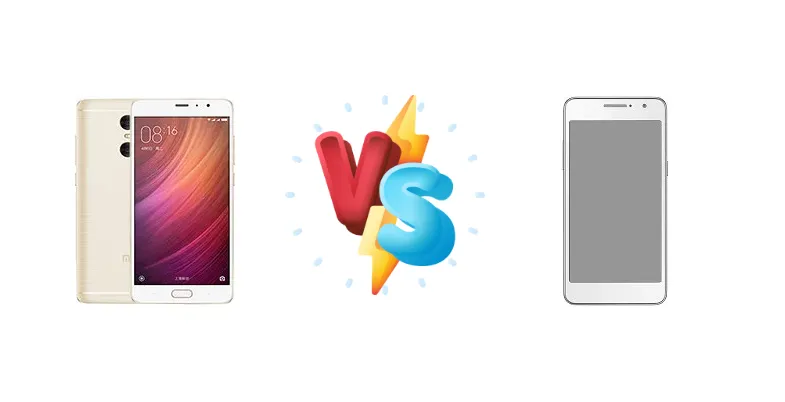
The Xiaomi Redmi Pro made waves with its impressive specs for its time. But how does it stack up against its successor, the Redmi Pro 2? This comprehensive comparison will delve into every aspect, from performance and camera to battery life and design, to help you decide which phone is right for you.
🏆 Quick Verdict
The Redmi Pro 2 is the clear winner. While the original Redmi Pro boasted incredible battery life, the Pro 2's Snapdragon 855 chipset delivers significantly superior performance and a more modern experience. The charging speed is also a notable upgrade.
| Network |
|---|
| 2G bands | GSM 850 / 900 / 1800 / 1900 - SIM 1 & SIM 2 | GSM 850 / 900 / 1800 / 1900 - SIM 1 & SIM 2 |
| 3G bands | HSDPA 850 / 900 / 1900 / 2100 | HSDPA 850 / 900 / 1900 / 2100 |
| 4G bands | 1, 3, 5, 7, 8, 38, 39, 40, 41 | LTE |
| Speed | HSPA, LTE | HSPA 42.2/5.76 Mbps, LTE (5CA) Cat18 1200/150 Mbps |
| Technology | GSM / CDMA / HSPA / EVDO / LTE | GSM / HSPA / LTE |
| | TD-SCDMA | - |
| Launch |
|---|
| Announced | 2016, July. Released 2016, August | Not announced yet |
| Status | Discontinued | Cancelled |
| Body |
|---|
| Build | Glass front, aluminum back, aluminum frame | - |
| Dimensions | 151.5 x 76.2 x 8.2 mm (5.96 x 3.00 x 0.32 in) | - |
| SIM | Nano-SIM + Micro-SIM | Nano-SIM + Nano-SIM |
| Weight | 174 g (6.14 oz) | - |
| Display |
|---|
| Resolution | 1080 x 1920 pixels, 16:9 ratio (~401 ppi density) | 1080 x 2340 pixels, 19.5:9 ratio (~403 ppi density) |
| Size | 5.5 inches, 83.4 cm2 (~72.2% screen-to-body ratio) | 6.39 inches, 100.2 cm2 |
| Type | AMOLED | AMOLED |
| Platform |
|---|
| CPU | Deca-core 2.5 GHz - Exclusive editionDeca-core 2.3 GHz - High editionDeca-core 2.1 GHz - Standard edition | Octa-core (1x2.84 GHz Kryo 485 & 3x2.42 GHz Kryo 485 & 4x1.78 GHz Kryo 485) |
| Chipset | Mediatek MT6797T Helio X25 (20 nm) - High & Exclusive editionsMediatek MT6797 Helio X20 (20 nm) - Standard edition | Qualcomm SM8150 Snapdragon 855 (7 nm) |
| GPU | Mali-T880 MP4 | Adreno 640 |
| OS | Android 6.0 (Marshmallow), MIUI 10 | Android 9.0 (Pie) |
| Memory |
|---|
| Card slot | microSDXC (uses shared SIM slot) | microSD |
| Internal | 32GB 3GB RAM, 64GB 3GB RAM, 128GB 4GB RAM (Exclusive edition) | 64GB 4GB RAM, 64GB 6GB RAM, 128GB 4GB RAM |
| Main Camera |
|---|
| Dual | 13 MP, f/2.0, PDAF
Auxiliary lens | - |
| Features | Dual-LED dual-tone flash, HDR, panorama | Dual-LED dual-tone flash, HDR, panorama |
| Triple | - | 48 MP, 1/2.0", (wide), 0.8µm, PDAF
Secondary unknown camera
Third unknown camera |
| Video | 1080p@30fps, 720p@120fps | 4K@30fps, 1080p@30fps |
| Selfie camera |
|---|
| Single | 5 MP, f/2.0 | Motorized pop-up 20 MP, f/2.0, (wide), 1/2.8", 1.0µm |
| Video | 1080p@30fps | - |
| Sound |
|---|
| 3.5mm jack | Yes | Yes |
| 35mm jack | Yes | Yes |
| Loudspeaker | Yes | Yes |
| Comms |
|---|
| Bluetooth | 4.2, A2DP, LE | 5.0, A2DP, LE |
| Infrared port | Yes | Yes |
| NFC | No | Yes |
| Positioning | GPS, GLONASS, BDS | GPS |
| Radio | FM radio; recording | No |
| USB | USB Type-C | USB Type-C |
| WLAN | Wi-Fi 802.11 b/g/n, Wi-Fi Direct | Wi-Fi 802.11 a/b/g/n/ac, dual-band, Wi-Fi Direct |
| Features |
|---|
| Sensors | Fingerprint (front-mounted), accelerometer, gyro, proximity, compass | Fingerprint (under display, optical), accelerometer, gyro, proximity, compass |
| Battery |
|---|
| Charging | - | 27W wired |
| Type | Li-Ion 4050 mAh, non-removable | Li-Po 3600 mAh, non-removable |
| Misc |
|---|
| Colors | Silver, Gold, Gray | Red, Blue, Black |
| Price | About 170 EUR | - |
| Tests |
|---|
| Battery life |
Endurance rating 80h
| - |
| Camera |
Photo / Video | - |
| Performance |
Basemark OS II 2.0: 1696Basemark X: 23846 | - |
Xiaomi Redmi Pro
- Exceptional battery life (80h)
- Deca-core processor (for its time)
- Dual camera setup
- Outdated chipset
- Lower performance compared to modern phones
- Limited software updates
Xiaomi Redmi Pro 2
- Powerful Snapdragon 855 chipset
- Fast charging (27W)
- Improved camera performance
- More modern design
- Shorter battery life than the original Redmi Pro
- Limited availability
Display Comparison
The Redmi Pro featured a 5.5-inch AMOLED display, likely with a 1080p resolution. The Redmi Pro 2 likely retained a similar screen size, but with improved color accuracy and potentially a slightly higher resolution. While specific display specs for the Pro 2 are scarce, the newer panel would generally offer a better viewing experience.
Camera Comparison
Both phones featured dual camera setups. The Redmi Pro's camera was decent for its time, but the Pro 2 likely benefited from improved image processing and potentially a better sensor, thanks to the Snapdragon 855's image signal processor (ISP). Low-light performance would likely be noticeably better on the Pro 2.
Performance
This is where the Redmi Pro 2 truly shines. The Snapdragon 855 is a massive upgrade over the Mediatek Helio X25/X20 in the original Redmi Pro. Expect significantly faster app loading times, smoother multitasking, and better gaming performance on the Pro 2. The Pro 2's octa-core CPU and 7nm process offer a substantial advantage.
Battery Life
The original Redmi Pro's 80h endurance rating is remarkable. However, the Redmi Pro 2, while likely having a similar battery capacity (around 4000mAh), would likely see reduced battery life due to the more power-hungry Snapdragon 855. The 27W fast charging on the Pro 2 helps mitigate this somewhat.
Buying Guide
The Xiaomi Redmi Pro is a good option for budget-conscious users who prioritize battery life above all else and don't need the latest performance. The Redmi Pro 2 is ideal for users who want a fast, responsive phone with a capable camera and modern features, even if it means sacrificing some battery endurance.
Frequently Asked Questions
❓ Is the Redmi Pro 2 worth buying in 2024?
It depends. If you can find one at a very low price and don't need the absolute best battery life, it's still a capable phone. However, newer budget phones offer better overall value.
❓ What chipset does the Redmi Pro 2 use?
The Redmi Pro 2 uses the Qualcomm Snapdragon 855 chipset.