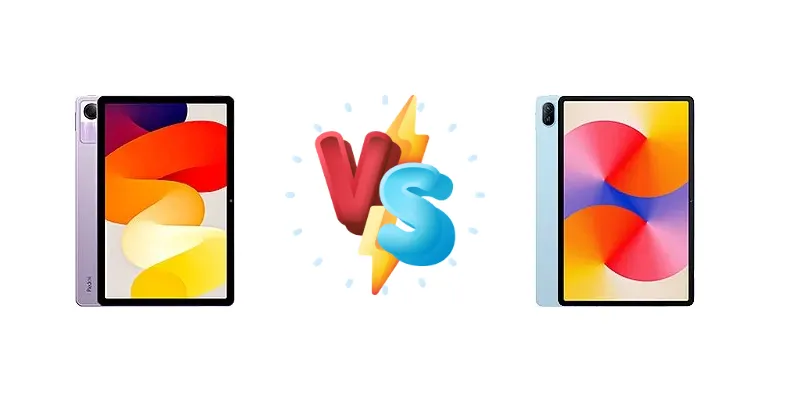
The sub-$200 tablet market is heating up, with the Xiaomi Redmi Pad SE and Huawei MatePad SE 11 vying for dominance. Both offer large displays and promise all-day usability, but they take different approaches to achieving this. The Redmi Pad SE focuses on a modern chipset and long battery life, while the MatePad SE 11 prioritizes faster charging and Huawei’s ecosystem integration. This comparison dives deep into the specifics to determine which tablet delivers the best value.
🏆 Quick Verdict
For most users, the Xiaomi Redmi Pad SE emerges as the stronger choice. Its impressive 13:56-hour active use battery life, coupled with the efficient Snapdragon 680, provides a smoother, longer-lasting experience. While the MatePad SE 11 boasts faster charging, the Redmi Pad SE’s overall balance of performance and endurance is more compelling.
| Network |
|---|
| 2G bands | N/A | N/A |
| 3G bands | N/A | N/A |
| 4G bands | N/A | N/A |
| EDGE | N/A | No |
| GPRS | N/A | No |
| Technology | No cellular connectivity | No cellular connectivity |
| Launch |
|---|
| Announced | 2023, August 15 | 2024, June 09 |
| Status | Available. Released 2023, September | Available. Released 2024, June |
| Body |
|---|
| Build | Glass front, aluminum back, aluminum frame | Glass front, aluminum frame, aluminum back |
| Dimensions | 255.5 x 167.1 x 7.4 mm (10.06 x 6.58 x 0.29 in) | 252.3 x 163.8 x 6.9 mm (9.93 x 6.45 x 0.27 in) |
| SIM | No | No |
| Weight | 478 g (1.05 lb) | 475 g (1.05 lb) |
| Display |
|---|
| Resolution | 1200 x 1920 pixels, 16:10 ratio (~207 ppi density) | 1200 x 1920 pixels, 16:10 ratio (~206 ppi density) |
| Size | 11.0 inches, 347.5 cm2 (~81.4% screen-to-body ratio) | 11.0 inches, 350.9 cm2 (~84.9% screen-to-body ratio) |
| Type | IPS LCD, 90Hz, 400 nits (typ) | IPS LCD, 400 nits |
| Platform |
|---|
| CPU | Octa-core (4x2.4 GHz Kryo 265 Gold & 4x1.9 GHz Kryo 265 Silver) | - |
| Chipset | Qualcomm SM6225 Snapdragon 680 4G (6 nm) | - |
| GPU | Adreno 610 | - |
| OS | Android 13, upgradable to Android 15, HyperOS 2 | HarmonyOS 2.0 |
| Memory |
|---|
| Card slot | microSDXC | microSDXC (dedicated slot) |
| Internal | 128GB 4GB RAM, 128GB 6GB RAM, 128GB 8GB RAM, 256GB 8GB RAM | 64GB 4GB RAM, 128GB 4GB RAM, 128GB 6GB RAM, 128GB 8GB RAM, 256GB 8GB RAM |
| Main Camera |
|---|
| Features | - | Panorama |
| Single | 8 MP, f/2.0, (wide), 1/4.0", 1.12µm, AF | 8 MP, f/2.0, AF |
| Video | 1080p@30fps | 1080p@30fps |
| Selfie camera |
|---|
| Single | 5 MP, f/2.2, (ultrawide), 1/5.0", 1.12µm | 5 MP, f/2.2 |
| Video | 1080p@30fps | 720p@30fps |
| Sound |
|---|
| 35mm jack | Yes | Unspecified |
| Loudspeaker | Yes, with stereo speakers (4 speakers) | Yes, with stereo speakers (4 speakers) |
| Comms |
|---|
| Bluetooth | 5.0, A2DP, LE | 5.1, A2DP, LE |
| NFC | No | No |
| Positioning | No | No |
| Radio | Yes | No |
| USB | USB Type-C, OTG | USB Type-C 2.0, OTG |
| WLAN | Wi-Fi 802.11 a/b/g/n/ac, dual-band | Wi-Fi 802.11 a/b/g/n/ac, dual-band |
| Features |
|---|
| Sensors | Accelerometer, proximity (accessories only) | Accelerometer |
| Battery |
|---|
| Charging | 18W Quick Charge 3.0 | 22.5W wired
5W reverse wired |
| Type | Li-Po 8000 mAh | 7700 mAh |
| Misc |
|---|
| Colors | Lavender Purple, Graphite Gray, Mint Green | Nebula Gray, Crystal Blue |
| Models | 23073RPBFG | - |
| Price | About 200 EUR | - |
| SAR EU | 0.37 W/kg (body) | - |
Xiaomi Redmi Pad SE
- Exceptional battery life (13:56h active use)
- Efficient Snapdragon 680 processor
- Good display brightness (402 nits)
- Slower charging speed (18W)
- Limited camera details available
Huawei MatePad SE 11
- Faster charging (22.5W)
- Reverse wired charging capability
- Potential Huawei ecosystem integration
- Likely less efficient processor
- Battery life not specified, potentially shorter
Display Comparison
The Redmi Pad SE features a display capable of reaching 402 nits of brightness, paired with a 1595:1 contrast ratio. This provides a reasonably vibrant viewing experience for everyday content. While the MatePad SE 11’s display specifications are not provided, Huawei typically focuses on color accuracy in this segment. The Redmi Pad SE’s brightness is sufficient for indoor use, but may struggle in direct sunlight. The lack of information on the MatePad SE 11’s panel type (IPS, LCD, etc.) and refresh rate makes a direct comparison difficult, but the Redmi Pad SE’s measured brightness gives it a quantifiable advantage.
Camera Comparison
Neither tablet is positioned as a photography powerhouse, and detailed camera specifications are absent. Without sensor size or aperture information for either device, a meaningful comparison is impossible. It’s safe to assume both tablets feature basic camera setups suitable for video calls and casual snapshots. Focusing on camera performance would be a misdirection given the target audience and price bracket.
Performance
The Redmi Pad SE is powered by the Qualcomm Snapdragon 680 4G (6 nm), an octa-core processor designed for efficiency. Its CPU configuration – 4x2.4 GHz Kryo 265 Gold & 4x1.9 GHz Kryo 265 Silver – balances performance and power consumption. The MatePad SE 11’s chipset is not specified, but given its price point, it likely utilizes a less powerful processor. The 6nm fabrication process of the Snapdragon 680 translates to better thermal efficiency compared to older, larger-node chipsets, potentially leading to sustained performance during extended use. This benefits users engaging in multitasking or light gaming.
Battery Life
The Redmi Pad SE shines with a remarkable 13:56 hours of active use, demonstrating excellent battery optimization. The MatePad SE 11 compensates with 22.5W wired charging and 5W reverse wired charging, allowing for quicker top-ups. While the MatePad SE 11’s faster charging is convenient, the Redmi Pad SE’s significantly longer battery life reduces the need for frequent charging. The Redmi Pad SE’s 18W Quick Charge 3.0 support is adequate, but slower than the MatePad SE 11, however, the longer runtime mitigates this difference.
Buying Guide
Buy the Xiaomi Redmi Pad SE if you prioritize extended battery life for long commutes, streaming, or note-taking. It’s ideal for students and users who need a reliable tablet for productivity tasks. Buy the Huawei MatePad SE 11 if you’re heavily invested in the Huawei ecosystem, value the convenience of 22.5W fast charging, and frequently need to top up your tablet quickly. It’s a good option for those who prefer HarmonyOS and its unique features.
Frequently Asked Questions
❓ How does the Snapdragon 680 in the Redmi Pad SE handle multitasking compared to the likely chipset in the MatePad SE 11?
The Snapdragon 680, built on a 6nm process, is designed for efficient multitasking. While the MatePad SE 11’s chipset isn’t specified, it’s likely less powerful. The 680’s octa-core architecture and efficient design should provide a smoother experience when switching between apps and running multiple programs simultaneously.
❓ Is the 18W charging on the Redmi Pad SE slow enough to be a significant inconvenience compared to the MatePad SE 11’s 22.5W?
While 22.5W is faster, the Redmi Pad SE’s exceptional 13:56-hour battery life significantly reduces the need for frequent charging. The slower charging speed is less of an issue when you’re not plugging in as often. Overnight charging will easily replenish the battery, minimizing any inconvenience.
❓ What kind of gaming performance can I expect from the Redmi Pad SE?
The Snapdragon 680 is capable of handling casual gaming and less demanding titles. While it won’t run graphically intensive games at maximum settings, it provides a playable experience for popular mobile games. Expect to adjust graphics settings for optimal performance.