
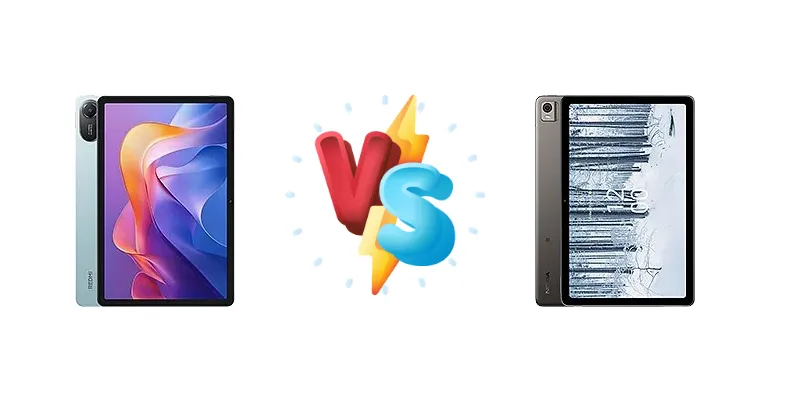
Xiaomi Redmi Pad 2 vs Nokia T21: Which Budget Tablet Reigns Supreme?
| Phones Images | |||||
|---|---|---|---|---|---|
|
🏆 Quick Verdict
For most users, the Xiaomi Redmi Pad 2 emerges as the stronger choice. Its Mediatek Helio G100 Ultra chipset, built on a more efficient 6nm process, provides a noticeable performance advantage over the Nokia T21’s Unisoc Tiger T612. While both offer 18W charging, the Redmi Pad 2’s superior battery life in active use makes it the better option for all-day productivity and entertainment.
| PHONES | ||
|---|---|---|
| Phone Names | Xiaomi Redmi Pad 2 | Nokia T21 |
| Network | ||
|---|---|---|
| 2G bands | GSM 850 / 900 / 1800 / 1900 - cellular model only | GSM 850 / 900 / 1800 / 1900 |
| 3G bands | HSDPA 800 / 850 / 900 / 1700(AWS) / 1900 / 2100 - cellular model only | HSDPA 850 / 900 / 1700(AWS) / 1900 / 2100 - US, LATAM |
| 4G bands | 1, 2, 3, 4, 5, 7, 8, 13, 18, 19, 20, 26, 28, 38, 40, 41, 66 - cellular model only | 1, 2, 3, 4, 5, 7, 8, 12, 13, 17, 20, 28, 40, 66 - US, LATAM |
| Speed | HSPA, LTE - cellular model only | HSPA, LTE - cellular model only |
| Technology | GSM / HSPA / LTE | GSM / HSPA / LTE |
| - | 1, 3, 5, 7, 8, 20, 28, 38, 40, 41 - International | |
| Launch | ||
|---|---|---|
| Announced | 2025, June 05 | 2022, September 01 |
| Status | Available. Released 2025, June 05 | Available. Released 2022, September 01 |
| Body | ||
|---|---|---|
| Build | Glass front, aluminum back, plastic frame | Glass front, aluminum back |
| Dimensions | 254.6 x 166 x 7.4 mm (10.02 x 6.54 x 0.29 in) | 247.5 x 157.3 x 7.5 mm (9.74 x 6.19 x 0.30 in) |
| SIM | Nano-SIM + Nano-SIM (cellular model only) | Nano-SIM (cellular model only) |
| Weight | 510 g or 519 g (1.12 lb) | 466 g (1.03 lb) |
| - | Splash resistant Stylus support | |
| Display | ||
|---|---|---|
| Protection | Corning Gorilla Glass 3 or Panda glass | Scratch-resistant glass |
| Resolution | 1600 x 2560 pixels, 16:10 ratio (~274 ppi density) | 1200 x 2000 pixels, 5:3 ratio (~224 ppi density) |
| Size | 11.0 inches, 350.9 cm2 (~83.0% screen-to-body ratio) | 10.4 inches, 307.9 cm2 (~79.1% screen-to-body ratio) |
| Type | IPS LCD, 1B colors, 90Hz, 600 nits (HBM) | IPS LCD, 360 nits (typ) |
| Platform | ||
|---|---|---|
| CPU | Octa-core (2x2.2 GHz Cortex-A76 & 6x2.0 GHz Cortex-A55) | Octa-core (2x1.8 GHz Cortex-A75 & 6x1.8 GHz Cortex-A55) |
| Chipset | Mediatek Helio G100 Ultra (6 nm) | Unisoc Tiger T612 (12 nm) |
| GPU | Mali-G57 MC2 | Mali-G57 |
| OS | Android 15, HyperOS 2 | Android 12, upgradable to Android 13 |
| Memory | ||
|---|---|---|
| Card slot | microSDXC (uses shared SIM slot) | microSDXC (dedicated slot) |
| Internal | 128GB 4GB RAM, 128GB 6GB RAM, 256GB 8GB RAM | 64GB 4GB RAM, 128GB 4GB RAM |
| - | eMMC 5.1 | |
| Main Camera | ||
|---|---|---|
| Features | HDR | LED flash |
| Single | 8 MP, f/2.0, (wide), 1/4.0", 1.12µm | 8 MP, AF |
| Video | 1080p@30fps | 1080p@30fps |
| Selfie camera | ||
|---|---|---|
| Features | HDR | - |
| Single | 5 MP, f/2.2, (wide), 1/5.0", 1.12µm | 8 MP |
| Video | 1080p@30fps | Yes |
| Sound | ||
|---|---|---|
| 3.5mm jack | - | Yes |
| 35mm jack | Yes | Yes |
| Loudspeaker | Yes, with stereo speakers (4 speakers, with Dolby Atmos) | Yes, with stereo speakers |
| Comms | ||
|---|---|---|
| Bluetooth | 5.3, A2DP, LE, aptX HD | 5.0, A2DP, LE |
| NFC | No | Yes (Wi-Fi/LTE model only / TA-1521) |
| Positioning | GPS, GALILEO, GLONASS, BDS, QZSS (cellular model only) | GPS - cellular model only |
| Radio | FM radio | FM radio |
| USB | USB Type-C 2.0, OTG | USB Type-C 2.0, OTG |
| WLAN | Wi-Fi 802.11 a/b/g/n/ac, dual-band, Wi-Fi Direct | Wi-Fi 802.11 a/b/g/n/ac, dual-band |
| Features | ||
|---|---|---|
| Sensors | Accelerometer, gyro/compass (cellular model only) | Accelerometer, proximity |
| Battery | ||
|---|---|---|
| Charging | 18W wired, PD2, QC2.0 | 18W wired, PD3.0 |
| Type | Li-Po 9000 mAh | Li-Po 8200 mAh |
| Misc | ||
|---|---|---|
| Colors | Graphite Gray, Mint Green, Lavender Purple | Charcoal Grey |
| Models | 25040RP0AG, 25040RP0AI | TA-1495, TA-1521, TA-1505, TA-1487 |
| Price | About 230 EUR | About 240 EUR |
| SAR | - | 1.19 W/kg (body) |
| SAR EU | - | 1.56 W/kg (body) |
Xiaomi Redmi Pad 2
- Superior chipset performance with the Mediatek Helio G100 Ultra.
- More efficient 6nm fabrication process for better battery life.
- Wider charger compatibility with PD2 and QC2.0 support.
- Detailed display specifications are unavailable.
- Camera performance is likely basic, given the price point.
Nokia T21
- Potentially cleaner software experience (based on Nokia’s brand image).
- PD3.0 fast charging support.
- Competitive price point.
- Less powerful Unisoc Tiger T612 chipset.
- Less efficient 12nm fabrication process.
- Shorter active use battery life.
Display Comparison
Both tablets lack detailed display specifications in the provided data, making a direct comparison difficult. However, considering their price points, we can assume both utilize IPS LCD panels. The absence of features like high refresh rates or LTPO technology is expected. Bezels are likely comparable, focusing on maximizing screen real estate within the budget constraints. Color accuracy will likely be standard for this segment, prioritizing viewing angles over professional-grade color reproduction.
Camera Comparison
Neither device is positioned as a photography powerhouse, and the provided data doesn’t offer specifics beyond the chipsets. We can assume both feature basic camera setups suitable for casual snapshots and video calls. Without sensor size or aperture information, a detailed comparison is impossible. It’s safe to assume image processing will be geared towards social media sharing rather than professional-quality results. The absence of OIS is also likely on both models.
Performance
The core difference lies in the chipsets. The Xiaomi Redmi Pad 2’s Mediatek Helio G100 Ultra (6nm) boasts a more modern architecture than the Nokia T21’s Unisoc Tiger T612 (12nm). The G100 Ultra’s Cortex-A76 cores, clocked at 2.2 GHz, offer a significant performance uplift over the T612’s Cortex-A75 cores at 1.8 GHz. The 6nm fabrication process further enhances efficiency, leading to better thermal management and potentially sustained performance. While both are octa-core CPUs, the architectural advantages of the Helio G100 Ultra will be apparent in demanding tasks and gaming. The Redmi Pad 2 is likely to exhibit less throttling under sustained load.
Battery Life
The Xiaomi Redmi Pad 2 demonstrates a clear advantage in battery life, achieving 11:09 hours of active use. While both tablets support 18W wired charging with fast charging protocols (PD2/QC2.0 for Redmi Pad 2, PD3.0 for Nokia T21), the Redmi Pad 2’s superior efficiency allows it to extract more usage from its battery capacity. The inclusion of both PD2 and QC2.0 on the Redmi Pad 2 offers broader charger compatibility, while the Nokia T21’s PD3.0 is a modern standard. However, the longer active use time of the Redmi Pad 2 outweighs this benefit.
Buying Guide
Buy the Xiaomi Redmi Pad 2 if you prioritize performance for gaming, multitasking, and demanding applications. Its more modern chipset architecture translates to a smoother user experience. Buy the Nokia T21 if you value a potentially cleaner software experience (based on Nokia’s brand reputation) and are primarily focused on basic tasks like video streaming and web browsing, where the performance difference will be less noticeable.