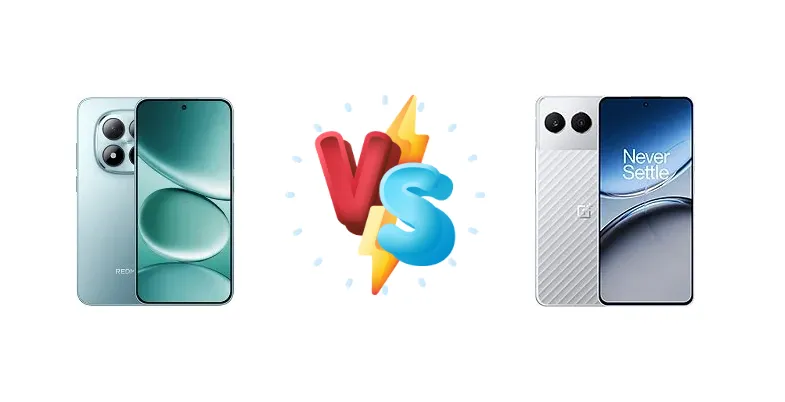
The mid-range smartphone market is fiercely competitive, and the Xiaomi Redmi Note 15 Pro and OnePlus Nord 4 represent compelling options. The Redmi Note 15 Pro aims to deliver strong value with a newer Mediatek chipset, while the Nord 4 leverages Qualcomm’s Snapdragon 7+ Gen 3 and a focus on rapid charging and sustained performance. This comparison dissects their key differences to help you choose the right device.
🏆 Quick Verdict
For the average user prioritizing all-day battery life and incredibly fast charging, the OnePlus Nord 4 emerges as the winner. Its Snapdragon 7+ Gen 3 offers a refined experience, and the 100W charging is a game-changer. However, the Redmi Note 15 Pro presents a strong value proposition for those seeking a balance of features at a potentially lower price point.
| Network |
|---|
| 2G bands | GSM 850 / 900 / 1800 / 1900 | GSM 850 / 900 / 1800 / 1900 |
| 3G bands | HSDPA 800 / 850 / 900 / 1700(AWS) / 1900 / 2100 | HSDPA 800 / 850 / 900 / 1700(AWS) / 1800 / 1900 / 2100 - International |
| 4G bands | LTE | 1, 2, 3, 4, 5, 7, 8, 12, 17, 18, 19, 20, 26, 28, 38, 39, 40, 41, 66 - International |
| 5G bands | SA/NSA | 1, 2, 3, 5, 7, 8, 12, 20, 28, 38, 40, 41, 66, 77, 78 SA/NSA - International |
| Speed | HSPA, LTE, 5G | HSPA, LTE, 5G |
| Technology | GSM / HSPA / LTE / 5G | GSM / HSPA / LTE / 5G |
| Launch |
|---|
| Announced | Not announced yet | 2024, July 16 |
| Status | Rumored | Available. Released 2024, August 08 |
| Body |
|---|
| Build | Glass front (Gorilla Glass Victus 2), plastic back or silicone polymer back (eco leather), plastic frame | Glass front, aluminum back, aluminum frame |
| Dimensions | 163.6 x 78.1 x 7.8 mm (6.44 x 3.07 x 0.31 in) | 162.6 x 75 x 8 mm (6.40 x 2.95 x 0.31 in) |
| SIM | · Nano-SIM + eSIM· Nano-SIM + Nano-SIM | Nano-SIM + Nano-SIM |
| Weight | 210 g (7.41 oz) | 199.5 g (7.05 oz) |
| Display |
|---|
| Protection | Corning Gorilla Glass Victus 2 | - |
| Resolution | 1280 x 2712 pixels, 19:9 ratio (~439 ppi density) | 1240 x 2772 pixels, 20:9 ratio (~450 ppi density) |
| Size | 6.83 inches, 116.2 cm2 (~90.9% screen-to-body ratio) | 6.74 inches, 109.7 cm2 (~90.0% screen-to-body ratio) |
| Type | AMOLED, 68B colors, 120Hz, 3840Hz PWM, HDR10+, Dolby Vision, 3200 nits (peak) | Fluid AMOLED, 1B colors, 120Hz, HDR10+, 2150 nits (peak) |
| Platform |
|---|
| CPU | Octa-core (4x2.6 GHz Cortex-A78 & 4x2.0 GHz Cortex-A55) | Octa-core (1x2.8 GHz Cortex-X4 & 4x2.6 GHz Cortex-A720 & 3x1.9 GHz Cortex-A520) |
| Chipset | Mediatek Dimensity 7400 Ultra (4 nm) | Qualcomm SM7675 Snapdragon 7+ Gen 3 (4 nm) |
| GPU | Mali-G615 MC2 | Adreno 732 |
| OS | Android 15, HyperOS 2 | Android 14, up to 4 major Android upgrades, OxygenOS 15 |
| Memory |
|---|
| Card slot | No | No |
| Internal | 256GB 8GB RAM | 128GB 8GB RAM, 256GB 8GB RAM, 256GB 12GB RAM, 512GB 16GB RAM |
| Main Camera |
|---|
| Dual | 50 MP, f/1.5, (wide), 1/1.95", 1.6µm, multi-directional PDAF, OIS
8 MP, 112˚ (ultrawide) | 50 MP, f/1.8, 25mm (wide), 1/1.95", 0.8µm, PDAF, OIS
8 MP, f/2.2, 112˚ (ultrawide), 1/4.0", 1.12µm |
| Features | LED flash, HDR, panorama | Dual-LED flash, HDR, panorama |
| Triple | 200 MP, f/1.7, 23mm (wide), 1/1.4", 0.56µm, multi-directional PDAF, OIS
8 MP, f/2.2, 15mm, 120˚ (ultrawide), 1/4.0", 1.12µm
2 MP (macro) | - |
| Video | 4K@24/30fps, 1080p@30/60/120fps, gyro-EIS, OIS | 4K@30/60fps, 1080p@30/60/120fps, gyro-EIS |
| Selfie camera |
|---|
| Features | HDR, panorama | Panorama |
| Single | 20 MP, f/2.2, 25mm (wide), 1/4.0", 0.7µm | 16 MP, f/2.4, 24mm (wide), 1.0µm |
| Video | 1080p@30/60fps | 1080p@30fps |
| Sound |
|---|
| 35mm jack | No | No |
| Loudspeaker | Yes, with stereo speakers (with Dolby Atmos) | Yes, with stereo speakers |
| Comms |
|---|
| Bluetooth | 5.4, A2DP, LE | 5.4, A2DP, LE, aptX HD, LHDC |
| Infrared port | Yes | Yes |
| NFC | Yes (market/region dependent) | Yes |
| Positioning | GPS, GALILEO, GLONASS, QZSS, BDS | GPS, GALILEO, GLONASS, BDS, QZSS |
| Radio | Unspecified | No |
| USB | USB Type-C 2.0, OTG | USB Type-C 2.0 |
| WLAN | Wi-Fi 802.11 a/b/g/n/ac/6, dual-band, Wi-Fi Direct | Wi-Fi 802.11 a/b/g/n/ac/6, dual-band, Wi-Fi Direct |
| Features |
|---|
| Sensors | Fingerprint (under display, optical), accelerometer, gyro, compass, proximity | Fingerprint (under display, optical), accelerometer, gyro, proximity, compass |
| Battery |
|---|
| Charging | 45W wired | 100W wired, PPS, 100% in 28 min |
| Type | 6580 mAh | 5500 mAh |
| Misc |
|---|
| Colors | Glacier Blue, Gold, Black, Purple | Obsidian Midnight, Mercurial Silver, Oasis Green |
| Models | 25060RABDG | CPH2663, CPH2661 |
| Price | About 400 EUR | € 410.27 / £ 423.17 |
| SAR | - | 1.18 W/kg (head) 1.06 W/kg (body) |
Xiaomi Redmi Note 15 Pro
- Potentially lower price point
- Mediatek Dimensity 7400 Ultra offers strong performance
- Feature-rich for the price
- Slower 45W charging
- Display brightness and quality unknown
- Potentially less optimized thermal management
OnePlus Nord 4
- 100W SuperVOOC charging (28 min full charge)
- Snapdragon 7+ Gen 3 provides superior performance and efficiency
- Brighter display (1163 nits)
- Likely higher price tag
- OnePlus’s software experience isn’t universally loved
- May lack expandable storage
Display Comparison
The OnePlus Nord 4 boasts a significantly brighter display, reaching a measured peak of 1163 nits. This translates to superior visibility outdoors under direct sunlight compared to the Redmi Note 15 Pro (brightness data unavailable). While both utilize 4nm chipsets, the display’s brightness impacts usability. We expect the Nord 4 to have better color accuracy and contrast, though a direct comparison requires panel analysis. The Redmi Note 15 Pro’s display specs are currently unknown, making it difficult to assess its overall quality.
Camera Comparison
Without detailed camera specifications for the Redmi Note 15 Pro, a direct comparison is limited. However, the market segment suggests both phones will feature multi-camera systems. The Nord 4’s image processing benefits from Qualcomm’s ISP, known for its detail preservation and dynamic range. We anticipate the Nord 4 to excel in low-light photography due to its optimized image signal processing. The Redmi Note 15 Pro will likely focus on offering a versatile camera experience, but may fall short of the Nord 4’s image quality in challenging conditions. Ignoring the likely inclusion of 2MP macro lenses on both devices, the main sensor and its accompanying OIS will be key differentiators.
Performance
The core difference lies in the chipsets: the Redmi Note 15 Pro features the Mediatek Dimensity 7400 Ultra, while the Nord 4 utilizes the Qualcomm Snapdragon 7+ Gen 3. The Snapdragon 7+ Gen 3, with its Cortex-X4 prime core clocked at 2.8 GHz, offers a performance advantage over the Dimensity 7400 Ultra’s Cortex-A78 core (2.6 GHz). The Snapdragon’s architecture, including the A720 and A520 cores, is also more modern, potentially leading to better efficiency. While both are built on a 4nm process, Qualcomm’s optimizations generally result in superior thermal management, crucial for sustained gaming. The Redmi Note 15 Pro’s CPU configuration suggests strong multi-core performance, but the Nord 4’s single-core speed will likely be higher.
Battery Life
The OnePlus Nord 4 shines in battery and charging. Its 14:41h active use score demonstrates excellent endurance. More importantly, the 100W wired charging, with PPS support, can fully charge the device in just 28 minutes – a significant advantage over the Redmi Note 15 Pro’s 45W charging. While the Redmi Note 15 Pro’s battery capacity is unknown, the slower charging speed suggests it may take considerably longer to reach a full charge. The Nord 4’s faster charging is ideal for users who need to quickly top up their battery throughout the day.
Buying Guide
Buy the Xiaomi Redmi Note 15 Pro if you need a feature-rich phone with a focus on value and are comfortable with potentially slower charging speeds. Buy the OnePlus Nord 4 if you prioritize a smoother, more responsive user experience, exceptionally fast 100W charging, and longer sustained performance during demanding tasks like gaming or video editing.
Frequently Asked Questions
❓ Will the Snapdragon 7+ Gen 3 in the Nord 4 handle demanding games like Genshin Impact at high settings?
Yes, the Snapdragon 7+ Gen 3 is a capable chipset for gaming. Its Adreno GPU and optimized architecture should allow for smooth gameplay in Genshin Impact at high settings, though you may need to adjust graphics settings for extended play sessions to manage thermals.
❓ How does the 100W charging on the Nord 4 affect battery health over the long term?
OnePlus employs charging algorithms and battery protection features to mitigate the potential impact of fast charging on battery health. While all batteries degrade over time, the Nord 4’s charging system is designed to minimize this effect. PPS support also contributes to more efficient and safer charging.
❓ Is the Mediatek Dimensity 7400 Ultra in the Redmi Note 15 Pro sufficient for everyday tasks and moderate gaming?
Absolutely. The Dimensity 7400 Ultra is a solid performer that will handle everyday tasks like browsing, social media, and video streaming with ease. It’s also capable of running most mobile games at medium settings without significant issues.
❓ Does the OnePlus Nord 4 support wireless charging?
No, the OnePlus Nord 4 does not support wireless charging. It focuses on delivering incredibly fast wired charging with its 100W SuperVOOC technology.