
Xiaomi Redmi Note 12 Discovery vs. Redmi Note 12 Pro+: A Detailed Comparison
| Phones Images | |||||
|---|---|---|---|---|---|
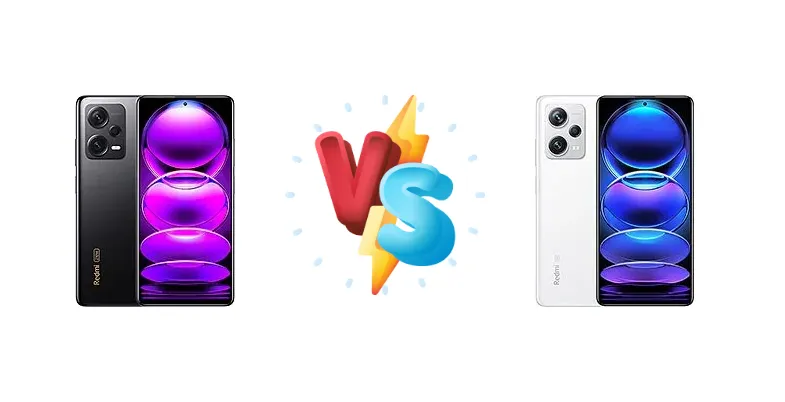
|
🏆 Quick Verdict
The Redmi Note 12 Pro+ takes the crown thanks to its significantly faster 120W charging, superior battery life, and potentially better camera capabilities. While the Discovery boasts incredibly fast 210W charging, the Pro+'s overall package provides a more well-rounded and practical experience.
| PHONES | ||
|---|---|---|
| Phone Names | Xiaomi Redmi Note 12 Discovery | Xiaomi Redmi Note 12 Pro+ |
| Network | ||
|---|---|---|
| 2G bands | GSM 850 / 900 / 1800 / 1900 | GSM 850 / 900 / 1800 / 1900 - SIM 1 & SIM 2 |
| 3G bands | HSDPA 850 / 900 / 1900 / 2100 | HSDPA 800 / 850 / 900 / 1900 / 2100 |
| 4G bands | 1, 3, 5, 8, 19, 34, 38, 39, 40, 41 | 1, 3, 5, 8, 19, 34, 38, 39, 40, 41 - International, China |
| 5G bands | 1, 3, 5, 8, 28, 38, 41, 77, 78 SA/NSA | 1, 3, 5, 8, 28, 38, 40, 41, 77, 78 SA/NSA - International |
| Speed | HSPA, LTE, 5G | HSPA, LTE-A (CA), 5G |
| Technology | GSM / CDMA / HSPA / EVDO / LTE / 5G | GSM / CDMA / HSPA / EVDO / LTE / 5G |
| CDMA2000 1xEV-DO | 1, 3, 5, 8, 28, 38, 41, 77, 78 SA/NSA - China | |
| Launch | ||
|---|---|---|
| Announced | 2022, October 27 | 2022, October 27 |
| Status | Available. Released 2022, November 01 | Available. Released 2022, November 01 |
| Body | ||
|---|---|---|
| Build | Glass front, glass back, aluminum frame | Glass front (Gorilla Glass 5), glass back |
| Dimensions | 162.9 x 76 x 9 mm (6.41 x 2.99 x 0.35 in) | 162.9 x 76 x 8.9 mm (6.41 x 2.99 x 0.35 in) |
| SIM | Nano-SIM + Nano-SIM | Dual SIM (Nano-SIM, dual stand-by) |
| Weight | 207.5 g (7.34 oz) | 208.4 g (7.34 oz) |
| IP53, dust and splash resistant | IP53, dust and splash resistant | |
| Display | ||
|---|---|---|
| Protection | - | Corning Gorilla Glass 5 |
| Resolution | 1080 x 2400 pixels, 20:9 ratio (~395 ppi density) | 1080 x 2400 pixels, 20:9 ratio (~395 ppi density) |
| Size | 6.67 inches, 107.4 cm2 (~86.8% screen-to-body ratio) | 6.67 inches, 107.4 cm2 (~86.8% screen-to-body ratio) |
| Type | OLED, 1B colors, 120Hz, Dolby Vision, HDR10+, 500 nits (typ), 900 nits (HBM) | OLED, 1B colors, 120Hz, Dolby Vision, HDR10+, 500 nits (typ), 900 nits (HBM) |
| Platform | ||
|---|---|---|
| CPU | Octa-core (2x2.6 GHz Cortex-A78 & 6x2.0 GHz Cortex-A55) | Octa-core (2x2.6 GHz Cortex-A78 & 6x2.0 GHz Cortex-A55) |
| Chipset | Mediatek Dimensity 1080 (6 nm) | Mediatek MT6877V Dimensity 1080 (6 nm) |
| GPU | Mali-G68 MC4 | Mali-G68 MC4 |
| OS | Android 12, MIUI 13 | Android 12, MIUI 13 |
| Memory | ||
|---|---|---|
| Card slot | No | No |
| Internal | 256GB 8GB RAM | 256GB 8GB RAM, 256GB 12GB RAM |
| UFS 2.2 | UFS 2.2 | |
| Main Camera | ||
|---|---|---|
| Features | Dual-LED dual-tone flash, HDR, panorama | Dual-LED dual-tone flash, HDR, panorama |
| Triple | 200 MP, f/1.7, 24mm (wide), 1/1.4", 0.56µm, PDAF, OIS 8 MP, f/1.9, 119˚ (ultrawide), 1/4.0", 1.12µm 2 MP (macro) | 200 MP, f/1.7, 24mm (wide), 1/1.4", 0.56µm, PDAF, OIS 8 MP, f/2.2, 120˚ (ultrawide), 1/4", 1.12µm 2 MP, f/2.4, (macro) |
| Video | 4K@30fps, 1080p@30/60/120fps, 720p@960fps | 4K@30fps, 1080p@30/60/120fps, 720p@960fps |
| Selfie camera | ||
|---|---|---|
| Features | HDR | HDR |
| Single | 16 MP, (wide), 1/3.06", 1.0µm | 16 MP, f/2.5, (wide), 1/3.06", 1.0µm |
| Video | 1080p@30/60fps | 1080p@30/60fps |
| Sound | ||
|---|---|---|
| 3.5mm jack | Yes | Yes |
| 35mm jack | Yes | - |
| Loudspeaker | Yes, with stereo speakers | Yes, with stereo speakers |
| 24-bit/192kHz audio | 24-bit/192kHz audio | |
| Comms | ||
|---|---|---|
| Bluetooth | 5.2, A2DP, LE | 5.2, A2DP, LE |
| Infrared port | Yes | Yes |
| NFC | Yes | Yes (market/region dependent) |
| Positioning | GPS (L1), GLONASS (G1), BDS (B1I+B1c), GALILEO (E1), QZSS (L1) | GPS (L1), GLONASS (G1), BDS (B1I+B1c), GALILEO (E1), QZSS (L1) |
| Radio | Unspecified | No |
| USB | USB Type-C 2.0, OTG | USB Type-C 2.0, OTG |
| WLAN | Wi-Fi 802.11 a/b/g/n/ac/6, dual-band, Wi-Fi Direct | Wi-Fi 802.11 a/b/g/n/ac/6, dual-band, Wi-Fi Direct |
| Features | ||
|---|---|---|
| Sensors | Fingerprint (side-mounted), accelerometer, gyro, proximity, compass | Fingerprint (side-mounted), accelerometer, proximity, gyro, compass |
| Battery | ||
|---|---|---|
| Charging | 210W wired, PD3.0, 66% in 5 min, 100% in 9 min | 120W wired, PD3.0, 100% in 19 min (advertised) |
| Type | Li-Po 4300 mAh | Li-Po 5000 mAh, non-removable |
| Misc | ||
|---|---|---|
| Colors | Black | Arctic White, Iceberg Blue, Obsidian Black, Trend edition |
| Models | 22101316UP | 22101316UCP, 22101316UG |
| Price | About 380 EUR | $ 348.00 / £ 439.00 / € 399.00 / ₹ 29,949 |
| Tests | ||
|---|---|---|
| Battery life | - | Endurance rating 88h |
| Camera | - | Photo / Video |
| Display | - | Contrast ratio: Infinite (nominal) |
| Loudspeaker | - | -26.7 LUFS (Good) |
| Performance | - | AnTuTu: 498710 (v9) GeekBench: 2208 (v5.1), 2372 (v6) GFXBench: 22fps (ES 3.1 onscreen) |
Xiaomi Redmi Note 12 Discovery
- Incredibly fast 210W charging
- Sleek design
- Good performance for the price
- Potentially shorter battery life
- Camera may not be as advanced as Pro+
- Limited availability in some regions
Xiaomi Redmi Note 12 Pro+
- 120W fast charging
- Excellent battery life (88h endurance)
- Potentially superior camera system
- More widely available
- Charging speed slower than Discovery
- Infinite contrast ratio claim is marketing
- Design might be less distinctive
Display Comparison
Both phones likely feature AMOLED displays with a 120Hz refresh rate, offering vibrant colors and smooth scrolling. The 'Infinite' contrast ratio mentioned for the Pro+ is a marketing term, but suggests excellent black levels and dynamic range. Expect similar display quality overall, with the Pro+ potentially having slightly better calibration.
Camera Comparison
The Redmi Note 12 Pro+ is expected to have a more advanced camera system, potentially including a higher resolution main sensor and improved image processing algorithms. While the Discovery's camera is likely capable, the Pro+ should deliver superior image quality, especially in low-light conditions. Video recording capabilities are also likely to be better on the Pro+.
Performance
Both devices utilize the Mediatek Dimensity 1080 chipset, ensuring comparable performance for everyday tasks and moderate gaming. Differences in real-world performance might arise from software optimization and thermal management, but they should be minimal. Don't expect flagship-level gaming performance from either.
Battery Life
The Redmi Note 12 Pro+ clearly wins in this category with its advertised 88h endurance rating. The Discovery's 210W charging is a remarkable feat, but it doesn't compensate for potentially lower overall battery capacity and longevity. The Pro+ offers a more sustainable power solution.
Buying Guide
The Xiaomi Redmi Note 12 Discovery is ideal for users prioritizing incredibly fast charging above all else and who don't mind potentially sacrificing some battery longevity. The Redmi Note 12 Pro+ is the better choice for those seeking a longer-lasting battery, potentially improved camera performance, and a more balanced feature set.