
Xiaomi Redmi Note 12 Discovery vs. Pro: A Detailed Showdown
| Phones Images | |||||
|---|---|---|---|---|---|
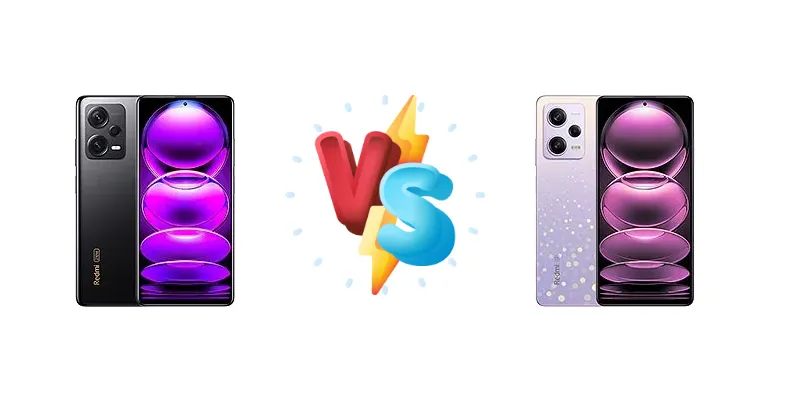
|
🏆 Quick Verdict
The Redmi Note 12 Discovery boasts incredibly fast 210W charging, a significant advantage for those prioritizing speed. However, the Note 12 Pro offers superior battery endurance and a potentially better display experience. For charging speed, Discovery wins; for longevity and potentially display quality, the Pro takes the lead.
| PHONES | ||
|---|---|---|
| Phone Names | Xiaomi Redmi Note 12 Discovery | Xiaomi Redmi Note 12 Pro |
| Network | ||
|---|---|---|
| 2G bands | GSM 850 / 900 / 1800 / 1900 | GSM 850 / 900 / 1800 / 1900 |
| 3G bands | HSDPA 850 / 900 / 1900 / 2100 | HSDPA 800 / 850 / 900 / 1900 / 2100 |
| 4G bands | 1, 3, 5, 8, 19, 34, 38, 39, 40, 41 | 1, 2, 3, 4, 5, 7, 8, 12, 13, 17, 18, 19, 20, 26, 28, 32, 38, 40, 41, 66 - International |
| 5G bands | 1, 3, 5, 8, 28, 38, 41, 77, 78 SA/NSA | 1, 3, 5, 7, 8, 20, 28, 38, 40, 41, 66, 77, 78 SA/NSA - International |
| Speed | HSPA, LTE, 5G | HSPA, LTE, 5G |
| Technology | GSM / CDMA / HSPA / EVDO / LTE / 5G | GSM / CDMA / HSPA / EVDO / LTE / 5G |
| CDMA2000 1xEV-DO | 1, 3, 5, 8, 28, 38, 41, 77, 78 SA/NSA - China | |
| Launch | ||
|---|---|---|
| Announced | 2022, October 27 | 2022, October 27 |
| Status | Available. Released 2022, November 01 | Available. Released 2022, November 01 |
| Body | ||
|---|---|---|
| Build | Glass front, glass back, aluminum frame | Glass front (Gorilla Glass 5), glass back, plastic frame |
| Dimensions | 162.9 x 76 x 9 mm (6.41 x 2.99 x 0.35 in) | 163 x 76 x 8 mm (6.42 x 2.99 x 0.31 in) |
| SIM | Nano-SIM + Nano-SIM | Nano-SIM + Nano-SIM |
| Weight | 207.5 g (7.34 oz) | 187 g (6.60 oz) |
| IP53, dust and splash resistant | IP53, dust and splash resistant | |
| Display | ||
|---|---|---|
| Protection | - | Corning Gorilla Glass 5 |
| Resolution | 1080 x 2400 pixels, 20:9 ratio (~395 ppi density) | 1080 x 2400 pixels, 20:9 ratio (~395 ppi density) |
| Size | 6.67 inches, 107.4 cm2 (~86.8% screen-to-body ratio) | 6.67 inches, 107.4 cm2 (~86.7% screen-to-body ratio) |
| Type | OLED, 1B colors, 120Hz, Dolby Vision, HDR10+, 500 nits (typ), 900 nits (HBM) | AMOLED, 1B colors, 120Hz, Dolby Vision, HDR10+, 500 nits (typ), 900 nits (HBM) |
| Platform | ||
|---|---|---|
| CPU | Octa-core (2x2.6 GHz Cortex-A78 & 6x2.0 GHz Cortex-A55) | Octa-core (2x2.6 GHz Cortex-A78 & 6x2.0 GHz Cortex-A55) |
| Chipset | Mediatek Dimensity 1080 (6 nm) | Mediatek Dimensity 1080 (6 nm) |
| GPU | Mali-G68 MC4 | Mali-G68 MC4 |
| OS | Android 12, MIUI 13 | Android 12, MIUI 13 |
| Memory | ||
|---|---|---|
| Card slot | No | No |
| Internal | 256GB 8GB RAM | 128GB 6GB RAM, 128GB 8GB RAM, 256GB 8GB RAM, 256GB 12GB RAM |
| UFS 2.2 | UFS 2.2 | |
| Main Camera | ||
|---|---|---|
| Features | Dual-LED dual-tone flash, HDR, panorama | Dual-LED dual-tone flash, HDR, panorama |
| Triple | 200 MP, f/1.7, 24mm (wide), 1/1.4", 0.56µm, PDAF, OIS 8 MP, f/1.9, 119˚ (ultrawide), 1/4.0", 1.12µm 2 MP (macro) | 50 MP, f/1.9, 24mm (wide), 1/1.56", 1.0µm, PDAF, OIS 8 MP, f/2.2, 120˚ (ultrawide), 1/4.0", 1.12µm 2 MP (macro) |
| Video | 4K@30fps, 1080p@30/60/120fps, 720p@960fps | 4K@30fps, 1080p@30/60/120fps, 720p@960fps |
| Selfie camera | ||
|---|---|---|
| Features | HDR | HDR |
| Single | 16 MP, (wide), 1/3.06", 1.0µm | 16 MP, f/2.5, (wide), 1/3.06", 1.0µm |
| Video | 1080p@30/60fps | 1080p@30/60fps |
| Sound | ||
|---|---|---|
| 3.5mm jack | Yes | Yes |
| 35mm jack | Yes | Yes |
| Loudspeaker | Yes, with stereo speakers | Yes, with stereo speakers |
| 24-bit/192kHz audio | 24-bit/192kHz audio | |
| Comms | ||
|---|---|---|
| Bluetooth | 5.2, A2DP, LE | 5.2, A2DP, LE |
| Infrared port | Yes | Yes |
| NFC | Yes | Yes (market/region dependent) |
| Positioning | GPS (L1), GLONASS (G1), BDS (B1I+B1c), GALILEO (E1), QZSS (L1) | GPS (L1), GLONASS (G1), BDS (B1I+B1c), GALILEO (E1), QZSS (L1) |
| Radio | Unspecified | No |
| USB | USB Type-C 2.0, OTG | USB Type-C 2.0, OTG |
| WLAN | Wi-Fi 802.11 a/b/g/n/ac/6, dual-band, Wi-Fi Direct | Wi-Fi 802.11 a/b/g/n/ac/6, dual-band, Wi-Fi Direct |
| Features | ||
|---|---|---|
| Sensors | Fingerprint (side-mounted), accelerometer, gyro, proximity, compass | Fingerprint (side-mounted), accelerometer, gyro, proximity, compass |
| Battery | ||
|---|---|---|
| Charging | 210W wired, PD3.0, 66% in 5 min, 100% in 9 min | 67W wired, PD3.0, 50% in 15 min, 100% in 46 min |
| Type | Li-Po 4300 mAh | Li-Po 5000 mAh |
| Misc | ||
|---|---|---|
| Colors | Black | Frosted Blue (Sky Blue), Onyx Black (Midnight Black), Polar White, Stardust Purple |
| Models | 22101316UP | 22101316C, 22101316I, 23013RK75C, 22101316G |
| Price | About 380 EUR | € 148.54 / $ 142.17 / £ 149.99 / ₹ 19,999 |
| SAR | - | 1.09 W/kg (head) 1.06 W/kg (body) |
| SAR EU | - | 0.99 W/kg (head) 0.99 W/kg (body) |
| Tests | ||
|---|---|---|
| Battery life | - | Endurance rating 97h |
| Camera | - | Photo / Video |
| Display | - | Contrast ratio: Infinite (nominal) |
| Loudspeaker | - | -26.6 LUFS (Good) |
| Performance | - | AnTuTu: 490526 (v9) GeekBench: 2209 (v5.1), 2372 (v6) GFXBench: 22fps (ES 3.1 onscreen) |
Xiaomi Redmi Note 12 Discovery
- Incredibly fast 210W charging
- Dimensity 1080 chipset for smooth performance
- Modern design
- Potentially shorter battery life compared to Pro
- Limited camera details available
- May lack some advanced camera features
Xiaomi Redmi Note 12 Pro
- Excellent battery life (97h endurance rating)
- Potentially brighter and more vibrant display (890 nits)
- Likely more refined camera system
- Balanced overall experience
- Slower charging speed (67W)
- Infinite contrast ratio claim is nominal
- May not be ideal for users prioritizing charging speed above all else
Display Comparison
Both phones feature AMOLED displays, but the Note 12 Pro's 890 nits max brightness suggests a potentially more vibrant and visible screen, especially outdoors. The Discovery's display details are less readily available, but it's likely a high-quality panel. The Note 12 Pro's 'infinite' contrast ratio is a nominal claim, but generally indicates excellent blacks and vibrant colors. The Discovery may have a slightly higher refresh rate, but this is unconfirmed.
Camera Comparison
Camera details are limited in the provided specs. Both phones are described as having 'Photo / Video' capabilities. However, the Note 12 Pro is likely to have a more refined camera system, potentially with better image processing and more advanced features. The Discovery may prioritize speed in camera operation, but overall image quality is likely to be better on the Pro.
Performance
Both devices share the same Mediatek Dimensity 1080 chipset and CPU configuration, meaning performance will be largely identical in everyday tasks and most games. Expect smooth multitasking and responsive app loading. Differences in RAM and storage configurations (which vary by region) could slightly impact performance, but the core processing power is the same.
Battery Life
This is where the Note 12 Pro shines. Its endurance rating of 97 hours and active use score of 12:08 hours demonstrate exceptional battery life. The Discovery's 210W charging compensates for potentially shorter battery life, allowing it to quickly replenish power. However, the Pro's longevity is a significant advantage for users who want to go days without charging.
Buying Guide
The Xiaomi Redmi Note 12 Discovery is ideal for users who value lightning-fast charging above all else and don't mind potentially sacrificing some battery longevity. The Redmi Note 12 Pro is a better choice for those prioritizing all-day battery life, a potentially brighter and more vibrant display, and a more balanced overall experience.